Curacao Travel Guide: Everything You Need to Know
I spent a week in Curacao with five friends and came back with a sunburn, a serious flamingo obsession, and a strong opinion that this island is one of the most underrated destinations in the Caribbean. That was enough to write this guide… and to keep updating it as the island changes.
Curacao is the largest of the ABC Islands (Aruba, Bonaire, and Curacao), sitting about 40 miles off the Venezuelan coast. It’s a Dutch-administered island and quite different from most Caribbean islands. For one, the architecture looks like Amsterdam in color, the beaches are less crowded than Aruba’s, and the diving rivals anywhere in the world.
It’s not the easiest island to get to, and it’s not the most polished. But that’s part of what makes it worth it. Here’s everything you need to know to plan your Curacao vacation the right way.
Disclosure: Some of the links below may be affiliate links. At no additional cost to you, I may earn a small commission if you make a purchase.
How to Get to Curacao Island
The only way to reach Curacao is by air or sea. For most travelers, that means flying into Hato International Airport (CUR), located just north of the capital, Willemstad.
Direct flights are available from Miami (roughly 3 hours), New York (about 4.5 hours), and Amsterdam, as well as connecting service from Aruba and Bonaire. Most US travelers fly through Miami (that includes me!), which has the most frequent service. Airlines serving the route include American, JetBlue, and KLM.
Skyscanner is a great starting point for finding affordable date combinations. Once you’ve narrowed down your window, book directly through the airline to protect yourself if the flight changes.
Do US Citizens Need a Visa for Curacao?
No. US passport holders can stay in Curacao for up to six months within a calendar year without a visa. You just need a valid passport (at least one blank page for stamping) and a return or onward ticket. Always double-check current entry requirements before you travel. (iVisa makes this easy.)
Get to Know the ABC Islands in the Caribbean: Aruba, Bonaire, and Curacao
Getting around Curacao
How you get around the island will shape your entire trip, so it’s worth deciding early.
Renting a Car (Recommended)
For anyone who wants to actually explore the island, renting a car is the move. Curacao is small, at about 38 miles long and 10 miles at its widest, but the best beaches, national parks, and flamingo salt lakes are spread out, and public transport won’t get you there reliably.
Discover Cars aggregates rates across all the major rental companies on the island. Book in advance and you can find cars for $40–60/day. Note that some roads aren’t paved or well-signed, so budget a little extra travel time when exploring the west side, and download an offline map to help you get around.
Driving is on the right side of the road (same as the US), and a valid US driver’s license is accepted.
Taxis
Taxis are available at the airport, in Willemstad, and through your hotel. Important: all taxis in Curacao are unmetered, so always agree on the fare before you get in. Typical fare from the airport to hotels near Willemstad runs around $30–35 USD.
Taxis are fine for occasional use but expensive for daily island-hopping.
Public Buses (Konvooi)
Curacao has public buses called Konvooi, which run in and around Willemstad. Fares are around 2 ANG (about $1.10 USD)… aka cheap. The 9-person shared vans (also labeled as buses) run more frequently but have no fixed schedule. You just flag one down on the main roads.
Honest take: public transit in Curacao is useful only if you’re staying in Willemstad and plan to walk most places, or if you’re at a resort and rarely leaving it. For anything else, rent a car.
Day Trips and Guided Tours
Even if you do rent a car, some experiences are better done with a guide. Here are the tours worth booking:
- Full-Day Catamaran to Klein Curacao: A small uninhabited island 6 miles off the coast, with some of the clearest water you’ll ever swim in. Book here.
- Underwater Walking Tour: No swimming ability required. You walk on the seabed in a pressurized helmet. Wild and surprisingly accessible. Book here.
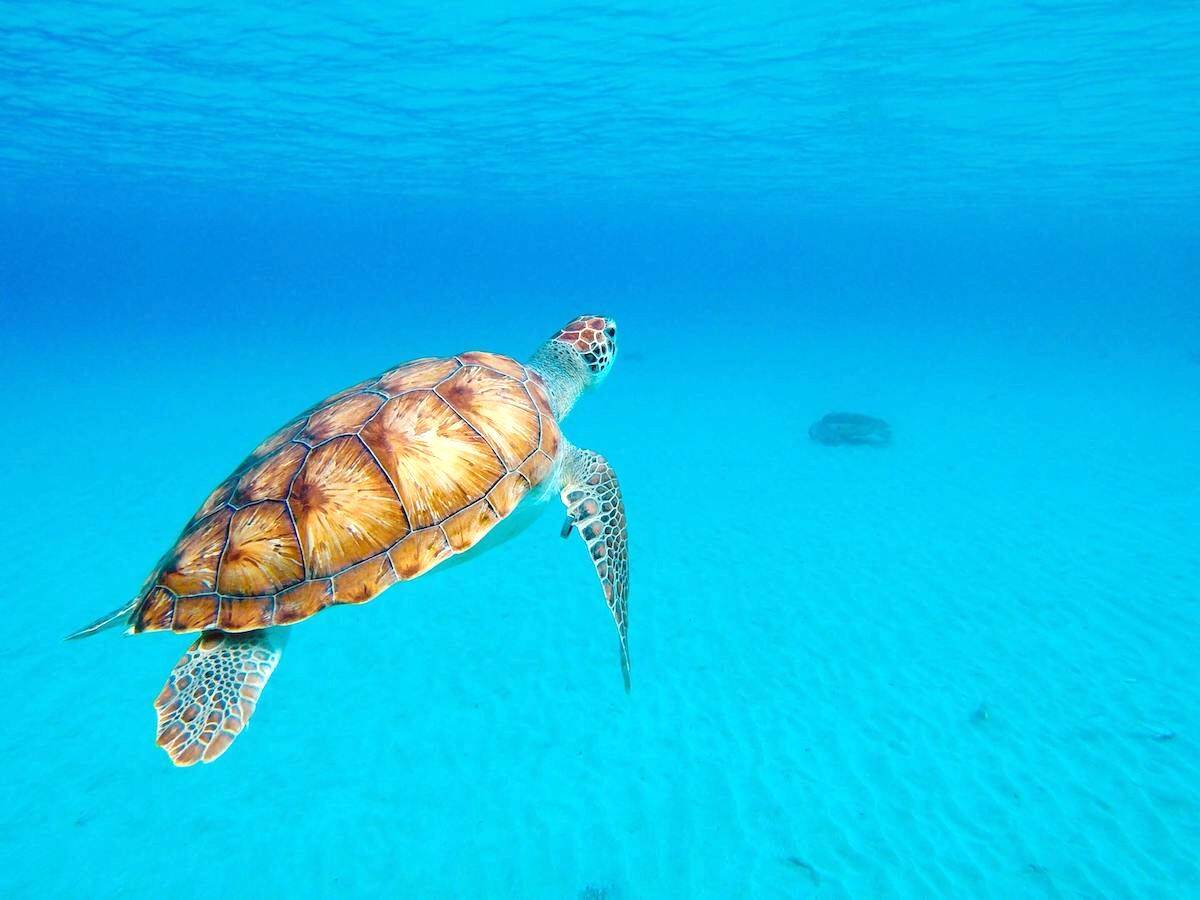
- Swim with Sea Turtles: Snorkeling at Grote Knip with sea turtle sightings almost guaranteed. One of the best excursions on the island. Book here.
- Discover Curacao Day Trip: Hits Shete Boka National Park, Kenepa Beach, and the Curacao Liqueur Distillery. Perfect if you don’t want to drive yourself around the island. Book here.
- Half-Day ATV Tour: Explores the rugged east side of the island, including an aloe vera plantation, ostrich farm, and caves. Book here.
Best Things to Do in Curacao
Curacao offers a few key activities, but you’ll probably want to spend most of your time enjoying the water and beaches!
1. Explore Willemstad
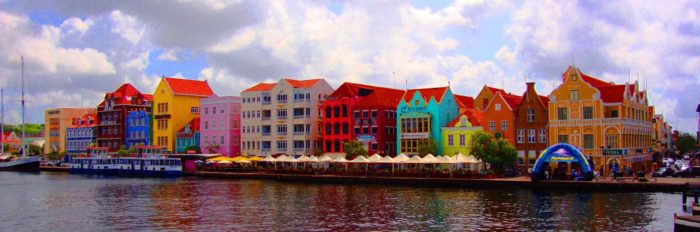
Willemstad is Curacao’s compact, colorful capital and a UNESCO World Heritage Site, one of the best-preserved examples of Dutch colonial architecture anywhere in the world. The most iconic view is the Handelskade, a row of pastel-painted 17th-century Dutch buildings lining the waterfront of St. Anna Bay. It looks like a postcard and smells like the sea.
Queen Emma Bridge is worth timing your visit around. This historic floating pontoon bridge swings open to let ships into the harbor, and watching it happen is a surprisingly dramatic few minutes. Cross it on foot for some fun. It sways slightly underfoot, and you can walk from the Punda district into Otrobanda.
Other Willemstad highlights:
- Kura Huland Museum: One of the most significant museums in the Caribbean, focused on the West African slave trade and Curacao’s role in it. It’s sobering, well-curated, and offers important context for understanding the island’s culture.
- Floating Market: Venezuelan vendors sell fresh fruit, fish, and vegetables from boats moored along the canal. Go in the morning.
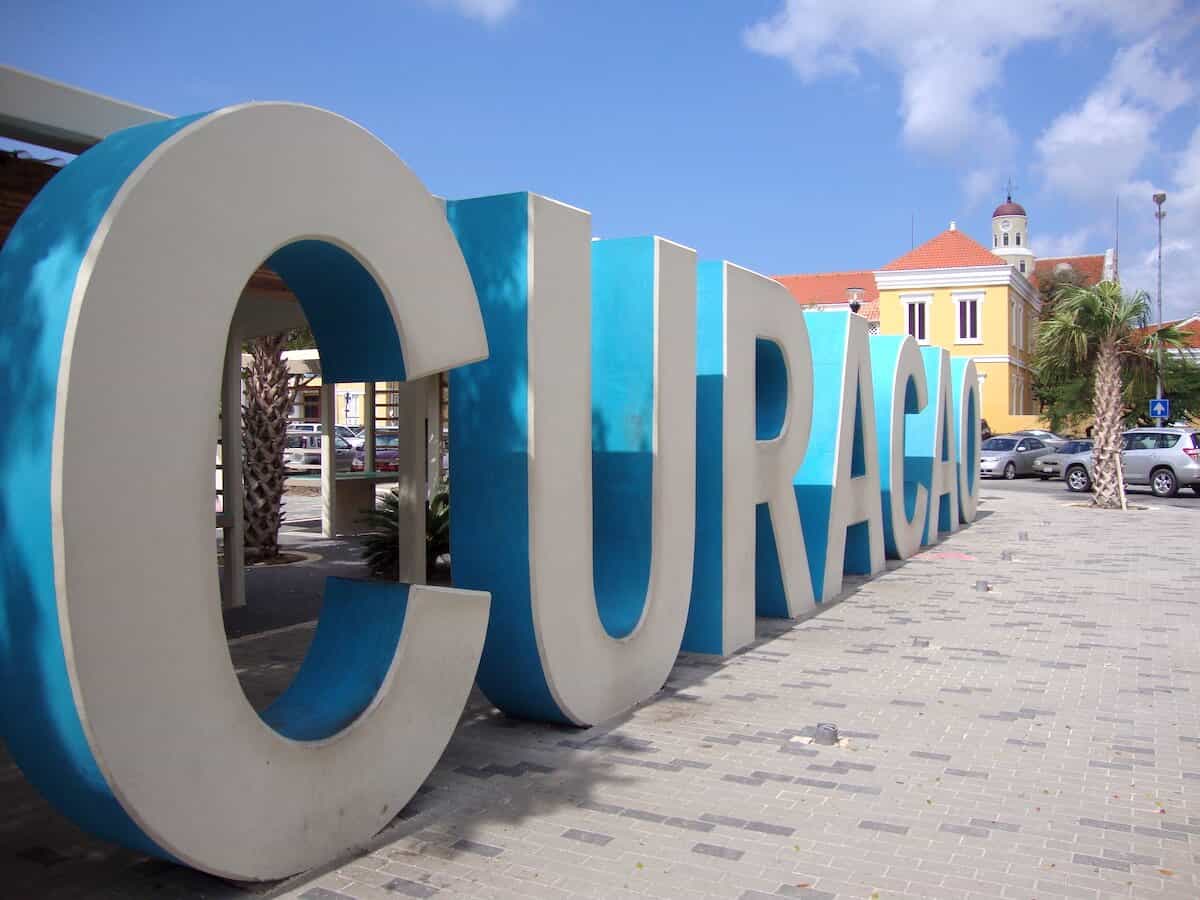
- Queen Wilhelmina Park: Home to the giant CURAÇAO letters. Yes, it’s a photo op. Yes, you should do it.
- Pietermaai District: The up-and-coming neighborhood just east of Punda, lined with restored colonial townhouses, boutique hotels, and the island’s best restaurants and bars.
Willemstad is small. Just a half-day is enough to hit the highlights, though you could easily spend more time eating and drinking your way through Pietermaai.
2. Visit the Best Beaches in Curacao
Curacao has over 35 beaches, ranging from resort-backed stretches to isolated coves you’ll have entirely to yourself. Here are the ones worth prioritizing:
- Kleine Knip (Little Knip): My personal favorite. Tucked into a sheltered bay on the northwest coast, it’s small, protected, and strikingly beautiful. The water is calm and clear, making it excellent for snorkeling (even without a guide). Bring your own snorkeling gear (and reef safe sunscreen) as there’s no rental equipment here. And, pack a lunch, as there’s no food service. No crowds, no noise. Just beach.
- Grote Knip (Big Knip / Kenepa Beach): A short drive from Kleine Knip and much larger. There’s a beach bar, bathrooms, and chair rentals. This is where the sea turtle snorkeling tours operate from, and it’s the better option if you want amenities alongside the scenery. The two beaches are quite different. Visit both if you can.
- Cas Abao: One of the most popular beaches on the island, with powdery sand, crystal water, and good snorkeling along the rocky edges. There’s an entry fee (~$10 USD) and full facilities. Worth it.
- Playa Kalki (Alice in Wonderland): On the far western tip of the island, near Westpunt. Known for excellent snorkeling and diving right off the beach, with vibrant coral and plentiful marine life. Remote and worth the drive.
- Playa Jeremi: Near Playa Kalki but more rugged and wild. No facilities, no crowds.
Dive or Snorkel the Reef
This deserves its own section because Curacao is world-class for underwater activity. The island sits outside the hurricane belt, which means its reefs have never suffered the storm damage that devastated much of the Caribbean. Combined with the island’s location outside major shipping lanes, visibility is exceptional. We’re talking 60–100 feet.
Even non-divers will find the snorkeling here unlike most Caribbean experiences. Many beaches have reef within swimming distance of the shore. If you want to scuba dive, the island has numerous reputable dive shops. The west side of the island (near Westpunt) and the marine park around the Tugboat wreck near Jan Thiel are particularly popular.
Christoffel National Park
One of the most underrated things to do in Curacao is Christoffel Park. It covers 2,300 hectares in the northwest corner of the island, Curacao’s largest national park. It’s home to native wildlife including white-tailed deer, green iguanas, and massive columnar cacti (kadushi).
The main draw is climbing Mount Christoffel, at 375 meters the highest point on the island. The hike takes about an hour each way and offers panoramic views across Curacao and out to Venezuela on a clear day. Critically: you cannot start the hike after 10am, as it becomes dangerously hot. Get there early. Entry is around 30 ANG (~$17 USD) per person.
Flamingos at the Jan Kok Salt Lakes
Driving the main road through the western interior of the island, you’ll pass the salt lakes of Jan Kok. These wide, shallow, brilliantly pink pans attract hundreds (sometimes thousands) of flamingos daily. There’s an observation deck at the edge of the salt flats. Pull over. Spend twenty minutes.
The flamingos tend to be most concentrated in the early morning and late afternoon.
Shete Boka National Park
Located on the rugged north coast, Shete Boka (meaning “Seven Inlets” in Papiamentu) protects a stretch of dramatic coastline where waves crash through sea caves and blow holes. The star attraction is Boka Tabla, a sea cave you can walk into and watch the ocean surge beneath you. It’s free to enter and easy to do without a guide. Excellent photography.
The Curacao Liqueur Distillery
Curacao’s namesake liqueur (the blue stuff you’ve seen in every beach bar cocktail) is made here from the dried peel of the laraha citrus fruit, a bitter orange variety that only grows on the island. The distillery is housed in a historic plantation house (Landhuis Chobolobo) and runs free tours that include tastings. It’s touristy in the best way.
Where to Stay in Curacao
Stay near the water. Full stop. The island’s best hours are early morning and sunset, and both are significantly better from a beach or beachfront terrace.
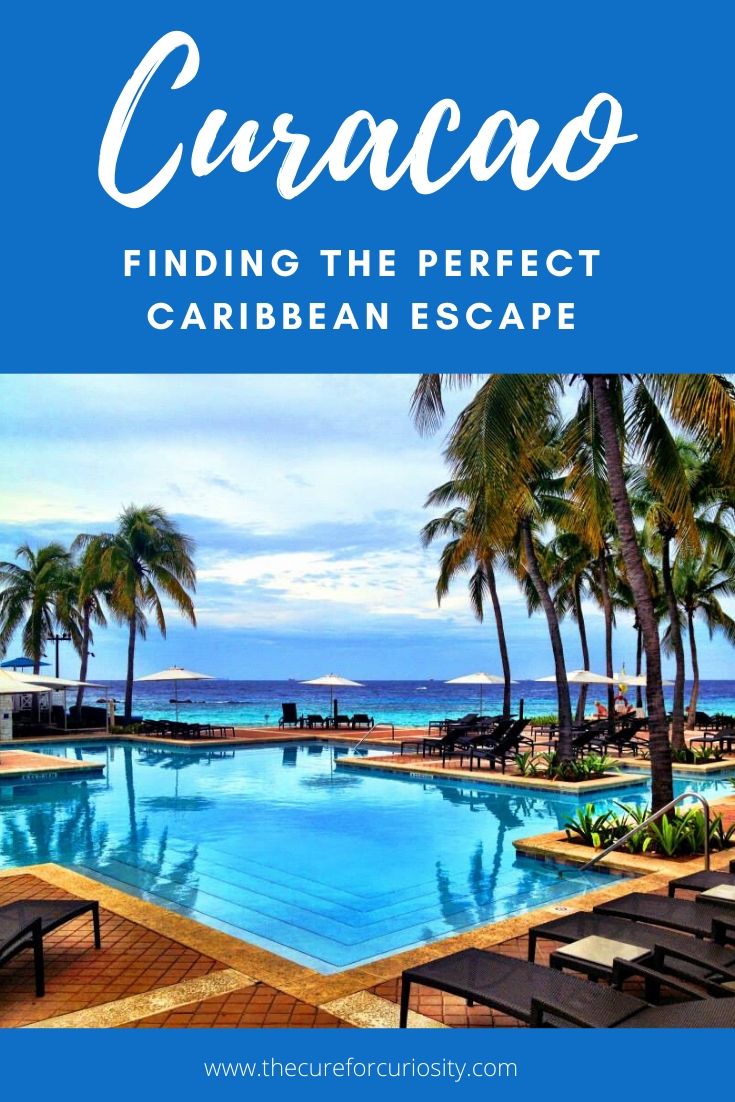
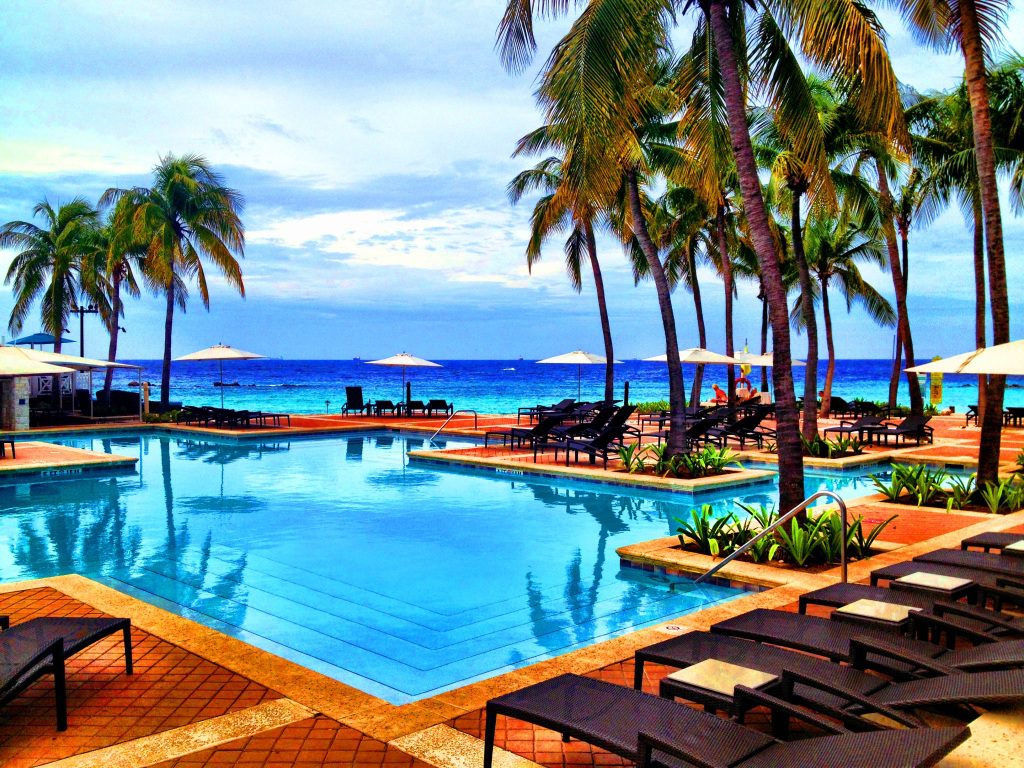
My group of six stayed at the Curacao Marriott Beach Resort. It’s beachfront, recently renovated, with a pool setup that made it hard to leave. It’s a classic Caribbean resort done well. Highly recommended for groups or couples who want a comfortable base with beach access.
If that’s not the right fit, here are options across every budget:
- Best Hostel in Curacao: Bed & Bike Curacao – Jan Thiel | Bed & Bike Curacao – Pietermaai District
- Best Budget Hotels in Curacao: City Suites & Beach Hotel | Landhuis Klein Santa Martha Boutique Hotel
- Best Mid-range Hotel in Curacao: Boutique Hotel ‘t Klooster | Bayside Boutique Hotel – Blue Bay Golf & Beach Resort | BOHO Bohemian Boutique Hotel
- Best Luxury Hotels in Curacao: Curacao Marriott Beach Resort | Renaissance Wind Creek Curacao Resort | Curacao Avila Beach Hotel
Learn more: Where to Stay in Curacao: Best Areas and Hotels

Best Time to Visit Curacao
The single best thing about Curacao’s location is that it sits outside the hurricane belt. At about 12 degrees north of the equator, its far enough south to avoid the storm tracks that hit much of the Caribbean between June and November. This means you can visit Curacao year-round without hurricane anxiety.
Average temperatures stay in the low-to-mid 80s°F (28–30°C) year-round, with low humidity compared to more tropical Caribbean islands. The tradewind keeps the heat manageable even in summer.
- Peak season (December–April): Best weather, most tourists, highest prices. Book hotels and tours well in advance. Great if the budget allows.
- Shoulder season (May–June, November): Fewer crowds, lower prices, still excellent weather. My personal recommendation for most travelers.
- Low season (July–October): The most affordable time to visit, with hotel rates sometimes 40–50% lower than peak. Occasional rain showers (usually brief), and some tours have reduced schedules. Still a great time to visit as you’ll often have beaches to yourself.
How Many Days Do You Need in Curacao?
Curacao is just 171.4 square miles being about 10 miles wide at its widest point and 38 miles long. This makes it the largest of the ABC Islands. So how much time do you need to travel around Curacao?
One Week (Perfect Length!)
I spent a week in Curacao and felt like it was perfect. One week lets you settle in, explore at a relaxed pace, and actually rest. You can rent a car, see the national parks, hit the best beaches, spend time in Willemstad, and still have days where you do nothing but float in the ocean or resort pool. This is the right amount of time for first-time visitors.
Sample 7-day framework:
- Day 1: Arrive, settle in, evening in Pietermaai
- Day 2: Willemstad (Handelskade, Queen Emma Bridge, Kura Huland Museum, Floating Market)
- Day 3: Northwest beaches (Grote Knip and Kleine Knip)
- Day 4: Christoffel National Park (start early) + Jan Kok flamingos
- Day 5: Klein Curacao day trip by catamaran
- Day 6: Shete Boka National Park + Curacao Liqueur Distillery
- Day 7: Beach day, departure
5 Days
Still very doable. Tighten the itinerary above by combining Day 4 and 6 (do Christoffel in the morning, Shete Boka in the afternoon on a single day drive) and use Day 5 as a beach day before departure.
3 Days
Make hard choices: Willemstad, one beach day (Grote/Kleine Knip), and one activity (Klein Curacao or flamingos). You won’t see everything, but you’ll see the best of it.
1 Day (Cruise Port or Day Trip)
Rent a car from the airport. Drive to Kleine Knip. Swing by the Jan Kok flamingos on the way back. Walk the Handelskade for an hour. That’s a good day.
Safety in Curacao
Good news… Curacao is considered one of the safer Caribbean destinations. The US State Department rates it Level 1: Exercise Normal Precautions (the same rating as most Western European countries).
Practical tips:
- Don’t leave valuables visible in your rental car (break-ins at beach parking areas do happen)
- Watch your belongings on busy beaches
- Avoid poorly lit areas in Willemstad late at night
The emergency number in Curacao is 911, same as the US.
Quick Facts About Curacao
| Detail | Info |
|---|---|
| Language | Papiamentu (official), Dutch, English, Spanish widely spoken |
| Currency | Netherlands Antillean guilder (ANG); US dollars widely accepted |
| Time zone | AST (UTC-4), no daylight saving time |
| Electricity | 110/220V — US plugs generally work fine |
| Tipping | Not mandatory; 10–15% appreciated at restaurants |
| Emergency number | 911 |
| Size | 171 sq miles (38 miles long) |
| Distance from US | ~3 hours from Miami, ~4.5 hours from New York |
FAQs about Curacao
No. US, Canadian, and EU passport holders can visit Curacao without a visa for up to six months. You’ll need a valid passport, a return or onward ticket, and proof of accommodation. Entry requirements can change, so always verify current rules before you travel.
The official languages are Papiamentu and Dutch, but English and Spanish are widely spoken across the island. Papiamentu is a Creole language blending Portuguese, Dutch, Spanish, English, and African dialects. It’s the everyday language locals use with each other. A simple danki (thank you) or bon dia (good day) goes a long way.
Yes, Curacao is one of the safer Caribbean destinations. The US State Department rates it Level 1 (Exercise Normal Precautions), the same as most of Western Europe. The main things to watch: don’t leave valuables in your rental car at beach parking lots, and avoid poorly lit areas in Willemstad after dark. The emergency number is 911.
The official currency is the Netherlands Antillean guilder (ANG), but US dollars are widely accepted almost everywhere (hotels, restaurants, shops, and taxis). Major credit cards work at most establishments. ATMs are available in Willemstad and at larger resorts.
Curacao sits outside the Atlantic hurricane belt, which means it’s rarely affected by hurricanes even during peak season (June–November). This makes it one of the few Caribbean destinations you can visit year-round without worrying about major storms. That’s a big advantage over islands like Barbados or St. Lucia.
Public buses (Konvooi) and shared vans run in and around Willemstad for about $1 USD per ride. Taxis are available but unmetered. Always agree on the fare before you get in. That said, if you want to reach the best beaches, national parks, and flamingo salt lakes, renting a car is by far the most practical option. The island is small and easy to drive.
Three things, mostly:
1. Its world-class scuba diving and snorkeling (the reefs are some of the best-preserved in the Caribbean).
2. The colorful Dutch colonial architecture of Willemstad (a UNESCO World Heritage Site).
3. Curaçao liqueur: The blue citrus liqueur made from the laraha orange peel grown only on the island.
Honestly, I’ve visited them both, and they’re just different islands. Aruba has wider beaches, more resorts, and a livelier nightlife scene. Curacao is larger, more culturally interesting, less crowded, and significantly better for diving. If you want a resort-style beach vacation, Aruba edges it out. If you want to explore history, nature, food, and underwater, Curacao is the better pick. Many travelers do both on the same trip since flights between them take about 30 minutes.
Explore More of the ABC Islands
If you’re traveling this far, it’s worth knowing your options. Curacao is the largest and most culturally rich of the ABC Islands, but its neighbors offer different experiences:
- Aruba is the most developed. Think better infrastructure, more resort options, more nightlife, and wider beaches (Eagle Beach is world-famous). It’s busier and more expensive, but excellent if you want more amenities or a party atmosphere.
- Bonaire is the quietest of the three islands. We’re talking slow, unpretentious, and spectacular underwater. It’s the top ABC Island for scuba diving. Very little nightlife, but infinitely peaceful.
You can fly between all three islands easily and inexpensively. Doing two or three in a single trip is very manageable. Here’s more information to get you started!
- Curacao Travel Guide: Everything You Need to Know
- Where is Curaçao? Location, Maps, and Facts
- Best Tours in Curaçao: 7 Can’t-Miss Excursions You’ll Love
- 7 Best All-Inclusive Resorts in Curaçao: Where to Stay
- 10 Best Things to Do in Bonaire – Beyond Just Scuba Diving
- Where is Bonaire? Location, Maps, and Facts
- Blue Curaçao Liqueur: The Signature Drink of Curaçao Island
- Where is Aruba? Location, Maps, and Facts
- Where to Stay in Curaçao: Best Areas and Hotels
- Get to Know the ABC Islands in the Caribbean
Read more: Get to Know the ABC Islands in the Caribbean
Like this post? Pin it.