Visiting the Giant Pandas in Chengdu, China: Everything You Need to Know
Learn the ins and outs of visiting the giant pandas near Chengdu, China.
If you’re headed to Chengdu, chances are good seeing the giant pandas of China are on your itinerary. If they’re not, add them now! The Chengdu Research Base of Giant Panda Breeding is one of the best things to do in Chengdu and is a must-visit for those in the area.
In fact, the giant pandas are one of the best reasons to go to Chengdu, in my humble opinion, but maybe I’m just a panda lover. How can you not be? Anyway, let’s get started by taking a look at Chengdu and then dive into how to get to the Panda Research Center from Chengdu and learn what to expect while you’re there.
Disclosure: Some of the links below may be affiliate links. At no additional cost to you, I may earn a small commission if you make a purchase.
About Chengdu, China
Chengdu, located in southwestern China, is a historic city with a modern twist. It’s known for its laid-back atmosphere and the Sichuan province’s distinct culture. With a population of millions, Chengdu offers a blend of tradition and urban development, making it a fascinating destination to explore.
Its most famous for Sichuan cuisine, teahouses, and historic landmarks as well as being the base for some of the most famous sites of China, like the Leshan Buddha and the Giant Panda Sanctuary.
What to See in the Chengdu Region
While we’ll be focused on the giant pandas near Chengdu, there are a few other key places to visit while you’re in the area. Add these to your China itinerary!
- Jinli Ancient Street: A historic street with traditional architecture, shops, and local snacks. It’s a great place to soak in the local atmosphere.
- Wuhou Shrine: A historical memorial that honors Zhuge Liang, a famous military strategist from the Three Kingdoms period.
- Du Fu Thatched Cottage: A park preserving the former residence of the Tang dynasty poet Du Fu. It offers a glimpse into ancient Chinese literary life.
- Sichuan Opera Face-Changing Show: Witness a unique performance where artists change their colorful masks quickly to create a mesmerizing show.
- Chengdu Research Base of Giant Panda Breeding: See adorable giant pandas in a semi-wild environment, dedicated to the preservation and study of these beloved animals.
- Leshan Giant Buddha: A massive stone Buddha statue carved into a cliff, near Chengdu. It’s an impressive example of ancient engineering. Learn all about taking a day trip to Leshan Buddha.
- Mount Qingcheng: A sacred Taoist mountain with beautiful scenery, temples, and hiking trails. It’s a place of both natural beauty and cultural significance.
- Emei Mountain: Another significant mountain in the area, known for its Buddhist monasteries, hiking trails, and panoramic views.
- Sanxingdui Museum: Explore an archaeological site that provides insights into an ancient civilization that existed in the region over 3,000 years ago.
- Jiuzhaigou Valley: A bit further away, but known for its stunning natural beauty, including colorful lakes, waterfalls, and snow-capped peaks.
10 Reasons to Visit the Giant Pandas near Chengdu
The Chengdu Research Base of Giant Panda Breeding aligns the efforts to conserve a species that holds both cultural and ecological significance. It also offers a unique and meaningful experience for several reasons. Let’s dive into those.
1. See Giant Pandas Up Close
The research base is one of the best places to see giant pandas in a semi-natural environment. You’ll have the opportunity to observe these adorable creatures eating, playing, and going about their daily activities.
2. Support Panda Conservation
The research base is dedicated to the conservation and breeding of giant pandas, a species that is endangered. Your visit contributes to the ongoing efforts to protect and increase the panda population.
3. Learn about Pandas
The research base provides educational information about pandas, their behavior, habitat, and the challenges they face in the wild. It’s a chance to learn more about these fascinating animals and the conservation work being done.
4. Witness Breeding Programs
The base has successful breeding programs that have resulted in the birth of panda cubs. Depending on the timing of your visit, you might have the chance to see baby pandas, a truly heartwarming sight.
5. Enjoy Beautiful Surroundings
The research base is situated amidst lush greenery and scenic landscapes. It offers a serene environment where you can relax, enjoy nature, and take in the picturesque setting away from the bustling cities in China.
6. Photography Opportunities
Giant pandas are photogenic creatures, and the research base provides numerous photo opportunities. Take your time to capture moments that you can cherish and share with friends and family.
7. Cultural Experience
The Giant Panda Research Base also showcases traditional Sichuan architecture and design elements, providing a cultural context to your visit.
8. Escape the City
It’s a great opportunity to step away from the city of Chengdu and spend time in a more peaceful and natural setting. This is particularly important if you’re spending a lot of time in China as it can be overwhelming with all the city life.
9. Support Research
The base conducts scientific research on pandas, their behavior, and their needs. By visiting, you indirectly contribute to these research efforts.
10. Family-Friendly Adventure from Chengdu
The panda sanctuary near Chengdu is an attraction that appeals to people of all ages. It’s an ideal destination for families, friends, and solo travelers alike.
How to Get to the Giant Panda Research Base from Chengdu
There are a few transportation options for getting from the city of Chengdu to the Chengdu Research Base of Giant Panda Breeding. Here are the best ways to reach the sanctuary.
Take Public Transit from Chengdu to the Giant Pandas
This was the route I took as I was on a tight budget when I traveled. It will take between an hour and an hour and a half to get to the Giant Pandas on public transit, so if you want to get there early – factor that into your timing.
To visit the giant pandas from Chengdu, head to the bus station. Then take Bus 1 going North to the end of the line at Zhaoju Temple Bus Station. Inside the bus station find Bus 87, which for me was sitting waiting, and take it to the Panda Base stop.
If you look foreign, chances are good the driver will tell you when you’re there. Each bus costs ¥2, so it costs a total of ¥4 – under a dollar! Just board the bus and put the exact fare in the metal box by the driver.
Book a Tour to the Giant Pandas
If you aren’t keen on navigating the public transit around Chengdu, don’t worry, there’s another option. -take a tour to the giant pandas in Chengdu! Here are some of your best bets.
- Private Half-Day Chengdu Panda Breeding Center Tour with Optional Volunteer: Meet your English-speaking guide in your hotel lobby and set off for the Chengdu Panda Breeding Center. Spend your morning in the company of China’s most endearing creatures, exploring the baby and adult panda areas during a 3-hour guided tour. Check availability now.
- Private Day Trip to Chengdu Panda Breeding Center and Leshan Buddha: Get picked up by your private tour guide and leverage private transit and railway with your guide to get to two of the. most amazing sites in the Chengdu area – Leshan Buddha and the Giant Panda Research Center. Check availability now.
Alternately, some hotels and hostels offer transportation or a tour if you’ve failed to book anything in advance.
The Giant Panda Research Base
Established in 1987 with a mission to safeguard rescued wild pandas, the Chengdu Research Base of Giant Panda Breeding has evolved into a cherished Chinese national asset.
Encompassing 165 acres (67 hectares) of open-air sanctuary, this destination has gained widespread popularity in southern China. Its emphasis on breeding, conservation, and reintroducing pandas to their natural habitats has solidified its reputation as a beacon of dedicated conservation efforts.
Arrive at the Chengdu Giant Panda Research Center
Upon arrival at the Chengdu Research Base of Giant Panda Breeding, purchase a ticket at the ticket office out front and make your way through the park following the “This way to the pandas” signs. Yes, it’s really that easy. The park opens at 7:30am and the earlier you get there the less crowded it is as you beat the giant tour groups.
Pro Tip: Go see the pandas when you get there and then come back to the museum by the entrance/exit afterwards. This will let you visit the pandas before it gets crowded and also, the air conditioning in the museum will feel good.
I was fortunate in that it was really empty when I arrived, the pandas were active, and it was overcast. There are many areas in the park to see adult giant pandas, sub-adult giant pandas, giant panda cubs, and the nursery for baby giant pandas (Is baby giant pandas an oxymoron?).
As a bonus, there’s also red panda enclosures and a red panda nursery. And of course, don’t forget the giant panda museum and the research center. I must say, I was in awe as I walked around the park. I mean, I was really geeking out over the pandas.
Start at the Panda Cubs
In the morning I was walking on an empty path and saw four panda cubs eating and playing. It was pretty much magical to watch their clumsy gestures as they rolled around. I might have taken a video…
Visit the Red Pandas
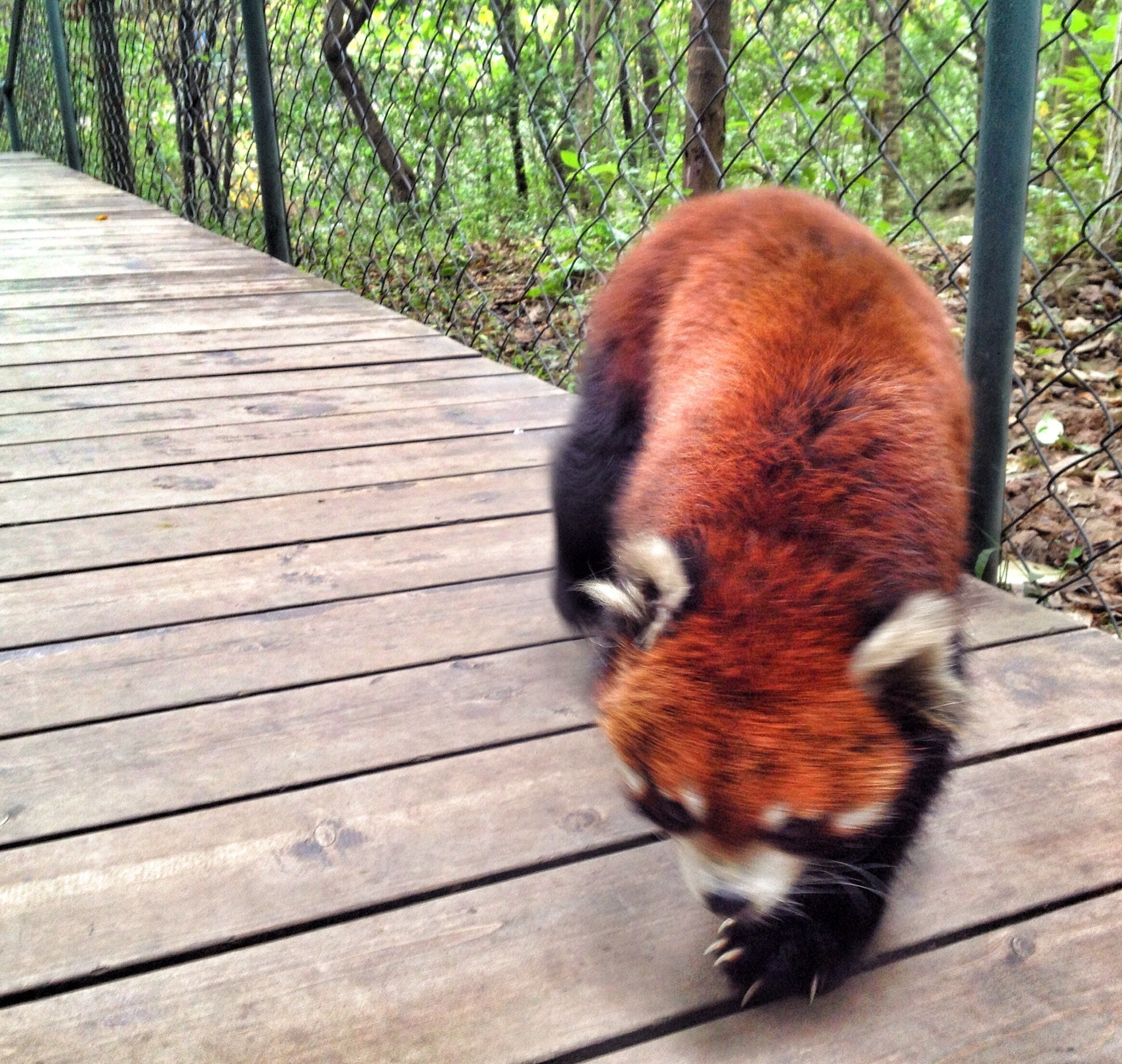
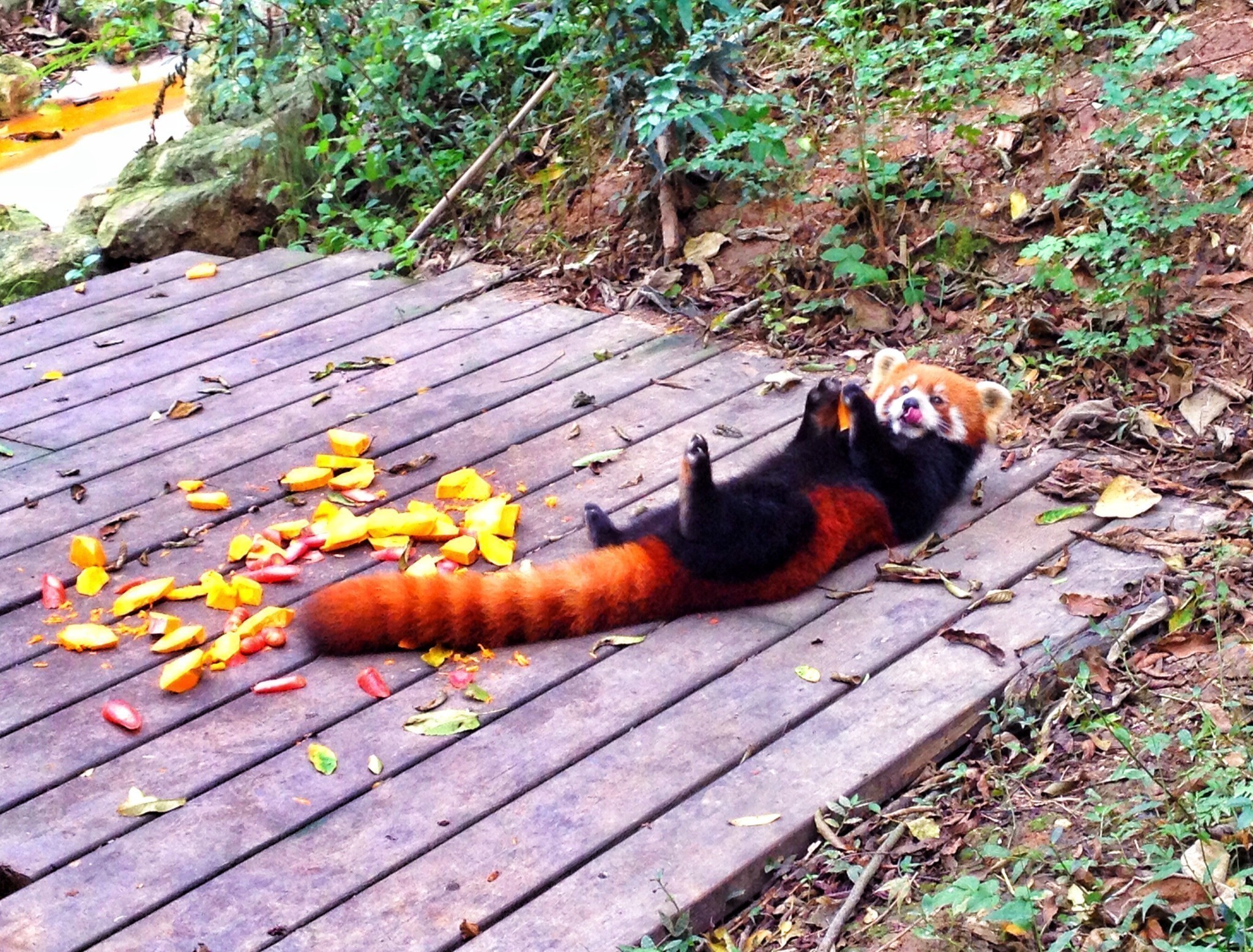
Thinking it couldn’t get any better than that, I was wrong. The red panda nursery as it is labeled is not a nursery in the sense that I think (that or I missed that part). It’s a habitat where the red pandas wander freely through the enclosures, along the sidewalks with you, and into the trees overhead. I stepped foot in and saw a little guy scurrying away down the path ahead of me.
The fences actually have giant holes built into them so the red pandas can wander freely! As I walked further, two red pandas came along and walked within a few inches of me, no worries, it’s on video too. (Told you I geeked out!)
I was astounded at how freely they let the red pandas wander and honestly how much they trust people to not harass them. It creates an awesome experience. Also, they’re pretty darn cute!
Admire the Giant Pandas
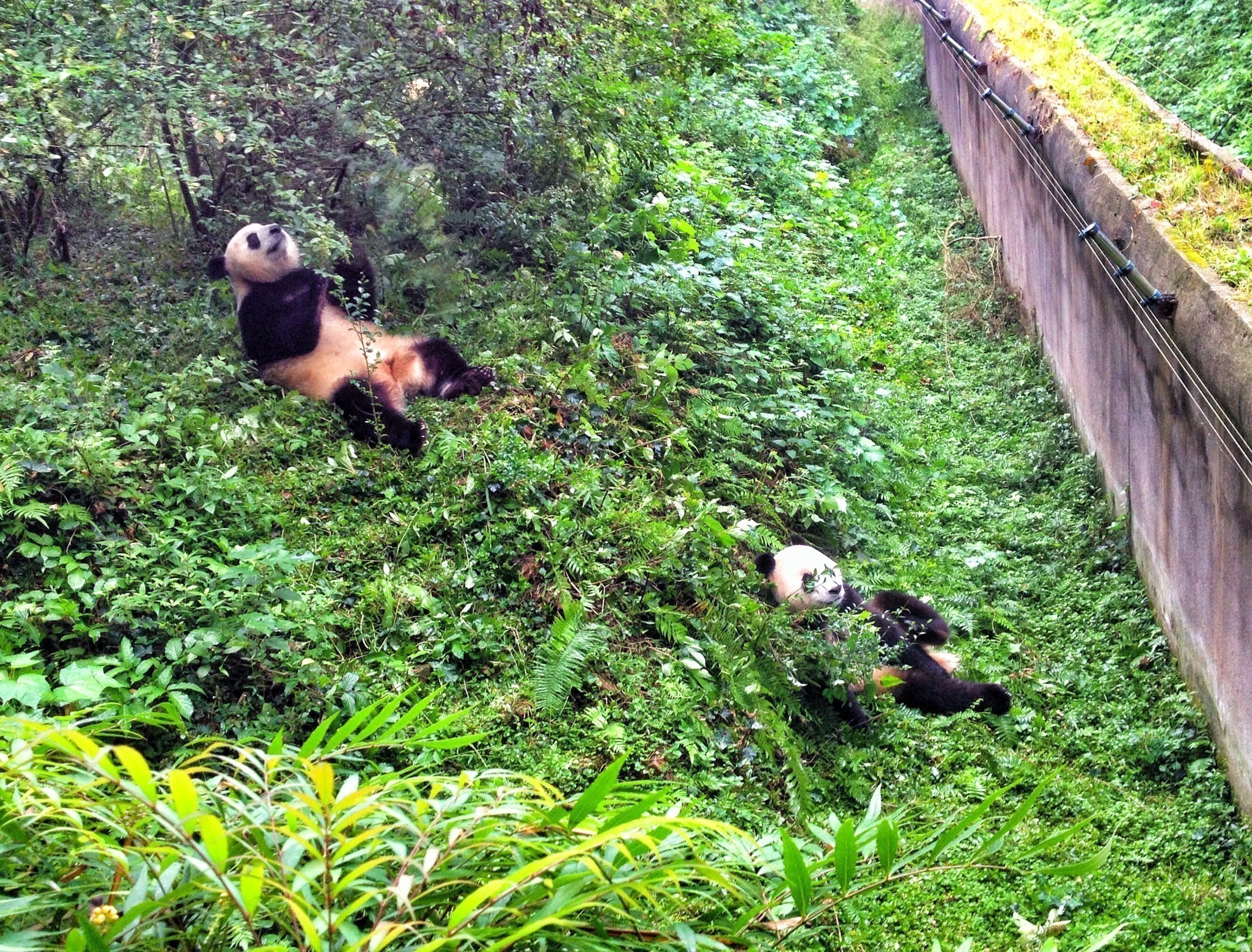
The giant pandas sadly are out of reach from people, but have excellent viewing as there’s a fence with a ditch on the other side and then the pandas. Sometimes the pandas even wander into the ditches making them quite close to you.
The only part of the park that irked me is they have quiet signs everywhere and people were literally screaming. In other words, human error, nothing to do with the park. The park is awesome.
It is breeding these adorable giant pandas hopefully away from the endangered level. Other than taking in all the cute I could handle for one day, I also learned a few things, like I could be friends with the pandas as we both eat 16 hours per day.
Anyway, if you are ever near Chengdu, visiting the giant pandas is a must. They’re worth it. And if I can’t convince you, maybe they can:
When to Visit the Giant Panda Sanctuary
The best time to visit the Giant Panda Research Base in Chengdu is during the cooler months of spring (March to May) and autumn (September to November). During these times, the weather is more pleasant, and the pandas are generally more active and playful.
Additionally, this is when temperatures are moderate, making it comfortable to explore the park without the extreme heat or cold of summer and winter.
To avoid the crowds, try not to visit during peak tourist seasons and holidays. If possible, you’ll also want to visit during weekdays or earlier in the day. Larger crowds and tourist groups tend to arrive later in the day.
If you’re interested in seeing baby pandas, the months of August and September are the best time to go see the giant pandas. This is typically when newborn pandas are more visible to the public.