21 Things to Know about Driving in Iceland + Driving Tips
Exploring Iceland is best done by car or camper van to ensure you have full flexibility to get out and discover the beautiful countryside. As with any country, if you are driving in Iceland, you need to be aware of the road rules in Iceland. This will not only keep you safe on the road but also out of legal trouble.
Let’s dive into the things you need to know about driving in Iceland, from the basics to the more fun and wacky things to know about Icelandic roads and laws.
Disclosure: Some of the links below may be affiliate links. At no additional cost to you, I may earn a small commission if you make a purchase.
Basics of Driving in Iceland
Driving around Iceland is pretty easy, but there are a few basics that you need to know to stay safe and free from expensive fines for driving violations.
Here are the top things to be aware of before you jump behind the wheel in Iceland!
1. Drive on the Right Side of the Road in Iceland
In Iceland, drive on the right side of the road and overtake on the left – just like in the United States. Additionally, the cars’ steering wheels are also on the left hand side, like the US.
2. Take Your Drivers License
To legally drive in Iceland, you just need a valid drivers license from your country. This means you will not need an International Drivers License to rent a car in Iceland.
3. Make Sure You’re Old Enough to Rent a Car in Iceland
To drive in Iceland, you just need to be 17 with a license. However, to rent a vehicle in Iceland, you will need to be over 21 years of age and typically have held your license for a full year. Meanwhile, renting a 4×4 vehicle in Iceland requires you to be 23 years old. Some car rental companies in Iceland also will charge extra for drivers under 25.
4. Follow the Speed Limits
Speed limits in Iceland are typically on the slow side and are marked in km/hr. They are also closely monitored by speed cameras so pay close attention to your speed. Fortunately, they are frequently posted and easy to find, but in general the speed limits are:
- 30-50 km/hour in cities or densely populated areas
- 80 km/hour on gravel roads in rural areas
- 90 km/hour on highways or paved roads in rural area
Additionally, vehicles pulling a trailer are not allowed to go faster than 80 km/h. If the trailer weighs over 750kg and does not have breaks, the speed limit for the vehicle and its trailer is only 60km/hr.
5. Buckle Your Seatbelt
In Iceland, you are required by law to wear a seatbelt. This applies to the driver and all passengers in the vehicle. Smaller children and babies must use a car-safety seat. Find full details on car seats for children in Iceland here.
6. Turn on Your Headlights
Another law in Iceland is to have your car headlights switched on at all times. This includes both day and night.
7. Check the Weather & Road Conditions
Iceland is known for its unpredictable weather, particularly in winter. Always make sure to check the weather and road conditions before setting off – particularly in winter!
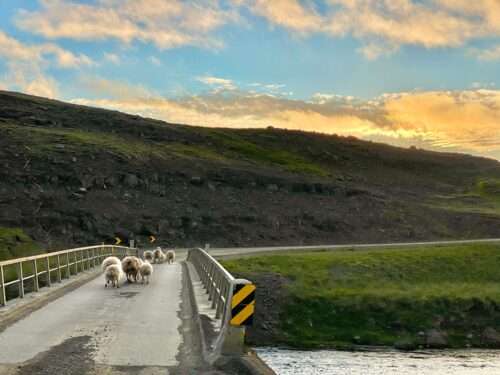
8. Watch Out for Sheep in the Road
Yes, sheep get their own special call out for driving in Iceland. This is because sheep wander freely around the country and often times can be found in the roadway. Be alert. Do not hit a sheep! If so, you are required to report it to the police and your rental car insurance will typically not cover it.
9. Stay on the Appropriate Roads
There are a couple of things to note about where you can drive in Iceland. If you do not have 4×4, it is illegal to drive on F-roads. Additionally, it is illegal to off-road in Iceland. Stay on the roads that your vehicle is permitted for.
10. Don’t Use Your Cell Phone
Using a cell phone while driving in Iceland is prohibited except for hands-free devices. Referred to as “phone driving” in Iceland, this offense is taken pretty seriously with a fine that increased by 800% in 2018 after the number of incidents continued to climb. This includes texting, browsing or talking on your phone without a hands-free device.
11. Don’t Drink and Drive
Driving under the influence in Iceland is taken very seriously. Do not do it. While the legal limit for drinking and driving is technically 0.05%, it is socially forbidden to drive after having even one drink. Just a first offense can set you back 100,000+ ISK plus a four month license suspension. Do not get a DUI in Iceland.
Things to Know about the Roads in Iceland
Beyond knowing the driving laws of Iceland, you’ll also want to know what to expect of the roads in Iceland. From the Golden Circle to the Ring Road and even the Westfjords you’ll find different types of roads. Here are some of the most common things you’ll need to know about Iceland roads.
12. Icelandic Roads
The roads in Iceland vary. Some are freshly paved and a couple lanes wide, but most are a single lane each direction with a few potholes here and there and limited to no shoulder to pull onto if you have car trouble.
13. F-Roads in Iceland
F roads, named after fjall which means mountain in Icelandic, are just that – mountain roads. These typically are unpaved, gravel roads that are not well maintained. You may encounter steep inclines, gravel, sand, river crossings, or other challenges on F roads.
Because of their rough and unpredictable status, F roads in Iceland are limited to 4×4 vehicles. It is actually illegal to drive on them with 2-wheel drive cars, which means police can pull you over for it and rental companies will not insure you on them if you’re driving a 2WD vehicle.
14. Roundabouts in Iceland
As you drive around Iceland, you’ll encounter some two-lane roundabouts. Approach these carefully. In Iceland, traffic from the inner lane takes priority over traffic in the outer lane. Pay close attention when going through roundabouts as they are a common place for accidents to occur.
15. Toll Roads, Bridges, & Tunnels
There is actually only one toll road in Iceland, and it is the Vadlaheidar Tunnel up near Akureyri. The toll can be paid 24 hours before or after driving through the tunnel on the official website: tunnel.is.
After 24 hours, the invoice for the tunnel will be sent to the owner of the car if it has not been paid. The cost is reasonable with most vehicles costing 1,500 ISK or around $11 USD.
16. One Lane Bridges in Iceland
On many Icelandic roads, you’ll encounter one lane bridges. In general, the first one to arrive at the bridge has priority. That being said, pay close attention to traffic on the other side to ensure you both don’t try to cross at the same time.
17. Parking at Attractions
Many popular attractions in Iceland have paid parking lots. These lots typically are monitored by cameras that capture the license plates, so don’t try to skip out on paying!
In most cases, there are pay stations in the parking lot where you can pay with a credit card. In some cases you’ll receive a ticket to display in your car, in other cases you’ll just input your license plate number.
If you don’t want to pay for the parking lot, find somewhere else to park and walk to the attraction.
18. Parking in Reykjavik
There are a lot of parking options available in Reykjavik. Choose from parking garages, street parking, parking lots, and more!
In general, the cost of parking increases as you get closer to the center of the city. You’ll find parking zones tend to be labeled with P1, P2, P3, or P4. If you don’t see a P with a number on it, you are likely in a free parking area.
To pay for parking, visit the pay stations and input your license plate. Note that parking is free on Sundays in Reykjavik.

Additional Useful Information for Safe Driving in Iceland
By now, you should have a clear vision of what to expect when driving around Iceland, but there are a few more valuable driving tips for Iceland. Let’s take a look and get you on your way!
19. How to Find Your Way around Iceland
For directions in Iceland, you’ll need a map, preferably an online map. There are a few options to consider that will be easy to use when driving Iceland.
- Download offline maps before you go: I always use Maps.me, but I also downloaded Google maps as a back up. Both of these allowed me to turn on navigation in Iceland, even when out of cell range.
- Rent a GPS or WiFi device: Most car rentals give you the option to rent a way to navigate around the island. If you don’t have another plan in place, spend the money!
- Add Icelandic phone service: Connectivity in Iceland is surprisingly great. If you have phone access, you can map yourself over your phone service 9 times out of 10.
20. Gas Stations in Iceland
Gas stations are readily available throughout most of the country, but in more remote parts you’ll want to fill up more often to avoid the chance of running out of gas! Popular gas stations to keep your eyes open for include: N1, Olis, OB, and Orkan.
A few important things to note:
- Gas is priced in liters and prices don’t vary too much throughout the country.
- You’ll need a debit card or credit card with a PIN number to pay at the the pump in Iceland. Many of our US credit cards were denied due to the PIN number requirements!
- Some gas pumps are free standing while others have shops attached. If there is a shop, you can usually find a bathroom in there! (This is especially valuable if you are camper vanning around Iceland!)
- Read the handles of the gas pump to ensure you are getting diesel or gas. The colors of the handles are not consistent with other countries which could mess you up! Know what your vehicle needs and verify you’ve chosen the correct one before starting to pump!
21. Important Iceland Driving Resources
There are a number of useful websites and resources to help you travel safely in Iceland. Save these to your phone or travel plans to keep them handy.
- en.vendur.is: Weather forecast in Iceland
- umferdin.is: Road conditions in Iceland
- safetravel.is: Road safety in Iceland
- Volcanoweather.is: Volcano area conditions
- Tjalda.is: Campsites in Iceland
- Tunnel.is: Tunnel toll in Akureyri
- Parka.is: Parking and Campsites bookings
- 112: Emergency telephone number in Iceland (similar to 911 in the US)
How to Handle a Car Accident in Iceland
Hopefully you will not need this, but if you do have a traffic accident in Iceland, remain calm and follow these easy steps.
1. Find a Safe Place to Handle the Accident
Depending on the severity of the incident, you will need to ensure you are safe and able to make a few phone calls from your current location.
This means determining if anyone is injured and moving everyone to safety. If someone is severely injured do not move them. Then, clear debris and obstructions from the roadway, if possible, including moving vehicles to the side of the road and turning on hazard lights.
2. Report the Incident to the Authorities
Call the emergency phone number in Iceland, 112, to report the car accident. This number should work from any phone, whether it be a land line, cellphone, pay phone, SMS, etc.
The 112 operator will need to know if anyone is injured, and they will then be able to help identify where you are, what to do, when to expect help, etc. If they need to send someone to help you, it is possible that they will provide a payment link for you to connect to upfront.
Fun Fact: In Iceland, they have a remarkable network for car tracking where you can give them the license plate and they will be able to tell you where you rented the car and pull additional needed information making the process simple.
3. Exchange Details with Other Drivers
If other cars were involved in the accident, exchange details with them drivers, including contact details, driving license number, and insurance details.
Additionally, take a few pictures at the scene of the accident in case they are needed at a later date.
4. Call Your Rental Car Company
Once you have connected with the authorities and dealt with the other drivers, make sure to contact your rental car company to let them know about the accident.
They should have provided you a 24/7 emergency number at the time of rental and will be able to help advise you on what to do next. This could include towing, repairs, or even needing a replacement vehicle.
Continue Planning Your Iceland Adventure
Driving in Iceland is simple and necessary to get to some of the best attractions. Just follow the above Icelandic driving laws and road rules and you’ll be well on your way to one of the best trips of your life!
Want to make the most of it? Rent a camper van to explore Iceland!
If after reviewing these rules you’re worried about renting a car and self-driving, there are plenty of tours and day trip options available to still enjoy Iceland to the fullest. You won’t want to miss:
- Visiting the Blue Lagoon – one of the most popular activities in Iceland
- Exploring the Golden Circle – the nearest natural wonders to Reykjavik
- Snorkeling between Continents – a once in a lifetime opportunity
- Going Whale Watching – making the most of your northern location
- Seeing the Snæfellsnes Peninsula – an easy excursion from Reykjavik
- Hiking on a Glacier – the ultimate Iceland experience
Continue planning your Iceland adventure with these helpful posts.
- 15 Best Things to Do in Iceland: Essential Icelandic Experiences
- Renting a Camper Van in Iceland: All the Need to Know Facts
- 21 Things to Know about Driving in Iceland + Driving Tips
- The True Cost of a Trip to Iceland: A Budget Breakdown
Like this post? Pin it.