14 Tips for Staying Healthy Trekking in Nepal
Having just come back from my second 10+ day trek in Nepal, I want to share some critical health and safety tips for trekking in Nepal for those looking to do so in the future. After all, nothing ruins a trek like coming down ill in the middle of it – especially if that means being heli-flighted out.
While some of these tips for staying healthy in Nepal may seem like common sense, there are others that even frequent hikers or travelers might miss. Trust me – I’ve seen it. I’ve even had my roommate on my first trek heli-evacuated out of the mountains with dysentery. (No – it’s not only a disease from the Oregon Trail computer game.)
So how do you stay healthy trekking in Nepal so that you can enjoy the breathtaking views and create unforgettable memories? Here’s my firsthand insights into where trekkers go wrong and how to protect yourself against common health challenges on the trail.
Disclosure: Some of the links below may be affiliate links. At no additional cost to you, I may earn a small commission if you make a purchase.
1. Bring Soap or Hand Sanitizer
Depending where you’re hiking and what time of year you’re hiking, access to running water can be scarce, especially in remote, high altitude, or extremely cold areas where the pipes freeze. Even if you have running water, soap can be a novelty. Don’t leave it to chance. Bring your own soap. Proper hand hygiene is one of the fastest ways to prevent gastrointestinal illnesses or infections like pink eye.
For instances where running water and soap aren’t available, pack hand sanitizer also. It’s a fast and reliable way to keep your hands clean and ready. Make sure to use it frequently, especially before meals and after using the restroom. You can bet those outhouse door handles are not regularly sanitized. (Yuck.)
2. Pack Toilet Paper and Learn to Use a Squatty Potty
Toilet paper is generally unavailable on the trail and in tea houses, so carry your own supply at all times. It’s a must. If you’re lucky, you might find shops or tea houses selling toilet paper along the way, like in Namche Bazaar (Everest Base Camp Trek) and Manang (Annapurna Circuit Trek). Otherwise, it’s up to you to come prepared.
Additionally, public restrooms in Nepal typically feature squat toilets rather than Western toilets. If you’ve never encountered such a toilet, familiarize yourself with their use ahead of time. I found these were also common in tea houses in remote areas and other times the Western toilets were not things you would even remotely consider touching. Think old school “outhouse” to mentally prepare yourself.
Good news: If you’re trekking one of the more popular treks, like the Annapurna Circuit, you’re more likely to encounter Western toilets at tea houses. If you’re fancy, you might even stay in a tea house where you have a bathroom attached to your room. These could have a toilet, running water, or even a solar powered shower. However, these still won’t have toilet paper. Pack it.
3. Sanitize Your Drinking Water
Water sources in Nepal, even those that appear clean, can contain bacteria or parasites that lead to illness – particularly for foreigners. Once again, your health while trekking in Nepal is your first priority. Take a LifeStraw water bottle or Aquatabs to purify water. These will make it safe to drink. Do not leave it to chance. Waterborne illnesses are no joke. Spoken as someone who got duped by bad water in Colombia. Ugh.
Not only is clean water important for avoiding illness, but you also need to stay hydrated to help combat Acute Mountain Sickness (AMS), also known as altitude sickness.
4. Cover Your Pillow
Trekking lodges, also known as tea houses, often don’t wash pillowcases or bedding between trekkers. Before you instinctively react to this, remember that these tea houses are often in remote areas with limited resources. That combined with the fact most trekkers pass through for only one night makes it challenging for the tea houses to keep up with.
To avoid exposure to dirt, bacteria, or whatever the people before you might have had, pack a lightweight pillow case or use a clean piece of clothing over your pillow. It will help ensure you don’t pick up any unwanted gifts while you sleep.
5. Keep Your Stomach Happy: Avoid Meat
Meat freshness, storage, and refrigeration can be unreliable in remote areas and at high altitudes where power outages are common. This increases the risk of foodborne illness. Additionally, digesting meat is more challenging for your body at altitude.
To avoid stomach issues while trekking in Nepal, stick to vegetarian options when trekking in high altitudes. This will minimize digestive issues and avoid food poisoning from meat that wasn’t kept quite up to your body’s standards.
While this might seem like a challenge, there are a lot of vegetarian meals on the menu. We’re talking omelets, pancakes, pizzas, momos (which are basically dumpings), pastas, dal bhat, and more! You won’t go hungry, but you may carb load.
6. Boost Your Health with Vitamin C
Another simple way to keep your immune system strong is by packing vitamin C supplements like Emergen-C. These can be easily dissolved in water to provide a daily immune boost while helping maintain hydration.
Besides, the flavor added to the water is welcome in my point of view. It makes it easier to meet my hydration needs.
7. Recover Quickly with Electrolytes
As we’ve discussed staying hydrated while hiking in Nepal is vital, but you’ll also need electrolytes to replace what you sweat out during long treks. I personally have packed Nuun tablets, but there are plenty of electrolyte solutions out there to help your body recover quickly and reduce the risk of dehydration.
While I wouldn’t say it is critical to your hike’s success in any case, it certainly doesn’t hurt. We’re talking about hedging your bets for a safe and healthy hike in Nepal. After all, 10+ days in the mountains with strenuous activity every day can push your body to the limit. Push back. Give yourself what you need to be strong and healthy until the very last day.
8. Pack Compression Socks for Faster Recovery
Trekking will also take a toll on your legs and feet. We’re talking days of uphill climbs with minimal, if any, rest days in between. Compression socks can improve blood circulation and help reduce swelling and fatigue after long days on the trail. Consider wearing them during or after trekking to speed up recovery. Using them as sleep socks can work wonders as well.
9. Power Up with Snacks for Long Days
You will not go hungry while trekking in the Himalayas. The tea houses have extensive menus with mostly affordable prices. However, there are days where you will go a long time between meals. For these days, I highly recommend packing nutrient-rich snacks like nuts, dried fruit, and protein bars.
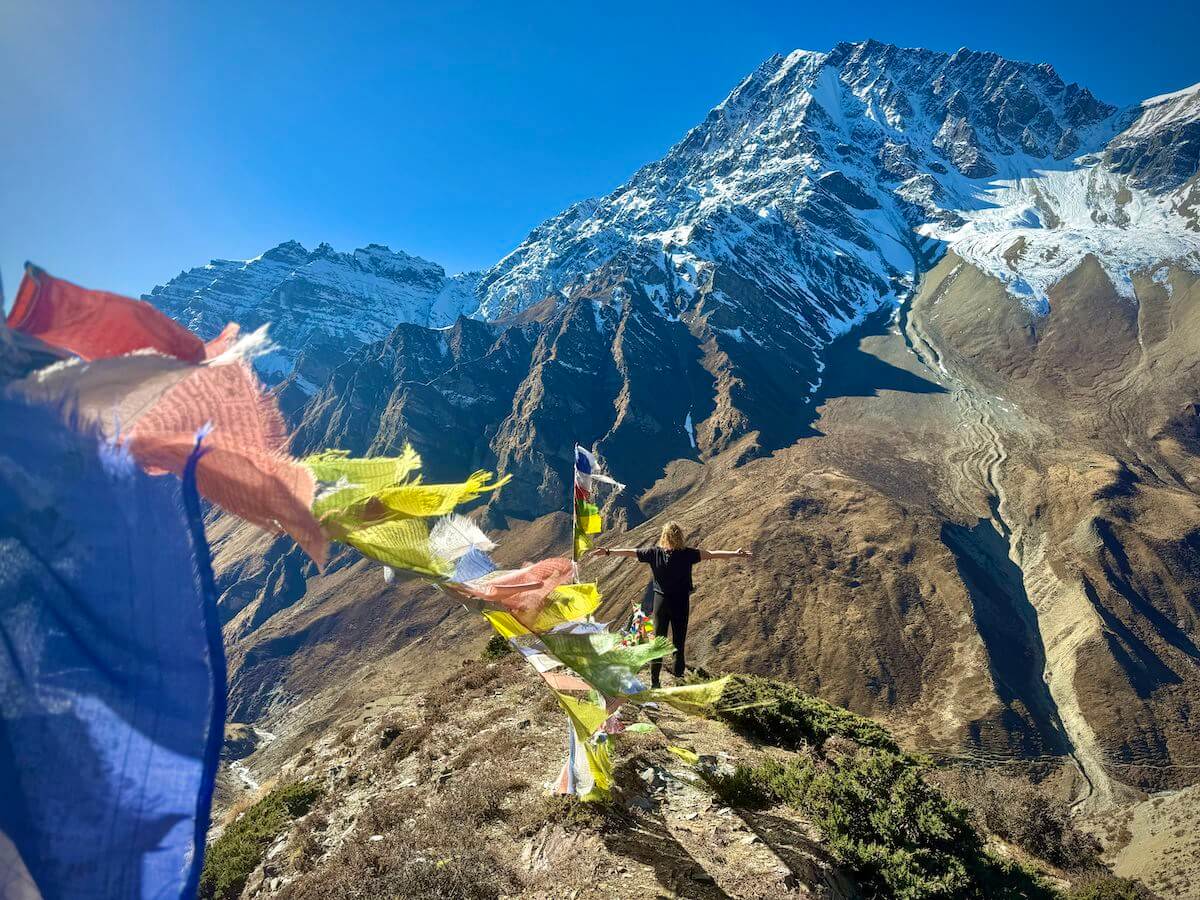
My last hike we set out at 6am to cross over Kang La Pass at 5,320 meters (17,454 feet) and didn’t arrive into town for “lunch” until 4pm. I’m talking nonstop hiking with no chance to eat a meal for 10 hours. I’m not that strong, and energy levels drop quickly when crossing high-altitude mountain passes. Pop a few snacks in your bag. They’re worth the extra weight – I promise.
10. Avoid Altitude Sickness with Diamox
Altitude sickness is a common occurence in Nepal’s high altitudes. In fact, during my Mount Everest Base Camp Trek in 2016, I was shocked at how many people came down with altitude sickness. We’ll talk a bit more about this in another post, but if you’re worried about it, consider packing some Diamox. It’s a medication that can help reduce symptoms and acclimate more smoothly.
Fair warning: I am not a doctor. This is not me providing medical advice. You should talk to your doctor about Diamox, before taking it. Although be forewarned that they may not know much about it if you don’t live in a high altitude region.
If you are interested in using it, you can find it for cheap and without a prescription in Kathmandu and Pokhara as well as some bigger towns along your trek, like Namche Bazaar and Manang. Be aware of dosage guidelines and potential side effects… you may have tingly body parts or other fun effects.
11. Pack a Small First Aid Kit
If you’re trekking with a guide, which you really should for most treks in Nepal, they will/should have a first aid kit on them. However, you should also come prepared. Pack a basic first aid kit with essentials like band-aids, antiseptic wipes, and Imodium. It can make a significant difference if you encounter minor injuries or stomach issues.
You can buy a prepacked First Aid Kit, like this one, or you can create your own with just the few items you are most likely to use while hiking. I personally didn’t want to carry any excess weight so only took a few key items – all of which came in handy for me or someone else along the trail.
12. Prepare for Dry Skin
Ya’ll, if I were to tell you the frequent glacial cold water literally messed my hands up, it would be an understatement. They flat out hurt – for days! Between the cold water, high altitudes, and dry air you’re well on your way to dry, cracked, raw skin.
Bring chapstick and a small bottle of moisturizing lotion to prevent and relieve chapped lips and dry patches. I failed to bring lotion and almost cried with excitement when I was able to purchase some relief for my hands in Manang.
13. Protect Against the Sun
Did you know the sun’s rays are stronger at high altitudes? In fact, it’s estimated that UV radiation increases 4-5% with every 1,000 feet above sea level. If you’re hiking up to 17,000+ feet, you guessed it… you’ve increased your the risk of sunburn – and snow blindness. That’s right, the UV rays at altitude reflected off snow and ice can permanently damage your eyesight.
Don’t worry. There’s a simple fix. Pack – and apply – sunscreen regularly. Bring a hat – if that’s your thing. Wear UV-protective sunglasses to shield your eyes. It is not just for comfort, it’s literally for your health while trekking in Nepal.
14. Stay Away from Dangerous Animals
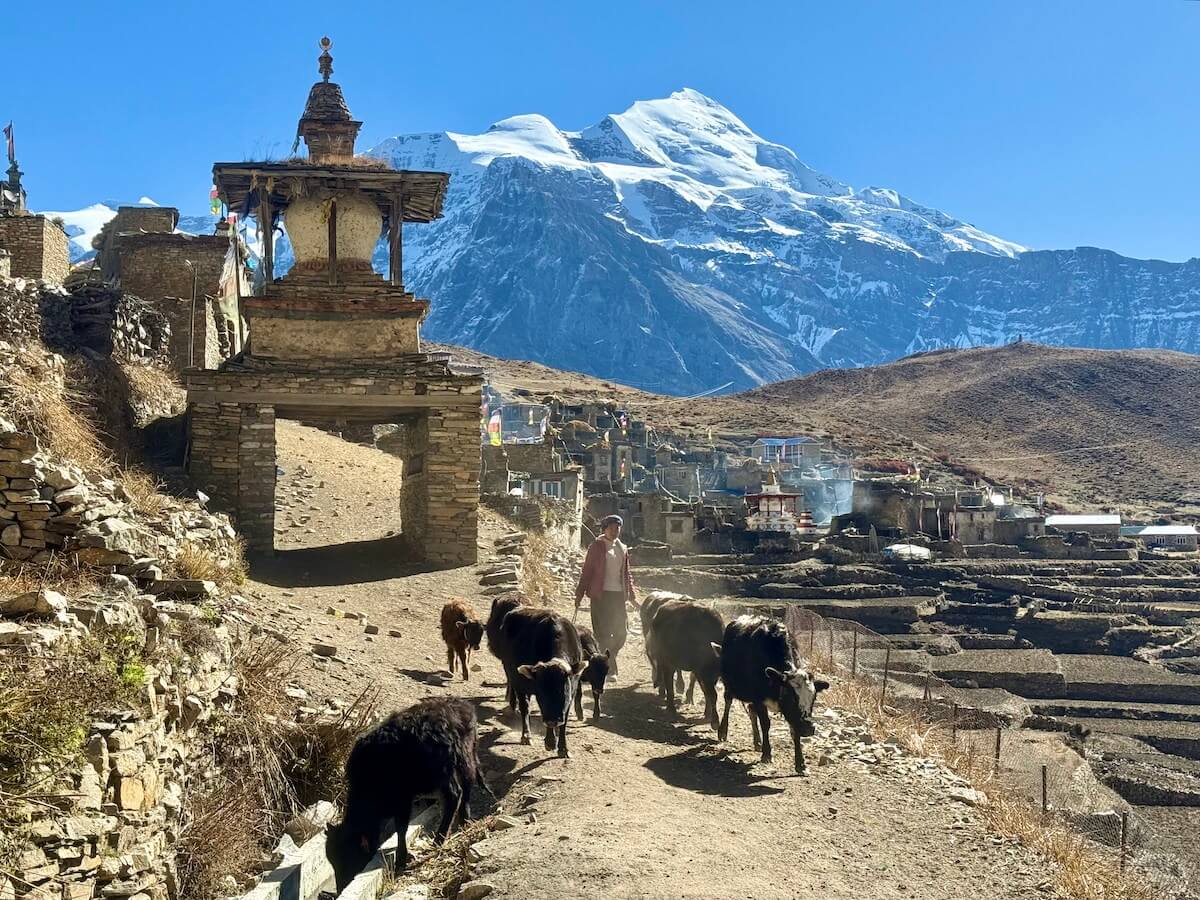
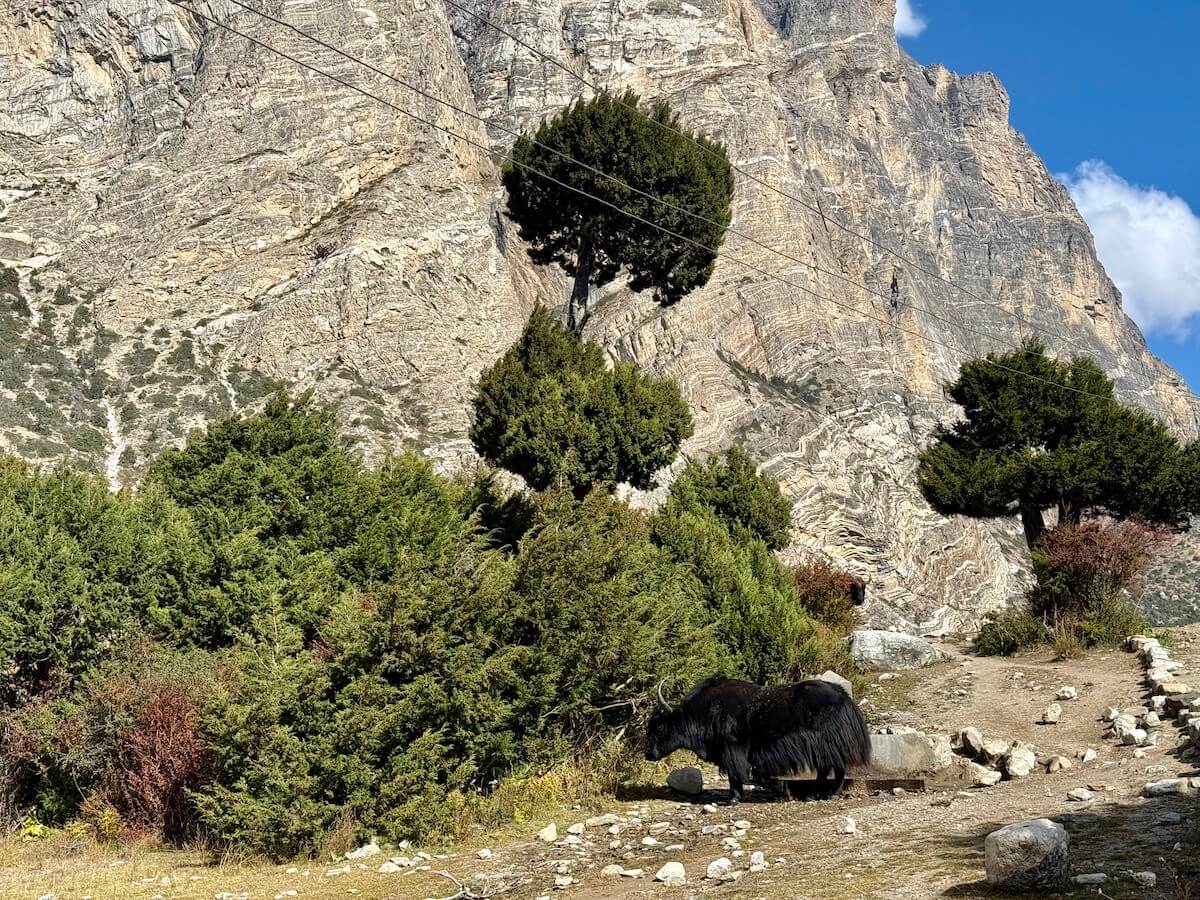
Yaks, cows with horns, and other animals can be territorial or aggressive – particularly in remote areas where they don’t encounter humans a lot. If you find them blocking your path, throw small rocks or make noise to encourage them to move safely away.
I literally was chased by a yak – yes, a “yak attack”, on the Nar Phu Valley trek. It was terrifying, but short lived thankfully, but our guide was shaking like a leaf for about five minutes afterwards as he almost lost one of his tourists. Yes – yaks are attracted to red and similar bright colors. Always give these animals plenty of space. That’s right, scratch selfies with unsupervised yaks off your Nepal to-do list.
Also, when passing any working animals on the trail (horses, cows, yaks, etc.) make sure you stand on the inside part of the trail – not on the edge looking down the mountainside. You don’t want to be pushed off by an animal. I’m actually serious about this. They at times will run into you and it can end with deadly consequences if you stand on the outer edge of the path.
Explore More of Nepal
Thinking of going trekking in Nepal? These health tips for Nepal trekking will make your journey more enjoyable, because lets be honest… trekking with a bad stomach or a need for a frequent bathroom break just isn’t going to cut it.
Want more insight into trekking in Nepal? Here are some other helpful posts about my firsthand experiences with long distance Nepal hiking. I’ve learned a lot and hope it helps you have a fun and successful trip to Nepal!
- The Essential Guide for Planning Your Mount Everest Base Camp Trek
- The Complete Packing List for Everest Base Camp
- Hiking to Mount Everest Base Camp: The Day by Day Breakdown
Like this post? Pin it.