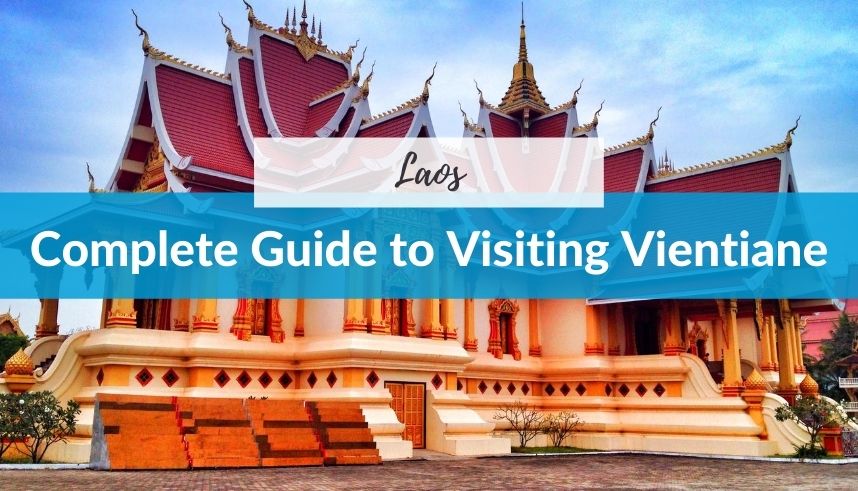
The Complete Guide to Visiting Vientiane, Laos
Learn about visiting one of the highlights of Southeast Asia, Vientiane, Laos.
Planning a trip to Laos will likely take you through the capital of Laos, Vientiane. While it may not be as charming as the better known Loatian cities of Vang Vieng and Luang Prabang, Vientiane offers a lot of interesting sights to visit over a couple of days.
In this guide, we’ll take a look at what you need to know when visiting Vientiane, Laos to make the most of a trip to this amazing capital city.
Disclosure: Some of the links below may be affiliate links. At no additional cost to you, I may earn a small commission if you make a purchase.
Introduction to Vientiane, Laos
Vientiane is the capital of Laos and is very different than other Laotian cities you may visit. For one, it is the largest city in Laos with a population of over 800,000, and it is far more developed than Luang Prabang and Vang Vieng.
For another, it lacks the same character, charm, and relaxing vibe of the other two cities. That being said, being a larger city, Vientiane offers better infrastructure including more international cuisine that you won’t find anywhere else in Laos.
Fast Facts about Vientiane
Vientiane is the capital and largest city of Laos, and it holds a unique blend of traditional and modern elements. Here are some core facts about Vientiane, Laos:
- Geography: Vientiane is located in the northern part of Laos, near the border with Thailand, along the Mekong River. It is the largest city in the country and serves as its economic, political, and cultural center.
- Language: The official language in Vientiane is Lao. Many residents also speak French and English, especially in the tourism and business sectors.
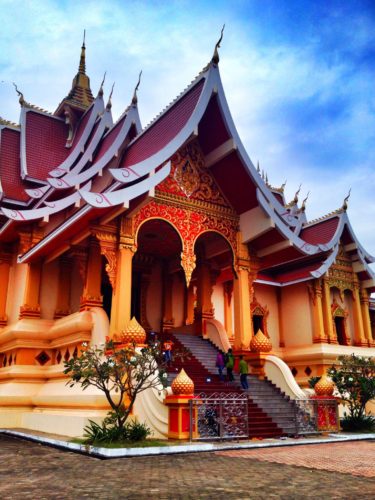
- Culture: Vientiane has a rich cultural heritage influenced by Buddhism. There are many Buddhist temples (wats) and monasteries throughout the city, including the famous Pha That Luang, a symbol of Laos.
- Economy: Vientiane’s economy is driven by government activities, trade, and tourism. Vientiane has seen significant economic growth in recent years, with new infrastructure and development projects.
- Transportation: Vientiane is well-connected by road, and it’s possible to travel to neighboring countries such as Thailand and Vietnam by land. Wattay International Airport serves as the main gateway for air travel.
- Tourism: Vientiane is a popular destination for visitors to Laos. The main sights in Vientiene are Buddhist temples, including the Pha That Luang, Patuxai Victory Monument, and Buddha Park.
- Cuisine: Lao cuisine is prevalent in Vientiane, and you can savor dishes like sticky rice, laap (a minced meat salad), and various noodle dishes. The city also has a range of international dining options.
- Currency: The currency used in Vientiane is the Lao Kip (LAK). Some businesses may accept Thai Baht or U.S. Dollars in tourist areas, but it’s advisable to have local currency for most transactions.
- Religion: Buddhism is the predominant religion in Vientiane, and you’ll find many temples and monks throughout the city. The city has a spiritual atmosphere, with monks often seen collecting alms in the mornings.
- Time Zone: Vientiane follows Indochina Time (ICT), which is UTC+7.
Where to Stay in Vientiane
Staying in the center of Vientiane is the best option as most of the main sights will be within walking distance. Here are some recommendations.
Budget-Friendly Hostels
There are a lot of options for amazing hostels in Vientaine. These low cost accommodation options offer you a bed in a shared room with a shared bathroom. If you’re trying to travel to Laos on a strict budget… this is the best option for you!
Here are some of the best hostels in Vientiane to check out:
- Lao Lao Cafe & Hostel
- Barn1920s Hostel
- Barn Laos Hostel
- SYRI Guesthouse Vientiane Hostel & Cafe
- Bed Terminal Hostel&Cafe
Best Budget Hotel in Vientiane: S 2 Modern Boutique Hotel
Located just a little further from the center of town compared to the others, S 2 Modern Boutique Hotel is a 20 minutes walk from the Laos National Museum. This slight difference in distance pays off by the low prices at this beautiful boutique hotel. Enjoy the outdoor pool and fitness center at your liesure.
Check rates for the S 2 Modern Boutique Hotel now.
Mid-Range Hotel in Vientiane: Salana Boutique Hotel
The Salana Boutique Hotel is centrally located in Vientiane and offers a lot of top tier services at a reasonable cost. Enjoy welcome fruit and the on site restaurants or relax at the sky bar or in the Sarila Spa.
Check rates for the Salana Boutique Hotel now.
Luxury Hotel in Vientiane: Crowne Plaza Vientiane
Due to the reasonable costs in Laos, even luxury accommodation is decently affordable when visiting Vientiane. The Crowne Plaza Hotel in Vientiane offers all of the perks you would expect at a luxury hotel, from an outdoor infinity pool to a 24-hour fitness room. And, they have a spa on site.
Check rates for the Crowne Plaza Vientiane now.
Best 16 Things to Do in Vientiane
Visiting Vientiane for just a day or two will enable you to check out the main sights within the city.
1. Pha That Luang (Great Stupa)
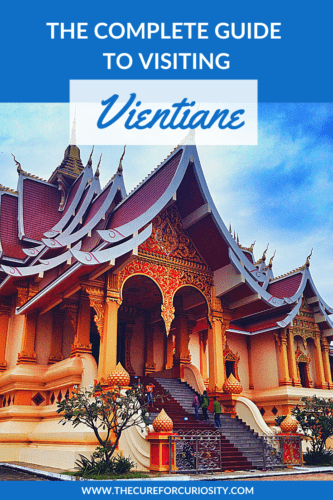
Known as a symbol of Laos and an icon of Buddhism in Laos, this giant golden stupa is a significant national monument. It offers multiple terraces which each represent a different level of Buddhist enlightenment, starting with the lowest level being the material world. Visiting Vientiane would not be complete with out stopping at Pha That Luang. Entrance fee: 5,000 kip.
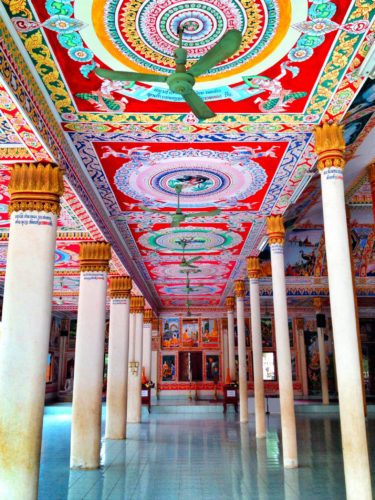
It is also surrounded by additional temples, including a huge sleeping Buddha and some with ornate painted ceilings. It helps make the two mile walk from town worthwhile.
2. Hor Pha Keo or Haw Phra Kaew
A Buddhist temple situated near the Presidential Palace, Har Pha Keo was built back in 1565 and is most famous for having been the home of the famous Emerald Buddha statue. While the statue was relocated to Thailand in 1779, to this day it is known as “Temple of the Emerald Buddha”. Entrance fee is 5,000 kip.
3. Victory Gate (Patuxai)
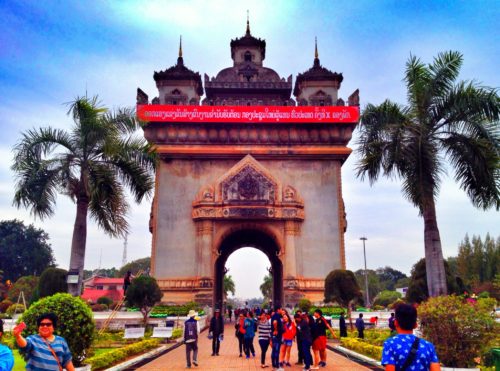
A giant concrete arch similar to the Arc de Triumph in Paris. This monument commemorates Laos gaining its independence from France and is dedicated to the Laotian soldiers who died in the battles for independence or during WWII. You can be climb to the seventh story for views of Vientiane. Entrance fee is 3,000 kip.
Fun Fact: It is sometimes referred to as a “vertical runway” as it was built using American money and materials meant for a new airport.
4. Wat Si Saket
Featuring 6,800 buddha images made from bronze, stone, and wood, Wat Si Saket is an old Buddhist monastery in Vientiane. It’s most famous for being the only surviving temple from the invasion of Siam back in 1828.
If you visit the temple in the early morning you can take part in the colorful Buddhist services. Entrance fee: 5,000 kip.
5. COPE Museum (Cooperative Orthotics and Prosthetics Enterprise)
Laos is one of the most heavily bombed countries in the world. At the COPE Museum you’ll learn about the dark history of the Laos Civil War and the 260 million bombs that dropped on Laos between 1964-1973.
You’ll also learn about the devices that failed to explode correctly and are still an ongoing problem in Laos. COPE also helps rehabilitate those whose lives have been affected by bombs and grenades. No entrance fee.
6. Night Market
Situated in the park along the river, the Vientiane Night Market offers a range of items for sale in the evenings. It normally gets started around sunset and remains open until 9:30pm. You’ll find textiles, handicrafts, and accessories, as well as a wide range of traditional Laoatian foods.
7. Wat Si Muang
Named after a young pregnant Laotian woman who sacrificed herself to please the gods, Wat Si Muang is a popular temple in Vientiane. Often times there will be a steady stream of worshipers at this temple as people come here to pray for good luck. Entrance fee: 3,000 kip.
8. Xieng Khuan or Buddha Park
15 miles (24 km) from Vientiane you’ll find Xieng Khuan, or Buddha Park. Designed back in 1958 by a monk who was interested in both Hindu and Buddhist sculptures, this park features over 200 statues, including a 130+ foot (40 m) tall statue of a reclining Buddha. Entrance fee: 15,000 kip.
9. National Ethnic Cultural Park
On the way to the Buddha Park, you will pass the National Ethnic Cultural Park located just outside of Vientiane. It features traditional houses that represent all of the different ethnic groups in Laos as well as other forms of entertainment. Entrance is free. Pools have a fee to use them.
10. Lao National Museum
Learn about the culture and history of Laos through artifacts like paintings, dinosaur bones, sculptures, and ancient pottery fragments at the National Museum. Entrance fee is 10,000 kip.
11. Lao Textile Museum
Laos is well known for silk woven products. Visit the Lao Textile Museum to learn more about these products and the artistic talent that is needed to create these stunning fabrics. Entrance fee: 30.000 kip.
Visit the official Lao Textile Museum website for more information.
12. Chao Anouvong Park and Statue
The Chao Anouvong Statue overlooks the river and is worth a look as you stroll down the riverfront. Chao led the Lao rebellion from 1826-1828 and was the last monarch of the Kingdom of Vientiane. No entrance fee.
13. That Dam (Black Stupa)
That Dam is a large stupa said to be home of the seven-headed Naga serpent who protects the citizens of Vientiane. Once upon a time it was covered in gold but it was stolen by Thailand in the late 1820s during the Siamese-Laotian war. No entrance fee.
14. Taiat Sao Shopping Mall and Morning Market
If you haven’t fulfilled your shopping needs, head to Taiat Sao Shopping Mall for the Morning Market. The outdoor section offers narrow walkways lined with market style souvenir stalls while the mall spans over 5 floors.
15. National Cultural Hall
An attractive building featuring traditional Lao architecture, the National Cultural Hall offers classical performances and French films.
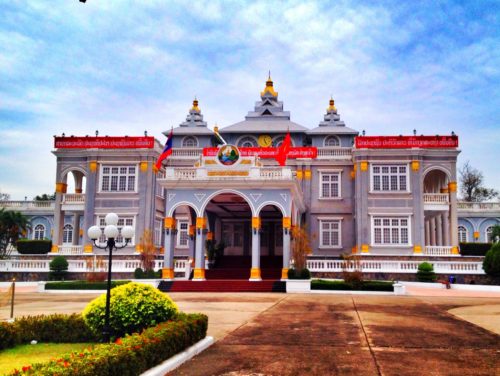
16. Presidential Palace (Hor Kham)
The Presedential Palace of Vientiane dates back to 1973 and serves as the royal residence for the Royal Lao government. Unfortunately, it is closed to the public, but it is worth gazing in at it from the street.
Best Organized Tours in Vientiane
If you don’t want to explore on your own, consider taking a tour when visiting Vientiane, Laos.
Best Time of Year to Visit Vientiane
The best time to visit Vientiane, Laos, largely depends on your weather and activity preferences. Vientiane experiences a tropical monsoon climate with distinct wet and dry seasons. I personally recommend avoiding monsoon season, but you’ll have to choose for yourself.
Here are some considerations for each season.
Cool and Dry Season (November to February)
Winter is typically considered the best time to visit Vientiane. The weather is cooler and more comfortable, with temperatures ranging from 59°F (15°C) to 86°F (30°C).
This is the peak tourist season in Vientiane, so expect higher prices and more crowded attractions. It’s also a great time for outdoor activities and sightseeing.
Hot and Dry Season (March to May)
During the spring, Vientiane temperatures can soar, often exceeding 95°F (35°C). It’s hot and dry, making it less comfortable for some travelers, especially if you’re not used to the heat. However, it’s still possible to visit, and hotel prices may be slightly lower than in the cool season.
Wet Season (June to October)
The wet season in Vientiane brings heavy rainfall, especially in July and August. While the city can be extremely green during this time, the rain can disrupt outdoor activities, and some roads may become impassable due to flooding.
This makes it the least desirable time to visit Vientiane. However, if you don’t mind the rain and want to experience Vientiane with fewer tourists and lower prices, this could be an option.
Getting In and Out of Vientiane
Depending which direction you are traveling through Laos, you may arrive at Vientiane from Vang Vieng or from Thailand or Vietnam. Below are some details on how to get to Vientiane from Vang Vieng and then onward to Bangkok, Thailand.
Getting to Vientiane from Vang Vieng
Vientiane is only 150km from Vang Vieng by road. Due to the road conditions, this will take about 4 hours by car or bus. Finding a bus is easy as there are buses, both mini buses and full sized buses, that go between the two cities at almost any hour of day.
Additionally, almost every hostel, guesthouse, travel agency, market, etc. is willing to sell you a ticket, but prices will vary. I recommend shopping around for the best ticket price.
I ended up purchasing my ticket at M Mart, one of the grocery stores in town, as it was 40,000 kip as compared to the 50,000/60,000 offers in most places. It’s a very simple process, pay for your ticket, receive a receipt and you’ll be picked up at your hostel or hotel.
It is likely that they will tell you it’s a 3 hour journey, but there is typically a 20 min stop in the middle, and really, everything in Laos takes longer than what is written down.
Kayaking to Vientiane from Vang Vieng
My original hope to get from Vang Vieng to Vientiane was to kayak there, as I had read that was an option. What could be more fun than kayaking from one city to another?!
My hopes were bashed as I asked around only to find this was discontinued due to a dam built on the river between the two cities – darn! (Or should I say damn?! Get it?) With that offer off the table buses are really the only way to get between Vang Vieng and Vientiane.
Getting from Vientiane to Bangkok
Flying to and from Laos is expensive! Because of this, many backpackers will cross back into Thailand or into Vietnam after visiting Vientiane. For me, this meant heading down to Bangkok to fly out to Taiwan. There are a few options to get from Vientiane to Bangkok.
Bus from Vientiane to Bangkok
The overnight bus from Vientiane to Bangkok is about 200,000 kip. It leaves at 6:00pm and arrives at 6:00am in Bangkok. The bus station is just a short tuk tuk ride away from the city center so I recommend leaving around 5:00pm to give yourself plenty of time.
At 6:00pm you’ll board the bus to Nong Khai in Thailand. It takes about half an hour to reach the Laos-Thailand border. At the border you’ll need to get off the bus to go through the departure immigration from Laos.
If you’re going through over the weekend, there may be a fee for “overtime”. It was 11,000 kip for me. Then you’ll reboard the bus and head to the Thai immigration checkpoint. Here you’ll need to get off the bus with all of your luggage and go through immigration. You’ll reboard the bus, again, and head on to the Nong Khai bus station. We arrived at 7:20pm.
From Nong Khai, the bus to Bangkok was set to depart at 8:20pm. I recommend spending your hour of time finding dinner at a nearby restaurant. (Pad Thai with a Polish traveler for me!) At 8:20pm board the overnight bus and take off to Bangkok!
The buses are pleasant with reclining chairs, blankets, water, juice, a snack, and a rather loud TV, which played Thai television shows throughout our journey. There was one stop in the middle of the night and then we arrived on time at 6:00am in Bangkok.
Train to Bangkok from Vientiane
There is also an option to take the train from Vientiane to Bangkok, but it is a bit more expensive, a bit longer, and supposedly arrives late more frequently. It leaves at 2:30pm and arrives at 6:00am.
Getting to the Don Muaeng Airport in Bangkok
If you’re headed to the Don Muaeng Airport, like me, I suggest you take a taxi from the bus station for the most direct route. If that does not appeal and you have the time, you can also take the bus (15 baht). It will take you to the Future Park Mall, which is about 6 miles past the airport.
From there, you’ll need to go over the bridge to the minibus area, and find the bus going to the airport (another 15 baht). The 2 bus route took about an hour and a half to get to the airport.
Continue Planning Your Trip to Laos
Visiting Vientiane, Laos, offers a culturally rich experience with Buddhist temples, traditional Laotian cuisine, and budget-friendly accommodations. This makes it a popular Southeast Asian destination and one that you should add to your itinerary.
If you’re visiting Vientiane as part of a bigger trip to Laos, check out these additional posts to continue planning your trip.
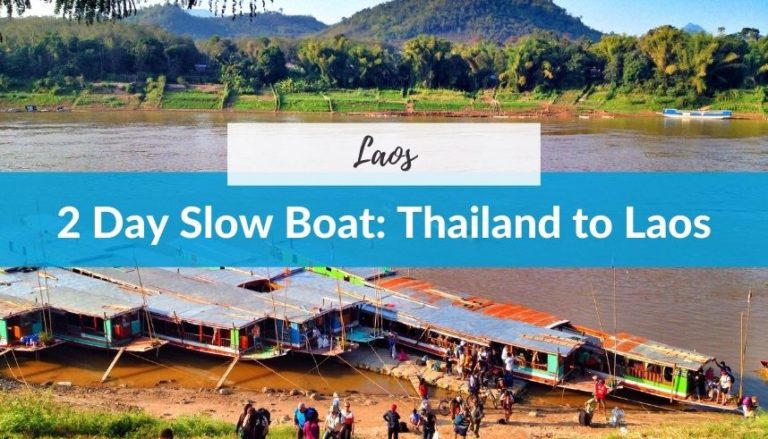
- 2 Day Slow Boat from Thailand to Laos
- Luang Prabang: UNESCO World Heritage City
- Vang Vieng: Tubing in Laos
Like this post? Pin it.