
Where is Qatar? Location, Maps, and Facts
When planning a trip to Qatar, one of the first things to know is its location. Understanding where Qatar is on the map will help you decide when to visit, what to pack, and what you can expect when you arrive.
We’ll explore Qatar’s geographic location and how it shapes the country’s climate, culture, and attractions. Plus, we’ll clear up some common misconceptions about Qatar, including what continent it’s on, whether it’s in the Middle East, and why this small country has become one of the most talked-about destinations in the world.
Disclosure: Some of the links below may be affiliate links. At no additional cost to you, I may earn a small commission if you make a purchase.
Qatar’s Location
Qatar is a small peninsula jutting northward into the Persian Gulf from the northeastern corner of the Arabian Peninsula. It sits at approximately 25.3548° N latitude and 51.1839° E longitude, situated between the larger nations of Saudi Arabia to the south and Bahrain to the northwest across the water.
Despite being one of the smallest countries in the world by land area, Qatar actually has significant to global influence, wealth, and name recognition. Its strategic location in the Gulf has made it a crossroads for trade, culture, and international affairs.
Where is Qatar on the map?
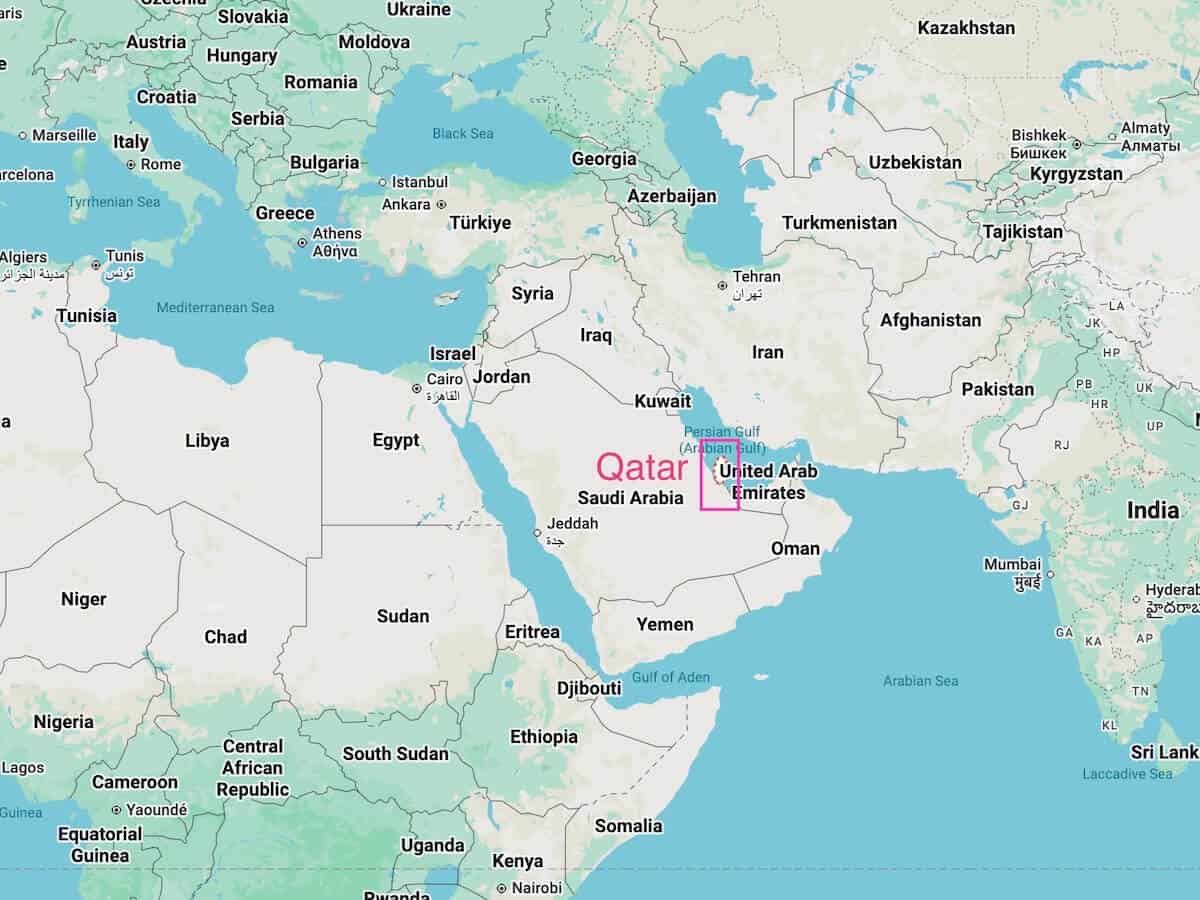
Qatar occupies a thumb-shaped peninsula on the western coast of the Persian Gulf. If you’ve ever struggled to find it on a map, you’re not alone. The country is small and doesn’t share land borders with many neighbors. It is bordered by Saudi Arabia to the south (its only land border) and is otherwise surrounded by the Persian Gulf.
Qatar’s coordinates place it squarely in the Arabian Peninsula, in a region most people know as the Middle East. Its capital city, Doha, sits along the eastern coast of the peninsula facing the Gulf.
Qatar’s coordinates: 25.3548° N, 51.1839° E
Interactive Map of Qatar
What countries are closest to Qatar?
Qatar’s nearest neighbors include:
- Saudi Arabia, whichshares Qatar’s only land border to the south
- Bahrain, an island nation located about 40 miles (65 kilometers) to the northwest, across the Gulf
- United Arab Emirates (UAE), approximately 100 miles (160 kilometers) to the southeast
- Iran, which sits across the Persian Gulf to the north, roughly 180 miles (290 kilometers) away
Qatar’s position in the Gulf makes it a natural hub for regional travel. Many visitors use Doha’s Hamad International Airport as a stopover on long-haul flights between Europe, Asia, and Africa. I know I’ve stopped there a couple of times!
Pro Tip: Qatar is a compact country, making it easy to explore in just a few days. However, if you want to combine it with other Gulf destinations like the UAE or Bahrain, set aside 7 to 10 days to do the region justice.
How big is Qatar?
Qatar covers approximately 4,473 square miles (11,586 square kilometers), making it slightly smaller than the state of Connecticut. The peninsula stretches about 100 miles (160 kilometers) from north to south and roughly 55 miles (90 kilometers) at its widest point east to west.
Don’t let the size fool you, though. Qatar has one of the highest GDPs per capita in the world at $76,688.70 according to the World Bank and has developed some of the most impressive infrastructure and architecture on the planet. Within that relatively small footprint, you’ll find giant skyscrapers, world-class museums, expansive deserts, and a coastline that stretches for miles.
Where is Doha, Qatar?
Doha (الدوحة in Arabic) is the capital and largest city of Qatar, and it’s where the vast majority of the country’s population lives and where most visitors spend their time. Doha is located on the eastern coast of the Qatar peninsula, directly facing the Persian Gulf.
The city’s coordinates are approximately 25.2854° N, 51.5310° E, placing it in the heart of the Arabian Gulf region. From a travel perspective, Doha is Qatar for most visitors. It’s home to the country’s main airport (Hamad International Airport), its iconic skyline, its top hotels and restaurants, and most of its major attractions.
Key Doha Landmarks and Neighborhoods
- The Corniche: A 4-mile waterfront promenade along the Gulf with stunning views of Doha’s skyline
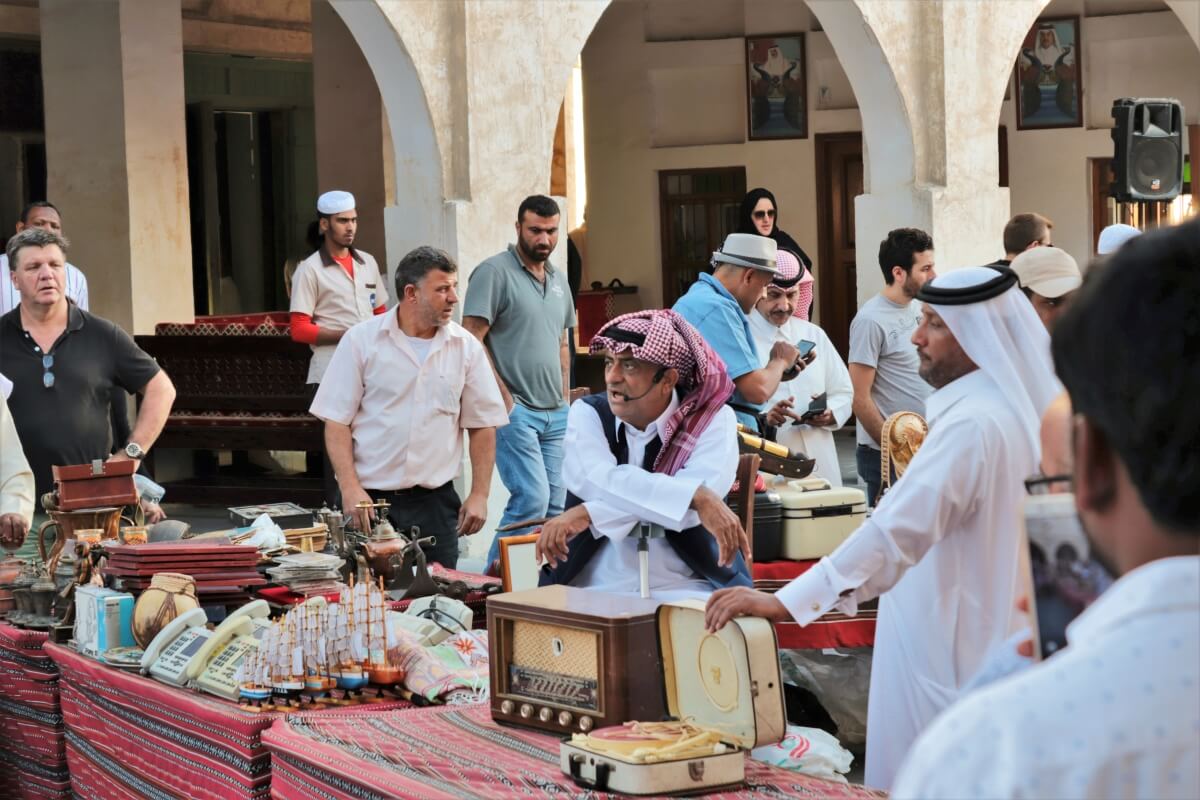
- Souq Waqif: A traditional market in the heart of the city where you can shop for spices, textiles, and falcons (yes, falcons)
- The Pearl-Qatar: An artificial island development packed with luxury apartments, restaurants, and yacht marinas
- Museum of Islamic Art: A world-renowned museum designed by I.M. Pei, housing one of the finest collections of Islamic art on earth
- West Bay: Doha’s central business district, recognizable by its dramatic cluster of futuristic skyscrapers
- Katara Cultural Village: A dedicated arts and culture hub hosting performances, galleries, and festivals year-round
Most of Doha is modern and newly built, which can surprise first-time visitors expecting something more ancient. The city that exists today was largely built within the last few decades, fueled by Qatar’s extraordinary oil and gas wealth.
What Continent is Qatar On?
Qatar is located on the continent of Asia. More specifically, it sits on the Arabian Peninsula in Southwest Asia, the far western tip of the Asian continent.
Travelers who love keeping track of their adventures by continent can count Qatar as a visit to Asia. It’s worth noting that while the Middle East is often spoken about as its own distinct region, it is not a separate continent. All of the countries commonly referred to as Middle Eastern are geographically part of Asia (or, in the case of Egypt, Africa).
So if you’re ticking continents off your list, a trip to Qatar absolutely counts as visiting Asia. And with Doha’s Hamad International Airport offering connections to virtually everywhere, Qatar makes an ideal first stop on an Asian adventure.
Is Qatar in the Middle East?
Yes, Qatar is in the Middle East. It is one of the Gulf Cooperation Council (GCC) nations, along with Saudi Arabia, the UAE, Bahrain, Kuwait, and Oman. They are all also widely recognized as core Middle Eastern countries.
What is the Middle East?
The term “Middle East” is a geographic and geopolitical designation, not an official continent or internationally standardized boundary. It generally refers to a region spanning from Egypt and Turkey in the west to Iran and sometimes Afghanistan in the east, encompassing the Arabian Peninsula and the lands around the eastern Mediterranean.
The phrase itself originated in Western usage in the early 20th century as a way to describe the region between Europe and the Far East (“the East”). It’s a somewhat imprecise term as different organizations and governments define its boundaries slightly differently, but it is widely used and understood around the world.
From a traveler’s perspective, the Middle East refers to a region with shared characteristics: predominantly Arab culture and language (with notable exceptions like Iran and Turkey), a majority-Muslim population, a history tied to ancient civilizations and trade routes, and in many countries, significant oil and gas wealth that has fueled rapid modernization.
What countries make up the Middle East?
While definitions vary, the Middle East is most commonly considered to include:
- Qatar
- Saudi Arabia
- United Arab Emirates (UAE)
- Bahrain
- Kuwait
- Oman
- Yemen
- Jordan
- Lebanon
- Syria
- Iraq
- Iran
- Israel and Palestine
- Egypt (sometimes included, sometimes categorized as North Africa)
- Turkey (sometimes included, sometimes categorized as part of Europe)
Qatar sits in the Gulf subregion of the Middle East, which is often called the “Gulf States” or the Arabian Gulf. This subregion is perhaps the wealthiest part of the Middle East, thanks to vast reserves of oil and natural gas.
How Qatar’s Location Affects Its Climate
Qatar’s location in the Arabian Gulf gives it one of the most extreme desert climates on the planet. Summers (June through September) are brutally hot and humid, with temperatures regularly exceeding 104°F (40°C) and sometimes reaching 113°F (45°C) or higher. The combination of heat and Gulf humidity can make being outdoors genuinely uncomfortable during these months.
The good news for travelers is that Qatar has a very pleasant winter season (November through March), with temperatures typically ranging from 59°F to 77°F (15°C to 25°C) with warm, sunny days that are great for exploring the city and the desert.
Best time to visit Qatar: November through March, when temperatures are mild and the city comes alive with outdoor events, festivals, and activities.
Qatar receives very little rainfall at only about 3 inches (75mm) per year, which is typical of desert climates. The landscape away from Doha is characterized by flat, sandy desert and low-lying salt flats known as sabkhas.
Planning Tip: If you’re visiting during Ramadan (which shifts each year based on the Islamic calendar), expect some restaurants to be closed during daylight hours and alcohol to be even more restricted than usual. That said, Ramadan in Qatar is a unique cultural experience that many travelers find fascinating.
Is Qatar a Country?
Yes, Qatar is an independent, sovereign country. It became fully independent in 1971 when it ended its treaty relationship with Britain. Today it is a member of the United Nations, the Arab League, the Gulf Cooperation Council, and numerous other international organizations.
Qatar is officially known as the State of Qatar (دولة قطر), and it is one of the wealthiest countries in the world by GDP per capita.
What type of government does Qatar have?
Qatar is an absolute monarchy, governed by the Al Thani royal family, which has ruled the country since the mid-19th century. The current ruler is Emir Sheikh Tamim bin Hamad Al Thani, who took power in 2013 when his father, Sheikh Hamad bin Khalifa Al Thani, voluntarily abdicated in his favor. This was an unusually peaceful transfer of power for the region.
The Emir holds executive, legislative, and judicial power. While Qatar does have an advisory council (the Shura Council), the country does not hold democratic elections for national leadership. Travelers should be aware of local laws, which reflect Islamic traditions and can differ significantly from those in Western countries.
What currency does Qatar use?
Qatar uses the Qatari Riyal (QAR), which is pegged to the US dollar at a fixed rate of approximately $1 USD = 3.64 QAR. This peg makes currency exchange predictable and easy to calculate. US dollars are not usually accepted at businesses, so it’s best to exchange currency or use an ATM upon arrival. Credit cards are widely accepted in hotels, restaurants, and malls throughout Doha.
What language is spoken in Qatar?
Arabic is the official language of Qatar, and it is the language used in government, education, and daily life for Qatari nationals. However, English is very widely spoken in Doha, particularly in hotels, restaurants, shopping malls, and tourist areas. Most signage in Doha appears in both Arabic and English.
It’s worth noting that the vast majority of Qatar’s population, roughly 85 to 90 percent, is made up of expatriate workers from South Asia, Southeast Asia, and other parts of the world. Languages like Hindi, Urdu, Tagalog, and Nepali are commonly heard throughout the country.
Why is Qatar Famous?
You may be wondering: why does such a small, sparsely populated country get so much global attention? There are several reasons Qatar has become one of the most recognizable names on the world stage.
1. Qatar and the 2022 FIFA World Cup
Qatar became the first Middle Eastern country to host the FIFA World Cup, doing so in November and December of 2022. The tournament was a monumental event that put Qatar on the global travel map and prompted the country to build a suite of stunning new stadiums, hotels, and infrastructure. Millions of visitors arrived, and the world got its first major look at what Qatar had to offer.
The 2022 World Cup was also historically unusual in that it was held in November and December rather than the summer months, specifically because of Qatar’s extreme summer heat. It was the most compact World Cup in history, with all venues within 30 miles of Doha.
2. Qatar Airways
Even if you’ve never been to Qatar, there’s a good chance you’ve flown Qatar Airways or at least seen it on a departures board. Qatar Airways is consistently ranked among the best airlines in the world and operates out of Hamad International Airport in Doha. The airline has made Doha one of the most important long-haul connection hubs in the world, funneling passengers between Europe, Asia, Africa, and beyond.
For many travelers, Qatar is the country where they’ve had their layover. The country has actively worked to turn that layover into a reason to stop and actually visit.
3. Natural Gas and Oil Wealth
Qatar sits atop the world’s largest natural gas field (shared with Iran), known as the North Dome on the Qatari side. This has made Qatar extraordinarily wealthy, funding the development of world-class infrastructure, arts institutions, sports facilities, and a standard of living that ranks among the highest on earth.
The country has invested its energy revenues into an ambitious vision of becoming a global hub for culture, education, and business.
4. Al Jazeera
Qatar is home to Al Jazeera, one of the world’s most widely watched international news networks. Launched in 1996 with funding from the Qatari government, Al Jazeera transformed media in the Arab world and quickly became a globally recognized news brand. Its headquarters in Doha have made Qatar an unexpected player in global media and information.
Is Qatar Safe to Visit?
Qatar is generally considered one of the safest countries in the world for travelers. Crime rates are extremely low, and Doha is a city where many visitors feel comfortable walking around at all hours. The government takes public safety very seriously.
That said, travelers should be aware of several things:
- Cultural norms: Qatar is a conservative Muslim country. Public displays of affection are frowned upon, and dress codes in public spaces (especially outside hotels and tourist areas) lean toward modest clothing. Revealing clothing, including shorts and sleeveless tops, may attract unwanted attention outside of resorts and malls.
- Alcohol: Alcohol is legal in Qatar but is only available at licensed hotels, restaurants, and one government-licensed liquor store for residents. You won’t find alcohol widely available the way it is in the UAE or Western countries.
- LGBTQ+ travelers: Same-sex relationships are illegal in Qatar under the country’s laws. LGBTQ+ travelers should exercise discretion and research the current situation carefully before visiting.
- Photography: Be mindful about photographing government buildings, military installations, or people (especially women) without permission.
None of this should deter you from visiting. In fact, millions of travelers visit Qatar each year without incident. But being aware of and respectful toward local laws and customs will make for a much smoother trip.
Explore More of Qatar
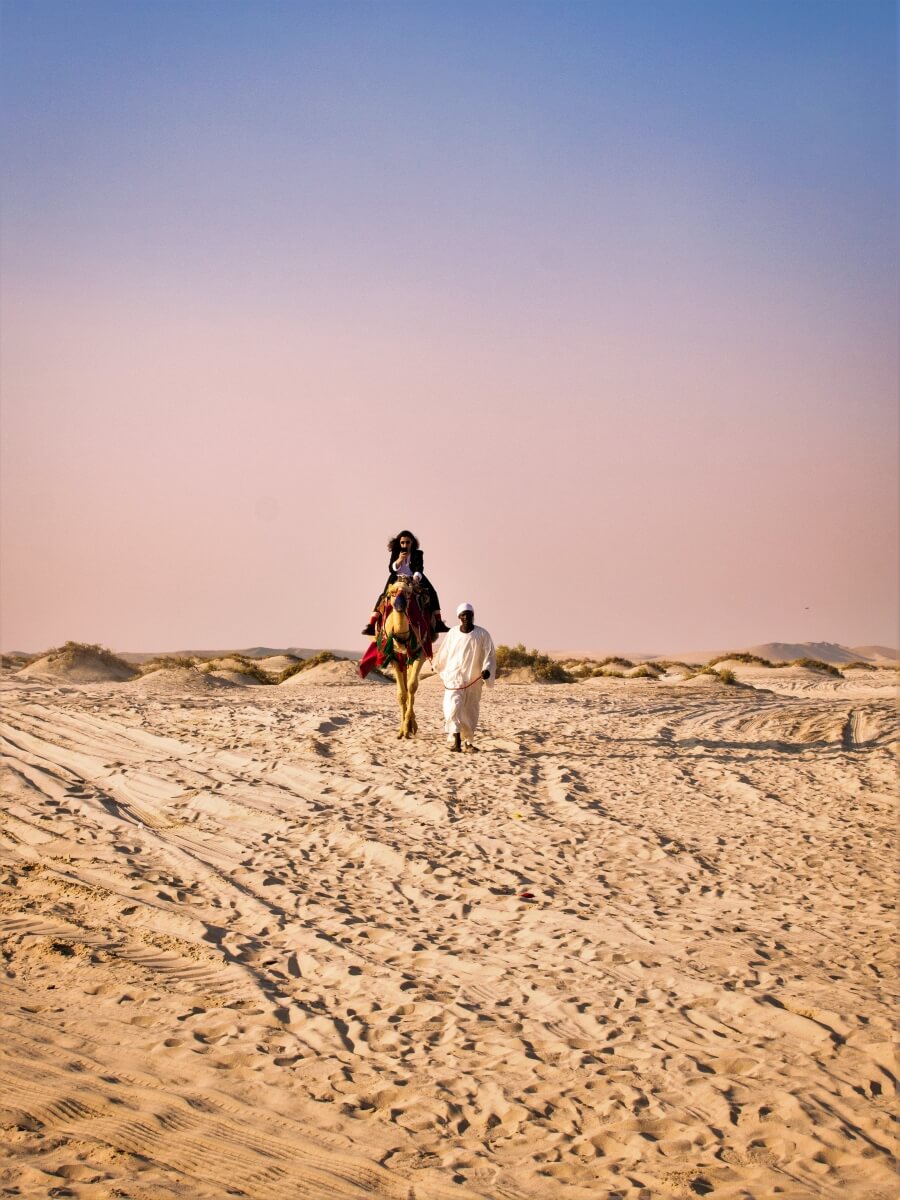
So, can you now answer where Qatar is? Qatar’s location at the heart of the Arabian Gulf makes it one of the most fascinating and unexpected destinations on the planet. Stop to marvel at the Doha skyline from the Corniche. Get lost in the narrow lanes of Souq Waqif. Head out into the desert for a sunset camel ride. Qatar offers experiences that are unlike anywhere else in the world.
Here are some additional resources to help you plan your trip to Qatar:


