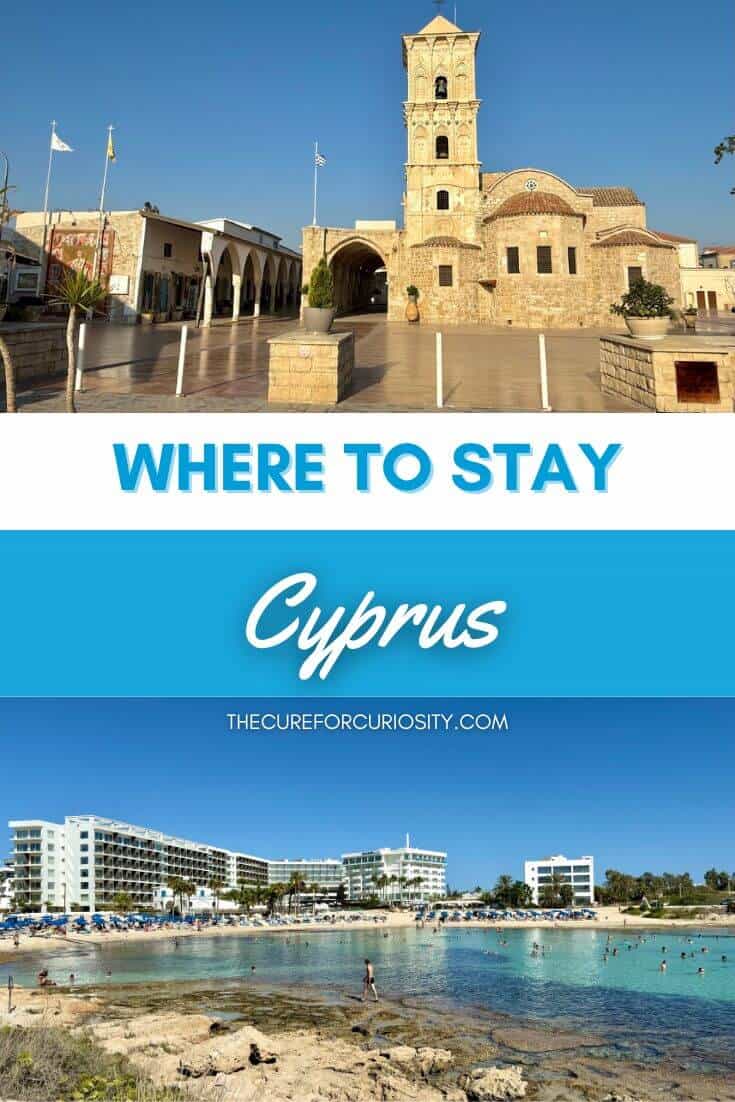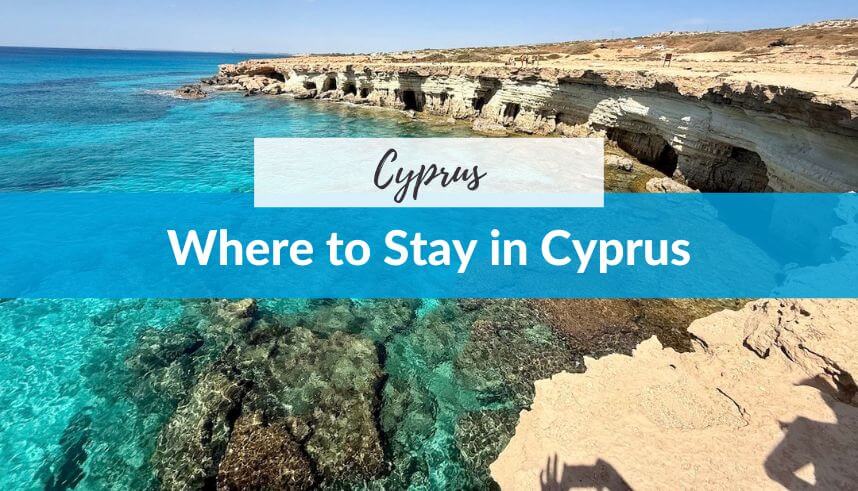
Where to Stay in Cyprus: The 6 Best Areas for Your Vacation
Planning a trip to Cyprus and wondering where to stay? Choosing the right area can make or break your Cyprus experience. The good news is that Cyprus’s compact size makes it easy to split your time between different regions, allowing you to experience everything from the amazing beaches and ancient ruins to authentic towns and restaurants.
I personally did a lot of research before going and ended up splitting my time between Larnaca and Paphos with a day trip to Ayia Napa, which gave me the perfect blend of culture, history, and beach time. However, the best areas to stay in Cyprus really depend on what you’re looking for in your vacation.
In this guide, I’ll walk you through the five best places to stay in Cyprus, what makes each area special, and how to create the perfect Cyprus itinerary based on your travel style.
Disclosure: Some of the links below may be affiliate links. At no additional cost to you, I may earn a small commission if you make a purchase.
Quick Guide: Which Cyprus Area is Right for You?
Choose Larnaca if: You want culture, easy access to the capital, budget-friendly accommodations, and convenience to the main international airport.
Choose Paphos if: You’re a history buff, love archaeological sites, want amazing sunsets, or prefer a mix of culture and beaches.
Choose Ayia Napa if: You’re visiting Cyprus primarily for the beaches, want the best water clarity, enjoy water sports, or want some nightlife.
Choose Nicosia if: You’re fascinated by history and division, want to experience both sides of Cyprus, prefer city life, or are interested in museums.
Choose Limassol if: You prefer modern, built-up areas, want to be centrally located, love wine tours, or desire more city amenities like fine dining and shopping.
Choose Troodos Mountains if: You want to escape the heat, love hiking, prefer small village experiences, or want to ski in winter.
1. Larnaca: The Cultural Gateway
Best for: Culture seekers, budget travelers, convenient access to day trips, authentic local experience
Larnaca is one of the best areas to stay in Cyprus if you’re looking for genuine Cypriot culture without the heavy tourist crowds. As Cyprus’s third-largest city, Larnaca offers the perfect balance of accessibility, authenticity, and affordability. The city sits on the southern coast and serves as an excellent base for exploring the entire island.
For this reason, I started my Cyprus journey in Larnaca, and I must say it was the perfect introduction to the island. The city has a relaxed and immediately made me feel like I was experiencing the “real” Cyprus rather than just another beach resort destination. This is ultimately what I was searching for as I had just come from scuba diving in Egypt.
Top Things to Do in Larnaca
While Larnaca is a smallish city, there are a handful of sights to check out along with a couple of day trips that are easy to do from the city.
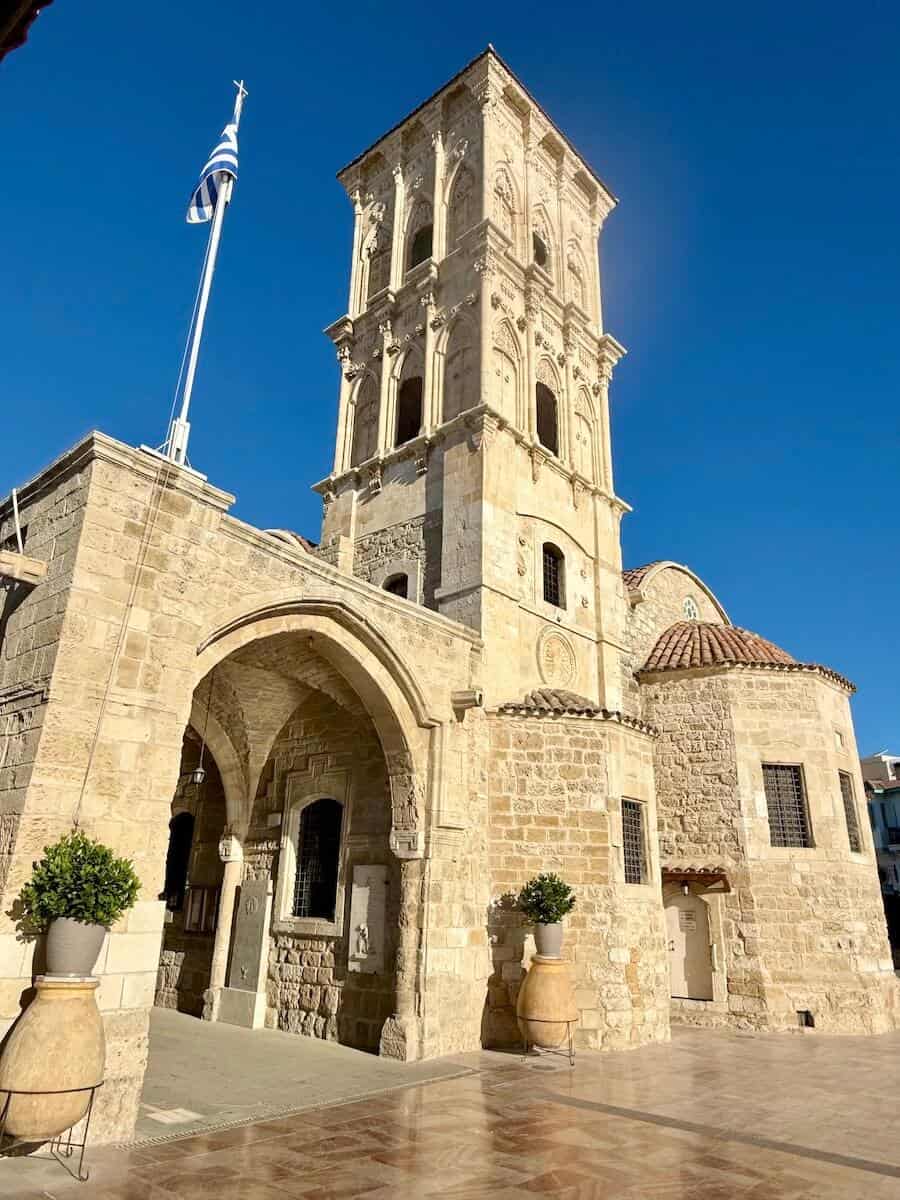
- Church of Saint Lazarus: This 9th-century Byzantine church is one of Cyprus’s most important religious sites. According to tradition, it’s built over the tomb of Lazarus, who was raised from the dead by Jesus and later became the first bishop of Larnaca.
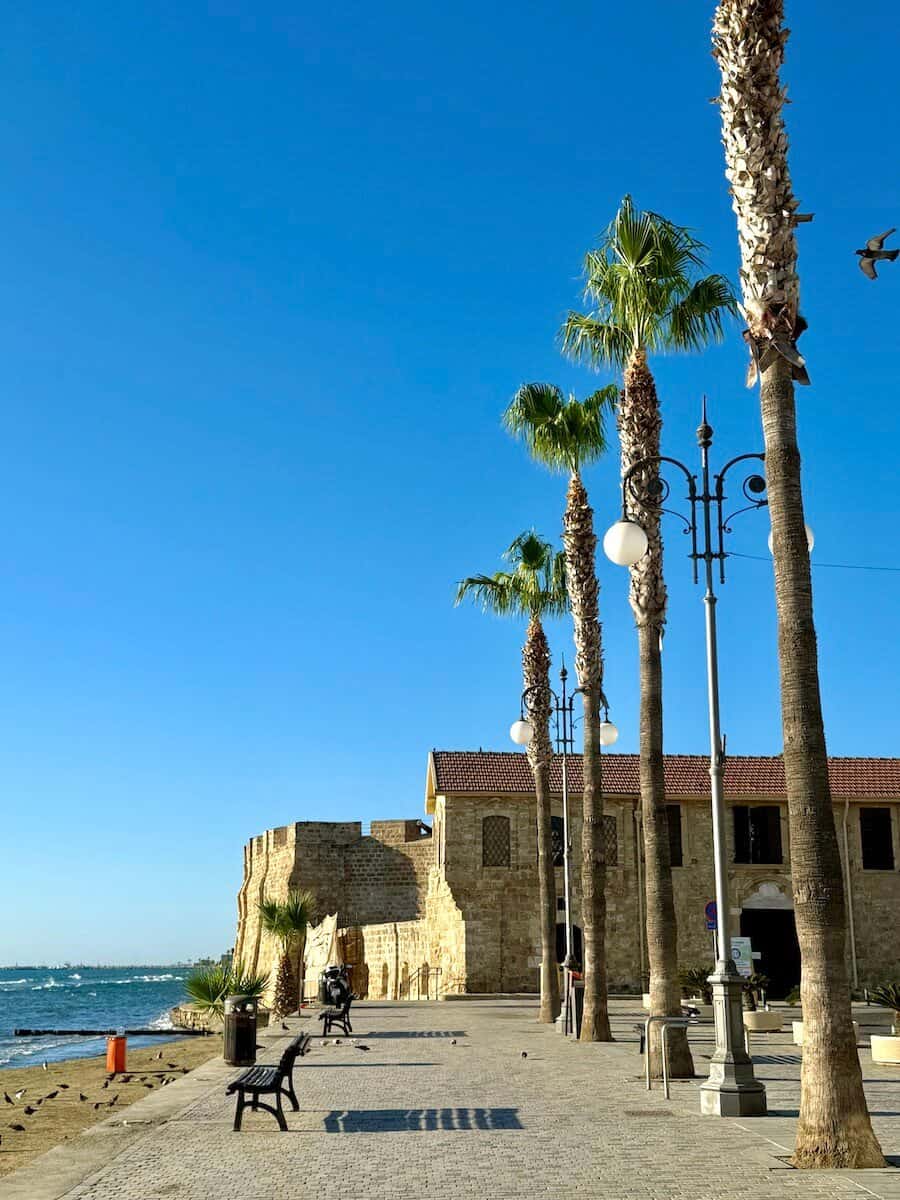
- Finikoudes Promenade: This palm-lined beachfront walkway is really the center of the city and the best place to take an evening stroll. It’s also a great place to meet locals as they tend to gather here to socialize and take walks. You’ll also find numerous cafés and restaurants here with sea views.
- Larnaca Salt Lake: In winter months (November-March), you can spot flamingos migrating to this salt lake. Other times of year, it’s just a beautiful lake, but the Hala Sultan Tekke mosque sits on its shore.
- Ancient Kition: Explore ruins right within the city that date back to the 13th century BC, including ancient temples and city walls that showcase Cyprus’s ancient history.
- Mackenzie Beach: A popular local beach with crystal-clear waters, beach bars, and the unique experience of watching planes land at the nearby airport. I personally walked the many beaches and waterfronts to get there from the city center, and it was worth the long walk!
- Day Trip to Nicosia: The capital city of Cyprus is just 30 minutes away, making it easy to explore the world’s last divided capital and walk through history in the old town.
Want to get out?
Take a day trip to Ayia Napa, Cape Greco, and the Blue Lagoon.
Where to Stay in Larnaca
There are a lot of accommodations in Larnaca, from beachfront hotels to budget-friendly hostels. Here are two of the best options.
- Mercure Larnaca Beach Resort: This beachfront property offers a bit of luxury with private beach access, a pool, and excellent dining options. Perfect if you want an upscale resort with quick taxi access to the city center. Check availability now.
- Sun Hall Hotel: A more budget-friendly option right on the Finikoudes promenade, offering great value with sea views and a central location near restaurants and shops. Check availability now.
Why I Recommend Larnaca
Larnaca is perfect as your first or last stop since it’s home to Cyprus’s main international airport. I spent three days here, which gave me enough time to explore the city, take a day trip to Ayia Napa, and genuinely experience local Cypriot life. The food scene is fantastic, with tavernas serving authentic meze spreads at reasonable prices.
Coming from diving in Egypt, I appreciated Larnaca’s culture in addition to the beach right in the center of the city. It felt like a real city where people live rather than a manufactured tourist destination.
2. Paphos: History and the Sea
Best for: History enthusiasts, archaeology lovers, romantic getaways, couples, sunsets
Paphos, also known as Pafos, is the center of Cyprus’ ancient history. This UNESCO World Heritage Site on Cyprus’s southwestern coast is packed with archaeological sites dating back to before the pyramids of Egypt. This makes it one of the best areas to stay in Cyprus for culture and history.
One of the unique aspects of planning where to stay in Paphos is deciding between two distinct experiences: Paphos city center or the beachfront area (Kato Paphos). I personally wavered back and forth and ultimately chose the city center. I’m honestly am still not sure which is the right answer, but it was easy to get from one to the other using the public bus system or my own two feet (~30 minute walk)!
Top Things to Do in Paphos
There are a few key sights that exist in Paphos, but beyond that, it’s a great little city and beachfront area to just spend a few relaxed days.
- Paphos Archaeological Park: This is absolutely unmissable. The park contains some of the finest Roman mosaics in the entire Mediterranean, depicting scenes from Greek mythology in incredible detail. You could easily spend a few hours here. Be aware that shade is minimal!
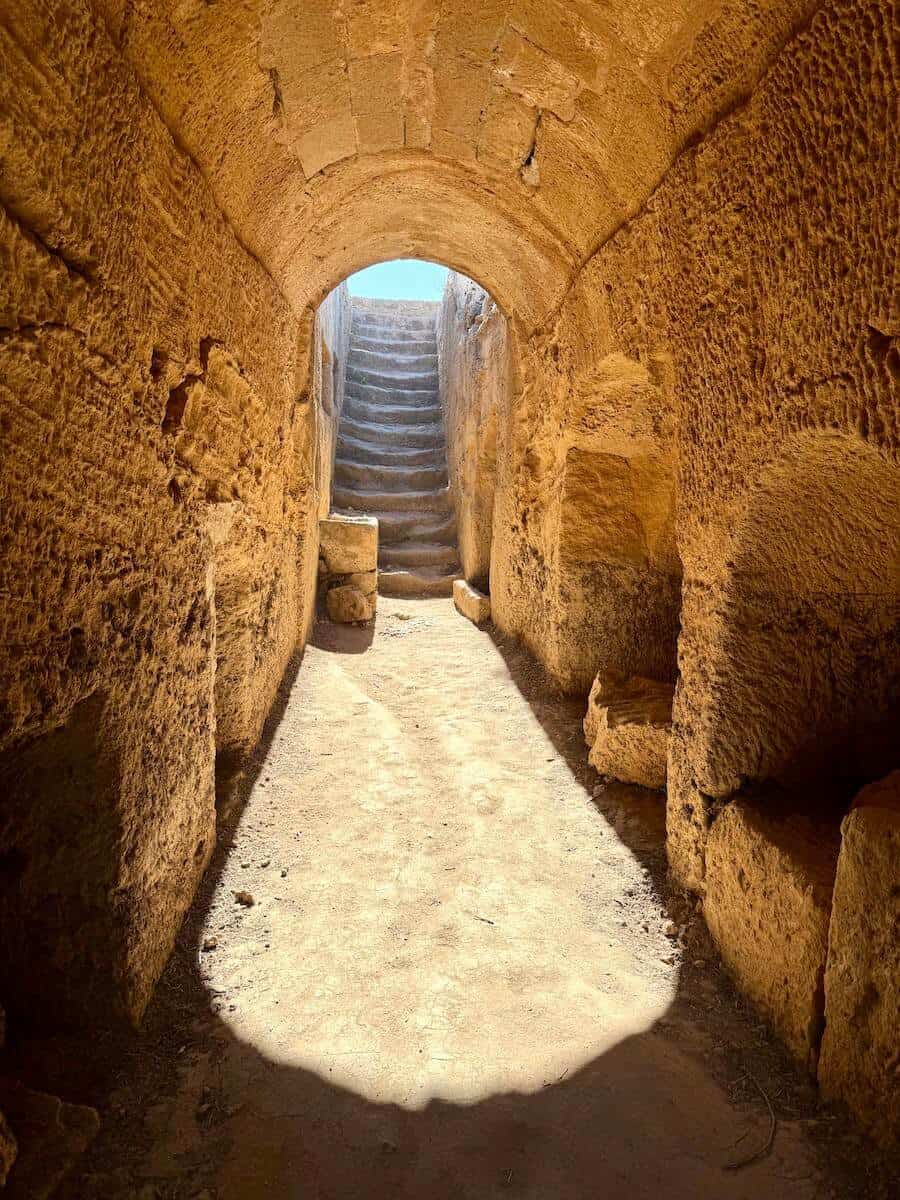
- Tombs of the Kings: This ancient necropolis features underground tombs carved into solid rock, dating back to the 4th century BC. Despite the name, nobles rather than kings were buried here.
- Aphrodite’s Rock (Petra tou Romiou): According to legend, the goddess Aphrodite was born from the sea foam at this stunning coastal rock formation. It’s about 15 minutes from Paphos and offers breathtaking sunset views.
- Paphos Harbour and Castle: The medieval harbor castle is very picturesque, especially at sunset when the fishing boats return and the waterfront restaurants light up.
- Akamas Peninsula: For nature lovers, this wilderness area offers hiking trails, beaches, and the famous Blue Lagoon.
- Traditional Mountain Villages: The villages in the Paphos district, like Omodos and Lofou, offer authentic Cypriot experiences with stone houses, local wineries, and traditional crafts.
Want to get out?
Take a day trip to the Troodos Mountains from Paphos or head to the mountains to go food and wine tasting.
Where to Stay in Paphos
If you’re wavering between staying in the city or at the beach in Paphos, here are some great options in both.
- Elysium Hotel: This five-star beachfront resort offers a bit of luxury with beautiful Mediterranean architecture, multiple pools, a spa, and direct beach access. Perfect for those wanting the full resort experience. Check availability now.
- Axiothea Hotel: Located in Paphos city center, this boutique hotel puts you close to local markets, authentic restaurants, and in the center of real Cypriot life. Check availability now.
Paphos City vs. Beachfront: Where Should You Stay?
This is an important consideration when choosing where to stay in Paphos. Here’s my take:
Stay in Paphos City Center if: You want more local culture, lower prices, and don’t mind a short drive or bus ride to beaches. There are plenty of great restaurants and shops around.
Stay on the Beachfront (Kato Paphos) if: You want fast and easy beach access, want resort amenities, prefer walking to major tourist sites, and don’t mind a more touristy area.
I personally leaned toward the cultural side, staying in the city center. Having just come from Egypt with plenty of water and beach time, I was more interested in experiencing authentic Cyprus. However, the beaches are still easily accessible within a 10-15 minute drive or bus ride or about a 30 minute walk.
I spent three days in Paphos, which allowed me to thoroughly explore the archaeological sites, city center and beachfront area.
3. Ayia Napa: Cyprus’s Best Beach Area
Best for: Beach lovers, water sports enthusiasts, families with kids, party seekers (or avoiders), photographers
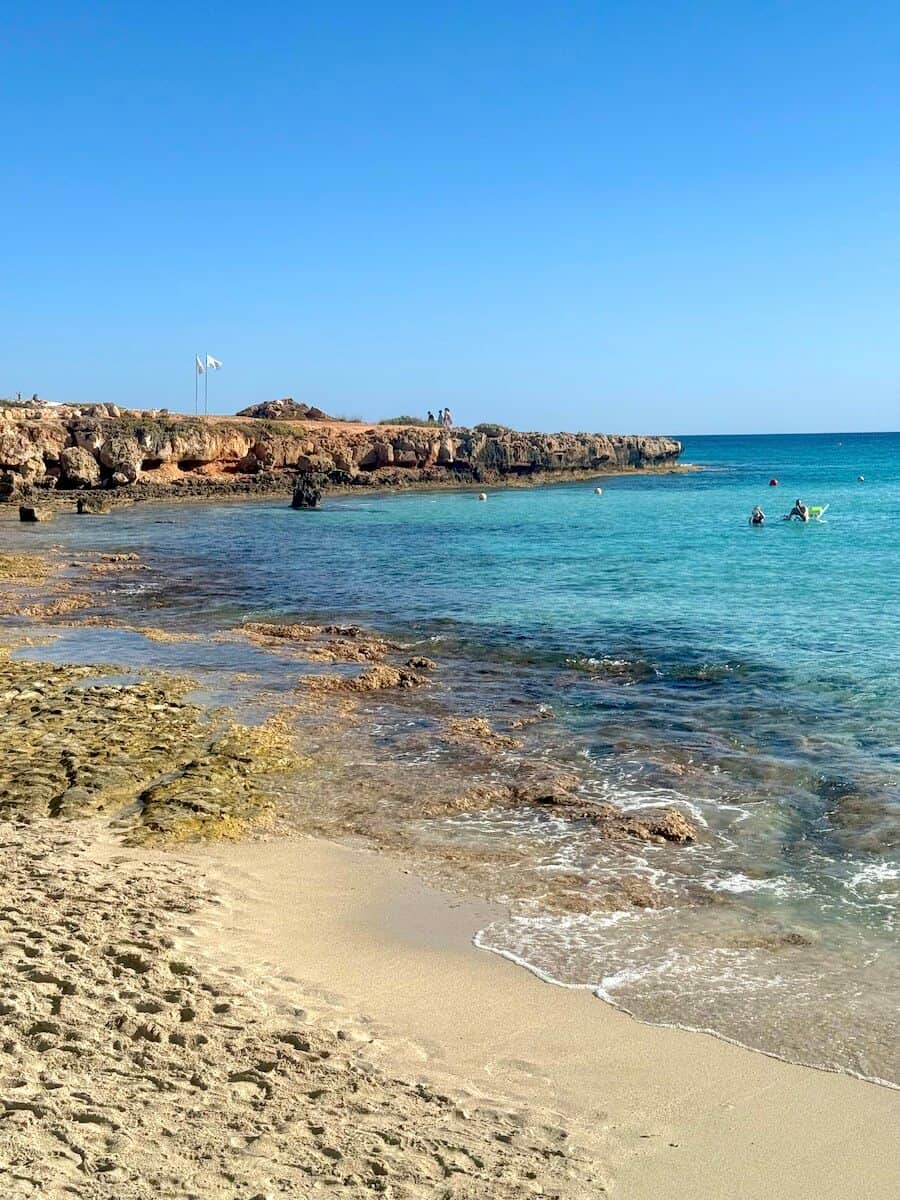
If you’re visiting Cyprus primarily for the beaches, Ayia Napa is hands down where you should stay. Located on the southeastern coast, this area boasts some of the most beautiful beaches in the entire Mediterranean, with crystal-clear turquoise waters and powdery white sand that rivals any Caribbean destination.
This also means you’ll find a lot of Europeans enjoying the beaches in the summer as it is one of the go-to beach destinations.
Top Things to Do in Ayia Napa
To be honest, the best things to do in Ayia Napa all surround the beaches and water. In fact, I’d argue this is the main reason most people come to Cyprus.
- Nissi Beach: This is Cyprus’s most famous beach, and for good reason. The shallow, warm turquoise waters and white sand create a postcard-perfect scene. It can get crowded in peak summer, but there are lots of beach chairs and plenty of space in the water!
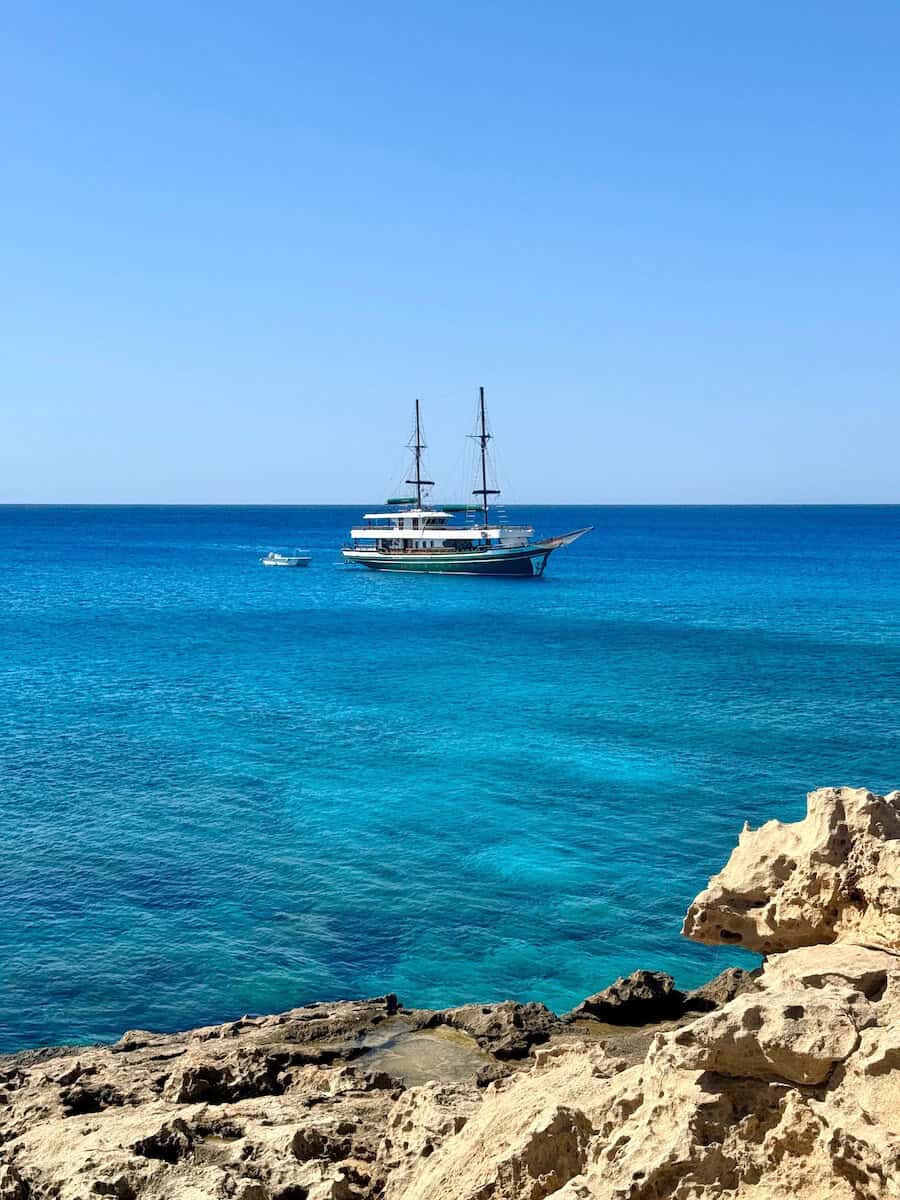
- Cape Greco: This national park offers dramatic cliff formations, sea caves, and some of the clearest water in Cyprus. It’s perfect for cliff jumping (if you’re adventurous), snorkeling, and photography. (I headed there on my day trip, and it was fabulous!)
- Blue Lagoon: Accessible by boat, this spot features impossibly clear water in shades of turquoise and blue. Many boat tours from Ayia Napa include stops here.
- Konnos Bay: This more secluded beach is located between Ayia Napa and Protaras. It offers calmer waters and a more laid-back/less-crowded atmosphere.
- Ayia Napa Monastery: In the center of town, this 16th-century monastery provides a cultural counterpoint to all the beach activities. Many of the buses to town and Cape Greco also stop here.
- Water Sports Galore: Jet skiing, parasailing, banana boat rides, scuba diving, and wakeboarding… if it involves water and adrenaline, you’ll find it here.
Visit the highlights, like the Blue Lagoon and Konnos Bay with a snorkeling cruise.
Make it family friendly with the Black Pearl Pirate Cruise.
Where to Stay in Ayia Napa
The Ayia Napa area stretches for a miles along the coast, all packed with hotels and resorts. You can also easily take a bus (or taxi) up and down the Ayia Napa area or walk between the many beaches and resorts along the coast as there is a trail that runs the whole way. I walked for miles along this path to beach hop. Do note that much of it is in full sun!
- NissiBlu Beach Resort: This upscale beachfront property offers stunning views over its sandy beach, excellent service, and multiple pools and restaurants for the perfect vacation. Check availability now.
- Chrysomare Beach Hotel & Resort: A popular all-inclusive option right on the sand, perfect for families who want everything in one place. Check availability now.
Consider staying in Protaras Instead: If you want Ayia Napa’s beautiful beaches without the intense nightlife, stay in nearby Protaras. It’s just 10 minutes away and offers a more family-friendly, relaxed vibe with equally stunning beaches.
Day Trip vs. Staying in Ayia Napa
Here’s my honest take: I did Ayia Napa as a day trip from Larnaca (about 45 minutes drive), and it was perfect for me. I got to experience the incredible beaches without committing to the more touristy, expensive resort atmosphere.
Do a day trip from Larnaca if: You’re primarily interested in culture but want one amazing beach day, you prefer authentic local experiences, or you’re on a budget (Larnaca accommodations are generally cheaper).
Stay in Ayia Napa if: Beaches are your top priority, you want multiple days of water activities, you enjoy resort amenities, or you’re interested in the nightlife scene.
Honestly, the beaches in Ayia Napa are noticeably nicer than those in Larnaca or Paphos. You’ll find clearer water, finer sand, and the overall beach experience is more “tropical.” If beaches are your main reason for visiting Cyprus, don’t skip staying in Ayia Napa!
4. Nicosia: The Last Divided Capital
Best for: History enthusiasts, city lovers, culture seekers, those interested in geopolitics, museum lovers, day-trippers
Nicosia (Lefkosia in Greek) is unlike any other capital city in the world. In fact, it’s the last divided capital on Earth. The city is split between the Republic of Cyprus in the south and the Turkish-occupied north, with a UN buffer zone (the Green Line) running through the center. This unique situation makes Nicosia a fascinating destination for those interested in history, politics, and culture.
Why I’d put it as fourth on the list is that most people visit Nicosia as a day trip from Larnaca (45 minutes) or other coastal cities like Limassol, but staying overnight allows you to experience both sides of the city more thoroughly.
Understanding Nicosia’s Division
Since 1974, Nicosia has been divided following Turkey’s invasion and occupation of northern Cyprus. The Green Line, a UN-patrolled buffer zone, separates the Greek Cypriot south from the Turkish-occupied north. However, several crossing points allow visitors to move between both sides with just a passport check.
The division is visible throughout the old city. You’ll see abandoned buildings in the buffer zone, contrasting currencies (Euro in the south, Turkish Lira in the north), and different alphabets on signs. It’s a sobering reminder of Cyprus’s complex recent history, but also a unique opportunity to experience two distinct cultures in one city.
Tips for Visiting North and South Nicosia
- If you’re visiting Nicosia as a day trip, you’ll need your passport (not just a copy) to visit both sides.
- The crossing from the South to the North (Lefkoşa) is straightforward, and both Greek and Turkish Cypriot authorities are used to tourists crossing. You can cross at multiple points, with Ledra Street being the most central and pedestrian-friendly.
- Bring some cash if crossing, as many places in the North only accept Turkish Lira (though some accept Euros at poor exchange rates). ATMs are available on both sides.
Top Things to Do in Nicosia
Nicosia has a wide assortment of things to do on both sides, but here are the top few to pack into your visit.
- Walk the Old City Walls: The Venetian walls encircling old Nicosia date from the 16th century and are remarkably well-preserved. You can walk along sections of the ramparts for great city views.
- Ledra Street: This pedestrian shopping street runs from south to north, cutting right through the buffer zone. It’s lined with cafés, shops, and restaurants, and leads directly to the crossing point.
- Cyprus Museum: The island’s main archaeological museum houses an incredible collection spanning 9,000 years of Cypriot history, from Neolithic times through the Roman period. Free to enter.
- Buyuk Han (in the North): This beautifully restored Ottoman caravanserai is now filled with craft shops, cafés, and art studios. It’s one of the highlights of the northern side.
- Selimiye Mosque/St. Sophia Cathedral (in the North): Originally a Gothic cathedral built by Crusaders, this building was converted to a mosque after the Ottoman conquest. The architecture is stunning and represents Cyprus’s complex history.
- Leventis Municipal Museum: This free museum offers excellent insights into Nicosia’s history and daily life through the centuries.
- Buffer Zone Observation: From certain points, you can view the eerie abandoned buildings in the UN buffer zone, frozen in time since 1974.
- Traditional Tavernas in Laiki Geitonia: This restored traditional neighborhood in the old town features narrow lanes, craft shops, and excellent tavernas serving authentic Cypriot meze.
Nicosia: Day Trip or Overnight Stay?
This is an important consideration when planning your Cyprus itinerary. Here’s my recommendation.
Visit as a Day Trip if:
- You’re primarily interested in beaches and want to maximize coastal time.
- You have limited time in Cyprus (less than a week).
- You’re based in Larnaca (only 45 minutes away).
- You want to see the highlights but prefer beachfront accommodations.
Stay Overnight in Nicosia if:
- You’re fascinated by divided cities and want to thoroughly explore both sides.
- You love culture, museums, and city dining.
- You have 10+ days in Cyprus and want diverse experiences.
- You’re less interested in beaches and more drawn to cultural and historical sites.
Where to Stay in Nicosia
Ultimately, you can pick to stay on either side of Nicosia, but I recommend staying on the Southern Cyprus side. Check out these two central hotels.
- Centrum Hotel: A modern option in the heart of the city with comfortable rooms and perfect proximity to Ledra Street and major sites. Check availability now.
- Martin Nicosia City Suites: This aparthotel offers comfortable rooms, a great rooftop area, and easy access to the city’s main attractions. Check availability now.
5. Limassol: The Cosmopolitan Hub
Best for: Modern amenities, foodies, wine enthusiasts, central location, business travelers, upscale shopping
Limassol is Cyprus’s second-largest city and its most cosmopolitan destination. If you appreciate modern infrastructure, excellent dining, and sophisticated nightlife while still having access to beaches and history, Limassol might be the best area to stay in Cyprus for you.
That being said, I personally don’t recommend staying here unless you are here on business as you will be missing out on most of the things that make Cyprus a destination: the best beaches, the rich history and archeological sights, and a lot of the culture.
Top Things to Do in Limassol
If you do choose to stay in Limassol, or even pass through for a day, here are the things you should check out.
- Limassol Old Port and Marina: The beautifully renovated port area features upscale restaurants, cafés, and shopping. The modern marina is lined with luxury yachts and offers a glimpse into Cyprus’s affluent side.
- Limassol Castle: This medieval castle houses the Cyprus Medieval Museum and played a significant role in the island’s history, including hosting Richard the Lionheart’s wedding.
- Ancient Kourion: Just 20 minutes west of Limassol, this Greco-Roman archaeological site features a stunning amphitheater still used for performances today, with dramatic coastal views.
- Wine Villages Tour: The Troodos foothills near Limassol are home to Cyprus’s wine region. Villages like Omodos and Koilani offer wine tastings at family-run wineries producing the unique Commandaria dessert wine.
- Lady’s Mile Beach: A long, sandy beach that’s popular with locals and offers a more authentic beach experience than the tourist areas.
- Limassol Carnival: If you’re visiting in late February or March, this is one of the Mediterranean’s best carnival celebrations.
Where to Stay in Limassol
If you plan to stay in Limassol, there are a lot of modern hotels to check out. Here are two I’d recommend you check out.
- Four Seasons Hotel: Ultimate luxury hotel with an impressive beachfront location, world-class spa, multiple restaurants, and impeccable service throughout. Check availability now.
- NYX Hotel: This trendy hotel sits in the heart of the tourist area, offering contemporary design, a rooftop pool, and easy access to restaurants and nightlife. Check availability now.

6. Troodos Mountains: Mountain Village Charm
Best for: Cool summer getaways, hikers, authentic villages, winter skiing, nature, photographers
Most people don’t think of mountains when planning where to stay in Cyprus, but the Troodos region offers a completely different side of the island that shouldn’t be missed. Located in the island’s interior, these pine-covered mountains provide a refreshing contrast to coastal resorts.
If you’re looking for something different or a change of pace, head to the mountains. In peak summer when coastal areas hit 95-104°F (35-40°C), the mountains stay pleasantly cool at around 77°F (25°C). You’ll get to experience a side of Cyprus that many beach-focused tourists completely miss.
Top Things to Do in Troodos
You obviously won’t find beaches in the mountains, so what is there to do in the Troodos? Here’s a few things to add to your itinerary.
- UNESCO Painted Churches: The Troodos Mountains contain ten Byzantine churches decorated with incredible frescoes, all designated UNESCO World Heritage Sites. Churches like Panagia tou Araka and Agios Nikolaos tis Stegis are absolute treasures.
- Mountain Villages: Explore traditional stone villages like Omodos (famous for wine), Kakopetria (built along a river), and Platres (the mountain resort town). These villages offer authentic Cypriot culture, local crafts, and traditional tavernas.
- Hiking Trails: The Troodos region has numerous trails through pine and cedar forests, including paths to waterfalls and scenic viewpoints. The Artemis Trail is a 5 mile trail that circles Mount Olympus and offers stunning views.
- Mount Olympus: At 1,952 meters (6,404 feet), this is Cyprus’s highest peak. In winter (January-March), there are actually four ski slopes here. Yes, you can ski in Cyprus!
- Local Food and Wine: Mountain villages specialize in different local products. Try zivania (a strong spirit), loukoumia (Cyprus delight), and locally produced wines.
Where to Stay in Troodos
With many mountain villages to choose from, deciding where to stay in the mountains is a bit challenging. I recommend renting a car to explore the mountains and using one of these hotels as your home base.
- Casale Panayiotis: This boutique hotel is set in a beautifully restored traditional village, offering luxury accommodations with authentic mountain atmosphere, an excellent spa, and fantastic local cuisine. Check availability now.
- Petit Palais Platres Boutique Hotel: This hotel offers mountain views, easy access to hiking trails, and a cozy mountain lodge atmosphere. Check availability now.
How to Split Your Time in Cyprus: Creating the Perfect Itinerary
One of the best things about planning where to stay in Cyprus is that the island is compact enough to explore multiple regions in one trip. No destination is more than 2-3 hours from any other, making it easy to experience the beaches, history, and culture all within one week.
Of course, how you split your time in Cyprus will be based on trip length and what you’re interested in. Let me walk yuo through what I ultimately decided on after all trip planning research, talking to friends who have visited, and a bit of on the ground research.
My One Week Cyprus Itinerary: The Larnaca-Paphos Split with Ayia Napa Day Trip
I found that splitting my time between Larnaca and Paphos with a day trip to Ayia Napa offered the perfect balance for me. Here’s why it worked so well.
- I flew into the Larnaca airport making the city of Larnaca a convenient place to stay, and it offered budget-friendly accommodation. From Larnaca, I was able to explore the city from a cultural standpoint and enjoy the beachfront areas all from one home base. I was also able to jump on the bus and take a day trip out to Ayia Napa and Cape Greco to explore the national park and some of the best beaches on the island. I spent 3 days here.
- From Larnaca, I took the bus through Limossol over to Paphos for another 3 days. Here I stayed in the city center (after going back and forth between a beach or city hotel…) and was able to explore city life, the archeological parts of the city, and the beachfront promenades. To be fair, I really like to walk so I did a lot of walking from place to place. It’s the best way to explore the area in my opinion! I then flew out of Paphos International Airport avoiding the need to backtrack to Larnaca’s airport.
This split allowed me to experience both major coastal regions, see world-class historical sites, enjoy beautiful beaches, and experience genuine Cypriot culture… all while only changing accommodations once.
However, if you’re visiting Cyprus primarily for the beaches and the water is your main focus, I’d absolutely recommend staying in Ayia Napa. The beaches there are noticeably superior in terms of water clarity, sand quality, and that picture-perfect turquoise color. It’s the difference between “nice beach” and “wow, this is paradise.”
FAQ about Where to Stay in Cyprus
Is Cyprus easy to explore from one base?
Yes! Cyprus is compact and well-connected. No major destination is more than 2–3 hours from another, making it easy to explore multiple regions in a single trip. If you don’t want to change hotels and just want to do day trips to explore, choose to stay in Larnaca.
What’s the best 7-day itinerary for Cyprus?
Ultimately, this is up to you. A balanced week usually includes:
- Days 1–4: Larnaca: Airport convenience, cultural sites, beach time, and day trips to Nicosia and Ayia Napa.
- Days 5–7: Paphos: Archaeological Park, Tombs of the Kings, Akamas Peninsula, and coastal scenery.
This offers culture, history, and beach time without feeling rushed.
How should I plan a two-week trip in Cyprus?
If you have more time, you may want to plan for:
- Larnaca (3 days)
- Ayia Napa/Protaras (2–3 days)
- Paphos (3 days)
- Limassol (3 days)
- Troodos Mountains (2 days)
- Optional: Add 1–2 nights in Nicosia if you want to explore both sides of the divided capital.
What’s the best place to stay for beaches in Cyprus?
Ayia Napa. Hands down. The water is the clearest. The sand is the softest. The color is that true turquoise “wow” factor. Stay here if beaches are your #1 priority.
Where should I stay in Cyprus if I love history and culture?
Split your time between Larnaca for city life and easy day trips and Paphos for its world-class archaeological sites. Add in time in Nicosia or Troodos if you want to dive deeper into the culture of Cyprus.
Should I rent a car in Cyprus?
Renting a car is the most convenient way to explore Cyprus, especially if you want flexibility or plan to visit villages, beaches, or archaeological sites outside major towns. Driving is on the left (British style), and the highways are well maintained, with most destinations 45–90 minutes apart. That said, the intercity bus system is reliable for travel between major hubs, and taxis are widely available. It just is less practical to rely on public transit for reaching more remote areas.
When’s the best time to visit each part of Cyprus?
The best time to visit Cyprus depends on what you want to do.
- April – May and September – October offer the ideal balance of warm weather, clear seas, and manageable crowds which makes it great for beaches, sightseeing, and exploring all regions.
- June – August is perfect if you’re focused on beach time, but expect high heat that can make cultural and mountain activities less comfortable.
- November – March is the quiet, cooler season. It’s perfect for exploring cities like Larnaca, Limassol, and Nicosia or hiking in the Troodos Mountains, though it’s generally too cold for swimming.
Which areas of Cyprus are the most affordable?
- Most budget-friendly: Larnaca, Limassol (non-beachfront)
- Mid-range: Paphos, Protaras
- Most expensive: Ayia Napa beachfront, Limassol marina, luxury mountain retreats
How many days do I need in Cyprus?
How long you need in Cyprus depends on what you want to do.
- If you’re coming from Europe, a long weekend is absolutely doable. Perfect for a quick beach escape in Ayia Napa.
- A minimum of 5–6 days lets you see the highlights of both the east and west coasts.
- Most travelers find 7–10 days ideal as it gives enough time to explore two or three regions without rushing.
- Slow travelers will want a full 14 days, which allows for beaches, villages, mountains, and true downtime.
Explore More of Cyprus
Cyprus’s compact size makes it easy to build an itinerary based on your interests. Choose from history, beaches, culture, or mountains.
My personal approach, splitting time between Larnaca for culture and Paphos for history, with an Ayia Napa day trip for beaches, worked beautifully because I came from beach-heavy Egypt and craved cultural experiences. However, if I’d been arriving from a concrete jungle, I would have absolutely prioritized more beach time in Ayia Napa.
Ready to book your trip to Cyprus? Learn more with these posts.
- Where to Stay in Cyprus: The 6 Best Areas for Your Vacation
- Where is Cyprus? Location, Maps, and Facts
Like this post? Pin it.