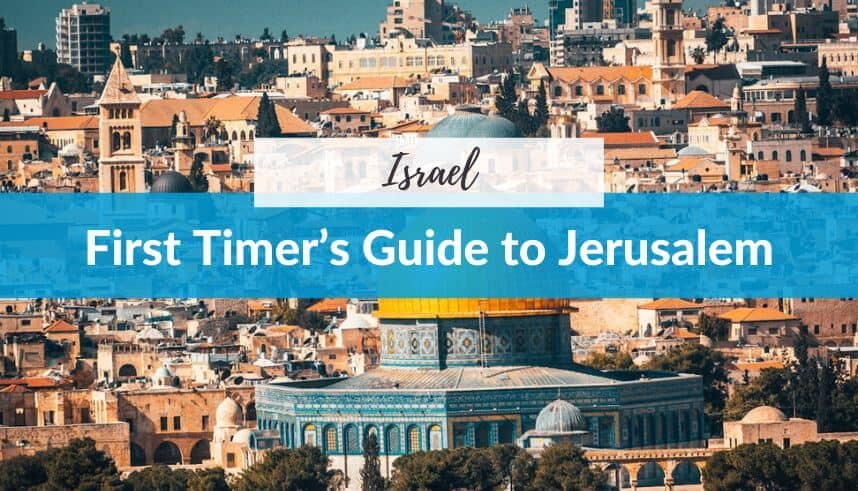
Jerusalem’s Old City: A First-Timer’s Guide to the Holy City’s Highlights
Growing up, I heard a lot about Jerusalem. It’s one of the most important cities on earth for three major religions: Judaism, Christianity, and Islam. Actually walking the streets of the Old City, seeing the Temple Mount and the Dome of the Rock up close, and standing in the Church of the Holy Sepulchre, where Christian tradition holds the tomb of Jesus, was truly incredible.
If you’re planning your first trip to Jerusalem, here’s exactly how I’d spend 2 days in Jerusalem, plus the practical details I wish I’d known ahead of time.
Disclosure: Some of the links below may be affiliate links. At no additional cost to you, I may earn a small commission if you make a purchase.
A Short History of Jerusalem & Why It Matters
It helps to understand, before you go, why a walled city less than half a square mile in size carries this much weight for half the planet.
The Jewish History of Jerusalem
Jerusalem’s religious importance starts around 3,000 years ago, when King David made it his capital and his son Solomon built the First Temple on a hilltop known as Mount Moriah. This is the site Jewish tradition holds as the place Abraham was tested by God, asked to sacrifice his son Isaac.
The Babylonians destroyed that Temple in 586 BCE; a Second Temple was built roughly 70 years later and dramatically expanded by King Herod around 20 BCE. Rome destroyed that Temple too, in 70 CE, ending Jewish self-rule in the city for centuries and scattering much of the Jewish population. (This is still mourned annually on the fast day of Tisha B’Av.)
The Christian History of Jerusalem
Christianity’s claim to the city comes from the Gospels: Jerusalem is where Jesus was tried, crucified, and, in Christian belief, resurrected, all within the same few square kilometers you’ll be walking. Constantine’s mother, Helena, identified the traditional sites of the crucifixion and tomb in the 4th century CE and built the first church over them, cementing Jerusalem as a pilgrimage destination that’s pulled Christians here ever since.
Islam’s History of Jerusalem
Islam’s connection dates to 638 CE, when the city came under Muslim rule following the early Islamic conquests, and to the Quranic account of the Prophet Muhammad’s Night Journey. It’s believed by Muslims to have ended with his ascension to heaven from the same rocky outcrop at the heart of the old Temple Mount. That belief is why the site is home to Islam’s third-holiest location, after Mecca and Medina.
The Aftermath….
From there, the city changed hands repeatedly: Crusaders held it for roughly a century starting in 1099, the Ayyubids and Mamluks ruled after, the Ottomans built the walls you’ll walk beside today (1535–1542), the British administered it after World War I, and it was divided between Israel and Jordan following the 1948 war before coming under Israeli control after the 1967 Six-Day War.
The city’s political status remains contested and is a core issue in the Israeli-Palestinian conflict. (This is worth knowing going in, since it shapes a lot of what you’ll notice on the ground, from checkpoints to whose flag flies where.)
None of that delightful history is just for background trivia or funsies. It’s the reason three different faiths are all standing shoulder-to-shoulder, sometimes literally, in this one walled city.
Introduction to the Layout of Jerusalem: Why are there Four Quarters?
You’ll see the Old City described everywhere as split into the Armenian, Jewish, Muslim, and Christian Quarters, so it’s natural to assume that’s an ancient, deliberate division. It isn’t, exactly.
Historians trace the “four quarters” framing to a British map from the 1840s. Before that, Jerusalem’s neighborhoods were far more mixed and numerous, and residents of different faiths lived scattered throughout the city rather than cleanly separated. The labels stuck because they were repeated on every map since, but even into the early 1900s, Ottoman census records show plenty of overlap. Jewish families living on streets inside the “Muslim Quarter,” churches inside areas framed as Muslim, and so on.
That said, the names aren’t meaningless today. Each quarter really does have a dominant community, history, and character worth knowing before you set out walking:
1. The Muslim Quarter
The Muslim Quarter is the largest and most populated of the four, occupying the northeast corner. It’s home to the Temple Mount/Haram al-Sharif, the covered souks, and the greatest concentration of daily life in the Old City.
2. The Christian Quarter
The Christian Quarter, in the northwest, centers on the Church of the Holy Sepulchre and contains roughly 40 Christian holy sites belonging to a range of denominations: Greek Orthodox, Roman Catholic, Armenian, Coptic, Syriac, and Ethiopian communities all maintain a presence here.
3. The Armenian Quarter
The Armenian Quarter is the smallest and quietest, in the southwest corner around the Cathedral of St. James. Armenians have lived in Jerusalem continuously since the 4th century CE, when Armenia became the first nation to adopt Christianity as a state religion. The community grew substantially after 1915, when survivors of the Armenian genocide arrived and settled here permanently.
4. The Jewish Quarter
The Jewish Quarter, in the southeast, is the most recently rebuilt. It was heavily damaged and its residents expelled during Jordanian control from 1948 to 1967, then extensively renovated after 1967. It’s home to the plaza in front of the Western Wall, along with synagogues, yeshivas, and archaeological museums.
Walking between all four in an afternoon with alleys barely wide enough for two people is one of the more disorienting and fascinating experiences you can have in a city. A guided walking tour on day one is worth it just for the orientation. (Honestly, I love starting my time in any city this way!)
Day 1: Getting Oriented & Where to Start
I’d recommend starting your exploration of Jerusalem exactly the way we did, with a walking tour that loops through all four quarters before you dive into any single site. It’s the fastest way to build a mental map of a city that has no straight lines and plenty of ways to get turned around.
Walking Tour of the Old City of Jerusalem
My favorite spots inside the walls were the covered bazaars, which wind through what feels like half the city, and the three heavyweight sites: the Temple Mount, the Western Wall, and the Church of the Holy Sepulchre. Here’s why each one carries the weight it does.
The Western Wall: Judaism’s Closest Point of Access
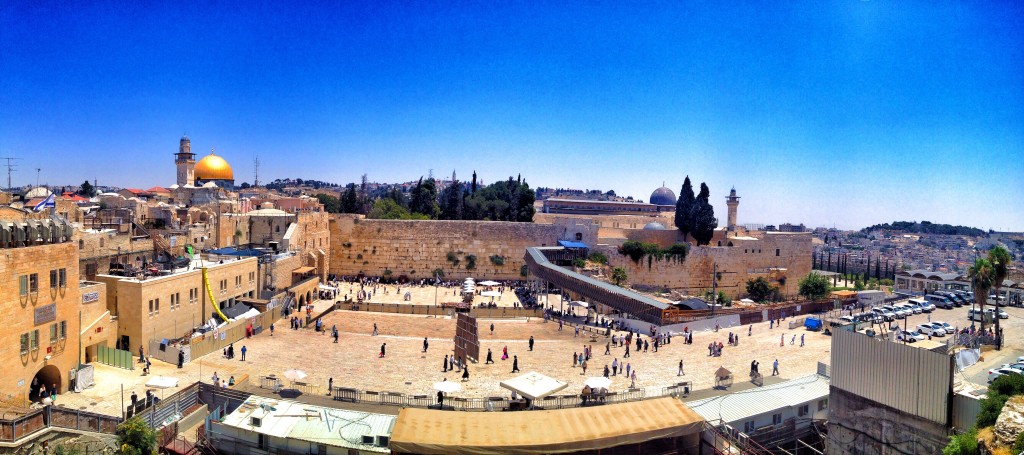
The Western Wall isn’t a remnant of the Temple itself. It’s a retaining wall, part of a massive platform King Herod built around 20 BCE to expand the Temple Mount into the grand complex his Second Temple stood on. When Rome destroyed the Temple in 70 CE, this outer wall survived largely intact.
Because the Temple’s inner sanctuary, the Holy of Holies, is traditionally located directly behind it, the Western Wall became the closest physical point Jews could reach to Judaism’s holiest ground for nearly two thousand years of exile and restricted access. This is exactly why it’s the focal point of prayer and pilgrimage you’ll see there today, at any hour, in any weather.
The wall is split into separate sections for men and women, per Jewish law, and functions as an active open-air synagogue rather than a monument. Plan to observe quietly if you’re not there to pray.
The Temple Mount, the Dome of the Rock, and Al-Aqsa Mosque
This one plateau carries the weight of all three religions at once, which is exactly what makes it the most complex (and most tightly controlled) site in the Old City.
For Jews, it’s the site of the First and Second Temples and remains the holiest place in Judaism, even though, for religious and political reasons, many observant Jews choose not to ascend the Mount itself.
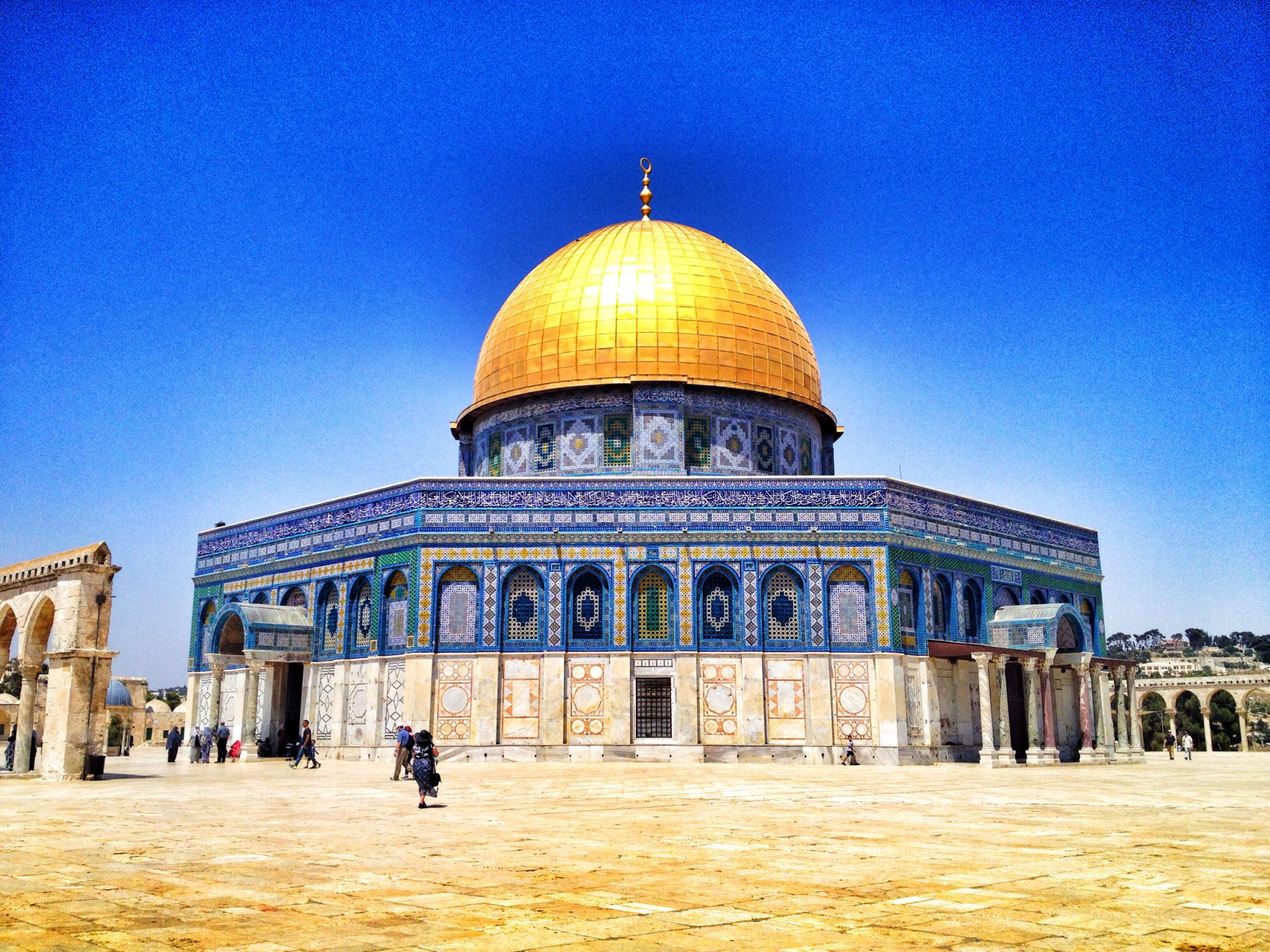
For Muslims, the compound is known as Al-Haram al-Sharif (“the Noble Sanctuary”) and houses Al-Aqsa Mosque, Islam’s third-holiest site after Mecca and Medina, along with the Dome of the Rock, a golden-roofed shrine (not itself a mosque) built by the Umayyad Caliph Abd al-Malik around 691 CE, making it one of the oldest surviving Islamic structures in the world. Muslim tradition holds that the Prophet Muhammad’s Night Journey and ascension to heaven began from the rock enclosed within it.
For Christians, the site appears throughout the Gospels as a place Jesus taught and overturned money-changers’ tables, tying it into the broader story of the same week that ends at the Church of the Holy Sepulchre.
The compound’s administration and access rules reflect just how contested it remains. It’s managed day-to-day by the Islamic Waqf, entry for non-Muslims is restricted to limited hours and a single gate, and the arrangements shift periodically depending on the political and security situation. When you visit, you’ll actually experience this.
The Church of the Holy Sepulchre
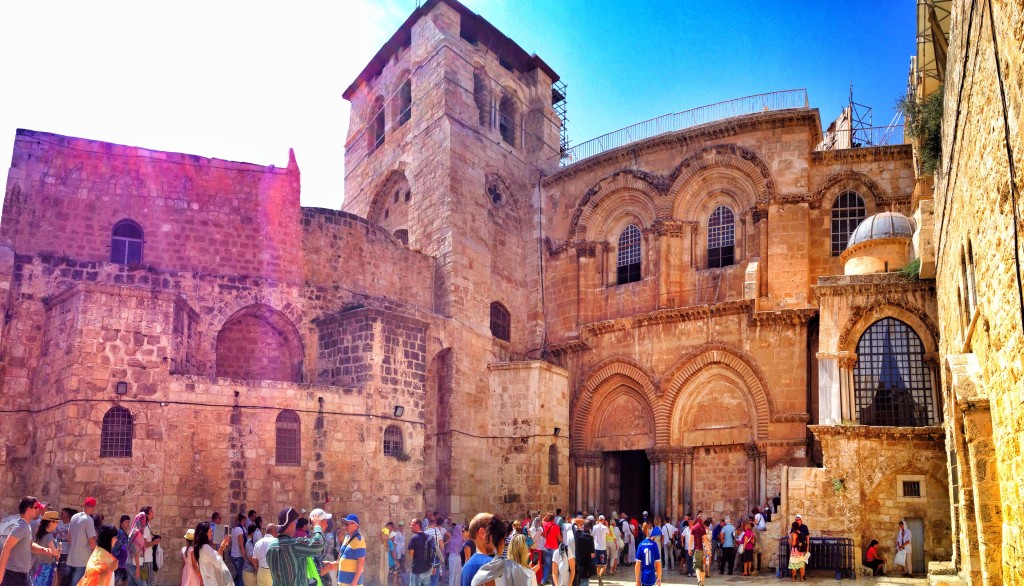
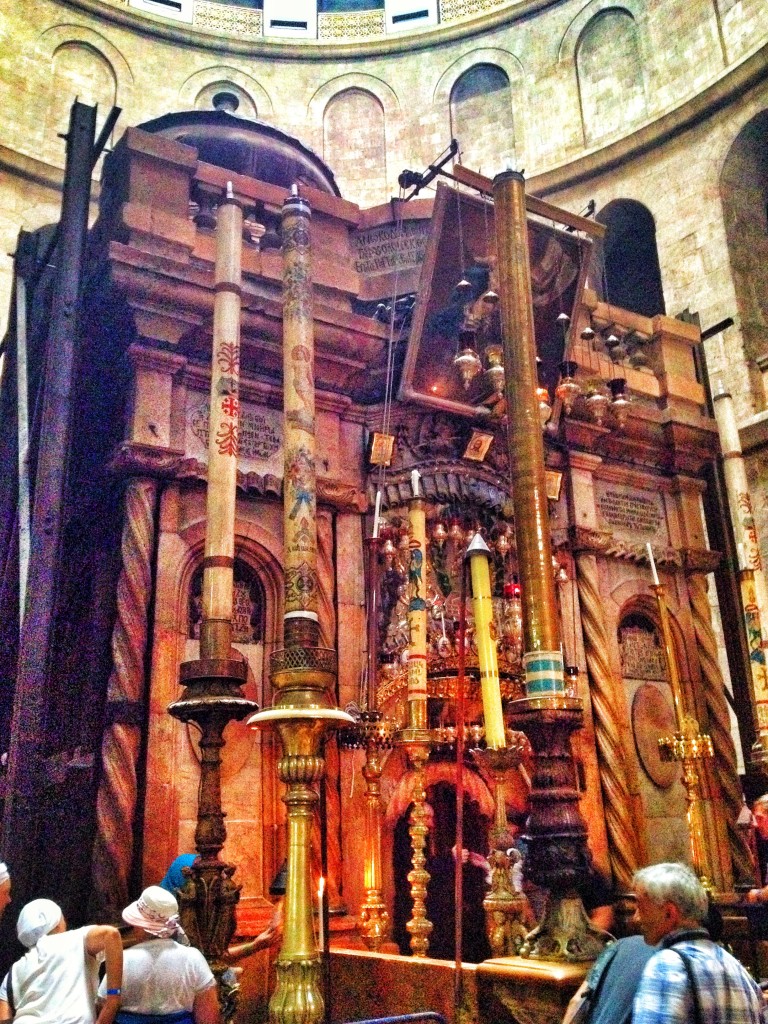
Tradition holds that this church sits over both the site of the crucifixion (Golgotha) and the tomb from which Christians believe Jesus rose. This puts the two most important events in Christianity within the same building. Empress Helena, mother of Constantine, identified these sites and had the first church built here starting in 326 CE. The current structure dates largely from the Crusader period, with older elements underneath.
Six different Christian denominations (Greek Orthodox, Roman Catholic, Armenian Apostolic, Coptic, Ethiopian, and Syriac) share custody of different parts of the building under a centuries-old arrangement, which is part of why the church feels like several churches stitched together, each with its own chapel, incense, and rhythm. Many pilgrims walk the Via Dolorosa beforehand, the traditional route through the Old City believed to trace Jesus’s path to the crucifixion, ending at the church’s doors.
Recommended Old City of Jerusalem Walking Tour
Hit the can’t miss sights of Jerusalem like the Church of the Holy Sepulchre, Temple Mount, the Western Wall, the Via Dolorosa, and Al Souq.
Yad Vashem: Worth the Detour
After the walking tour, my friends and I headed to Yad Vashem, Israel’s national Holocaust museum. The thought was that we would return to the Old City the next day to explore it properly.
Having spent four months prior to my trip to Jerusalem in Europe visiting Holocaust museums, memorials, and former concentration camps, I thought I’d seen enough. What made Yad Vashem different all of those sights was the crowd. We walked through it alongside hundreds of Jewish visitors, many of them Orthodox. Reading the exhibits next to people for whom this history is deeply personal made the experience heavier, and more powerful, than visiting with a typical tourist crowd.
It’s an extremely well-curated museum, and it helped connect pieces of history I’d picked up in other countries and cities along the way. Give yourself at least half a day here. To get the most out of it, you may want to book a guided tour.
Important Note: All visits to the Holocaust History Museum (individuals and groups) must be reserved in advance on their Online Reservation System. While it is technically free to enter, there is a nominal fee to book your online reservation. Reserve your visit here – if you’re not doing a guided tour.
Sunset from the Mount of Olives
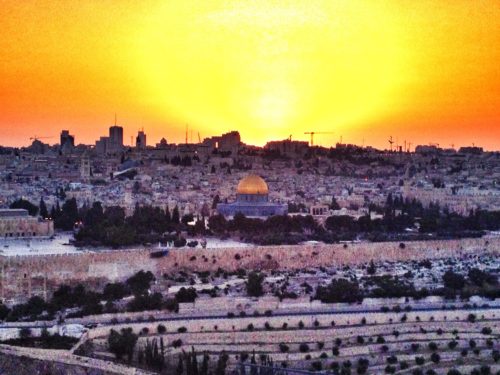
After the museum, head to the Mount of Olives for sunset. The Mount of Olives sits just east of the Old City walls, across the Kidron Valley, and it’s been a significant site for far longer than its been a scenic photo and sunset spot in Jerusalem.
It’s referenced throughout the Hebrew Bible and the New Testament. Jesus is said to have wept over Jerusalem here, prayed the night before his arrest in the Garden of Gethsemane at its base, and ascended to heaven from its summit in Christian tradition.
Its slopes also hold one of the world’s oldest and most continuously used Jewish cemeteries, with tombs dating back thousands of years, tied to a belief that resurrection will begin here.
We went for the view, and arrived about two hours too early for sunset… a mistake worth avoiding by checking sunset times before you go, especially in summer. Fortunately, our wait turned out fine: the view of the Dome of the Rock’s gold roof as the sun goes down over the Old City is breathtaking, and we had good company to pass the time.
At one point, a man approached our group and asked if we’d help with a promotional video shoot for the Tel Aviv airport. We had nothing but time, so we said yes. A guitarist played while we “jammed” along for what felt like a dozen takes. I have no idea if that footage ever aired anywhere, but by the time we wrapped, the sun was finally dipping below the skyline.
Pro Tip: The Mount of Olives is also one of the best vantage points for photos of the Old City as a whole. Go for sunset if you can, but the view is worth it any time of day.

Where We Ate and What We Found at Night
Back in central Jerusalem, we found dinner in one of the covered markets. While we had underwhelming food, I’ve heard there’s great food to be had and most of the food we ate in the Middle East was delicious. Fortunately, it was made better by a live band a few doors down that carried well through the space.
We stuck around for the music, then went looking for Jerusalem nightlife afterward, which turned out to be a dead end. Jerusalem isn’t Tel Aviv. If a big night out matters to you, save it for the coast.
Day 2: Deep Dive into the Highlights of Jerusalem
For day two in Jerusalem, we set out to properly explore the bazaars, the Western Wall, the Temple Mount, and the Church of the Holy Sepulchre. Honestly, it’s incredible to spend a few hours seeing so many major religious sites back to back.
Practical Tips for Visiting
- The Western Wall is divided into two sections, one for men and one for women, each with a modest dress requirement.
- The Temple Mount has limited, non-Muslim visiting hours that shift seasonally and can change without notice for security reasons. It’s typically closed to tourists on Fridays and Saturdays, and hours are often further restricted during Ramadan and Jewish holidays. Entry for non-Muslim visitors is via the wooden ramp near the Western Wall Plaza (Mughrabi Gate), and you’ll go through a security checkpoint.
Check the current schedule the morning of your visit. I’d recommend the Christian Information Center’s opening hours page, since posted hours online are frequently out of date. (Just search for Temple Mount)
Dress conservatively for the Temple Mount. We’re talking shoulders and knees covered, no tight or sheer clothing. If you’re not dressed appropriately, you may be turned away or asked to rent a cover-up on site.
- The Church of the Holy Sepulchre draws long lines for the tomb itself. Expect to wait up to an hour, since only three or four people can enter the tomb chamber at a time. Arrive early or late in the day to minimize the wait.
- The security and access situation around the Old City, and especially the Temple Mount, has grown more volatile since the war that began in October 2023. Before you book, check your government’s current travel advisory for Israel and the Palestinian territories, and build some flexibility into your itinerary in case a site is closed on short notice.
Where to Stay in Jerusalem
Honestly, you just want to be close to the Old City of Jerusalem so that you can come and go through the city gates. A few great options, depending on your budget are:
- The King David Hotel: One of the most famous hotels in Jerusalem
- The Inbal Jerusalem: An amazing five-star hotel with a central location
- Caesar Premier Jerusalem Hotel: A slightly more affordable alternative while still being a stunning hotel
- New Citadel Hostel: Looking to stay central on a budget? Try a hostel. It’s fabulously close and affordable.
Continuing On: Bethlehem
If you have more than 48 hours in Jerusalem, you can certainly explore more of the city. There are endless things to discover. Personally, we took our third day in Jerusalem and did a day trip from Jerusalem to Bethlehem (the traditional birthplace of Jesus).
It is well worth building this into your itinerary if you are interested in the religious sites or just want to better understand the Israel-Palestine conflict, as Bethlehem sits in the West Bank (part of Palestine). Note that there are separate rules for entering Palestine vs. Israel, depending on your citizenship… so you will need to be aware of the current political situation and entrance requirements. I wrote a full guide to that crossing here.
FAQ about Exploring Jerusalem in 2 Days
It’s the only city on earth central to the founding stories of Judaism, Christianity, and Islam at once… the site of the Jewish Temples, the crucifixion and resurrection in Christian tradition, and Muhammad’s Night Journey in Islamic tradition, all within roughly the same half-square-mile.
Two full days is the minimum: One for a walking tour plus Yad Vashem, and one dedicated to the Western Wall, Temple Mount, and Church of the Holy Sepulchre without rushing.
The security situation in Israel and the Palestinian territories has changed significantly since 2023, and it can shift quickly. Check your government’s current travel advisory before booking, and stay flexible about site closures once you’re there.
Not necessarily, but a walking tour on day one makes the rest of your visit far easier. The Old City’s alleyways are like a maze and a bit disorienting without a guide, plus a guide will explain what you’re looking at as you go.
The “four quarters” naming is a 19th-century cartographic convention, not an ancient religious division. Jerusalem’s neighborhoods historically overlapped far more than the map suggests. Even so, each quarter today does have a distinct dominant community and history.
Explore More of Israel
Want to see more of Israel? You definitely should. It’s an incredible country and offers natural beauty as well as history and tons of famous places and sights, particularly if you are religious!