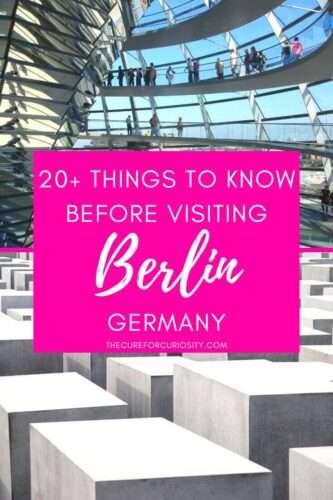
25 Tips for Visiting Berlin: Things to Know Before You Go
Prepare to visit one of the best cities in Europe with these helpful know before you go tips for Berlin, Germany!
Before you set off on your journey, there are some essential things to know about Berlin, Germany to make the most of your time there. From understanding the local language and currency to embracing the city’s open-minded culture and respecting its history, these insights will ensure a smooth and enriching experience in Berlin.
Get ready to experience the city’s fascinating history, explore its diverse neighborhoods, savor its delectable cuisine, and discover the unique charm that makes Berlin a beloved destination for travelers from around the world.
So, before you pack your bags and jump on the plane, let’s take a look at some tips for Berlin to ensure your visit is a success!
Disclosure: Some of the links below may be affiliate links. At no additional cost to you, I may earn a small commission if you make a purchase.
1. Understand the History
Berlin’s history is a complex tapestry of triumphs and tribulations. From its humble origins as a medieval trading town, it evolved into a powerful capital of Prussia and, later, the German Empire. The 20th century witnessed turbulent times, including World War II, which left the city devastated.
Next up, the division of Berlin during the Cold War resulted in the infamous Berlin Wall, symbolizing the ideological struggle between East and West. However, in 1989, the Berlin Wall fell, marking the reunification of East and West Germany.
Since then, Berlin has emerged as a symbol of resilience and creativity. It embraces its diverse past and offers a progressive identity that makes it one of Europe’s most dynamic capitals.The remnants of the Berlin Wall and Checkpoint Charlie stand as poignant reminders of the city’s divided history.
Embracing the history of Berlin will deepen your understanding and appreciation of Berlin’s landmarks, making your visit more meaningful.
2. Embrace Public Transportation
Berlin’s public transit system is a well-organized, efficient, and extensive network that provides seamless connectivity throughout the city. With over 1,400 kilometers of train tracks, 150 bus lines, and numerous trams, you can easily access any part of Berlin with a single ticket.
Operated by the Berliner Verkehrsbetriebe (BVG), Berlin offers various modes of transportation, such as U-Bahn (subway), S-Bahn (urban rail), buses, and trams. The U-Bahn and S-Bahn cover the central areas and outskirts, while buses and trams complement the coverage, reaching even the most remote neighborhoods. The public transit system in Berlin operates regularly and punctually. This makes it easy for to navigate and explore.
To save money on public transit, consider purchasing the Berlin WelcomeCard. It offers unlimited public transportation as well as discounts on attractions around town. This makes it an excellent choice for visitors.
3. Be Familiar with the Currency
The Euro is the currency used in Germany as of January 1, 2002 when it replaced the Deutsche Mark (DM). Denoted by the symbol “€”, the Euro is divided into 100 smaller units called cents (¢).
Euro banknotes come in various denominations: €5, €10, €20, €50, €100, €200, and €500. Euro coins are available in denominations of 1 cent, 2 cents, 5 cents, 10 cents, 20 cents, 50 cents, €1, and €2.
4. Carry Cash
Credit cards, especially Visa and Mastercard, are commonly accepted at hotels, restaurants, shops, and tourist attractions in Berlin. However, having cash on hand is advisable for smaller shops, street vendors, and in more remote areas. This small tip on visiting Berlin can save you a lot of headaches along the way.
Cash transactions are most common for small purchases, public toilets (which often come with a fee in Europe), and in markets, like Mauerpark or the Turkish Market. Fortunately, ATMs (Automated Teller Machines) are widely available throughout Berlin. This makes withdrawing Euros easy if you’re using major credit cards or debit cards associated with the Cirrus or Maestro networks.
5. Learn the Basics of the Language
German is the official language in Berlin. However, you’ll find that many locals, especially in the tourism industry, speak English (and other languages) fluently. Still, making an effort to learn basic German phrases like “Gutentag” (Good day) or “Danke” (Thank you) can go a long way in building rapport and respect with the locals.
Don’t worry if you don’t speak much German. Around popular tourist areas and attractions, you’ll find signs and information are provided in both German and English. This extends to the public transportation systems which often have English signage and announcements making it easy for English-speaking visitors to navigate Berlin.
6. Know Where to Stay in Berlin
When it comes to choosing the perfect place to stay in Berlin, Mitte is one of the best neighborhoods to base yourself in. As the central district, Mitte translates to “middle” or “center,” and it truly lives up to its name.
Staying in Mitte means you’ll be at the heart of the city, within walking distance or a short commute to many of Berlin’s most popular tourist attractions and historic landmarks. From the iconic Brandenburg Gate and Museum Island to the vibrant Alexanderplatz and trendy Hackescher Markt, Mitte offers an unparalleled location for sightseeing and exploration.
Additionally, this dynamic neighborhood boasts an array of accommodation options, ranging from luxury hotels to budget-friendly hostels. This ensures you can find the perfect place to suit your travel style, preferences, and budget. Here are some recommended hotels in Mitte, Berlin.
- Best Budget Hotels in Mitte: Fjord Hotel Berlin | Best Western Hotel am Spittelmarkt | MEININGER Hotel Berlin Tiergarten
- Best Mid-range Hotels in Mitte: The Mandala Suites | Pullman Berlin Schweizerhof | Hotel Luc
- Best Luxury Hotels in Mitte: Hotel Adlon Kempinski Berlin | The Ritz-Carlton Berlin | The Regent Berlin
Learn more: Where to Stay in Berlin, Germany: Best Areas & Hotels
7. Get the Berlin WelcomeCard
The Berlin WelcomeCard is a popular and convenient travel pass designed to enhance visitors’ experiences in Berlin. It offers unlimited travel on public transportation within Berlin’s ABC zones, which include the city center and most major attractions. The card is available in various durations, from 2 – 6 days, allowing you to choose the one that suits your itinerary best.
In addition to unlimited public transportation, the Berlin WelcomeCard provides numerous other cost saving benefits around Berlin. Cardholders enjoy discounts of up to 50% on admission to over 200 attractions, museums, tours, and restaurants. This includes popular sites, such as the Berlin TV Tower, Pergamon Museum, and Madame Tussauds often offer reduced entry fees with the card.
The Berlin WelcomeCard also includes a detailed guidebook with information about participating partners, city maps, and suggested itineraries. Overall, the Berlin Welcome Card is a valuable companion for tourists seeking to make the most of their time in Berlin.
8. Know How Long to Spend in Berlin
The number of days to spend in Berlin largely depends on your interests and how deeply you wish to explore this dynamic city. Ideally, dedicating at least 3 or 4 days in Berlin allows you to experience the highlights and immerse yourself in its rich history, culture, and diverse neighborhoods.
Within this timeframe, you can visit iconic landmarks, like the Brandenburg Gate, Berlin Wall Memorial, and Museum Island. You’ll also have time to explore the trendy districts of Kreuzberg and Prenzlauer Berg, indulge in the city’s culinary delights, and soak up its lively nightlife.
However, if you have more time available, extending your stay to a week in Berlin allows for a more leisurely pace. This will give you time to uncover hidden gems in Berlin, visit more museums and galleries, and truly absorb the city’s unique atmosphere.
9. Drink Tap Water
Drinking tap water in Berlin is safe and of excellent quality. The city’s tap water undergoes rigorous testing and meets the high standards set by the European Union for drinking water. Berlin’s tap water comes from natural underground sources and reservoirs, making it one of the cleanest and purest water supplies in the country. The water is treated and disinfected to ensure its safety before it reaches households and businesses.
As a result, there is no need to buy bottled water in Berlin. You can confidently drink tap water without any health concerns. Not only is drinking tap water in Berlin environmentally friendly, but it’s also cost-effective, saving you money during your stay in Berlin. This makes it one of my favorite tips for Berlin, as I’m an avid water drinker.
You’ll also find public water fountains throughout the city, and most restaurants and cafes will gladly serve you tap water upon request. So, while exploring Berlin, bring a refillable water bottle and stay hydrated with the city’s refreshing and safe tap water.
10. Visit Museum Island
Museum Island (Museumsinsel), is a UNESCO World Heritage site featuring five world-class museums: Pergamon Museum, Neues Museum, Altes Museum, Alte Nationalgalerie, and Bode Museum. The island is a cultural treasure trove, offering ancient artifacts, art, and sculptures from various civilizations. It includes renowned masterpieces, like the Pergamon Altar and Nefertiti’s bust.
A visit to Museum Island is a must when visiting Berlin. It provides a fascinating journey through art, history, and culture, surrounded by stunning architecture and grand interiors. If you want to visit multiple of the museums, you may want to consider getting the Berlin WelcomeCard to save some money on entrance fees.
11. Learn about the Berlin Wall
The Berlin Wall was a physical and ideological barrier that divided East and West Berlin from 1961 to 1989 during the Cold War. Erected by the German Democratic Republic (East Germany), the wall was intended to prevent mass emigration from East to West. It consisted of a concrete wall, watchtowers, guard dogs, and a “death strip” with traps to deter escape attempts.
The fall of the Berlin Wall on November 9, 1989, marked a pivotal moment in history, symbolizing the end of the Cold War and the reunification of Germany. Today, remnants of the wall serve as a poignant reminder of the city’s tumultuous past.
When visiting Berlin, the East Side Gallery is a must-visit open-air art gallery, featuring over 100 paintings on the remains of the Wall. These reflect themes of hope, freedom, and unity standing as a powerful testament to hope, freedom, and unity.
12. Know the Best Time to Visit Berlin
The best time to visit Berlin depends on your personal preferences and the type of experience you seek. Ultimately, it can be a year-round destination with something special to offer in every season.
Spring (April to June) and early autumn (September to October) are popular choices, as the weather is mild, and the city comes to life with colorful flowers and autumn foliage. During these seasons, outdoor activities, such as strolling through parks or cruising along the River Spree, are at their peak. It’s also the best time for open-air events, festivals, and outdoor dining.
If you’re a fan of warm weather and lively atmospheres, summer (July to August) is perfect. This is when outdoor festivals, concerts, and rooftop parties are in full swing. However, keep in mind that summers can be crowded and accommodation prices might be higher.
For those seeking a winter wonderland experience, December brings festive Christmas markets, charming decorations, and a cozy atmosphere. Winter in Berlin can be chilly, but it’s an enchanting time to explore the city’s indoor attractions and indulge in hearty winter dishes.
13. Understand Tipping in Berlin
In Berlin, tipping is appreciated but not mandatory. It is customary to leave a tip in restaurants, cafes, and bars, usually rounding up the bill or adding 5-10% of the total amount as a gratuity for good service.
When paying by card, you can tell the server the total amount you wish to pay, including the tip. In taxis, rounding up the fare is common practice. For other services, such as hotel staff or tour guides, tipping is discretionary and based on the level of satisfaction with the service provided.
While tipping in Berlin is a gesture of appreciation, Germans tend to tip more conservatively than in some other countries. Feel free to tip according to your own discretion and satisfaction with the service received.
14. Experience the Green Spaces
Despite being a busy urban center, Berlin is renowned for its vast parks and gardens. The Tiergarten, located in the heart of Berlin, is the city’s largest park featuring many paths and lakes. Another option within the city is Grunewald Forest. This 3,000 hectares park offers hiking trails and the Schlachtensee and Krumme Lakes.
If you’re looking for a touch of history, visit the Volkspark Friedrichshain. As Berlin’s oldest public park, Volkspark Friedrichshain is adorned with monuments and a beautiful fountain. Want more options? Check out the lush gardens of the Charlottenburg Palace and the Britzer Garten‘s colorful floral displays. There’s plenty of ways to escape city life into the well manicured parks of Berlin.
15. Stay Safe in Berlin
If you’re worried about safety in Berlin, you can put your mind at ease. Berlin is a fairly safe city, but like any large urban area, it’s essential to remain vigilant and exercise common sense. Keep your belongings secure and be cautious of pickpockets, especially in crowded tourist areas. Stick to well-lit and busy areas, particularly at night, and avoid poorly lit or secluded places.
When using public transportation, keep an eye on your belongings and be aware of your surroundings. It’s also advisable to stay on official walking and cycling paths, especially when exploring parks or riverside areas.
While Berlin is LGBTQ+-friendly, it’s still essential to be mindful of your surroundings and exercise respect for local customs and cultures. By staying aware, respecting local laws, and taking necessary precautions, you can enjoy a safe and memorable experience in this dynamic city.
Learn more about staying safe while traveling with 35 Critical Safety Tips for Travelers.
16. Don’t Jaywalk
Germans are known for their strict adherence to rules, and jaywalking is no exception. In Berlin, jaywalking is not only frowned upon but also illegal and strictly enforced. Pedestrians are expected to follow traffic signals and only cross streets at designated crosswalks or pedestrian crossings. Jaywalking can result in fines. Additionally, disregarding traffic rules may pose safety risks for both pedestrians and drivers.
Berlin’s roads are busy, and obeying traffic signals ensures smooth and safe traffic flow. Always wait for the pedestrian light to turn green before crossing the street, even if there are no cars in sight. Respecting these simple traffic regulations contribute to a safer and more orderly city.
17. Practice Respectful Photography
While Berlin is a photographer’s dream, you do need to be respectful when photographing the city. With it’s complex past, Berlin’s landmarks, memorials, and historical sites deserve reverence and respect. It’s also essential to observe no-photography signs in sensitive areas.
For example, when photographing Holocaust memorials, museums, or other significant locations, it is important to maintain a solemn and thoughtful demeanor, refraining from disruptive behavior or inappropriate poses. Additionally, always seek permission before taking photos of individuals or their property. Respect for privacy is paramount as Berlin is home to 3.6+ million people.
Responsible photography in Berlin ensures that the city’s stories are preserved with dignity and authenticity. It also reflects a deep appreciation for the city’s past, present, and the people who call it home.
18. Enjoy Berlin Cuisine
Berlin cuisine offers a fusion of traditional German dishes and international influences. A must-try dish is the iconic currywurst, a sliced sausage topped with curry ketchup and curry powder. It’s typically found from street vendors throughout the city. Another popular street food option is the Döner kebab, introduced by the city’s Turkish community.
For a taste of more traditional German fare, seek out dishes like schnitzel, a breaded and fried meat cutlet, or eisbein, a tender, boiled pork knuckle served with sauerkraut and mashed potatoes. Berlin’s culinary scene also embraces international flavors, with a growing vegan and vegetarian culture. You’ll find many inventive plant-based creations throughout the city.
19. Experience the Nightlife
Berlin is famous for its legendary nightlife, particularly its techno scene. In fact, Berlin is often referred to as the “Techno Capital of the World.” As such, you’ll find an array of clubs, bars, and music venues throughout the city.
If you’re into clubbing, you’ll want to check out one (or more) of the iconic techno clubs in Berlin, like Berghain, Tresor, and Watergate. Here electronic music lovers dance until sunrise. Keep in mind that some clubs have strict dress codes and entry policies, so be sure to check the rules beforehand.
20. Check Out Berlin’s Festivals
Berlin hosts an array of festivals throughout the year, reflecting the city’s eclectic spirit and culture. One of the most renowned events is the Berlin International Film Festival, also known as the Berlinale, held in February each year. Here, film enthusiasts gather to enjoy a wide selection of international cinema.
In the summer, Berlin also celebrates Pride with the Berlin Christopher Street Day Parade, a lively LGBTQ+ event promoting equality and diversity. The Carnival of Cultures in late May/early June is also a colorful extravaganza celebrating the city’s multiculturalism with parades, music, and food from around the world.
For music lovers, the Lollapalooza Berlin Festival in September showcases an impressive lineup of international and local artists. The Festival of Lights, held in October, illuminates Berlin’s iconic landmarks with amazing light installations.
From film and music to diversity and light, Berlin’s festivals offer an immersive experience into the city’s unique culture and art.
21. Embrace the Open-Minded City
Berlin is known for its open-mindedness and often thought of as a progressive city, embracing diversity and inclusivity in all aspects of life. The city has a long history of being a melting pot of cultures, attracting people from around the world with its arts, music, and nightlife scenes. Additionally, Berlin is known for its LGBTQ+ friendliness. It has a lively and welcoming queer community.
The city’s residents are generally open to different lifestyles, ideas, and beliefs, fostering an atmosphere of tolerance and acceptance throughout the city. Berlin’s open-mindedness is evident in its community spaces, art galleries, and grassroots initiatives that encourage open dialogue and creativity.
As a result, Berlin continues to be a haven for those seeking a city that celebrates diversity and embraces individuality with open arms.
22. Rent a Bike
Another thing to know before visiting Berlin is how bike-friendly it is. It offers numerous bike lanes and bike-sharing programs. In fact, renting a bike in Berlin is an excellent way to explore the city. You’ll even notice that many locals use bicycles as their primary mode of transportation.
Renting a bike in Berlin is easy, as there are numerous bike rental shops scattered throughout the city. You can find traditional bike rental stations or opt for modern bike-sharing services, such as Nextbike or Lime. Many hotels and hostels also offer bike rentals for their guests. With a bike, you can discover Berlin at your own pace, avoiding traffic jams and enjoying the fresh air.
Whether you want to pedal along the scenic River Spree, explore the famous Tiergarten park, or visit iconic sites like the Brandenburg Gate, biking offers an eco-friendly way to experience all that Berlin has to offer. Just be sure to follow traffic rules and respect pedestrians while cycling to ensure a safe and enjoyable ride.
See the sights and highlights of Berlin by bike with this tour!
23. Be Aware of Sunday Closures
A slightly less known Berlin tip is about Sunday closures, known as “Sonn- und Feiertagsruhe” (Sunday and public holiday rest). This means most shops and retail establishments are closed on Sundays and certain public holidays. Exceptions include restaurants, cafes, tourist areas, gas stations, pharmacies on a rotational basis, and bakeries in the morning.
Sunday closures are an important aspect of German culture, promoting rest and family time. While it may limit shopping opportunities, it provides a chance to explore other non-commercial activities and enjoy the city’s parks and cultural attractions. Plan ahead and stock up on essentials before Sunday to ensure a smooth experience during the closures.
24. Book Your Activities in Advance
To fully enjoy your time in Berlin, it’s highly recommended to book activities and attractions in advance. In fact, it’s one of the most important tips for Berlin as the city does get crowded and activities do sell out.
This bustling city offers an array of popular experiences, from guided tours of historical landmarks to visits to world-class museums and unique cultural events. Booking in advance ensures you secure your spot, especially during peak tourist seasons when demand is high. Moreover, some attractions may have limited capacity, and pre-booking helps avoid disappointment.
Whether you’re planning to visit iconic sites like the Brandenburg Gate, explore the renowned Museum Island, or join a river cruise along the Spree, advanced reservations guarantee a seamless and stress-free itinerary. This allows you to make the most of your time in this vibrant and captivating city.
To book activities, check out Get Your Guide and Viator.
25. Be Punctual
The last thing to know before you go to Berlin is that Germans are well-known for their punctuality and adherence to schedules. Being on time is considered a sign of respect and reliability in German culture. Whether it’s for meetings, appointments, or social gatherings, being punctual is expected and appreciated. Germans value efficiency and planning. They also take pride in keeping their commitments and not wasting others’ time.
Arriving late without a valid reason is generally frowned upon, as it can be perceived as rude or unprofessional. This cultural emphasis on punctuality extends to various aspects of daily life, including public transportation, work, and social events, and even your tours.
Explore More of Germany
Now that you’re equipped with these essential tips for visiting Berlin, Germany you’re all set for your trip. Berlin is a fascinating city offering plenty of opportunities to explore the old and new. It just requires some pre-planning.
Here are some additional resources to help you plan your trip to Berlin and the rest of Germany.
- 4 Day Itinerary for Berlin: How to Spend 4 Days in Berlin
- Where to Stay in Berlin, Germany: Best Areas & Hotels
- Day Trip to Neuschwanstein Castle: Everything You Need to Know Before You Go
- 9 Top Day Trips from Munich, Germany
- How to Get from Munich to Neuschwanstein Castle
- How to Spend One Day in Lubeck, Germany
- 18 Best Things to Do in Hamburg to Fully Experience the City
- Best Things to Do in Meissen, Germany: Home of Porcelain
- Dachau: 70 Years of Liberation
Like this post? Pin it.