

2 Days in Petra: The Ultimate Itinerary (Tickets, Tips & What to Skip)
For many people, Petra is best known as the dramatic backdrop in Indiana Jones and the Last Crusade, where the Holy Grail supposedly waited behind the iconic stone facade. For me, Petra was one of those bucket-list destinations I’d dreamed about ever since I first saw a photo of the Treasury peeking out from a narrow canyon.
But for a long time, it felt just out of reach—too far, too expensive, too uncertain given the constant warnings about travel in the Middle East. So the moment I finally set foot in Jordan and stood at the entrance to the Siq, the narrow gorge that leads into Petra, I felt a mix of disbelief and awe: I had made it.
If you’re planning a visit and want to make the most of two days in Petra, this guide covers everything from how to get there, what to see, and helpful tips you’ll wish you knew before you arrived.
Petra in 2 Days: At a Glance
Two days in Petra is the perfect amount of time to see this ancient Nabataean city without rushing. Day 1 covers the iconic highlights: walk the Siq canyon at sunrise, see the Treasury (Al-Khazneh), climb 800 steps to the Monastery (Ad-Deir), and watch sunset from the High Place of Sacrifice. Day 2 slows down. You’ll explore the Royal Tombs, wander the Colonnaded Street, and spend time in parts of the site that most day-trippers never reach. Entry is paid in Jordanian Dinar (cash only): 50 JD for 1 day, 55 JD for 2 days, 60 JD for 3 days. The Jordan Pass (~70 JD) includes entry and is worth it if you’re visiting multiple sites. Petra is best visited March to May and September to November. Arrive at sunrise on both days.
Disclosure: Some of the links below may be affiliate links. At no additional cost to you, I may earn a small commission if you make a purchase.
Buying Tickets for Petra
Petra is big and it is exposed to the sun. With only 48 hours to explore this World Wonder, you need to arrive early. And perhaps most importantly, bring your passport to purchase tickets.
Entry fees are:
- 1 day: 50 JD
- 2 days: 55 JD
- 3 days: 60 JD
- Or you can purchase the Jordan Pass which includes your entry fee… more about that below.
Note these prices are in Jordanian Dinar and must be paid in cash.
My friends and I chose the 2-day pass, which was perfect… enough time to hit the highlights and also explore beyond the most famous sites.
One thing that surprised us: how strong the Jordanian Dinar is. At nearly 1:1 with the British pound, Jordan is not a budget destination, so be prepared for higher costs than in neighboring countries.
Check out the latest costs on the Visit Petra website.
What is the Jordan Pass?
The Jordan Pass is a bundled tourist pass that covers your Jordanian visa on arrival (normally ~25 JD / ~$35 USD for single entry) plus entry to over 40 attractions in Jordan, including Petra and Wadi Rum.
Jordan Pass options (2026 prices, verify at jordanpass.jo before purchasing):
| Pass | Includes | Cost |
|---|---|---|
| Petra Wanderer | 1 day in Petra + visa | ~70 JD |
| Petra Explorer | 2 days in Petra + visa | ~75 JD |
| Petra Expert | 3 days in Petra + visa | ~80 JD |
Is the Jordan Pass worth it?
For most visitors: yes, clearly. The math is simple. If you’re paying the visa fee anyway (~25 JD) plus a 2-day Petra pass (55 JD), you’re already at 80 JD. The Explorer pass covers both for ~75 JD and adds entry to Wadi Rum, Jerash, and 37 other sites.
Who might skip it: Citizens of countries that have visa-free or visa-on-arrival agreements with Jordan (some nationalities pay less or nothing for a visa). Check the official requirements for your passport at jordan.gov.jo before assuming the pass is the right call.
Important: Purchase the Jordan Pass before you arrive at jordanpass.jo. It cannot be purchased at the airport or at Petra’s entrance.
How to Get to Petra from Amman (and Other Starting Points)
Petra is located in southern Jordan near the town of Wadi Musa. Here’s how to get there from the main entry points.
From Amman (Most Common)
- Private car / driver: The most comfortable option. The drive takes about 3–3.5 hours south along the Desert Highway. Most hotels in Amman can arrange a driver, or book through a local agency. Expect to pay 50–80 JD each way.
- JETT Bus (public): Jordan’s official tourist bus runs a daily Amman–Petra service. Departs from the JETT terminal in Amman. Tickets are around 10 JD each way and must be booked in advance at jett.com.jo. Journey time is approximately 3 hours.
- Rental car: Straightforward drive on well-paved highways. Jordan drives on the right. International driving permit recommended.
From Aqaba (Red Sea)
A 2–2.5 hour drive north. Good option if you’re combining Petra with Wadi Rum (which sits between Aqaba and Petra). Many travelers do: Amman → Petra → Wadi Rum → Aqaba as a natural south-flowing route.
From Wadi Rum
About 1.5 hours by car. If you’re doing both (which you absolutely should) most organized tours combine Wadi Rum overnight with a Petra visit.
Where to Stay near Petra
The town of Wadi Musa is literally the gateway town to Petra. The main entrance is here. Stay in Wadi Musa to walk to the entrance each morning. This is by far the most convenient option, and it allows you to arrive at opening time (6am) to catch the site before the day-trip crowds pour in around 9–10am.
Hotel recommendations in Wadi Musa:
- Luxury: Mövenpick Resort Petra – inside the site, steps from the entrance gate. Stunning views, excellent breakfast.
- Mid-range: Petra Moon Hotel, Rocky Mountain Hotel – well-reviewed, good value, short walk to entrance.
- Budget: Valentine Inn, Cleopetra Hotel – clean, basic, walking distance to the gate.
Day 1: Petra’s Greatest Hits (and a Lot of Stairs)
We entered Petra just after sunrise at 6:30am to beat the heat and the crowds. The walk from the entrance to the Treasury takes you through the Siq, a 1.2-km-long canyon carved into rose-red rock. Walking through it feels like entering another world.
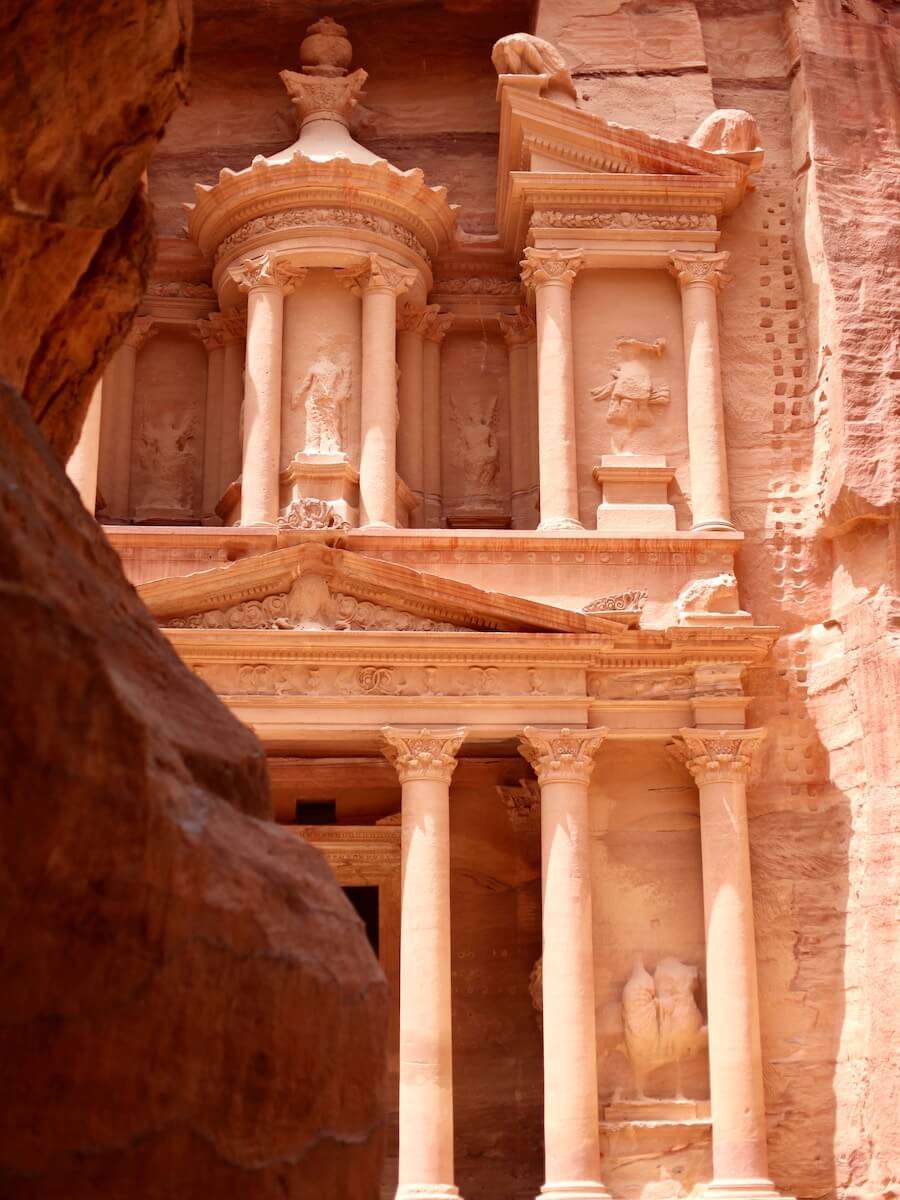
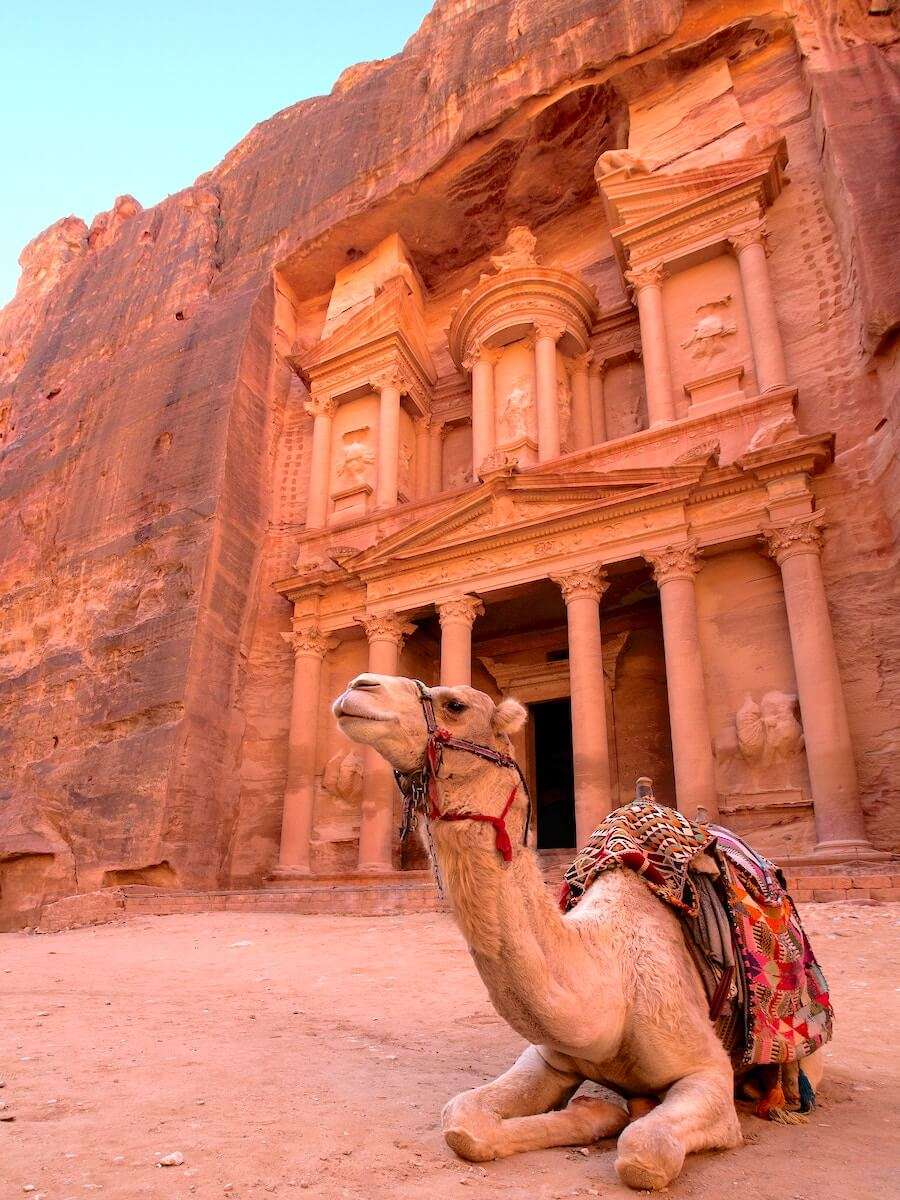
Just when you’re starting to wonder where it leads, the Treasury (Al-Khazneh) suddenly appears between the cliffs. It is every bit as jaw-dropping as the photos, if not more so.
We took some time to admire it in the early morning light, nearly alone, before heading off toward one of Petra’s other iconic sites: the Monastery (Ad-Deir).
Climbing to the Monastery
To get there, follow the signs. Admittedly, we followed what we thought were the signs, only to end up halfway up the wrong mountain.
A friendly Bedouin man redirected us and offered to guide us down to the proper trail. Turns out he had been born in one of the caves carved into the mountainside and had lived in Petra his entire life. Conversations like these were a real highlight of our trip—each person we met had a story that gave Petra more depth and personality than any guidebook could.
Once we found the correct trail, it was a tough but rewarding climb with over 800 stone steps, uneven in places and made more difficult by the intense desert sun. (Don’t visit in August… it’s unbelievably hot, but not crowded.)
We paused frequently for water and shade, and also to marvel at the sweeping views along the way. Donkeys are available to carry visitors up the trail, but many of the animals appeared underfed and poorly treated, so we chose to go on foot, and I encourage you to do the same if you’re able.
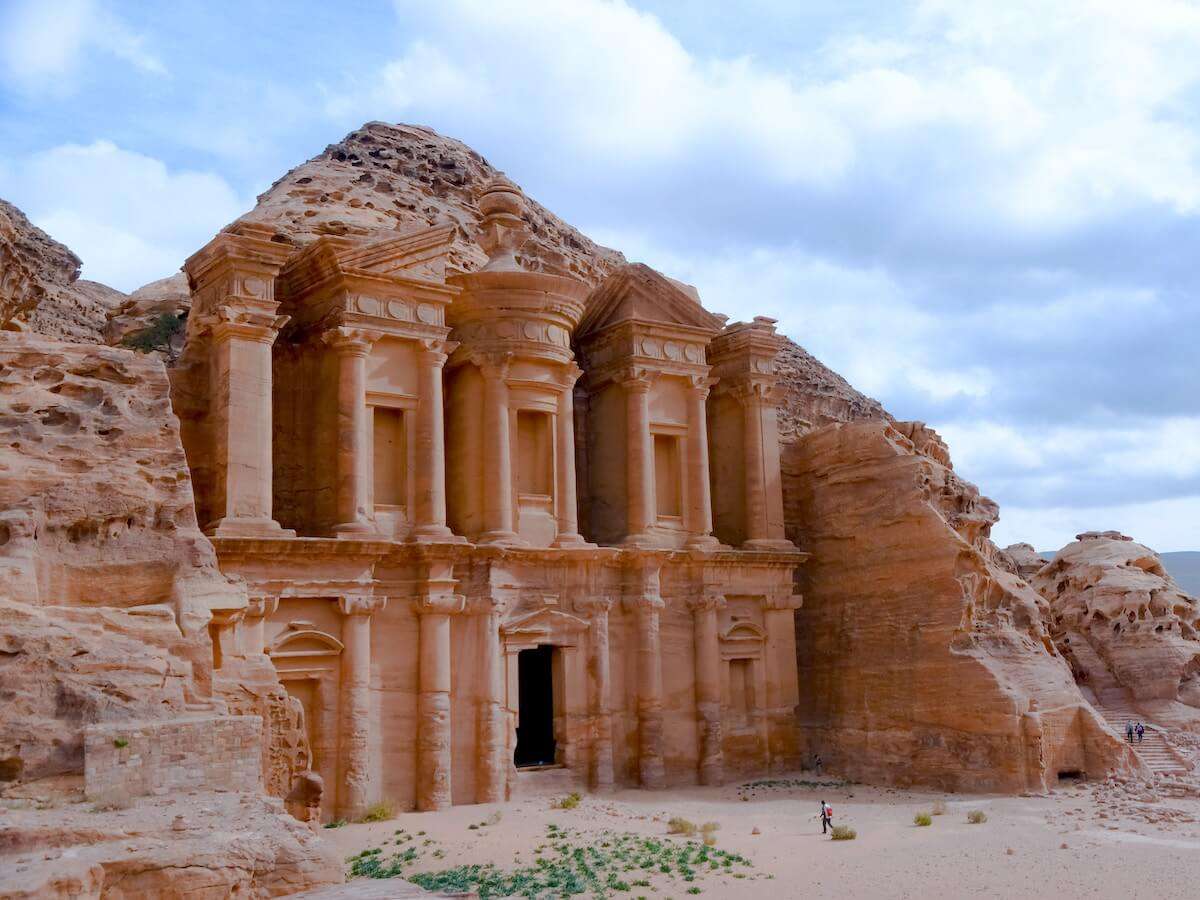
At the top, the Monastery finally comes into view. It’s massive, magnificent, and far quieter than the Treasury. There’s a small café carved into a cave nearby. After the hot climb, we sat and ordered fresh juice and rested on floor cushions. It gave us time to savor both the shade and the scenery. We lingered for hours, chatting, eating, and eventually picking up a French traveler to add to our group.
Sunset at the High Place of Sacrifice
Later in the day, we made our way back down and hiked up again, this time to the High Place of Sacrifice, a mountaintop altar with panoramic views over the Petra valley. The climb was steep, but the golden light and stillness made it feel otherworldly with the views down into the Petra valley where you can see hundreds of tombs below.
We stayed until sunset, watching the red rocks light up as the sun sank lower. I would venture a bet this is the best view of sunset in Petra, and I highly recommend you go at this time of day. Just a word of caution, if you intend to hang out past sunset, make sure to bring a flashlight or torch of some kind as the path gets quite dark at night!
Petra by Night
Just a heads-up: Petra has a very flexible closing time. While the official entry cutoff is around 6:00pm, you can linger until well after dark. However, if you’re still inside when Petra by Night starts (8:30 – 10:30pm on Monday, Wednesday, and Thursday), expect to be asked to pay the extra 17 JD admission, even if you’re just trying to exit.
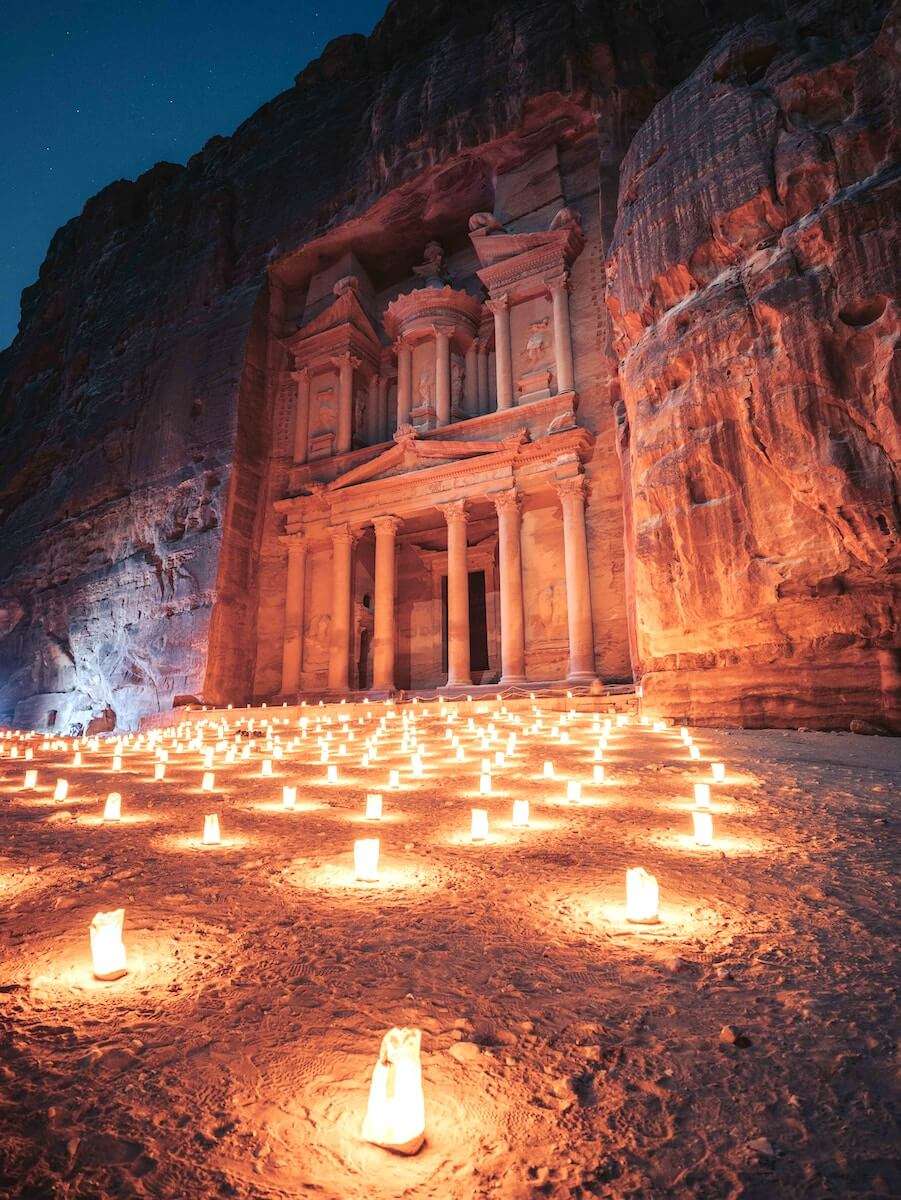
We had a bit of an unpleasant run-in with a guard over this, though most other tourists seemed to leave without issue. As such, we opted to stay and attend Petra by Night, a special event that lights the Siq and the Treasury with hundreds of candles.
During this event you have traditional music and stories echo through the canyon, creating a magical (if slightly touristy) ambiance. It’s a lovely way to experience Petra in a different light… literally.
Day 2: Royal Tombs and Slower Wanderings
After 14 hours inside Petra the day before, we were moving a little slower on Day 2. We made our way back through the Siq, where the Treasury looked just as beautiful, albeit a little more crowded.
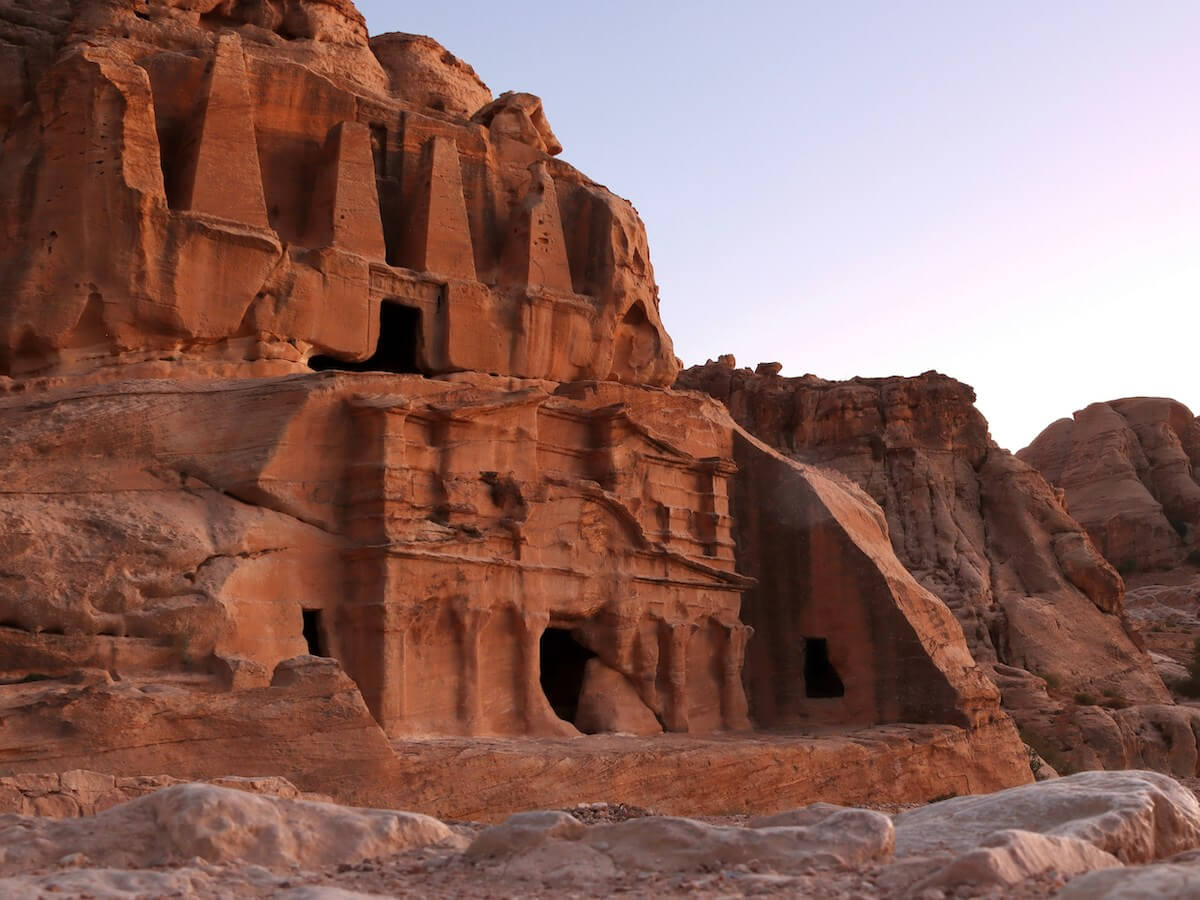
This time, our focus was the Royal Tombs, including the Urn Tomb, Silk Tomb, and Corinthian Tomb. These enormous facades are carved directly into the cliff face and overlook the Petra valley.
Though slightly less visited than the Treasury or Monastery, they’re equally worth your time. You can enter some of them and walk inside, where the ceilings swirl with bands of color in the rock. At one point, we laid down on cushions beside the Urn Tomb for a much-needed nap in the shade. It was well over 100 Fahrenheit.
At that point, we recognized many of the local Bedouins from the day before—they remembered us too. Most were friendly, though one made a jarring comment about “Americans are not human.” that left us feeling a little unwelcome. Luckily, this was an exception; the majority of people we met in Jordan were kind and generous.
Getting to Know the Local Culture
The walk back to our hotel was uphill (of course), but a local café owner spotted us and offered us a ride. Over juice at his café, we chatted about life in Jordan—everything from hospitality to dating customs, which are very different from the West.
In small towns like Wadi Musa, the base for visiting Petra, dating isn’t really a thing. Instead, people get engaged, get to know each other, and then marry. While it might sound strange from a Western perspective, he told us that it works well: engagements are rarely broken, and divorces are uncommon.
It was just another reminder that travel isn’t just about seeing places—it’s about hearing stories, learning perspectives, and making connections that stick with you long after you leave.
What I’d Do Differently Next Time
As incredible as Petra was, no trip goes perfectly, and that’s part of the adventure. Looking back, there were a few things I’d tweak if I had the chance to explore Petra for two days again.
Some are small, like packing better snacks; others would’ve made a big difference in how much we enjoyed the experience (or how sore we were the next day). If you’re planning your own visit, here’s what I’d change—and what you can learn from our trial and error.
1. Start with a guide, even for just an hour or two.
We explored on our own, which was amazing, but Petra is huge and layered with hidden meanings. Hiring a licensed guide for the first couple of hours could’ve added context we missed (like the Nabataean water systems or hidden tombs we walked right past).
Just a couple things to know about guides and faux guides. Not everyone offering help in Petra is doing it out of generosity. Some will walk you halfway up a trail, then demand payment. Always ask if someone is a licensed guide, and settle on a price in advance if you want help.
Also be away that tipping in Petra is expected. Whether it’s for help finding a trail, posing for a photo, or even just a friendly conversation, many locals will expect a small tip. Keep small Jordanian bills or coins handy.
2. Bring more snacks and water than you think you’ll need.
There are food stands in Petra, but they’re limited and expensive. The sun, hiking, and miles of walking will wear you down. Next time, I’d pack trail mix, energy bars, and at least 2 – 3 liters of water per person. We literally ran out of water one day, which was most unfortunate.
Also, this might sound obvious, but there’s very little shade, and the sun is relentless, especially on the climbs. I had sunscreen, but a better sun hat and even a cooling towel would’ve made a big difference.
3. Stay close to the Petra entrance.
Wadi Musa sprawls up a hill with the entrance to Petra at the bottom of town. We stayed at a lovely but high-up guesthouse. After 20,000 steps a day, that uphill walk back to the room nearly broke us. I’d keep this in mind as you book your accommodations.
This also means be careful what shoes you wear. Much of your walking will be uphill and over uneven stone steps.
4. Skip Petra by Night… or manage expectations.
While beautiful in theory, it was a little underwhelming and very crowded. You’re paying 17 JD just to sit on a mat and listen to music in the dark. If you’re short on time or budget, it’s okay to skip. But if you have plenty of time and money, go enjoy it. Just manage your expectations as the candle lighting is highly impressive, but sitting on the ground is dusty and uncomfortable.
5. Avoid riding the animals.
Donkeys, camels, and horses are all over Petra, but their treatment varies—and some animals looked visibly distressed. We skipped the rides and felt better for it. If you do want to ride, observe the animals and handlers before choosing one.
Want more tips for your two days in Petra?
Check out: 11 Things You Need to Know before Visiting Petra.
Should You Visit Wadi Rum Too? (Petra vs. Wadi Rum)
If you’re already making the journey to Petra, the answer is almost certainly yes, visit both.
Wadi Rum is a desert about 1.5 hours from Petra. It’s a landscape unlike anywhere else on earth: towering sandstone cliffs, pink-red sand, ancient rock inscriptions, and one of the best stargazing skies in the world. Staying overnight in a Bedouin camp here is one of the most memorable experiences Jordan has to offer.
The two sites complement each other perfectly. Petra is ancient civilization with carved rock, temples, markets. Wadi Rum is pure nature and raw desert. Together they make Jordan one of the most compelling two- or three-destination countries in the world.
If you’re short on time and can only do one: Petra wins. It’s simply one of the great wonders of the ancient world. Wadi Rum is spectacular but deserts can be found in other places. Petra cannot.
How to combine them: The most logical routing if flying into/out of Amman is: Amman → Petra (2 nights) → Wadi Rum (1 night) → Aqaba → fly home. Or reverse it. Either works.
What to Pack for Petra
Petra will humble you physically. The site covers about 100 square miles (264 square kilometers), and a two-day visit involves serious walking and climbing… in intense heat (at least when we were there!). Pack accordingly:
- Comfortable, broken-in walking shoes or hiking boots: You will regret sandals or new shoes. The terrain is rocky, dusty, and uneven. Good ankle support for the Monastery climb is worth it. Granted… I wore my flip flops 🙂
- Water (more than you think): Bring at least 2 liters per person per day. Water is available for purchase inside the site but at inflated prices.
- Sun protection: The site offers almost no shade except inside the canyon and at higher elevations. High-SPF sunscreen, a sun hat with a brim, and UV-protective sunglasses are non-negotiable.
- Snacks: There are a few spots to buy food inside (including the wonderful cave café near the Monastery), but prices are high and options are limited. Pack nuts, energy bars, and fruit.
- Cash (Jordanian Dinar): Petra entry is cash only. ATMs are available in Wadi Musa but not inside the site. Bring more JD than you think you’ll need.
- A small backpack: You’ll be walking all day. A comfortable daypack to carry water, snacks, and a layer is essential.
- A light layer for mornings: The desert gets cold at night and early mornings, even in summer. A light jacket for the walk through the Siq at sunrise is useful.
- Modest clothing: Jordan is a Muslim-majority country. Shoulders and knees covered is respectful, particularly in smaller towns. Inside Petra itself the dress code is a bit more relaxed, but it’s still good practice.
Is Petra Worth It? (Honest Take)
Petra is expensive for the region, physically demanding, and requires significant planning to reach. Is it worth it?
Yes…. and I say that as someone who has visited 100+ countries and can be a bit cynical about overhyped destinations.
The Treasury appearing from the Siq is one of those rare travel moments that beats the photo you’ve seen a hundred times. The Monastery is arguably even better. It’s massive, remote, quieter, with that incredible cave café where you can sit for hours in the shade staring at something that has no right to exist.
The High Place of Sacrifice at sunset, the hundreds of tombs carved into every cliff face, the Bedouin families who still live within the site. Petra is not just a monument, it’s a whole lost world you get to wander through for two days.
The practical answer to “is Petra worth it” for most travelers is also yes. If you’re already flying into Amman, for Jordan itself, for a Middle East trip, or as a layover en route to Asia or Africa, adding Petra adds maybe $100–200 to your trip cost (ground transport + 2-day entry). That’s a no-brainer.
The one caveat: don’t come in July or August like I did! The heat is brutal and the afternoon sun turns the site into an oven. Of course, the trade off is fewer crowds… which isn’t all bad! Spring (March to May) and fall (September to November) are the best times.
Side Note on My Experience
My visit to Petra is something I still think about often, and while I absolutely believe it’s worth seeing (10/10 site), my experience there was far from comfortable.
I traveled with a Brazilian friend, and at the time there was noticeable tension toward Americans globally. In some of the quieter, more remote areas of the site, we were followed by a few local Bedouins who directed hostile comments at me. Telling me they hated me, that I was “lower than dirt,” and that no one would miss me if I were gone. It was unprovoked and unsettling, especially given how isolated parts of Petra can feel.
What struck me most was a brief exchange I had with one of them. When I asked how he could hate me without knowing me, he explained that because the U.S. is a democracy, he believed every American is responsible for its politics. It was a sobering reminder of how global perceptions can shape personal interactions.
I share this not to discourage anyone from going, but to be honest. Your experience can be influenced by the broader political climate, and it’s something to be aware of when visiting.
Frequently Asked Questions: Petra, Jordan
Two days is the perfect amount of time for most visitors. Day 1 covers the headline sites: the Siq, the Treasury, the Monastery, and the High Place of Sacrifice. Day 2 allows you to see some of the less visited sites, like the Royal Tombs, the Colonnaded Street, the Great Temple, and the quieter southern side that most day-trippers never reach. One day is possible but rushed. Three days is only necessary for serious archaeology enthusiasts.
For most visitors, yes. The Jordan Pass (purchased at jordanpass.jo before arrival) bundles your Jordanian visa fee (~25 JD) with Petra entry and 40+ other sites. The 2-day Petra Explorer pass costs roughly 75 JD which is less than buying the visa and 2-day Petra ticket separately (80 JD). It also gives you access to Wadi Rum, Jerash, and other sites at no additional cost.
The most common option is a private car or driver (3–3.5 hours, ~50–80 JD each way). The JETT public bus runs a daily Amman–Petra route for ~10 JD each way (book at jett.com.jo). There is no train service. Rental car is also possible on well-paved highways.
March to May and September to November are the best. The weather is warm but not extreme, and the site is at its most beautiful in soft spring or autumn light. Avoid July and August as the heat can exceed 40°C (104°F) and the afternoon sun turns the site into an oven. December to February can be cold and occasionally rainy, but the site is almost empty.
Yes. Jordan is one of the safest countries in the Middle East for tourists and consistently has low crime rates. The area around Petra and Wadi Musa is extremely tourist-friendly. The main annoyances are persistent vendors and touts offering camel rides and horse rides. Just politely but firmly saying no is all that’s needed. Check your government’s current travel advisories before any trip to the region.
Technically yes. The drive is about 3–3.5 hours each way. But it’s not recommended. You’d arrive exhausted, have 4–5 hours in the site, and leave exhausted. Petra deserves more than that. At minimum, spend one night in Wadi Musa so you can arrive at opening time (6am) when the site is nearly empty and at its most magical.
Comfortable, broken-in walking shoes or light hiking boots are helpful. The terrain is rocky and uneven, and you’ll cover 10 – 12 miles (16–19 km) over a full day. Sun protection (hat, sunscreen, sunglasses) is critical. Bring layers for the early morning Siq walk, which can be cool even in summer. Modest clothing (shoulders and knees covered) is respectful in the surrounding town of Wadi Musa, though inside the site it’s more relaxed.
It depends on your expectations. Petra by Night (Monday, Wednesday, and Thursday evenings) fills the Siq and the area in front of the Treasury with thousands of candles and features traditional Bedouin music. It’s atmospheric and beautiful, but very crowded and the “show” is brief. Manage your expectations going in. It’s worth experiencing if you’re already there for two days and can book it easily, but don’t build your schedule around it.
Explore More of Jordan
We spent two full days in Petra, and I wouldn’t have done it any other way. One day is enough to see the big sights, but two days gives you room to breathe, explore lesser-known corners, and absorb the magic of this ancient city.
Yes, it’s hot. Yes, it’s expensive. And yes, it requires some effort to get there. But Petra is one of those rare places that actually lives up to the hype.
If you’ve been dreaming about Petra, don’t wait for the perfect time. Just go. While you’re at it, explore more of Jordan. Here’s some helpful posts about the country.
- 2 Days in Petra: The Ultimate Itinerary (Tickets, Tips & What to Skip)
- 11 Things to Know Before Visiting Petra, Jordan
- How to Visit the Dead Sea: The Essential Guide for First Time Visitors
- Taking the Ferry from Jordan to Egypt: A Local Experience
- How to Get an Egyptian Visa in Aqaba, Jordan
- Camping in the Wadi Rum Desert: A Firsthand Experience
Like this post? Pin it.



Julia, I’ve been catching up with your trip the past couple of weeks. I’m eNjoying the armchair travel through your posts. Petra looks amacing. Good travels, barb
Glad you’re enjoying – I am too! So many incredible places and people!
Great post Julia! Very helpful as we are thinking about visiting Petra ourselves but have also heard the warnings that it is unsafe. Thanks for the tips!
I felt plenty safe in Jordan despite being told about people’s dislike for Americans. Many Jordanians actually mentioned how tourism there has been hit because they are surrounded by countries with very unstable situations which is true when you look at a map. Unless things change, I wouldn’t write it off for safety concerns right now, but of course keep up with the news and the U.S. State Department site which posts any and all concerns. I may have even checked the UK warnings for questionable places just to verify! Petra is beautiful!!