

Where is Bali? Location, Maps, Fast Facts, and More!
Bali is one of those places that people seem to talk about constantly. You’ve probably heard a friend say it changed their life, seen a yoga influencer post from a jungle villa, or watched Eat, Pray, Love and dreamed of your own version of a soul-searching escape. But have you ever stopped to ask: What actually is Bali? Is it a country? A city? An island? Where is it, really?
Surprisingly, many people can’t point it out on a map, and that’s okay. Let me break down everything you need to know about Bali’s geography, culture, cost, and why it has captured the hearts of travelers, like me, from all over the world, and what parts of it I actually think might be overrated.
Disclosure: Some of the links below may be affiliate links. At no additional cost to you, I may earn a small commission if you make a purchase.
The Location of Bali
Traveling is fun and full of education. One of the most awe inspiring is sometimes looking up where it is you want to go and exactly how far away it is or where it is located. Bali is no different. Getting here is not always easy for those of us on the other side of the world, but it still ranks up there as a “must-visit” destination.
So let’s take a look at where Bali is located and what other information you might need to know to book a trip there!
Where is Bali located?
Bali is an island in Southeast Asia, located in the Indian Ocean between the islands of Java and Lombok. It is part of the country of Indonesia, which is made up of more than 17,000 islands stretching along the equator.
Though Bali is often referred to on its own, almost as if it were its own country, it is one of 38 provinces in Indonesia. However, it has its own distinct culture, language, and religion, which makes it feel like a world apart from the rest of the country.
Where is Bali on the map?
To find Bali on a world map:
- Look just north of Australia
- Trace your finger across Southeast Asia toward the equator
- Bali is east of Java (where Jakarta, the capital of Indonesia, is located) and west of Lombok
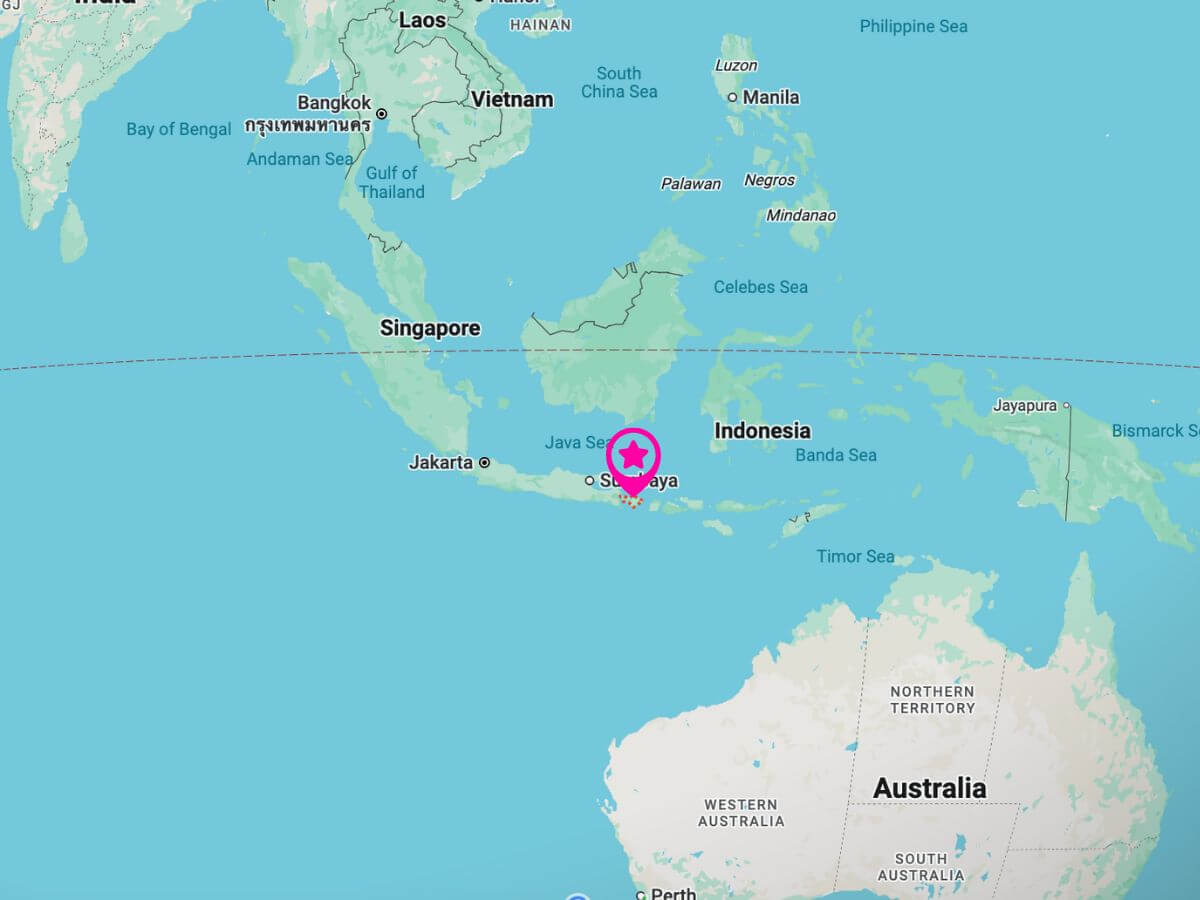
Bali’s GPS Coordinates: Approximately 8.3405° S, 115.0920° E
Bali’s Continent: Asia
Bali’s Ocean: Indian Ocean
The Island of Bali is part of which country?
Bali is part of Indonesia. This sprawling archipelago is the largest country in Southeast Asia by area and population. While most of Indonesia is Muslim, Bali stands out with its Hindu-majority culture, traditional ceremonies, and temple-filled landscapes.
What are Bali’s neighboring countries?
Although Bali is part of Indonesia, it’s helpful to understand its position in the broader region. Here are Bali’s closest neighboring countries:
- Australia: ~1,600 miles (2,600 km) to the south
- Singapore: ~1,050 miles (1,700 km) to the northwest
- Malaysia: ~1,180 miles (1,900 km) to the northwest
- East Timor (Timor-Leste): ~715 miles (1,150 km) to the east
- The Philippines: ~1,240 miles (2,000 km) to the northeast
- Papua New Guinea: ~1,550 miles (2,500 km) to the east
These distances may seem large, but they make Bali a convenient getaway for regional travelers from Australia and Singapore, in particular. As you spend time in Bali, this will become readily apparent based on the many loud Australians you’ll encounter along the way!
What is the capital of Bali?
The capital of Bali is Denpasar, located in the island’s south. While it functions as the political and commercial center, as a tourist, you’ll likely bypass it in favor of beach or inland destinations.
However, Denpasar is home to Ngurah Rai International Airport (DPS), Bali’s main point of entry, so if you’re flying into Bali, you will land in the capital!
Check out this interactive map of Bali and its capital Denpasar.
What continent is Bali on?
Bali is part of Southeast Asia and belongs to the country of Indonesia, the world’s largest archipelago nation. Although Indonesia technically spans both Asia and Oceania, Bali itself is located on the Asian continental shelf. Therefore, culturally, geographically, and politically, Bali is considered part of Asia.
What ocean is Bali in?
The Island of Bali sits in the Indian Ocean, just east of Java and west of Lombok Island. Its location in the tropics means it enjoys warm ocean waters year-round. If you visit the beaches around the island, you’ll notice they vary widely though. Some have black volcanic sand while others with golden or white shores.
The Indian Ocean also influences Bali’s climate, with a rainy season from November to March and a dry season from April to October. This makes certain months better for surfing, diving, or hiking.
How Location Impacts Your Visit to Bali
In addition to knowing where to find Bali on a map, there are a few other ways its location play into a visit to Bali. After all, island nations are always a bit of a challenge to navigate! Let’s take a look at some of the key points I think you should know.
Why is Bali so famous?
As we talked about in the beginning, Bali has a reputation that far exceeds its size, and for good reason. It offers incredibly diverse experiences for all types of visitors. You want to surf all day every day? You want a yoga retreat in the jungle? You want to climb volcanos and swim in waterfalls? There’s a lot going on here that makes it a draw for tourists.
- Beaches: From the wild surf breaks of Uluwatu to the calm lagoons of Nusa Dua, Bali’s beaches offer a wide variety to choose from.
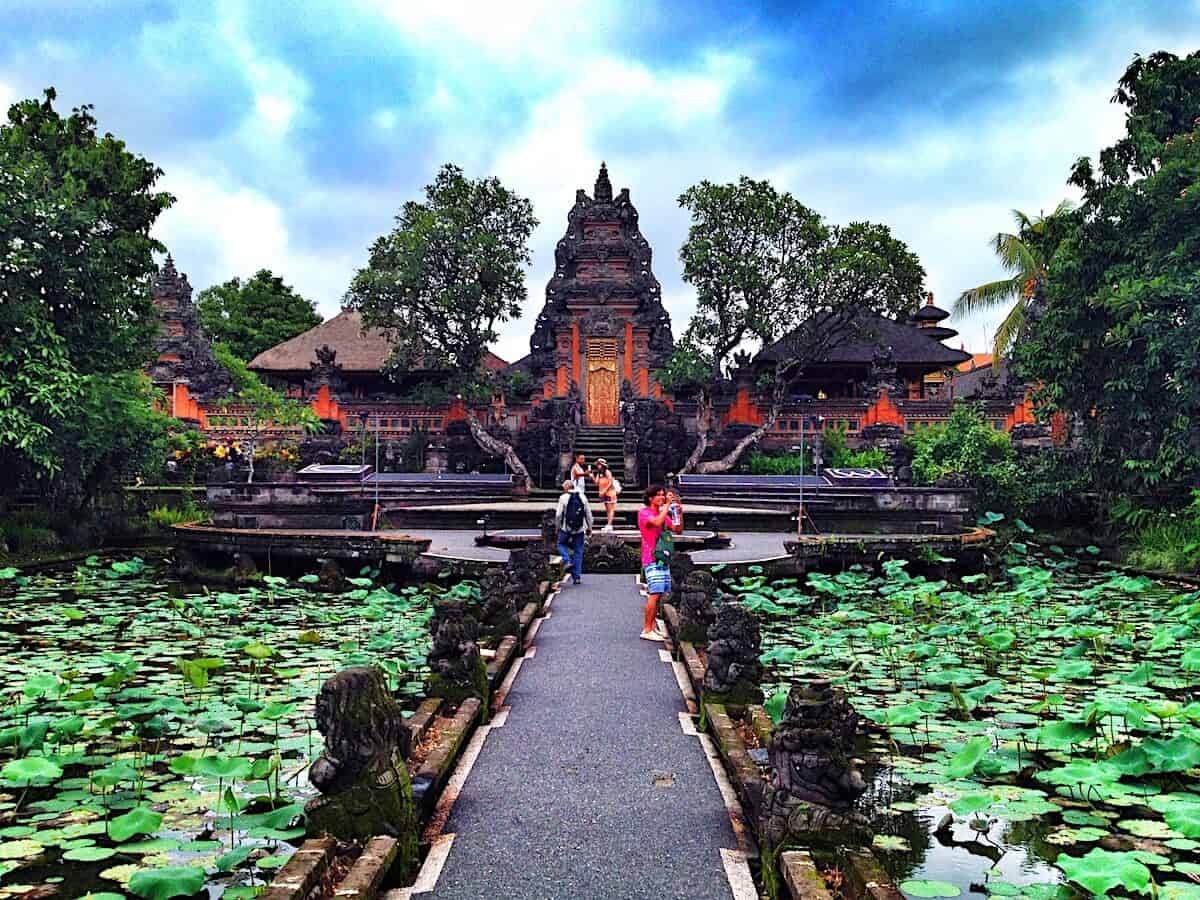
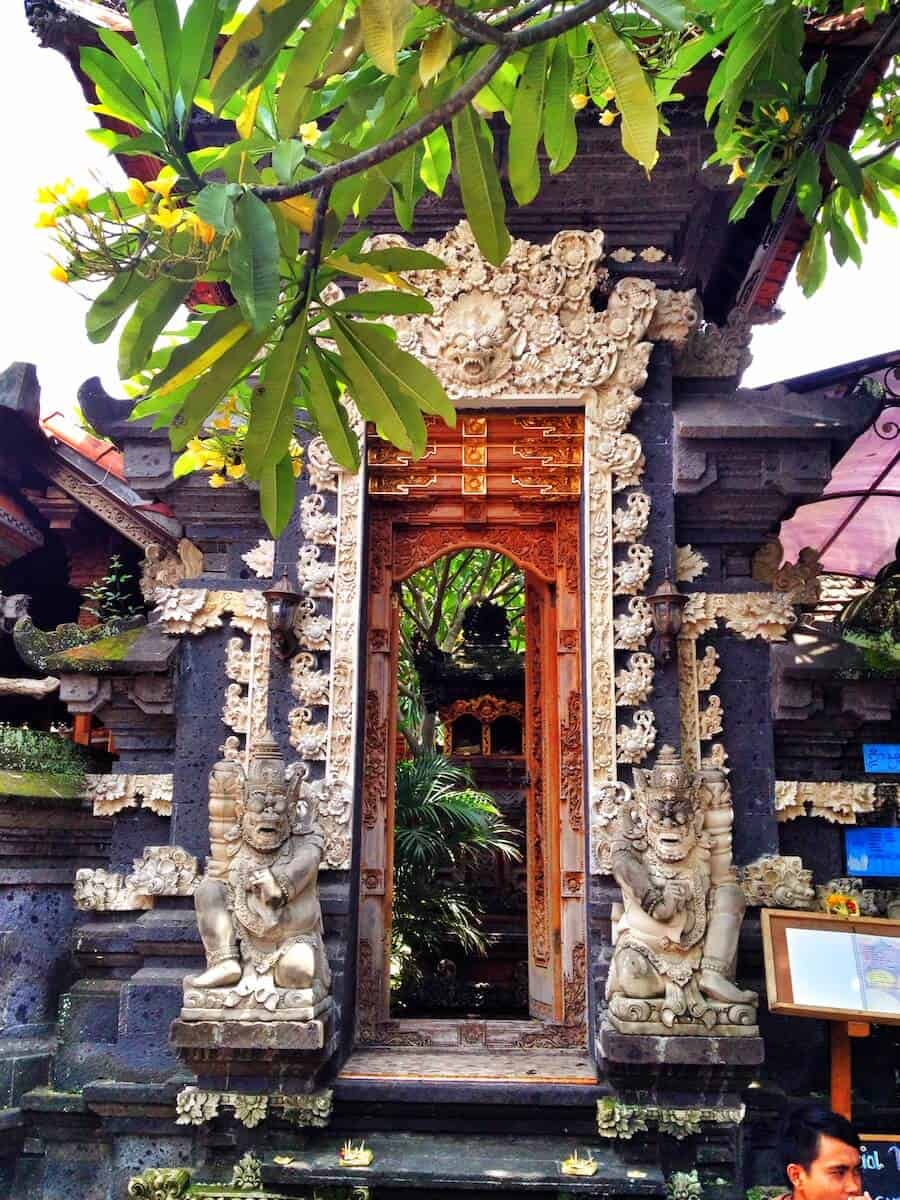
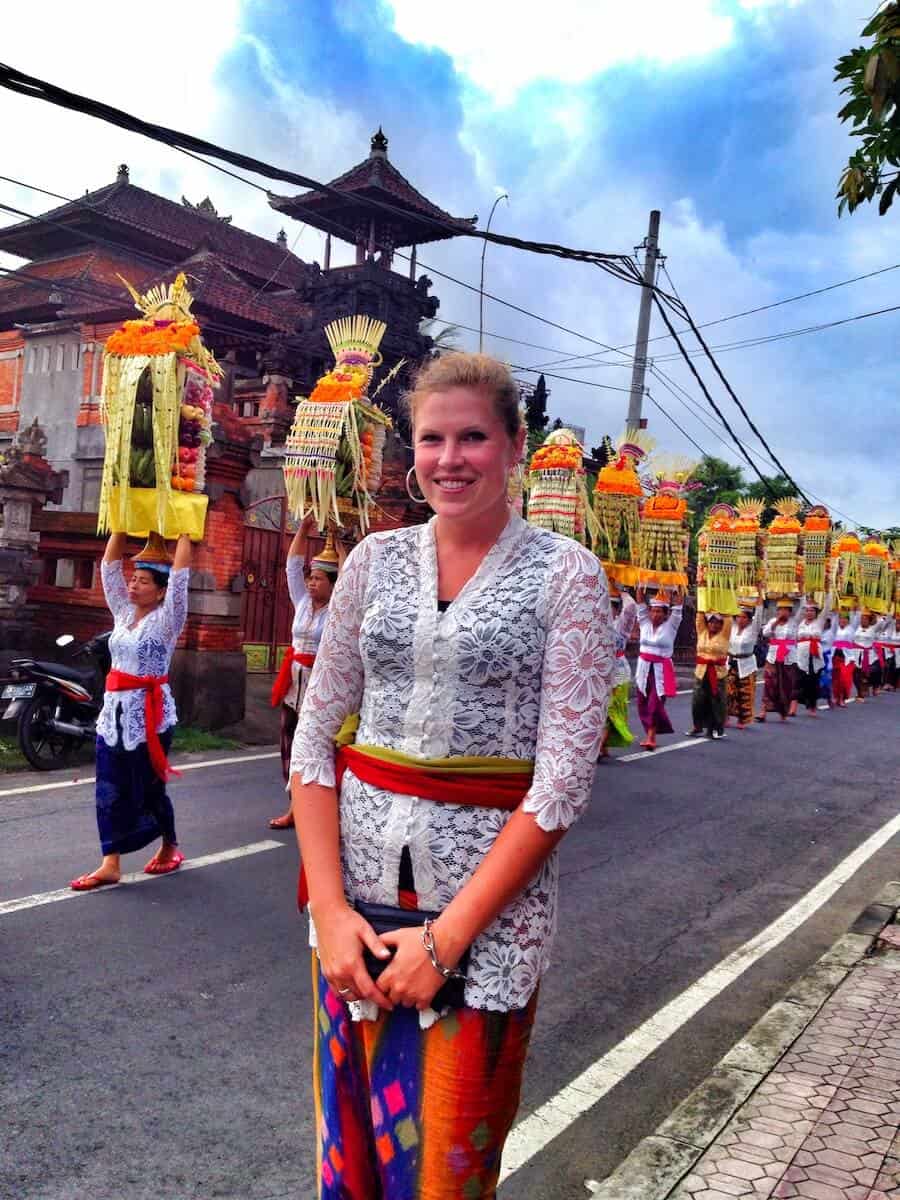
- Culture: Balinese Hinduism is ever-present around the island. You’ll see daily offerings, temple ceremonies, traditional dance performances, and colorful festivals throughout the island. I was fortunate enough to get invited to a town’s temple ceremony while I was there as the guest of my hostel host.
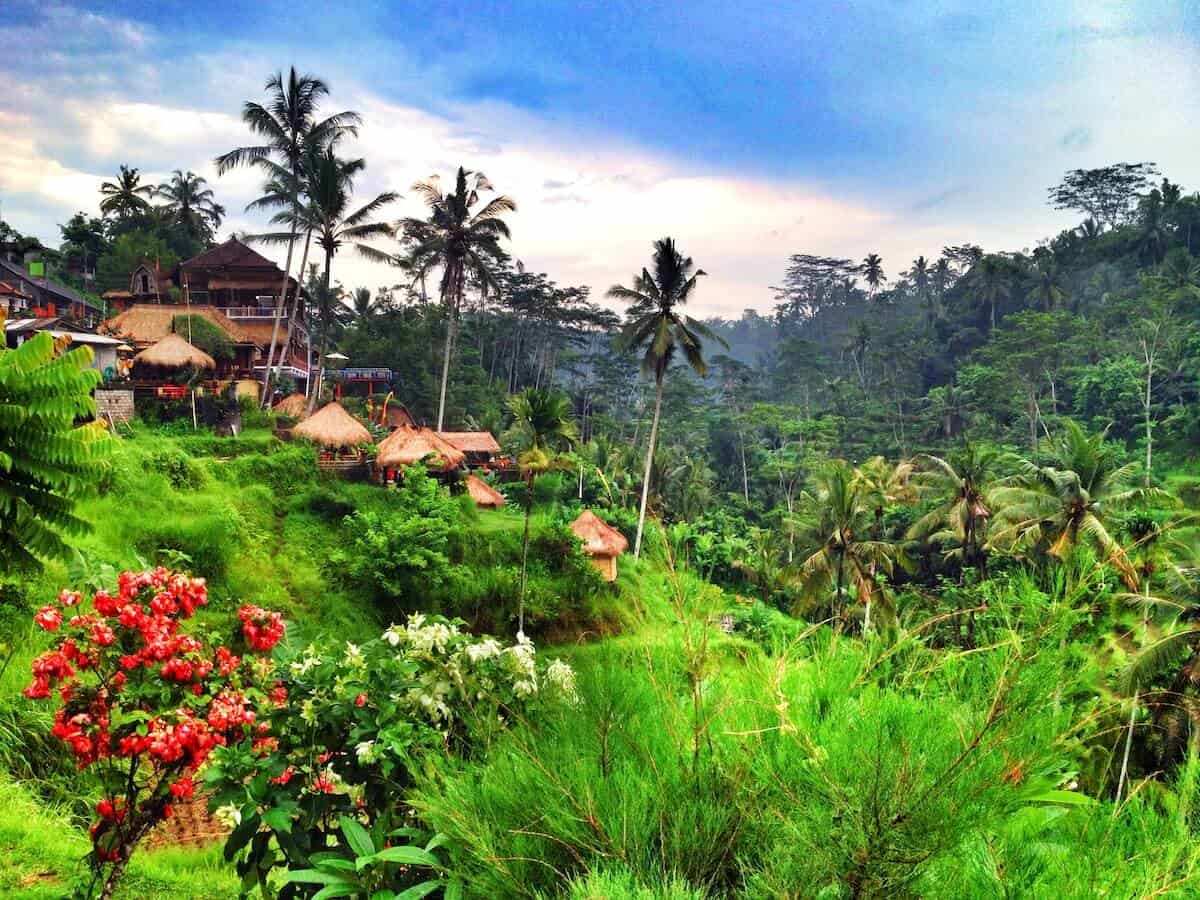
- Nature: The island is filled with stacked rice terraces, active volcanoes, hidden waterfalls, and monkey-filled jungles. Seriously one of the most beautiful islands.
- Wellness and Spirituality: Bali has become a global center for yoga, meditation, and holistic health. Retreat centers dot the countryside, especially in Ubud.
- Affordable Luxury: You can stay in a private pool villa, enjoy spa treatments, and dine at chic restaurants for a fraction of what you’d pay elsewhere. As a backpacker, it really helped me stretch my budget while living an amazing life!
- Digital Nomad Culture: Towns like Canggu have become hubs for remote workers, thanks to the tropical lifestyle, solid Wi-Fi, and global community. If you have the flexibility to come and stay for a month, rent a villa and give it a try!
It’s this rare combination that keeps Bali on the world’s travel radar, and why ultimately, it deserves a visit.
Is Bali expensive to visit?
Bali is known for being very budget-friendly, but it also has plenty of luxury options. Here’s what you can expect based on your budget.
- Budget Travelers ($25–$50/day): Stay in guesthouses or hostels, eat at local warungs (small restaurants), and get around by scooter or rideshare apps.
- Mid-Range Travelers ($75–$150/day): Enjoy boutique hotels or villas, dine at trendy cafes or beach clubs, and book a few guided tours.
- Luxury Travelers ($200+/day): Stay in private pool villas or luxury resorts, indulge in spa treatments, hire a private driver, and dine at upscale restaurants.
Your daily cost will depend on your travel style, accommodation type, how often you eat out, and whether you hire private transportation or explore independently. Season also plays a role as peak periods like July-August and December can see prices rise across the board.
What language do they speak in Bali?
The official language of Bali is Bahasa Indonesia, the national language of Indonesia. However, the local language spoken by many residents is Balinese, which has its own script and dialects.
In tourist areas, English is widely spoken, especially by those working in hospitality, tourism, and transportation. This is perfect as you can get around with just English, but I still recommend you try to pick up a few key words used by the locals.
Is Bali safe for solo female travelers?
Yes, Bali is considered safe for solo female travelers. I spent some time alone in Bali and always felt safe. You’ll also meet many women who have traveled there alone for yoga retreats, wellness experiences, or remote work stints.
That said, general travel precautions still apply and a few specific tips for Bali:
- Avoid walking alone at night in isolated areas
- Be cautious when riding scooters and make sure your insurance covers you!
- Drink sealed bottled water
- Watch your drinks in nightlife areas
- Dress respectfully when visiting temples
How do you get to Bali?
Most travelers arrive via Ngurah Rai International Airport (DPS), located just south of Denpasar.
You can fly to Bali directly from many major Asian cities like Singapore, Kuala Lumpur, Bangkok, Doha (Qatar Airways), Dubai (Emirates), and Tokyo / Seoul as well as Australian cities like Sydney and Melbourne and some European cities (with seasonal routes or stopovers).
Flights to Bali from the U.S. and Canada usually involve 1–2 stopovers, often in the Middle East or East Asia.
How big is Bali and how do you get around?
Bali may look small on a map, but it covers an area of approximately 2,231 square miles (5,780 square kilometers). This makes it about the same size as the U.S. state of Delaware. Despite its fairly small size, getting around the island takes time due to winding roads and traffic, especially in the south.
That said, it’s absolutely possible to visit multiple regions in a single trip. Many visitors, me included, split their time between the cultural center of Ubud and a beach area like Seminyak, Canggu, or Uluwatu.
The easiest ways to get around are:
- Scooter rental: Popular for confident drivers, especially in Canggu and Ubud. This was the way we typically got around.
- Private drivers: Affordable and ideal for day trips or transfers between towns.
- Ride-hailing apps: Services like Grab and Gojek are widely used in the south.
- Taxis: Available but often more expensive than app-based options. This was the other main way we got around due to a lack of cellular service and Wi-Fi when we were there.
Where to Go in Bali: Regions and Highlights
Bali is a mid-sized island that offers incredible variety. Getting around is relatively easy, especially if you rent a scooter or hire a private driver. Here’s a breakdown of key areas you may want to visit.
South Bali: Beaches, Nightlife, and Surf
This is where I started my travels in Indonesia, and I’m glad I did, as it was a great introduction but definitely not my favorite part!
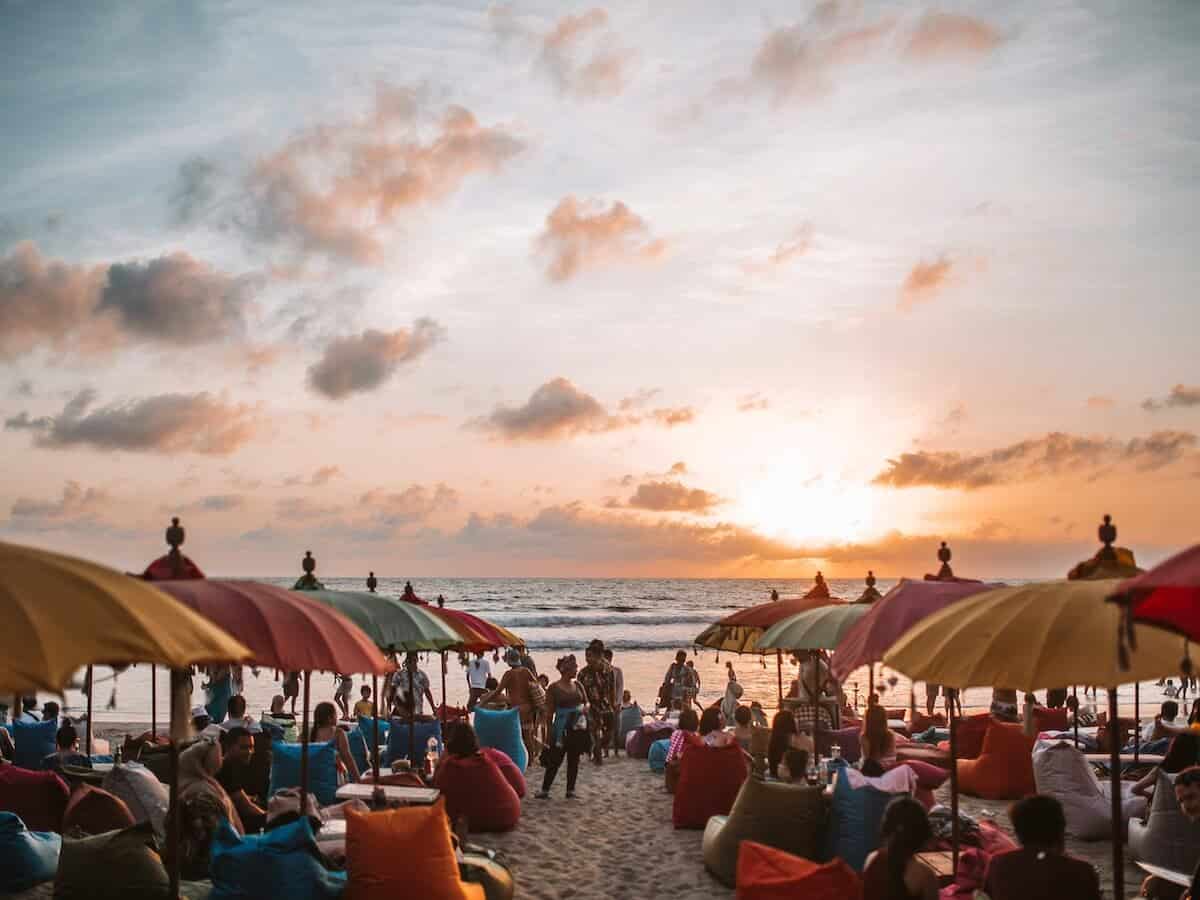
- Seminyak: Stylish and upscale, with trendy restaurants, designer boutiques, and beach clubs like Potato Head and KU DE TA. It’s a go-to spot for people who want to see and be seen.
- Canggu: A laid-back surf town popular with digital nomads. Expect hip cafes, coworking spaces, street art, and rice fields. It strikes a balance between chill and lively.
- Kuta and Legian: Older, more budget-friendly beach areas with a party vibe. These were Bali’s original tourist zones and still draw in those looking for nightlife.
- Uluwatu: Known for dramatic cliffs, epic surf breaks, and sunset temples. Uluwatu is perfect for surfers and couples, with a quieter, more romantic feel.
- Nusa Dua: A gated resort area with high-end hotels, calm beaches, and family-friendly amenities. Great for honeymooners and families looking for a stress-free stay.
Central Bali: Culture and Nature
This is where I went next, and I have to say, I much preferred the more naturally beautiful parts of Bali in Ubud and surrounding areas.
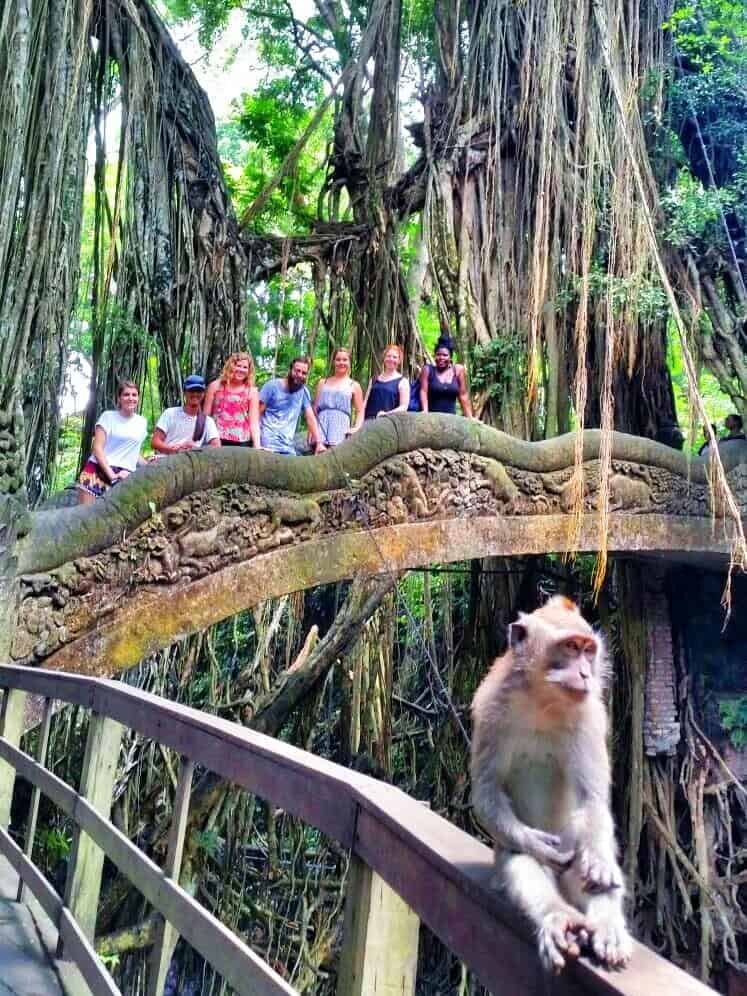
- Ubud: The cultural and spiritual heart of Bali. Expect rice terraces, yoga studios, art galleries, monkey forests, and wellness retreats. Personally, I found Ubud to be more laid-back and less touristy than the beach areas.
- Tegallalang: Famous for its photogenic rice terraces and jungle swings. It’s a quick day trip from Ubud and is one of the most Instagramable places in Bali.
- Tirta Empul: A sacred water temple where visitors can participate in purification rituals. It’s one of the island’s most spiritually significant spots.
East Bali: Peaceful, Scenic, and Less Visited
While I didn’t spend much time on the east coast of Bali, I did venture this way to take a boat over to Java.
- Amed: A quiet coastal village known for diving, snorkeling, and in general laid-back vibes. Its black sand beaches and traditional fishing boats offer a slower pace of life.
- Tirta Gangga: A royal water palace with fountains and koi ponds. Beautiful for photography.
- Mount Agung: Bali’s tallest volcano. Consider a sunrise trek if you’re up for a challenge. (There are tons of sunrise volcano treks in Indonesia!) It’s also a sacred mountain in Balinese culture.
North Bali: Waterfalls and Volcanic Views
This is an area that we only visited briefly by motorbike to check out the areas, try the coffee, and visit some waterfalls, but it was worth the trip!
- Lovina: Known for black sand beaches and dolphin-watching tours. It’s far from the crowds and a great base for exploring northern temples and villages.
- Munduk: A highland village surrounded by waterfalls, coffee plantations, and hiking trails. Expect cooler temperatures and stunning scenery.
Nusa Islands: Off-the-Coast Adventures
While I have not made it over to the Nusa Islands, I wanted to include them as they are home to one of the most popular social media posting locations: Nusa Penida Tree House or the Rumah Pohon Treehouse. Trust me. If you follow any Bali pages, you’ve seen this little hut with views of the island below.
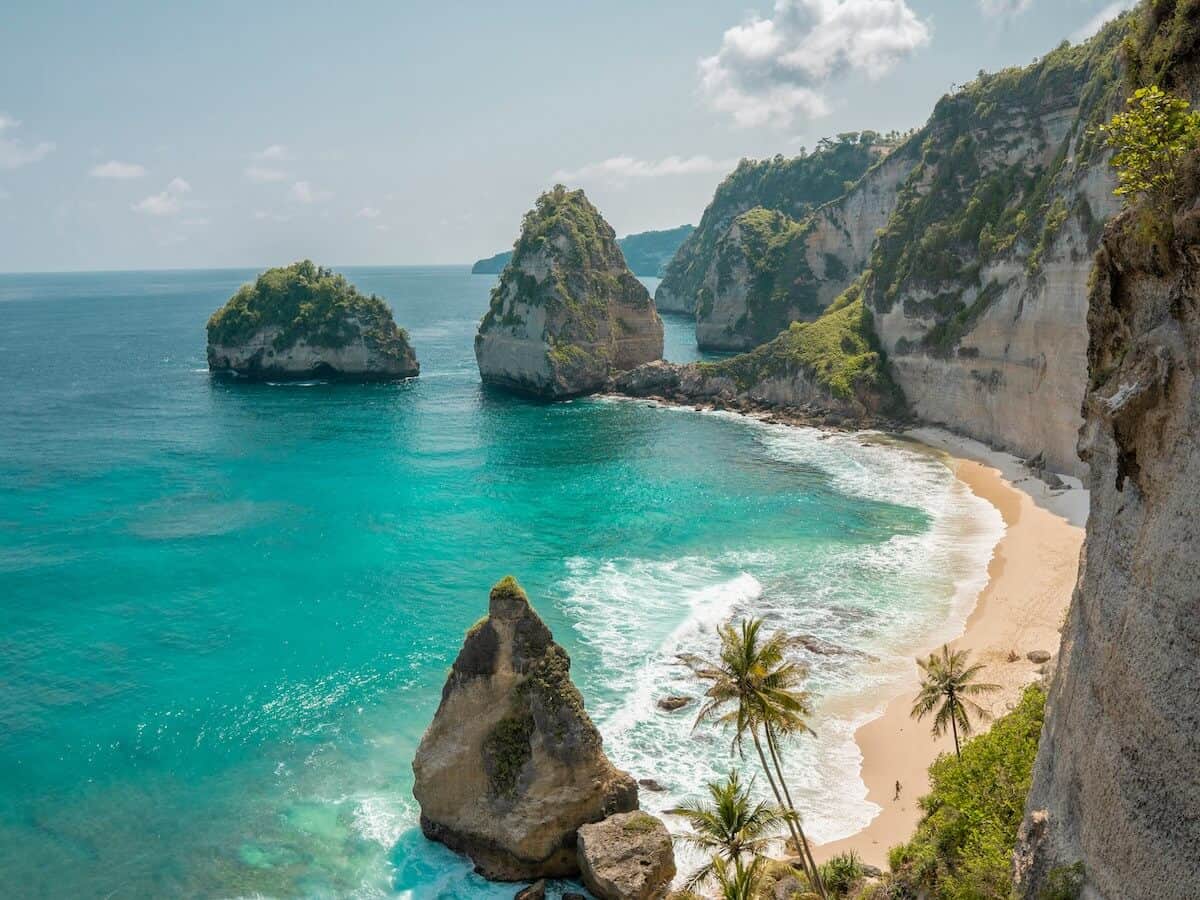
- Nusa Penida: Home to Bali’s most iconic cliffs and beaches, like Kelingking and Broken Beach. Popular as a day trip or overnight stay, though roads can be rough.
- Nusa Lembongan & Nusa Ceningan: Smaller islands with beach bars and beautiful sunsets. Great for snorkeling and a slower pace. I personally opted for the Gili Islands off Lombok instead, but I’ve heard great things about the Nusa Islands!
My Bali Experience
I made my way to Bali by way of Australia. It was the next logical destination on my world tour.
Ultimately, I started in South Bali at the beaches and generally found them to be extremely touristy. The beaches themselves aren’t particularly special, and it’s hard to relax when you’re constantly approached by touts trying to sell you things.
That said, the food and drink scene near the coast is incredible. There’s something for every budget, from trendy cafes to local warungs. But the popularity of these areas means they’re often crowded and, frankly, lack the charm many people expect from Bali.
I personally preferred Ubud and the more untouched parts of the island. There, I found monkey forests, quiet rice terraces, and local temple celebrations with my hostel host. I hiked to waterfalls where you can swim and did a sunrise volcano trek on Christmas morning that I’ll never forget.
If you’re dreaming of a Bali escape, I recommend you start your trip at the beach and then head inland to take in the culture. I personally would have have been quite disappointed to do it in the reverse order.
Explore More of Indonesia
So now you know what Bali is, I hope. Bali is not a city, not a country, and not just a tropical beach. It’s a culturally rich island within Indonesia that has something for everyone from temples and jungles to beaches and wellness retreats. There’s a reason you’ve heard of it, and why you should visit it for yourselves!
Need more information about traveling to Bali and the rest of Indonesia? Check out these posts.
- Day Trip to Borobudur and Prambanan: The Complete Guide
- Visiting Mount Bromo, Indonesia: An Active Volcano
- Gili Trawangan Travel Guide: Which Gili Island is Right for You?
- Where is Bali? Location, Maps, Fast Facts, and More!
- 10 Best Things to Do in Yogyakarta: Culture Capital of Indonesia
- 1 Day in Jakarta: 24 Hour Itinerary in the Capital City
- How to Hike to Ijen Crater and the Blue Flames
- 4 Day Boat Trip to Komodo Island with Komodo Adventure and Beyond
- Renting a Motorbike to Get Off the Beaten Path in Lombok
- Kuta, Bali: Paradise for Australians?
Like this post? Pin it.


