
Where is Egypt? Location, Culture, and Identity
I’ve been to Egypt three times, and each visit revealed that the country is misunderstood. We’re talking confusion when it comes to where Egypt is located, what region it belongs to, and how geography shapes Egyptian culture and identity.
From sailing the Nile, to wandering Cairo’s neighborhoods, to diving in the Red Sea off Hurghada and Marsa Alam, to hiking Mount Sinai and down time in Dahab, I’ve experienced Egypt beyond just the highlights. And yet, I still hear the same questions again and again: Is Egypt in Africa or the Middle East? Is Egypt Arab or African? What continent is Egypt on? These aren’t silly questions as Egypt sits at the crossroads of continents, cultures, and histories.
This guide breaks it all down clearly and thoroughly: where Egypt is on the map, what countries border Egypt, whether Egypt is part of Africa or Asia, and how its unique geography influences Egyptian people, culture, religion, and the sheer range of experiences you can have there.
Disclosure: Some of the links below may be affiliate links. At no additional cost to you, I may earn a small commission if you make a purchase.
Where is Egypt?
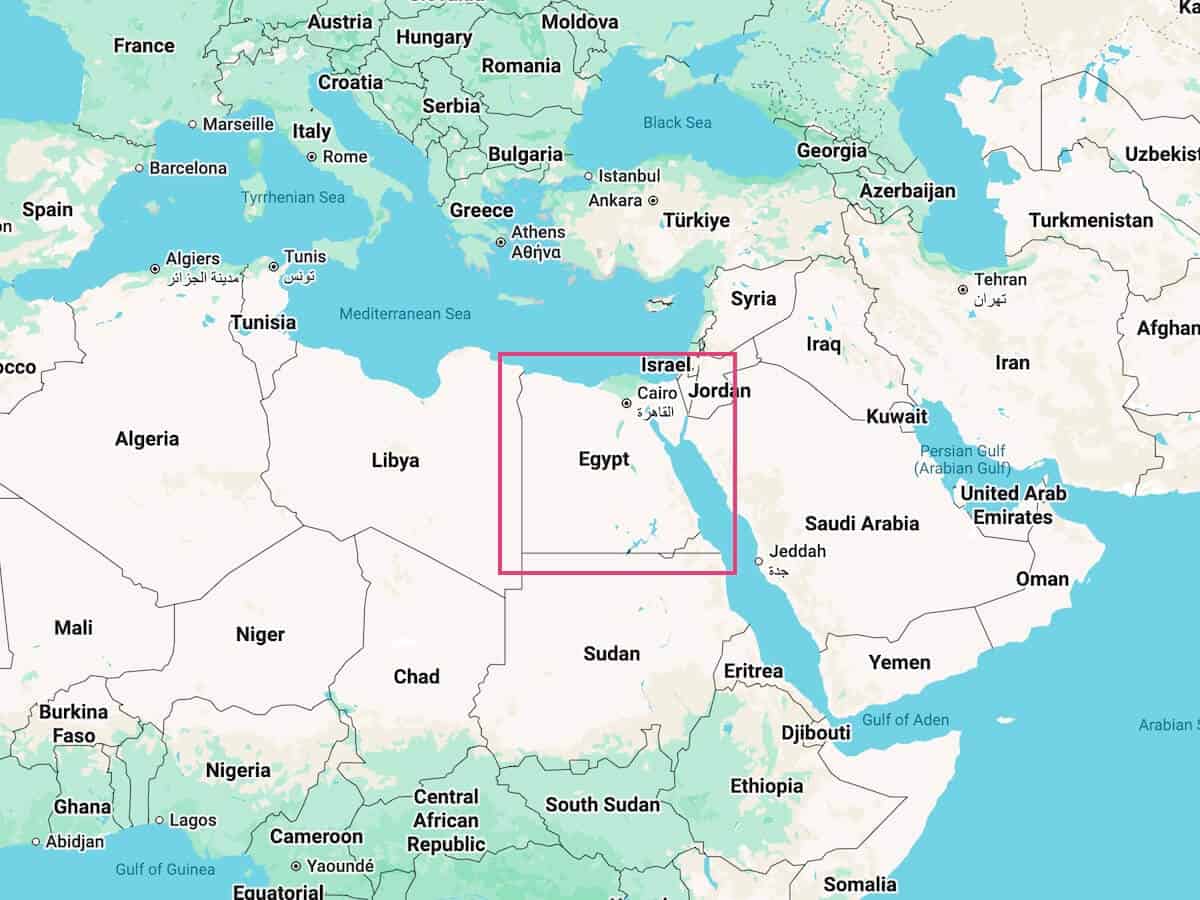
Egypt is a country in northeastern Africa, with a smaller but critically important portion of its land located in Western Asia. This alone explains much of the confusion around Egypt’s identity.
If you’re wondering where is Egypt in the world map, you’ll find it positioned at one of the most strategic locations on Earth:
- In North Africa, anchoring the continent’s northeastern corner
- Along the Mediterranean Sea to the north
- Along the Red Sea to the east
- At the physical meeting point of Africa, the Middle East, and the Mediterranean basin
Egypt’s location has shaped it into a hub of trade, empire, religion, and migration for thousands of years, and it still plays that role today.
Where is Egypt on the Map?
On a world map, Egypt sits:
- Directly south of Europe, separated by the Mediterranean Sea
- West of the Middle East, connected by land through the Sinai Peninsula
- East of Libya
- North of Sudan
The Nile River runs from southern Egypt northward into the Mediterranean. Nearly all of Egypt’s major cities, and the overwhelming majority of its population, developed along this river.
Is Egypt a Country?
Yes, Egypt is a sovereign country with one of the longest continuous histories of any nation on Earth.
Its official name is the Arab Republic of Egypt. It has its own government, borders, military, currency, and legal system, and it plays a major diplomatic role in Africa, the Middle East, and globally.
The Capital of Egypt
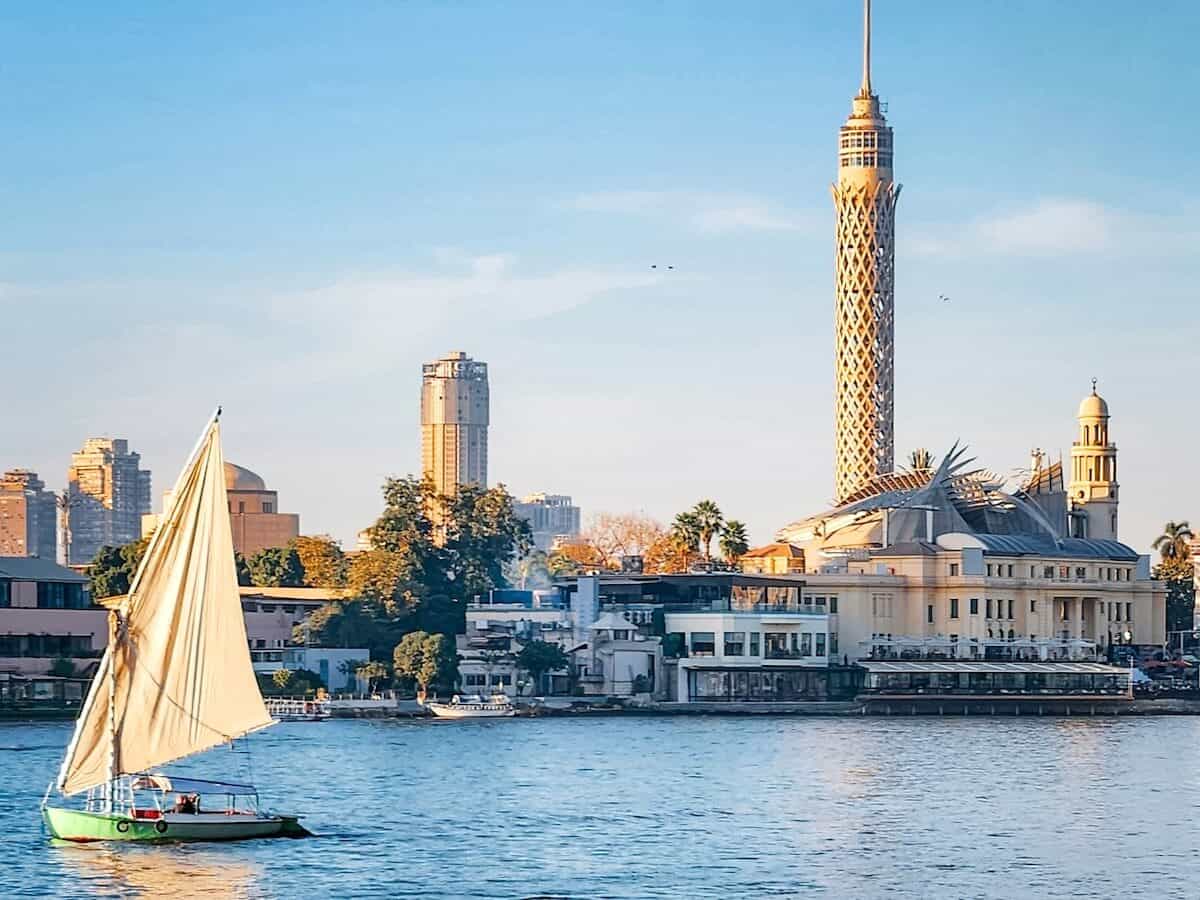
The capital of Egypt is Cairo, one of the largest cities in Africa and the Middle East.
Cairo is:
- Home to over 20 million people in the greater metropolitan area
- A blend of ancient, medieval, colonial, and modern architecture
- Located just east of the Giza Plateau, where the famous Pyramids of Egypt stand
Spending time in Cairo helps you learn more about the country and its people and their culture versus just a historic destination and land of the Pharaohs. Take some time to explore Cairo’s mosques, Coptic churches, markets, and neighborhoods which all exist side by side, often within the same block.
Where are the Egyptian Pyramids Located?
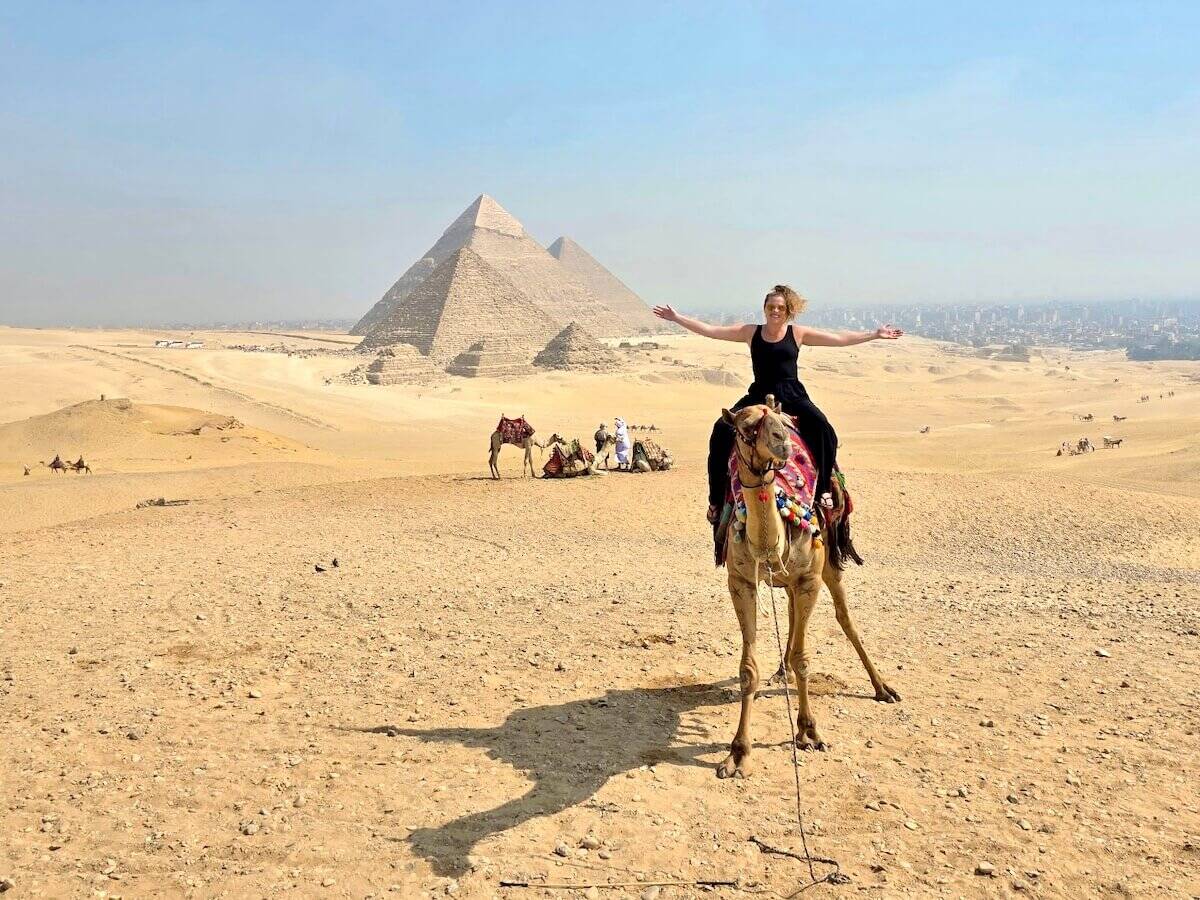
The most famous pyramids, the Pyramids of Giza, are located on the Giza Plateau, just outside Cairo on the west bank of the Nile River.
People are often surprised to learn how close they are to the city. From certain angles, you can see apartment buildings, highways, and Cairo traffic just beyond the pyramids. Or my favorite fact: There’s a Pizza Hut and KFC right across from the Sphinx, which is also located on the Giza Plateau. It’s been there for at least 20 years…
What Countries Border Egypt?
Egypt has three land borders:
- Libya to the west
- Sudan to the south
- Israel to the northeast (through the Sinai Peninsula)
It also has extensive coastlines along two major bodies of water, the Red Sea and the Mediterranean Sea, which dramatically shape who Egypt is connected to.
What Countries are Closest to Egypt Geographically?
Water plays a major role with Egypt’s neighbors. While Egypt does not share land borders with many countries, it is geographically very close to several other countries across narrow seas and gulfs.
Countries close to Egypt by water include:
- Saudi Arabia: approximately 95–125 miles (150–200 km) across the Red Sea
- Jordan: roughly 9 miles (15 km) across the Gulf of Aqaba at the narrowest point
- Greece: about 435–500 miles (700–800 km) across the Mediterranean
- Turkey: approximately 560 miles (900 km) by sea
- Cyprus: around 340 miles (550 km) across the Mediterranean
These water borders explain Egypt’s long-standing maritime trade routes and culture. For example, from the Red Sea coast, Saudi Arabia feels surprisingly close, both geographically and culturally.
What Continent is Egypt On?
Egypt is primarily in Africa, but it is also transcontinental.
- About 94% of Egypt’s landmass lies in Africa
- The remaining portion is the Sinai Peninsula, which is geographically part of Asia
The Suez Canal, a man-made waterway, marks the boundary between African Egypt and Asian Egypt.
Fun Fact: This little strip of water divides the continents, and they stamp your passport when you cross from one side to the other! (Or at least they did when I passed through in 2015!)
Who Owns the Suez Canal?
The Suez Canal is owned and operated by Egypt through the Suez Canal Authority (SCA), a state-owned body responsible for managing, maintaining, and collecting tolls on this waterway connecting the Mediterranean and Red Seas. Originally controlled by a British-French company, the canal was nationalized by Egypt in 1956, placing it fully under Egyptian government authority.
Is Egypt in Africa or Asia?
Egypt is officially considered an African country, but because it includes the Sinai Peninsula, it also spans Asia. This dual identity is central to understanding Egypt’s culture and geopolitics.
Is Egypt Part of the Middle East?
Yes, Egypt is also widely considered part of the Middle East, especially in political, cultural, and linguistic contexts.
Although Egypt is geographically African, it is grouped with Middle Eastern countries because of:
- The Arabic language
- Predominantly Islamic culture
- Shared history with the Levant and Arabian Peninsula
- Political alliances and regional organizations
You’ll often see Egypt included in the term MENA (Middle East and North Africa), which more accurately reflects its joint identity.
Culture-wise, What is Egypt Closest To?
Culturally, Egypt shares similarities with:
- Levantine countries like Jordan and Palestine
- The broader Arab world
- Sudan and parts of North Africa
That said, Egypt is culturally distinct even within the Arab world. Egyptian humor, music, film, food, and dialect are unique and widely influential across the region. And I’ve had the good fortune to learn quite a bit about it between my trips to Egypt and my Egyptian friend in Raleigh.
Geography of Egypt & Why It Matters for Travel
Egypt’s geography is one of the biggest reasons the country offers such a wide range of travel experiences and why just one visit is never enough.
The Nile River Valley
The Nile is the center of Egypt. It is home to famous cities like Luxor and Aswan and the site of most of the ancient temples, tombs, and villages in Egypt. To experience the Nile, you can take a river cruise (highly recommend) or slowly travel overland. Don’t just pop into one of the cities for the day or two as you’ll miss so much of this important region.
The Deserts
As you might expect, over 90% of Egypt is desert. We’re talking both the Western Desert, which includes some amazing oases, and the Eastern Desert between the Nile and Red Sea. These regions are large and feel completely different than the cities in Egypt.
The Red Sea Coast
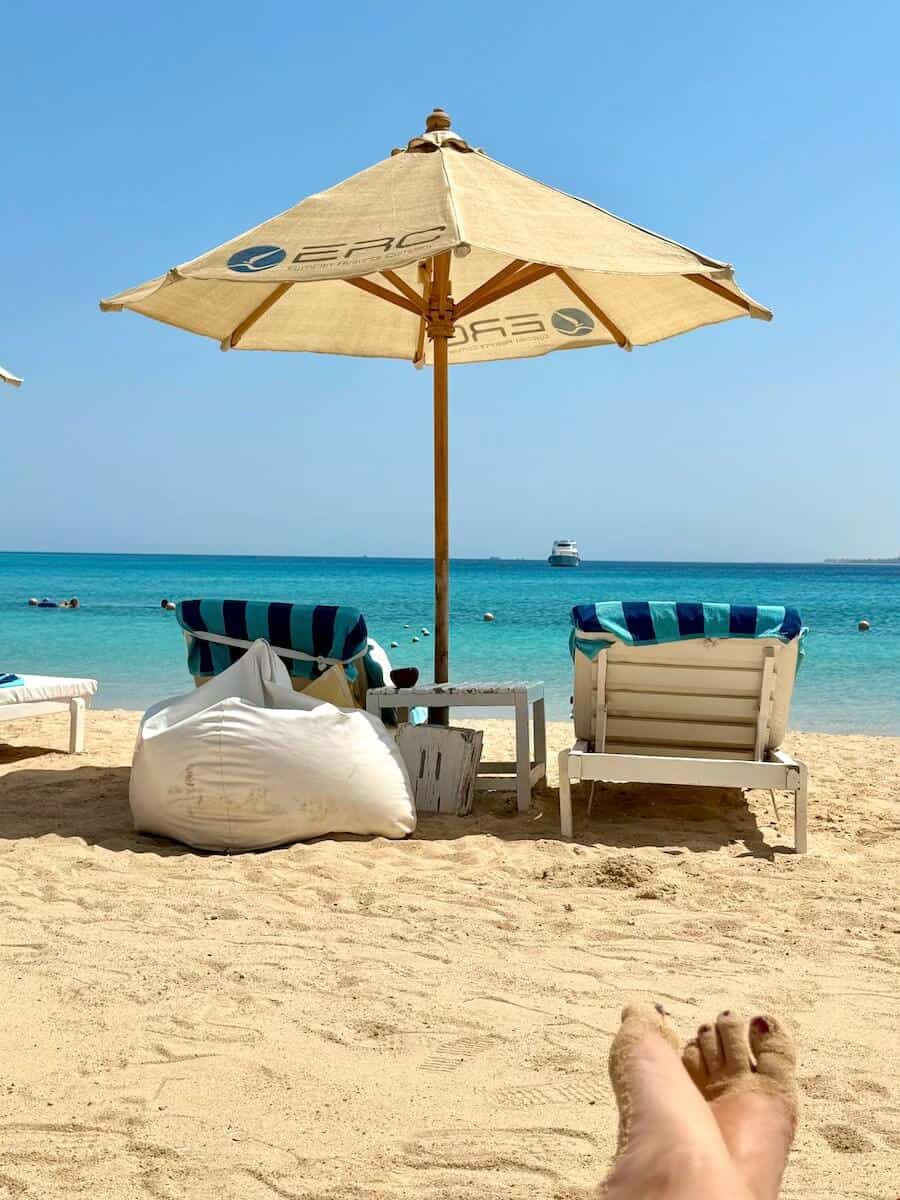
The Red Sea on the other hand offers a completely different side of Egypt. We’re talking world-class scuba diving and snorkeling with coral reefs, marine life, and resort towns. You may have heard of places like Hurghada, El Gouna, Marsa Alam, and Sharm El Sheikh.
This is where Egypt surprises most international visitors. In fact, on my latest trip to Egypt, which was for a dive trip out of the southern Port of Hamata, everyone I talked to was shocked that Egypt had amazing scuba diving, but you’ll actually find a lot of Dive Liveaboards here. (And it’s worth it!)
The Sinai Peninsula
Sinai feels culturally and geographically distinct as well. We’re talking rugged mountains and deserts, like the famous Mount Sinai. This important religious site allows you to hike up the mountain to where Moses received the ten commandments. It’s quite beautiful!
And you can base yourself in towns like Dahab where Bedouin culture is still alive and well. In fact, the Sinai Peninsula bridges Africa and Asia not just geographically, but culturally.
Are Egyptians Arab or African?
The answer is not either/or… it’s both, and more. Yes, I get that it sounds confusing, but it doesn’t have to be.
Are Egyptians Arab?
Modern Egyptians are considered Arab in terms of language, cultural affiliation, and national identity. Arabic became dominant after the 7th century, but it part of an already ancient civilization rather than replacing it.
Are Egyptians African?
Yes, Egyptians are African by geography, and many Egyptians, particularly in the south, strongly identify with Africa. Nubian communities, especially near Aswan, maintain distinct traditions, music, and architecture.
What Race is Mostly in Egypt?
Egypt does not fit neatly into modern racial categories. In fact, Egyptians are ethnically diverse. Most have mixed ancestry: ancient Egyptian, Arab, African, Mediterranean, and Middle Eastern. You could say that their identity is cultural and national rather than racial.
What Ethnicity are Egyptians?
Most Egyptians identify ethnically as Egyptian. While ancestry may vary widely, modern identity centers around their history, language, and cultural traditions. Western racial and ethical classifications simply don’t translate cleanly to Egypt.
What Language Do They Speak in Egypt?
The official language of Egypt is Arabic. Daily life is conducted in Egyptian Arabic. While Modern Standard Arabic is used in education and media.
Egyptian Arabic is one of the most widely understood dialects in the Arab world, largely due to Egypt’s film, television, and music industries.
English is also commonly spoken in tourist areas, and French appears occasionally in education and older institutions.
What is the Main Religion in Egypt?
Egypt is predominantly Muslim but also has deep Christian roots. We’re talking about 90% Sunni Muslim and around 10% Christian, primarily Coptic Orthodox.
Christianity has existed in Egypt since the earliest centuries of the faith. Ancient monasteries, desert churches, and Coptic neighborhoods remain present throughout the country. When you visit Cairo, you get the opportunity to visit both mosques and churches to learn more about Egypt’s religions.
Why Egypt is so Often Misunderstood
After traveling extensively through Egypt over my multiple trips, Nile temples, Sinai mountains, Red Sea dives, and multiple stays in Cairo, it becomes clear that much of the misunderstanding comes from trying to simplify a country that has never been simple… even since the pharoahs!
Egypt is:
- African, yet also Middle Eastern.
- Arab, yet unmistakably Egyptian in its dialect, humor, and culture.
- Ancient, yet modern and constantly evolving.
- Conservative in some regions, and surprisingly relaxed in others.
Few countries carry so many overlapping identities at once.
For many outsiders, Egypt is reduced to a single image: pyramids, camels, desert, and history frozen in time. But that narrow view ignores the reality of everyday life, like the traffic and driving in Cairo and coastal towns where life revolves around the sea.
Geography plays a role in this confusion. Egypt sits in Africa, stretches into Asia, and is politically grouped with the Middle East. Culturally, it touches all of these worlds without fully belonging to just one. That in-between position makes Egypt hard to categorize and easy to misunderstand if you’re looking for neat labels, which we are so fond of in the United States.
Explore More of Egypt
Ready to get up close and personal with Egypt? Here are some more posts from my many trips and travels around Egypt. It really is a special place and deserves more than one trip to see all it has to offer.
- Where is Egypt? Location, Culture, and Identity
- 9 Common Scams in Egypt (and How to Avoid Them)
- One Day in Cairo: Explore the Best of Egypt’s Capital in 24 Hours
- How to Spend 3 Days in Dahab: Paradise on a Budget
- Discover the 8 Best Hotels in Dahab: Where to Stay on Vacation
- 14 Best Things to Do in Dahab, Egypt & the Sinai Peninsula
- How to Get from Cairo to Dahab in Egypt: 4 Transportation Options
- Climbing Mount Sinai: Everything You Need to Know
- Taking the Ferry from Jordan to Egypt: A Local Experience
- How to Get an Egyptian Visa in Aqaba, Jordan


