
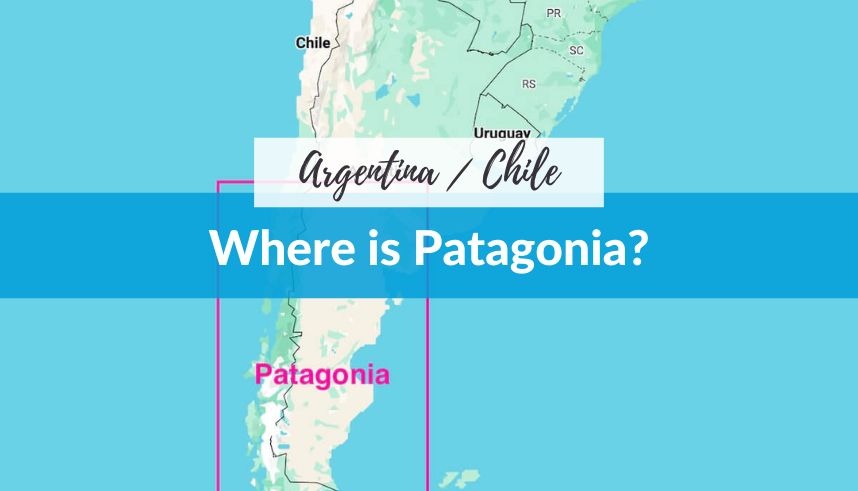
Where is Patagonia Located? Visiting One of the World’s Best Regions
If you’ve seen my photos of jagged mountain peaks, turquoise glacial lakes, and remote windswept plains and wondered where in the world is that, chances are, you were looking at Patagonia. Known for its breathtaking landscapes and remote wilderness, the Patagonia region of South America is a dream destination if you love nature, hiking, or adventure.
But where is Patagonia exactly? Is it a country? A province? And what makes it so special? This post breaks down everything you need to know about Patagonia’s location, geography, and why it’s one of the most beautiful places to travel to in the world.
Disclosure: Some of the links below may be affiliate links. At no additional cost to you, I may earn a small commission if you make a purchase.
Where is Patagonia?
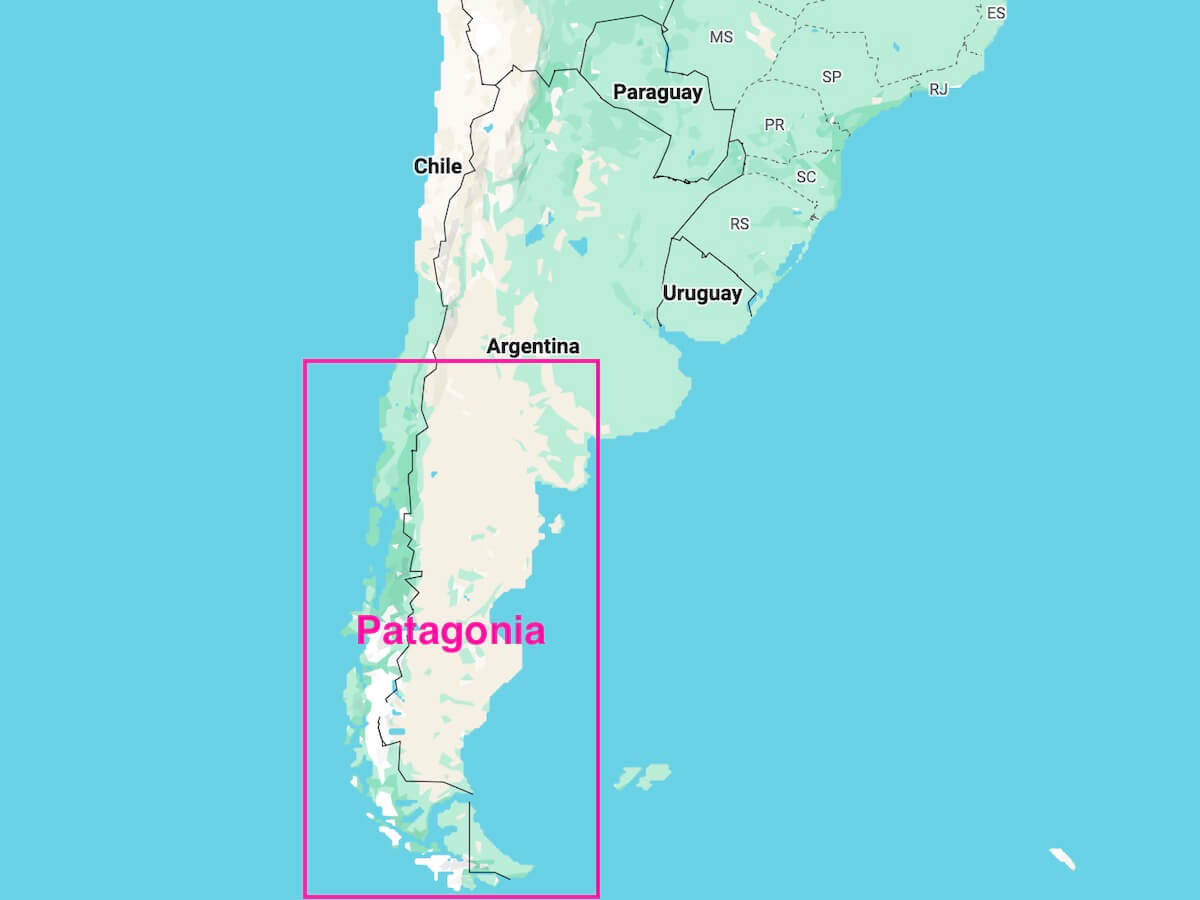
Patagonia is a geographical region located at the southern part of South America, shared by two countries: Argentina and Chile. It’s not a country itself, but rather a loosely defined region that spans the lower portion of both nations.
On a map of South America, you’ll find Patagonia occupying the southern cone of the continent, stretching from around latitude 37° S all the way down to the southern tip of the continent at Tierra del Fuego and Cape Horn.
- On the Argentine side, Patagonia begins just south of the Colorado River and extends to the Strait of Magellan.
- On the Chilean side, it typically begins just south of Puerto Montt, and continues all the way down to the southernmost islands of the continent.
While the exact borders of Patagonia are debated and vary depending on who you ask, what’s certain is that it covers a massive area of roughly 1,043,000 square kilometers (about 403,000 square miles). This makes it one of the largest and most remote natural regions in the world.
Map of Patagonia
Let’s take a look at where Patagonia is on a map to clear it all up.
Common Misconceptions about Patagonia
When we talk about travel and places to go, it’s usually a city or country that we’re talking about, not a region. That’s what makes Patagonia unique and a bit hard to understand for some. So let’s talk about some of the common misconceptions about this region.
- “Is Patagonia a country?”
Nope. Patagonia is a region, not a country. It’s divided between Chile and Argentina.
- “Patagonia starts at the same latitude in both countries.”
Not quite. On the Argentine side, it’s generally considered to start south of the Río Colorado, near Bariloche. On the Chilean side, it may begin farther north, around Temuco, including areas like Puerto Montt and Chiloé Island.
- “Patagonia is all mountains and snow.”
While parts of Patagonia are extremely mountainous and glaciated, especially on the Chilean side, the region also includes arid plateaus, windswept plains, and coastal deserts, especially in Argentine Patagonia.
Where is Patagonia in South America?
To answer more specifically: Patagonia is located in southern South America, stretching across the southern parts of Chile and Argentina. On the Argentine side, it includes provinces like Río Negro, Neuquén, Chubut, Santa Cruz, and Tierra del Fuego. On the Chilean side, the Patagonia region includes Aysén and Magallanes.
If you’re trying to find Patagonia on a map of South America, look toward the bottom third of the continent. To the west lies the Pacific Ocean, to the east the Atlantic Ocean, and running down the middle is the Andes Mountains, which form a natural divide between Chilean and Argentine Patagonia.
What Country is Patagonia In?
While we’ve answered where Patagonia is located, people often struggle with if Patagonia is a country or not, and I want to be straight with you. Patagonia is not a country. It is a region that spans across two countries: Chile and Argentina. Most of Patagonia’s landmass (about 90%) lies within Argentina, while the rest is in southern Chile.
Despite the shared geography, each side offers a different experience:
- Argentine Patagonia is known for wide-open steppes, glacier-fed lakes, windswept deserts, and iconic landmarks like Mount Fitz Roy and Perito Moreno Glacier.
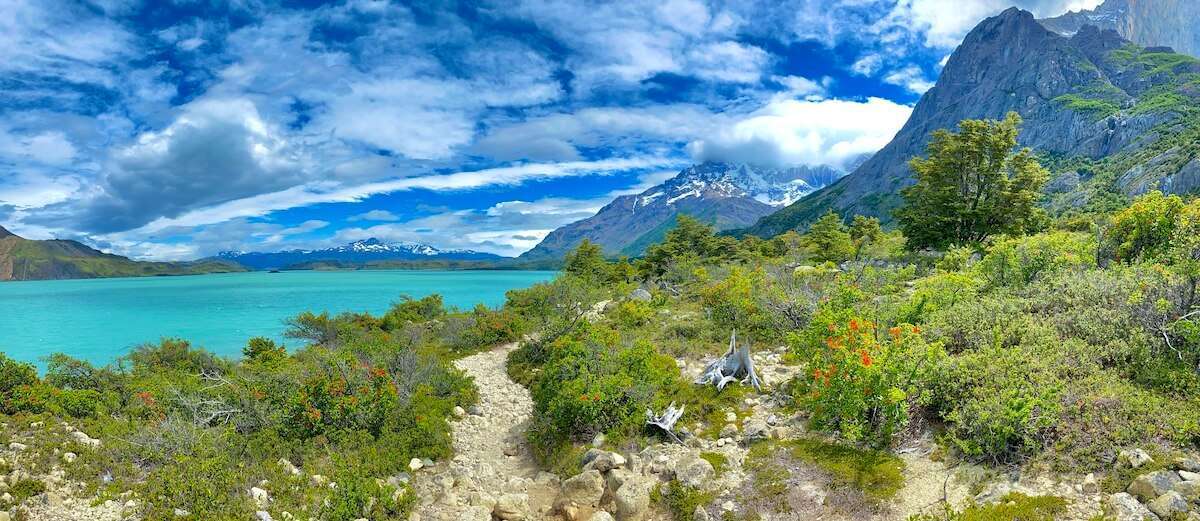
- Chilean Patagonia is famed for its rugged fjords, dense rainforests, and the jaw-dropping peaks of Torres del Paine National Park.
Both are worth exploring and offer completely different landscapes and cultures despite being part of the same region.


What is Patagonia Famous For?
Patagonia is legendary among travelers for its natural beauty, remote wilderness, and dramatic landscapes. It’s what attracted me there, and why I recommend it as one of the most naturally beautiful areas of the world!
Here are just a few things that make this region so iconic:
- The Andes Mountains: Patagonia contains the southern portion of this massive range, including some of its most photogenic peaks, like Mount Fitz Roy.
- Glaciers: Home to the Southern and Northern Patagonian Icefields, second only to Antarctica in size. It’s amazing to see the epic size of glaciers like Perito Moreno.
- Wildlife: From the Magellanic penguins of Isla Magdalena and guanacos to pumas and Andean condors, Patagonia is full ofwildlife.
- Hiking & Adventure: Trekkers like me flock to Torres del Paine, El Chaltén, and Los Glaciares National Park. Have you heard of the famous W Trek or O Trek? These are both located in Torres del Paine National Park Chile.
- End-of-the-world Feel: Southern Patagonia, particularly Tierra del Fuego, is so remote that locals often say they live at the end of the world. Head out that way and you’ll know why!
If you’re into multi-day hikes, glacier trekking, or just soaking up solitude, Patagonia is one of the last great wildernesses on Earth. Beautiful nature and not a ton of people? Yes, please!
How Big is Patagonia?
Patagonia covers an area of approximately 1,043,076 square kilometers (around 403,750 square miles). That’s larger than Texas and California combined. This makes it one of the most expansive and sparsely populated regions on the planet.
- In Argentina, Patagonia makes up nearly one-third of the country’s landmass.
- In Chile, Patagonia encompasses about one-third of the country’s southern territory.
Despite its vast size, only about 2 million people live in Patagonia, with the majority living on the Argentine side. Much of the region remains undeveloped and wild, with population densities as low as 1.5 people per square kilometer. I have to admit, that’s part of what makes this area so attractive: Lots of nature, not a lot of people.
Why You Should Travel to Patagonia
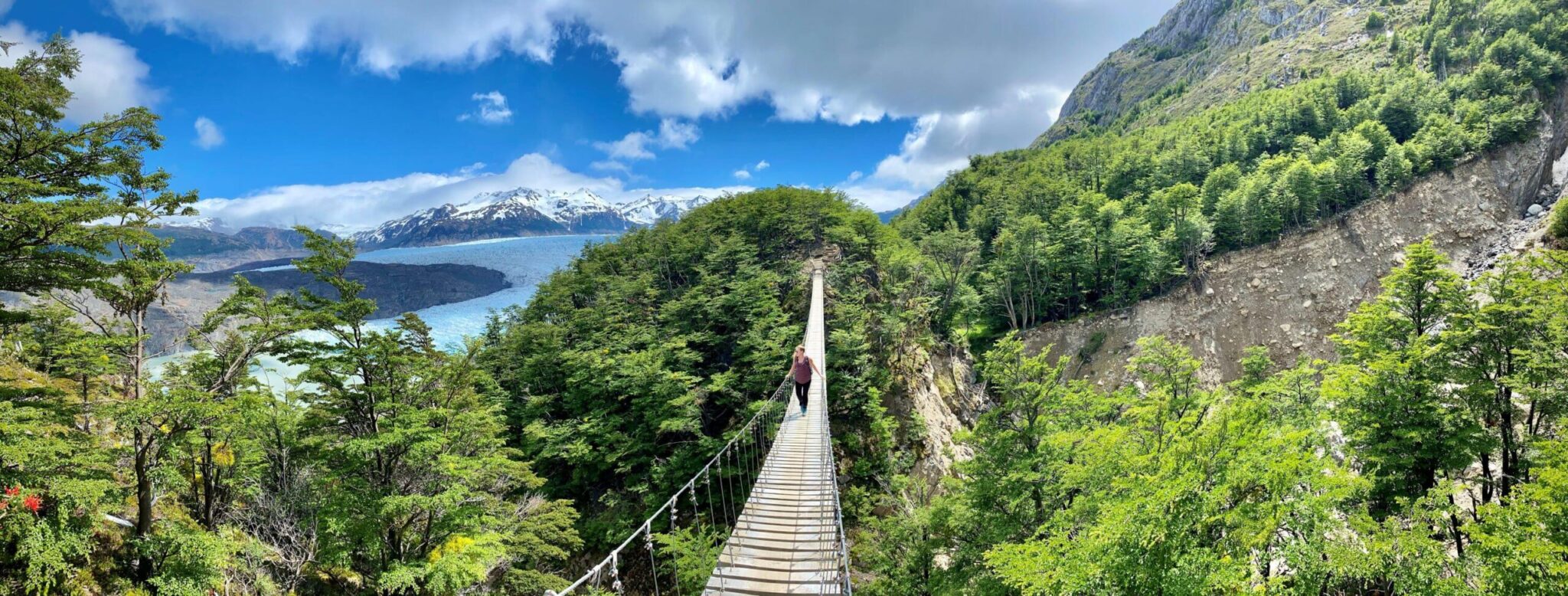
As someone who’s traveled to Patagonia and fallen in love with it, I can tell you: this place stays with you. Watch sunrise in Torres del Paine National Park. Hike to Mount Fitz Roy. Admire the glaciers and icebergs around Perito Moreno. Patagonia is unforgettable.
Its isolation, raw beauty, and diversity make it one of the most unique and rewarding destinations in the world. It’s a place where time slows down, and the natural world feels larger than life. You have to try it for yourself.
Check out this 2 week itinerary for Patagonia.
Explore More of Argentina & Chile
So, where is Patagonia? It’s at the bottom of South America, in the southern stretches of Argentina and Chile, spanning mountains, glaciers, and steppes.
If you look at a Patagonia map, plan a trek, or just dream of these faraway landscapes, now you know: Patagonia is not a country, but a region, one of the most beautiful on Earth.
- Ultimate Guide to Visiting the Penguins of Isla Magdalena from Punta Arenas
- Where is Patagonia Located? Visiting One of the World’s Best Regions
- Visiting Perito Moreno Glacier: The Ultimate Guide
- Where to Stay in El Calafate: Hotels for All Budgets
- Best Time of Year to Visit Patagonia: Season by Season Breakdown
- 9 Best Things to Do in El Chalten, Argentina: A Hiker’s Paradise
- The Complete Guide to El Chalten, Argentina: Know Before You Go
- How to Book Campsites in Torres del Paine National Park
- 18 Best Things to Do in El Calafate, Argentina
- Epic 2 Week Patagonia Itinerary: Travel Guide to an Outdoor Paradise
Like this post? Pin it.


