

12 Best Things to Do in Rocky Mountain National Park
From snow capped mountains to alpine lakes, herds of elk, and sweeping valley views, Rocky Mountain National Park offers it all. Plan a trip to Rocky Mountain National Park to experience its wonder firsthand and understand why it’s one of the top national parks in the United States.
In this post we’ll take a look at the best things to do in Rocky Mountain National Park to ensure you hit all of the highlights on your visit making it a trip you won’t soon forget!
Disclosure: Some of the links below may be affiliate links. At no additional cost to you, I may earn a small commission if you make a purchase.
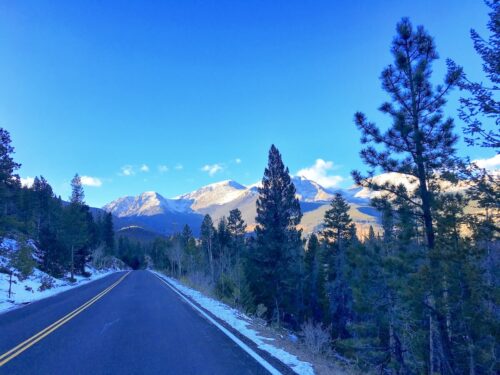
About Rocky Mountain National Park, Colorado
Located just 1.5 hours NW of Denver, Colorado, Rocky Mountain National Park is the third most visited national park in the United States. Coming in just behind Great Smokey Mountains National Park and the Grand Canyon National Park, there were over 4.7 million people who visited Rocky Mountain National Park in 2019. It’s easy to see why as the park offers 415 square miles of mountainous terrain with over 300 miles of hiking trails.
Make planning your visit to Rocky Mountain National Park easy with these practical tips and a list of the best things to do in the park.
- Entrance Fees: $30 per automobile for a 1 day pass, $35 for a weekly pass, or its included in the $80 America the Beautiful Pass, which is good for a year and gets you into all Federally operated recreation sites across the country. Note that they are currently only accepting Credit and Debit cards.
- Park Hours: Rocky Mountain National Park is open 24 hours per day, 365 days per year.
Get the latest information on the park by checking the Rocky Mountain National Park website from the National Park Service.
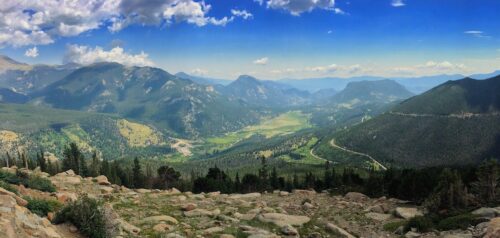
Best Things to Do in Rocky Mountain National Park
Planning a visit to Rocky Mountain National Park will be simple with this list of can’t miss activities in the park. Whether you have a week or just one day, you’ll come away knowing you saw the best of the best! Let’s get into it!
1. Drive Trail Ridge Road
The best thing to do in Rocky Mountain National Park is to drive through the park on Trail Ridge Road. This 50 mile road is the highest continuously paved road in the United States reaching an elevation of 12,183 feet. It is also the only road running straight through Rocky Mountain National Park from Estes Park to Grand Lake. Due to its high elevation, it is typically only open and able to be driven straight through in the summer.
While you’re driving, you’ll need to stop at the many overlooks along Trail Ridge Road to see some of the best views in Rocky Mountain National Park, including:
- Many Parks Curve: One of the first hairpin curves along Trail Ridge Road, when coming from Estes Park, Many Parks Curve offers stunning views into the valleys below.
- Forest Canyon Overlook: The overlook into Forest Canyon offers one of the best views in Rocky Mountain National Park as it is one of the wildest parts of the park. On clear days you can even see a number of mountain peaks in the distance.
- Fairview Curve Overlook: The Fairview Curve Overlook looks into the Kawuneeche Valley below. Its best views are available in fall when the aspens in the valley turn bright yellow giving the valley the appearance of being on fire.
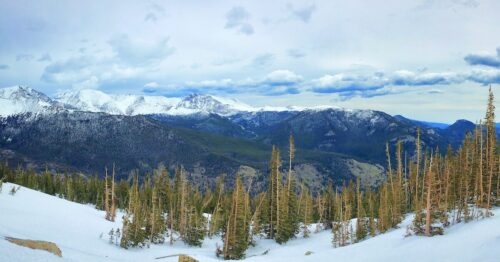
2. Stop at a Visitors Centers in Rocky Mountain National Park
The visitor centers in Rocky Mountain National Park are a great place to learn about the park and its wildlife. They are also the best place to get up-to-date information on road and trail closures due to harsh weather or fires in the area. Additionally, if you did not get a map at the entrance, you can pick one up here. You’ll also find restrooms and gift shops available at most of them if you’re looking for souvenirs to remember your time by.
Here are the five different information centers spread throughout the park:
- Beaver Meadows Visitor Center: The entrance closest to Estes Park will put you in Rocky Mountain National Park near Beaver Meadows Visitor Center. This makes it the first stop for most park visitors.
- Fall River Visitor Center: Another popular visitor center from Estes Park is the Fall River Visitor Center.
- Alpine Visitor Center: Located along Trail Ridge Road, this visitor center sits at the highest elevation of any National Park System visitor center at 11,796 feet! Because of this, it is only open in the summer season when the Trail Ridge Road is open, around late-May to mid-October.
- Kawuneeche Visitor Center: Located on the west side of the park near the Grand Lake entrance, this is the visitor center to stop at as you enter from Grand Lake to get information on where to go in the park.
- Sheep Lakes Information Station: This kiosk is not a full visitor’s center, but it does offer some great information on the park. It is best known for its wildlife viewing opportunities as it’s not uncommon to see bighorn sheep, elk, or moose here.
3. Hike the Emerald Lake Trail
Start your hike to Emerald Lake at the Bear Lake Trailhead and make your way through pine forests, past pristine alpine lakes, like Nymph Lake and Dream Lake, and continue to beautiful views of the Rocky Mountain peaks. The scenery along this hike makes it one of the best hikes in Rocky Mountain National Park as you’ll have stunning views of Flattop Mountain, Hallett Peak, Glacier Gorge, and Tyndall Glacier.
Overview of the Emerald Lake Trail:
- Difficulty: Moderate
- Type of Trail: Out & back
- Distance: 3.2 miles
- Elevation Gain: 698 feet
- Time Needed: 1 hour 15 minutes
Learn what to pack for a day hike with the Essential Hiking Packing List.
4. Watch for Wildlife at Moraine Park
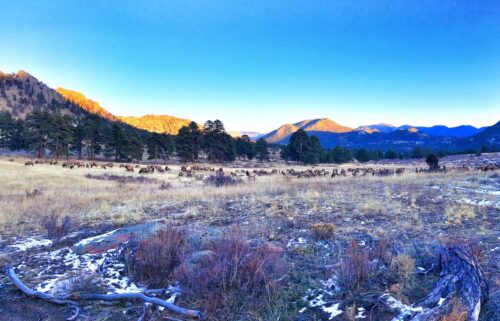
One of best places in Rocky Mountain National Park to watch for wildlife is Moraine Park. It offers beautiful golden meadows which are often home to herds of elk, deer, moose, as well as the occasional bear or mountain goat. If you have the time, hang around during dawn or dusk to see the animals at their most active times.
While you’re there, you can also stop at the Moraine Park Discovery Center. It’s only open in the summer and fall, but it offers displays about the park and its wildlife as well as a souvenir shop and some ranger-led discovery hikes.
5. Trek to Sky Pond via Glacier Gorge Trail
A popular hike in Rocky Mountain National Park, Sky Pond is well-traveled for a reason – it’s gorgeous! You’ll encounter a bit of everything from waterfalls to mountain views, and alpine lakes. Due to its popularity, the parking lot for the Glacier Gorge Trail fills up quickly, so make it an early morning and save yourself hours of waiting around for someplace to park! Alternatively, you can take the free Rocky Mountain National Park shuttle to avoid needing to park at the trailhead.
It’s also worth noting that unless you are visiting in mid to late summer, you are likely to encounter snow and ice on this trail. Make sure to take shoe spikes and trekking poles if the weather is questionable.
Overview of Sky Pond via Glacier Gorge Trail:
- Difficulty: Moderate
- Type of Trail: Out & back
- Distance: 9.4 miles
- Elevation Gain: 1,758 feet
- Time Needed: 4.5 hours
6. Visit the Holzwarth Historic Site
First built in 1917 by John Holzwarth, this 160 acre homestead is located on the west side of the Colorado River in the Kawuneeche Valley. What started as one small cabin quickly grew as John, his wife Sophia, and their son John Jr. (Johnnie) started building additional cabins for guests. Eventually, during the 1920s the many cabins turned into a “dude ranch” used for tourism in Rocky Mountain National Park.
In 1974, the now over 800 acres of the Holzwarth Historic Site were purchased by the Nature Conservancy and were transferred to the National Park Service. Today, it is still used to give insight into the life of early Colorado homesteaders. Visit during mid-June through Labor Day weekend for a daily volunteer-led tour.
7. Hike Gem Lake Trail
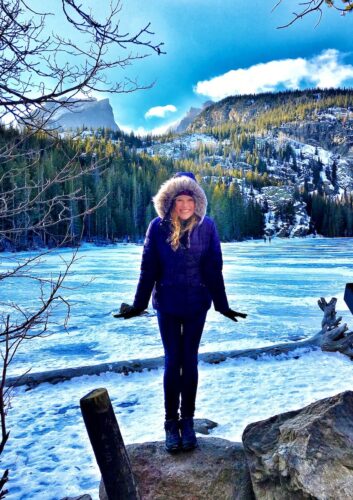
The hike to Gem Lake starts outside of Rocky Mountain National Park at Lumpy Ridge Trailhead off of Devils Gulch Road. While the trail is right around four miles, you will have to work on this hike due to some serious elevation gain. Fortunately, you’ll be distracted by the amazing views you encounter.
Once you reach Gem Lake, which admittedly is more like a pond, you can continue up a bit further to Balanced Rock for even higher views of the land below.
Overview of the Gem Lake Trail:
- Difficulty: Moderate
- Type of Trail: Out & back
- Distance: 3.1 miles
- Elevation Gain: 994 feet
- Time Needed: 2 – 3 hours depending on what shape you’re in for uphill climbs
8. Summit a Mountain
With sixty mountain peaks over 12,000 feet, you’ll find plenty of opportunities to summit a mountain in Rocky Mountain National Park. In fact, Rocky Mountain National Park is considered to be one of the highest national parks in the United States.
If you’re into mountaineering and looking for a challenge, try climbing up to Longs Peak. It’s the only fourteener in the park at 14,259 feet and can be summited via the Keyhole Route. This route is not for the amateur climber as you will encounter sheer vertical rocks, which could result in death if you make a mistake. However, its summit is considered one of the best things to do in Rocky Mountain Park, if you’re a mountaineer.
9. Visit the Continental Divide
The Continental Divide runs straight through Rocky Mountain National Park making it easy to cross on foot or by road. Or, if you’re looking for something a bit different, you can follow the Continental Divide National Scenic Trail. The Continental Divide National Scenic Trail (CDNST) actually runs about 3,100 miles long, extending from the Canadian border in Montana to the border of Mexico in New Mexico. However, the Rocky Mountain National Park portion of the CDNST is just 30 miles long. Hike part of it in one day, or spend multiple days hiking it all!
While the Continental Divide National Scenic Trail route in Rocky Mountain National Park does not travel entirely along the actual Divide, it does hug it and provide breathtaking scenery above the treeline. For a map of the Continental Divide National Scenic Trail in the park, click here.
10. Chase Waterfalls along the Alberta Falls Trail
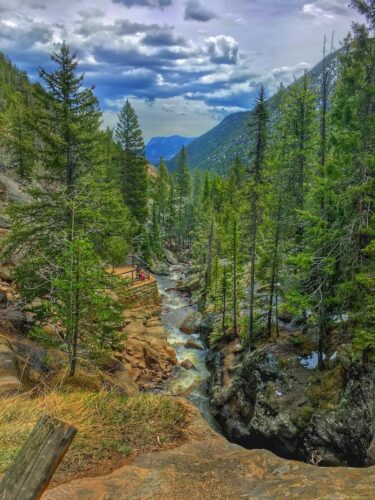
Also located at the Glacier Gorge Trailhead, the Alberta Falls Trail is a popular waterfall to visit in Rocky Mountain National Park. It’s an easy hike that offers a lot of payoff with scenic views of not just the 30 foot waterfall, but also over Glacier Gorge. Consider hiking here for sunrise to watch the sun come up over the park. It offers excellent views and is the perfect place for a breakfast picnic.
Overview of the Alberta Falls Trail:
- Difficulty: Easy
- Type of Trail: Out & back
- Distance: 1.6 miles
- Elevation Gain: 232 feet
- Time Needed: 1 hour
11. Check Out Bear Lake
Bear Lake is one of the classic sights of Rocky Mountain National Park and also one of the most photographed places in the park. It sits below Hallett Peak and the Continental Divide offering stunning mountain views and plenty of hiking trails, including some shorter and flatter ones, like walking around the lake.
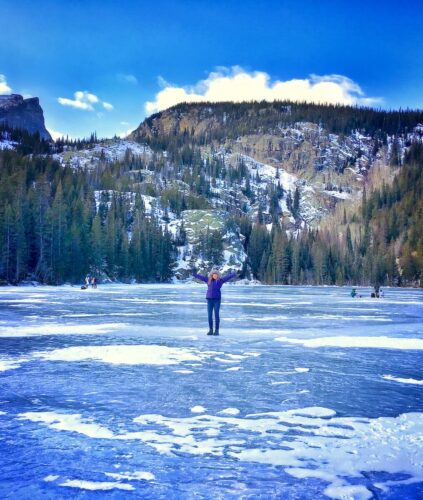
The parking area at Bear Lake is quite large but still can fill up by late morning in peak season. If you find this to be the case, you can always take a the free park shuttle to Bear Lake. Alternately, if you visit in the winter, you’re likely to find this high altitude lake to be completely frozen and able to be walked or skated upon. (Of course, use caution whenever walking on frozen bodies of water!)
Try out some of the hikes from Bear Lake:
- Around Bear Lake: 0.7 miles / 49 feet of elevation gain
- Nymph Lake: 1.2 miles / 262 feet of elevation gain
- Dream Lake: 2 miles / 426 feet of elevation gain
- Bierstadt Lake: 3 miles / 800 feet of elevation gain
- Emerald Lake: 3.2 miles / 698 feet of elevation gain
- Lake Haiyaha: 4 miles / 846 feet of elevation gain
- Lake Helene: 6.1 miles / 1,341 feet of elevation gain
- Odessa Lake: 8.3 miles / 2,004 feet of elevation gain
- Flattop Mountain: 8.2 miles / 2,870 feet of elevation gain
12. Tackle Winter Sports
Summer remains the peak season to visit Rocky Mountain National Park, however you’ll find plenty of winter activities to try your hand at if you arrive to find it covered in snow! And, as a bonus, you’ll find it way less crowded and often have trails to yourself, unlike in summer where even parking can be a hassle.
- Watch the Wildlife: When the park is quieter, it’s prime time to spot the elk, moose, and bighorn sheep in the park!
- Explore with Snowshoes: Are you a summer hiker? Try your hand at snowshoeing in the winter! You can make your way to some of the best sights in the park with snowshoes strapped to your feet. It’s easy to get a hang of, but it can be exhausting, so try it out on a shorter trail until you know what you’re in for! You can also check in at the visitor centers to see if there are any free park ranger led snowshoe trips available.
- Try Cross Country Skiing: Strap on your cross country skis (which can be rented in Estes Park or Grand Lake) and try your hand at cross country skiing. The west side of the park offers deeper snow with flat, easy-to-ski valleys while on the east side of the park, you’ll find steeper trails that lead to frozen alpine lakes.
- Go Ice Fishing: Ice fishing is allowed on all open-fishing lakes and ponds in Rocky Mountain National Park! Unfortunately, you typically will have to hike or snowshoe to the lakes, which is a deterrent for many, but give it a try! It’s worth noting that hand augers are required – no gas augers allowed!
A few things to remember for winter in Rocky Mountain National Park:
- Trail Ridge Road will be closed in winter making driving through the middle of the park impossible. You will have to drive around to get from Estes Park to Grand Lake.
- Avalanches are possible. Always check avalanche conditions before setting out.
- Dress appropriately and in layers as you may heat up when you’re being active, but you’ll need those layers for other parts of the park!
FAQs about Rocky Mountain National Park
Visiting Rocky Mountain National Park takes some planning. To help answer those lingering questions you might have about the park, let’s dive into some of the most frequently asked questions. If you still have questions after this, feel free to post them in the comments!
What city is closest to Rocky Mountain National Park?
Rocky Mountain National Park sits right outside of Estes Park, Colorado. However, if you’re looking to fly into Colorado to visit Rocky Mountain National Park, you’re going to need to fly into Denver and make your way to Estes Park. Denver sits 70 miles or 1.5 hours SE of Rocky Mountain National Park.
The easiest way to get from Denver to Rocky Mountain National Park is to rent a car and drive. Another option is to take the Estes Park Shuttle from Denver’s Union Station, Denver International Airport, or the Denver Greyhound Station.
What is the best time of year to visit Rocky Mountain National Park?
Rocky Mountain National Park is beautiful year-round, but what you do in the park will vary by season. Summer of course if one of the most popular seasons offering clear hiking trails and open roads, including the Trail Ridge Road. Another popular time of year to visit is during September – October when the leaves are changing and the elk are mating.
If you’d prefer to avoid the crowds, plan to visit between November and April. You’ll find Trail Ridge Road will be closed due to snow and ice and many of the lakes are frozen, but the trails will be covered in snow, perfect for snowshoeing!
How many days should you spend in Rocky Mountain National Park?
Ideally, you’d spend at least three days in Rocky Mountain National Park to really experience all of the stunning scenery the park has to offer. If you’re an avid hiker though, you could easily spend a week hiking in Rocky Mountain National Park and still want to see more. For those really short on time, even a day will allow you to see many of the highlights, but you’ll have to skip most of the hiking to fit it in.
Where should you stay for Rocky Mountain National Park?
While you could stay in Estes Park on the east side of the park or Grand Lake on the west side of the park, you’ll want to stay in Estes Park. This is mainly because the east side of the park is far more scenic. However, you’ll also find Estes Park is quite charming on its own!
Check out these awesome hotels in Estes Park:
- The Stanley Hotel: Stay at the Stanley Hotel, a classic hotel option within Estes Park. It was made famous from the movie The Shining and is still heavily visited today due to its reputation.
- Rams Horn Village Resort: This charming resort offers an outdoor pool, hot tub, gym, business center, and more. Everything you need to enjoy your time near Rocky Mountain National Park!
- Boulder Brook on Fall River: This hotel offers stunning mountain views in a more natural setting as well as a hot tub and private balconies to soak up the views!
Search all hotels in Estes Park, Colorado.
How long does it take to drive through Rocky Mountain National Park?
Driving through Rocky Mountain National Park requires taking Trail Ridge Road. Fortunately, this is the best thing to do in Rocky Mountain National Park and will only take about two hours, plus any stops you make at the overlooks of course!
What should you wear for visiting Rocky Mountain National Park?
No matter what time of year you visit Rocky Mountain National Park, you’ll find the temperature will vary throughout the park. This is due to the many changes in altitude you’ll pass through as well as your changing exposure to the elements. Because of this, you’ll want to dress in layers!
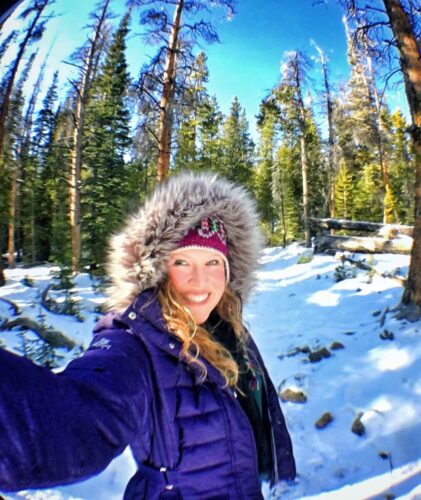
Start with a base layer, which could be a tank top – preferably a dry fit fabric, add a short sleeve or long sleeve layer, continue with a zip up or hoodie, and eventually add a coat. In the winter, you’ll also want to pack gloves, scarf, and hat. If you plan to do any hiking, wear waterproof hiking boots, just in case you encounter snow on the trail. This offers you the ability to add or subtract layers as necessary to stay comfortable throughout your whole trip!
Besides, if you prepare for the worst weather, you’ll be pleasantly surprised by the glorious sunny Colorado days!
Other Things to Do Near Rocky Mountain National Park
With so many great things to do in Rocky Mountain National Park, it’s hard to imagine needing to venture outside of it, but there are a lot of things nearby to see and do. For one, you’ll definitely want to pop into downtown Estes Park to admire its small mountain town charm. Beyond that, you can explore Denver and some of the neighboring areas. Learn more about some of these options in these related posts:
- Best Things to Do in Denver, Colorado
- Where to Stay in Denver: Best Neighborhoods & Hotels
- Epic Denver to Moab Road Trip with 9+ Amazing Stops!
- Ultimate Denver to Glacier National Park Road Trip Itinerary: With 10+ Stops!
Like this post? Pin it.


We have visited the Rocky Mountains in Canada but have not yet visited the Rocky Mountain National Park in Colorado. Great to know it is open all year round. I am sure the views vary so much through the seasons. We love to drive the scenic roadways in the parks and get a great view from the viewpoints. Scary hairpin curves don’t worry us at all. But it would be great to plan enough time to hike a few of the trails The views sound stunning. I think we would need to visit a few times and pick one for each trip.
There’s certainly enough to do over multiple visits, particularly if you visit in different seasons! I love to drive Trail Ridge Road in the summertime but the snow is also incredible and beautiful in the winter! Fortunately hiking is fairly accessible year round… even if you need to make some modifications to snowshoes or spikes/poles to make it happen!