The Okavango Delta: What to Expect (+ Is It Worth It?)
There are a handful of places on Earth that stop you mid-thought and make you recalibrate your sense of scale. The Okavango Delta is one of them. I knew it was supposed to be spectacular before I arrived as it’s a UNESCO World Heritage Site, one of Africa’s Seven Natural Wonders, and the setting for more wildlife documentaries than I can count. What I didn’t expect was just how different it would feel from every other safari experience I’d had.
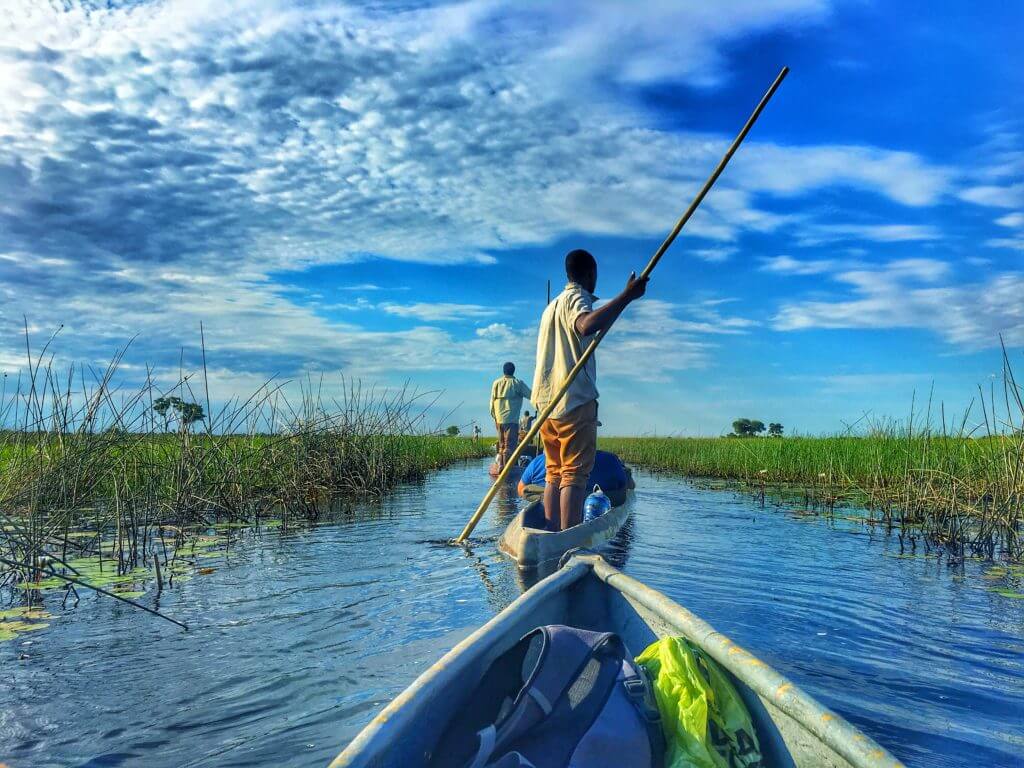
There are no roads. No vehicles. No engine noise at all. Just the sound of a long wooden pole dipping into shallow water and the occasional sound of something large moving through the bush. You’re sitting about 8 inches above the waterline in a traditional mokoro (dugout canoe), being guided deeper into the delta by a local poler who’s been navigating these channels since before he could read.
I spent two days in the Okavango Delta as part of my overland safari through Botswana, and it was spectacular! (You can read the full story in my G Adventures Botswana & Falls Adventure review and my 2-week Southern Africa itinerary. This post goes deeper into everything you need to know about visiting the Okavango Delta, from what it actually is to how to get there, what to expect on a mokoro trip, how much it costs, and how to do it as a budget traveler vs. a luxury one.
Disclosure: Some of the links below may be affiliate links. At no additional cost to you, I may earn a small commission if you make a purchase.
What is the Okavango Delta?
The Okavango Delta is the world’s largest inland delta. If a “delta” is still not descriptive enough, consider it a permanently flooded wetland ecosystem. This specific one is located in the Kalahari Desert of northwestern Botswana. It covers between 2,300 – 5,800 square miles (6,000 – 15,000 square kms) depending on the season, fed entirely by rainfall and snowmelt in the Angolan highlands roughly 600 miles (1000 kms) to the north.
Here’s what makes it remarkable… the Okavango River flows southeast out of Angola, crosses the Caprivi Strip in Namibia, and then, instead of emptying into the sea like virtually every other river system on earth, it fans out into the Kalahari sand and simply disappears. There is no outlet. The water spreads across an enormous alluvial fan, creating a maze of channels, lagoons, palm islands, and floodplains before eventually evaporating into the desert air or soaking into the sand.
The result is a permanent oasis in the middle of one of Africa’s great desert systems, and the wildlife concentrations this produces are staggering. The Delta was designated a UNESCO World Heritage Site in 2014 (as the 1,000th site on the list), and it was named one of Africa’s Seven Natural Wonders in 2013. It supports around 260,000 large mammals during the dry season, along with more than 500 bird species, 70 fish species, and some of the highest concentrations of predators on the continent.
Need more convincing it’s worth a visit? Let’s go!
Where is the Okavango Delta?
The Okavango Delta is located in the northwestern part of Botswana, near the border with Namibia. It forms where the Okavango River spreads out across a flat, arid landscape, creating a vast inland delta in the middle of the Kalahari Desert.
How the Flooding Works
Understanding the Delta’s flooding cycle is key to planning your visit because it defies expectations. Rain falls in Angola between November and March. That water takes around four months to travel down the Okavango River system and spread across the Delta. This means the Okavango floods during Botswana’s dry season, typically peaking between June and August, which is one of the most counterintuitive and wonderful things about it.
At peak flood (July–August), the Delta can nearly triple in size, flooding areas that were dry just months before. This is when the mokoro experience is at its best: water levels are high, channels are deep and navigable, the landscape is green despite there being almost no rain locally. This also is supposed to increase wildlife concentrates along the edges of the floodplains by extraordinary numbers.
My Experience in the Okavango Delta in December
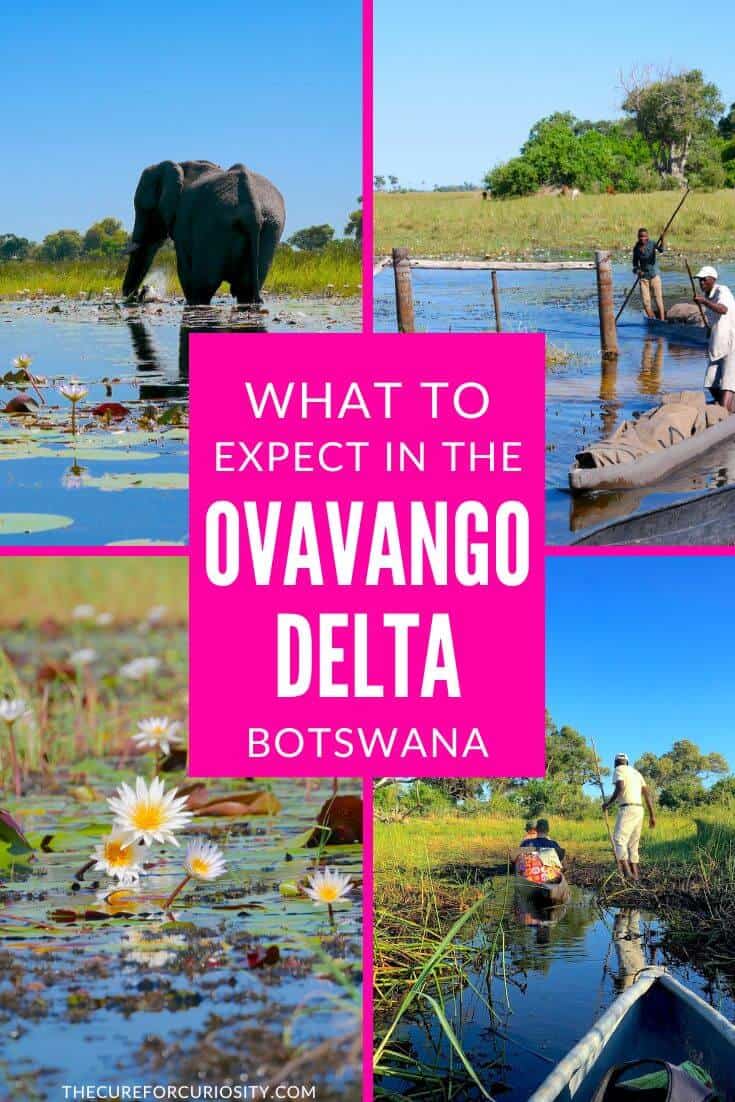
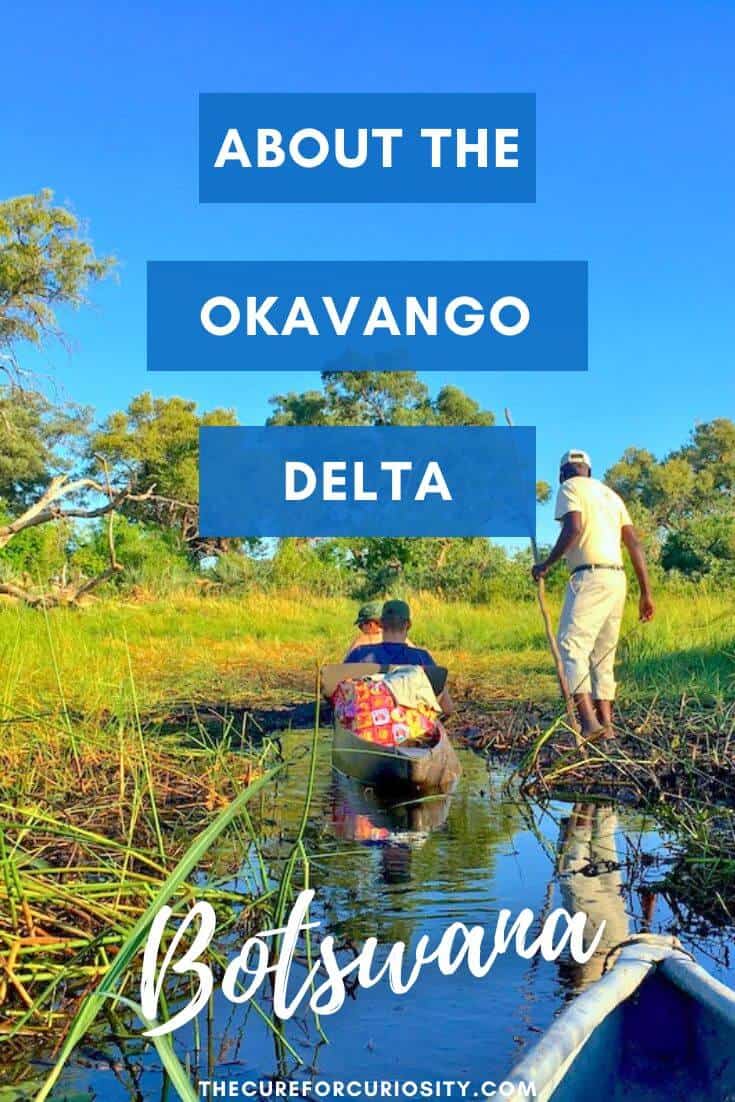
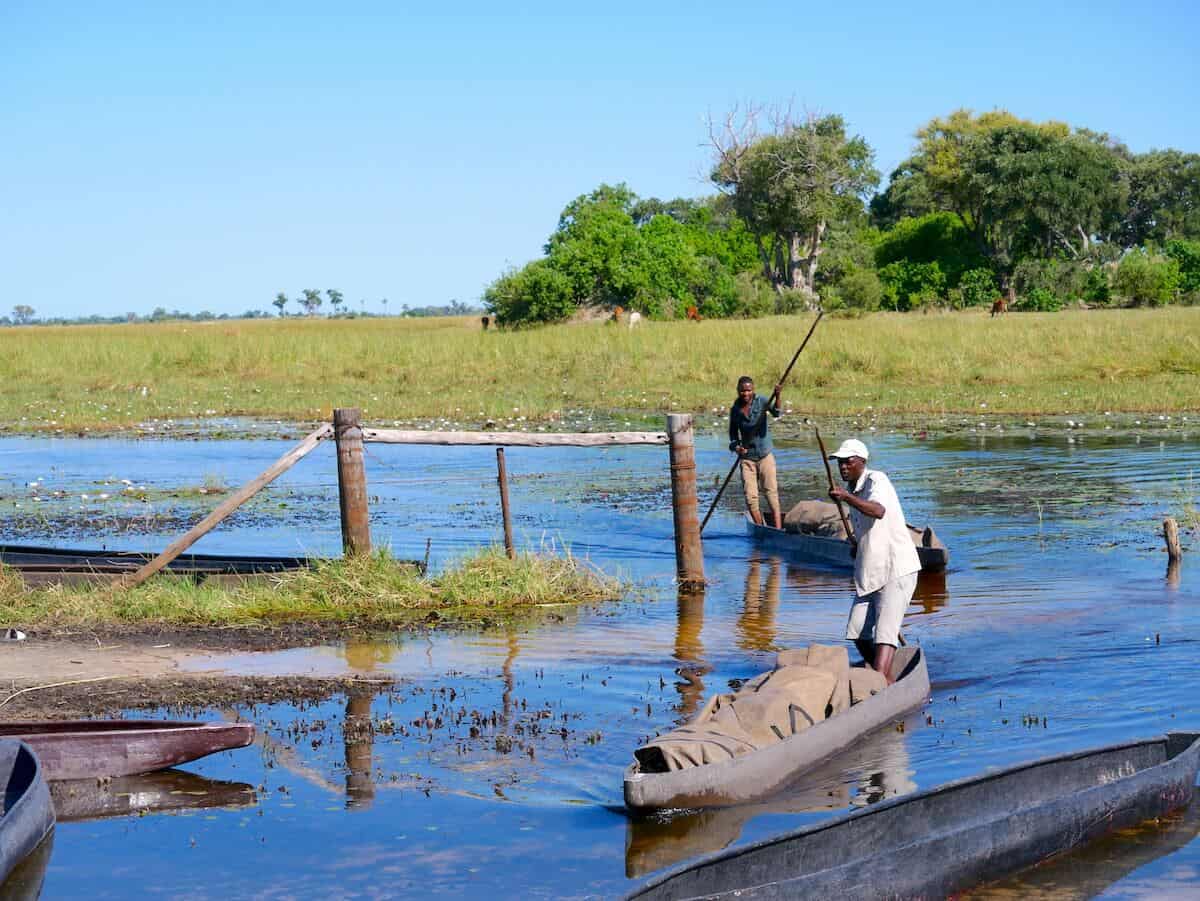
We arrived in the Delta after an hour’s drive from Maun, transferred from the road into traditional mokoros at a local station, and were poled approximately two hours into the bush to our camp on a small island. Two people per mokoro, lying back on a cushion, watching the papyrus and reeds slide past at water level.
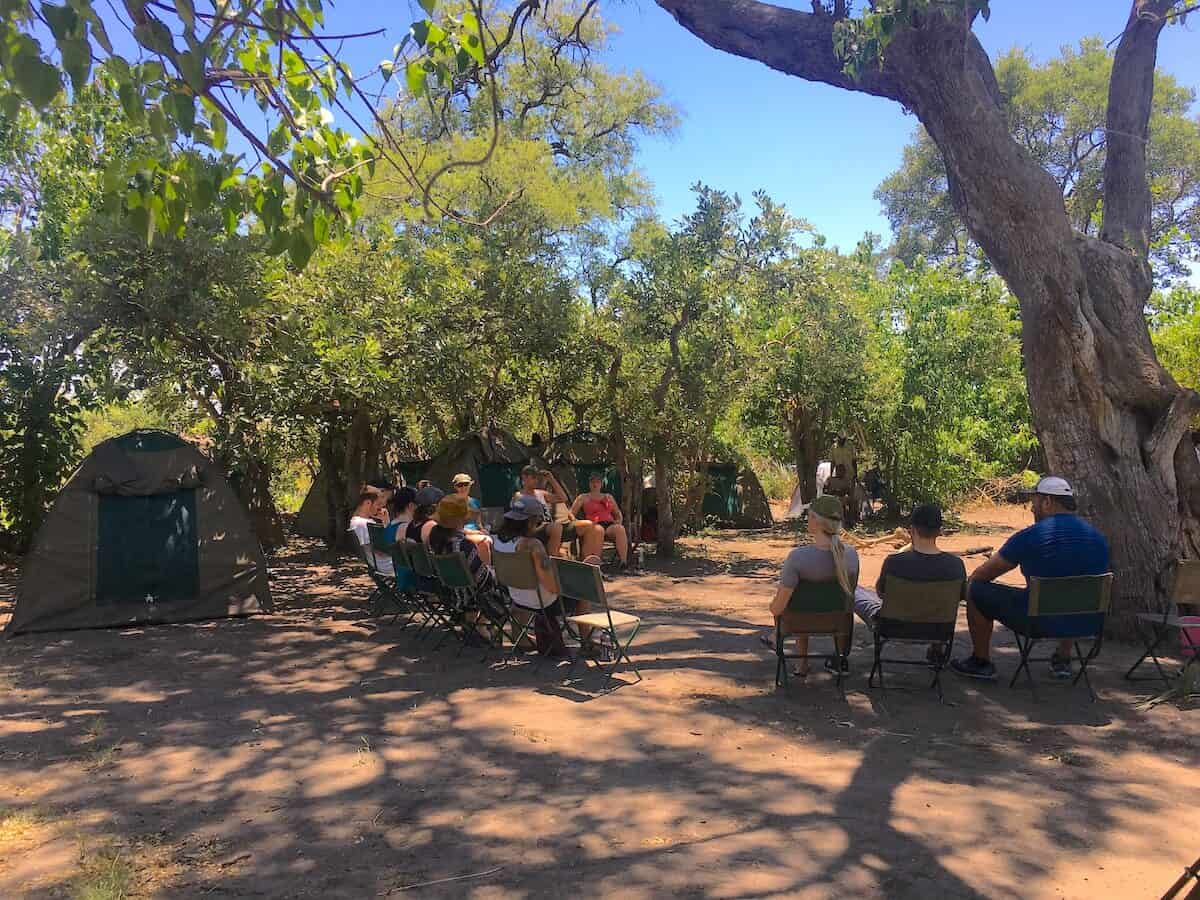
We spent around five hours at the bush camp in the afternoon heat, alternating between sitting in the shade, swimming in the channels (yes, with hippos and crocodiles in the area but our guides knew where it was safe… or just didn’t like us), and exploring on foot.
As the sun dropped, we went on a bush walk and saw elephants, buffalo, wildebeest, zebra, and a tortoise moving through the golden light. Back at camp, our mokoro polers cooked dinner, sang local songs, and played games with us around the fire. It was one of those evenings that’s impossible to replicate.
My honest take: two days was not enough to take it all in. The Delta rewards time. If I went back, I’d spend a minimum of two to three nights, ideally at a camp that combines mokoro with game drives and walking safaris, so you experience both the water-based and land-based sides of the ecosystem.
What is a Mokoro? (And What to Expect on a Ride)
A mokoro (plural: mekoro) is a traditional dugout canoe that has been used by the Bayei and Hambukushu people of the Okavango region for centuries. It was originally used for fishing, transporting goods between villages, and navigating the Delta’s flooded channels. Today, it’s also the primary way tourists experience the inner waterways of the Delta.
Traditionally carved from the trunks of large hardwood trees, primarily sausage trees and African ebony, most mokoros in use today are made from eco-friendly fibreglass, which reduces pressure on the Delta’s tree population while being more durable and lighter to handle.
How a Mokoro Works
A poler (your guide) stands at the rear of the mokoro and propels it using a long wooden pole called a ngashi, pushing against the riverbed in a motion that looks effortless but requires considerable skill and strength. The mokoro carries two passengers, seated low in the hull, facing forward. You sit or recline, but there’s no paddling on your part.
The genius of the mokoro is its relationship with the Delta’s shallow waters. Many channels are only 1.5 – 2.5 feet deep (50 – 80 cms). That’s way too shallow for motorboats but perfect for a flat-hulled canoe with a poler who knows the way. This allows access to areas of the Delta that are otherwise completely unreachable, including the narrow, reed-lined channels deep in the inner Delta where elephants wade and hippos surface.
What a Mokoro Ride Actually Feels Like
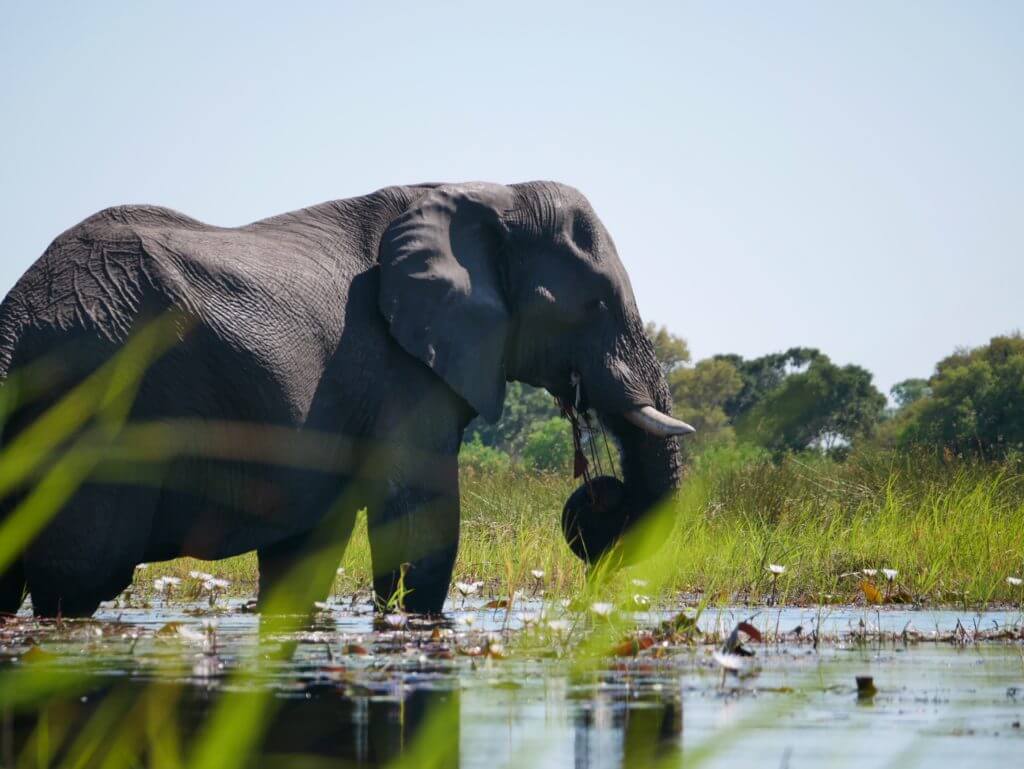
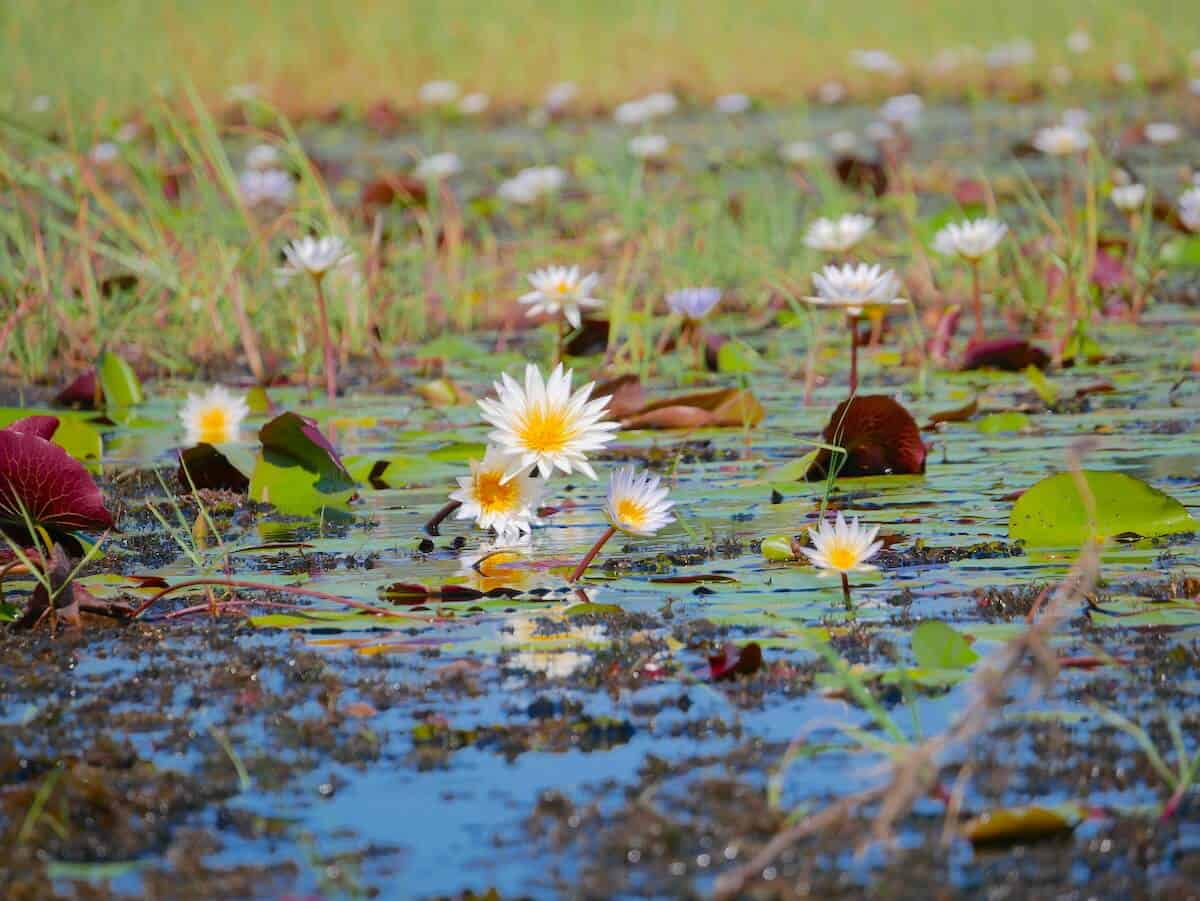
You’re sitting low in the water. Literally, your eye line is just above the surface, which gives you an entirely different perspective on the landscape. Lily pads and water hyacinths drift past at face height. You can hear frogs calling from reeds a metre away. Reed frogs, kingfishers, malachite bee-eaters, and African jacanas appear at close range without flinching, because the mokoro makes almost no noise and carries no exhaust scent.
Wildlife sightings on the water vary. You’ll get your birds and reptiles mixed in with hippos surfacing and elephants wading chest-deep through a flooded channel. For large predator sightings, game drives in adjacent areas (like Moremi Game Reserve) are more reliable. But the mokoro offers something a game drive never can… the experience of being inside the ecosystem.
Safety on a Mokoro
The most common question I get about the mokoro experience is some version of: “Is it safe? Aren’t there crocodiles and hippos?” The answer is yes… and yes, it is safe when done with an experienced guide. Or at least it definitely felt safe.
Your poler knows where hippos are, where crocs hide, and which channels are safe to navigate. Before departure, you’ll receive a brief on how to sit still, where to place your hands, and what to do in the unlikely event of an encounter. Operators follow strict safety protocols. In decades of commercial mokoro tourism on the Okavango, serious incidents are extraordinarily rare.
One note from my experience: swimming in the Delta is possible in certain locations that your guide designates as safe, but you should never enter the water without your poler’s explicit direction. I swam in the Delta, and it was an experience I’d do again, but only because our guides knew the specific spot and the conditions that day. (Admittedly, my friend from Australia was not into it knowing what dangers hide in the water!)
Ways to Experience the Okavango Delta: Day Trip vs. Overnight vs. Fly-In
There are three main ways to experience the Delta, and they suit very different budgets and travel styles. Here’s a quick breakdown.
| Day Trip | Overnight Bush Camp | Fly-In Lodge | |
| Best for | Budget travelers, limited time | Best budget immersion | Luxury & deeper Delta access |
| Time in Delta | 4–6 hours | 1–3 nights | 2–7 nights |
| Mokoro included | Yes | Yes (usually) | Yes (seasonal) |
| Wildlife | Good (outer Delta) | Very good | Exceptional (inner Delta) |
| Accommodation | Return to Maun | Bush camping / basic tents | Luxury tented lodge |
| Price range | ~$80–150/person | ~$150–400/person/night | $500–2,000+/person/night |
| Fly-in required | No | No (land transfer from Maun) | Yes |
Option 1: Day Trip from Maun
The most accessible and budget-friendly option. Most operators in Maun offer 8-hour day trips that include a 4WD transfer to the mokoro station (about 1 hour), a 2–3 hour mokoro ride into the Delta, a picnic lunch on an island, a guided nature walk, and a mokoro ride back out. You’re back in Maun by late afternoon.
This is a great introduction to the Delta if you’re short on time or budget, but it does have real limitations, like you miss the golden hour light, you can’t do a sunset or sunrise game walk, and you’re not spending a night in the bush, which is when the sounds of the Delta are at their most magical. Besides, who doesn’t like a little danger when going to the bush toilet (aka hole in the ground) in the moonlight?
Here are a couple of day trip options you should check out:
- Okavango Delta: Full-Day Mokoro/Canoe Tour All-Inclusive: 9-hour tour by Kalahari Breeze Safari with hotel pickup, mokoro ride, picnic lunch, and bush walk included.
- Mokoro Full Day Trip-Okavango Delta: 9-hour tour from Maun by Mosu Safari Tours, also including hotel pickup, mokoro ride, lunch, and a nature walk.
Most Okavango Delta trips depart from lodges in Maun.
Search Maun accommodation on Booking.com.
Option 2: Overnight or Multi-Night Bush Camp (Best Budget Immersion)
This is the option I did, and what I’d recommend to most travelers. You travel by mokoro to a bush camp on an island in the Delta, spend 1–3 nights there with sunset/sunrise bush walks, evening campfires, local meals, and multiple mokoro excursions. Accommodation ranges from basic dome tents on simple platforms to comfortable safari tents with proper bedding.
The multi-night format gives you time to slow down and actually absorb the Delta, which is the whole point. Wildlife encounters tend to improve the longer you stay, and the experience of waking up on an island in the middle of the Okavango with no roads, no engines, and nothing but birdsong and the distant splash of a hippo is worth every cent. Just be prepared to rough it a bit!
The best way to experience it?
2 Nights Okavango Delta Mokoro WildCamping Tour, all-inclusive: This 3 day, 2 night tour by Kalahari Breeze Safaris includes camping accommodations, meals, mokoro, and guided walks.
Option 3: Fly-In Luxury Lodge (The Full Okavango Experience)
For travelers with a larger budget, fly-in camps in the inner Delta, places like Duke’s Camp, Selinda Camp, Oddballs Enclave, and Moremi Crossing, offer the deepest and most wildlife-rich version of the Delta experience. You arrive by light aircraft (20–40 minutes from Maun), land on a private airstrip, and spend 2–7 nights at an all-inclusive tented lodge with morning and evening game drives, mokoro excursions, and guided walks all included.
Check your luxury options here.
The inner Delta is inaccessible by road, which means the wildlife concentrations are higher, the crowds are non-existent, and the overall experience is more immersive and exclusive. This is also the option that gives you the chance to get into Moremi Game Reserve, one of Africa’s finest wildlife areas, known for exceptional big cat and wild dog sightings.
The trade-off is cost: fly-in camps typically range from $500 to $2,000+ per person per night, all-inclusive. For many travelers, this makes the Maun-based overnight camp the most realistic way to genuinely experience the Delta.
What Wildlife Can You See in the Okavango Delta?
The Okavango Delta supports some of the most diverse wildlife in Africa. What you see depends on the season, your location within the Delta, and the type of activities you’re doing. Here’s a realistic picture.
On the Water (Mokoro)
- Hippos: Frequent; you’ll hear them constantly and likely see them surfacing in the distance
- Crocodiles: Present in most channels; often spotted on banks
- Red lechwe: A wetland antelope endemic to the Okavango; seen in large herds in flooded areas
- Sitatunga: A semi-aquatic antelope; rare and beautiful
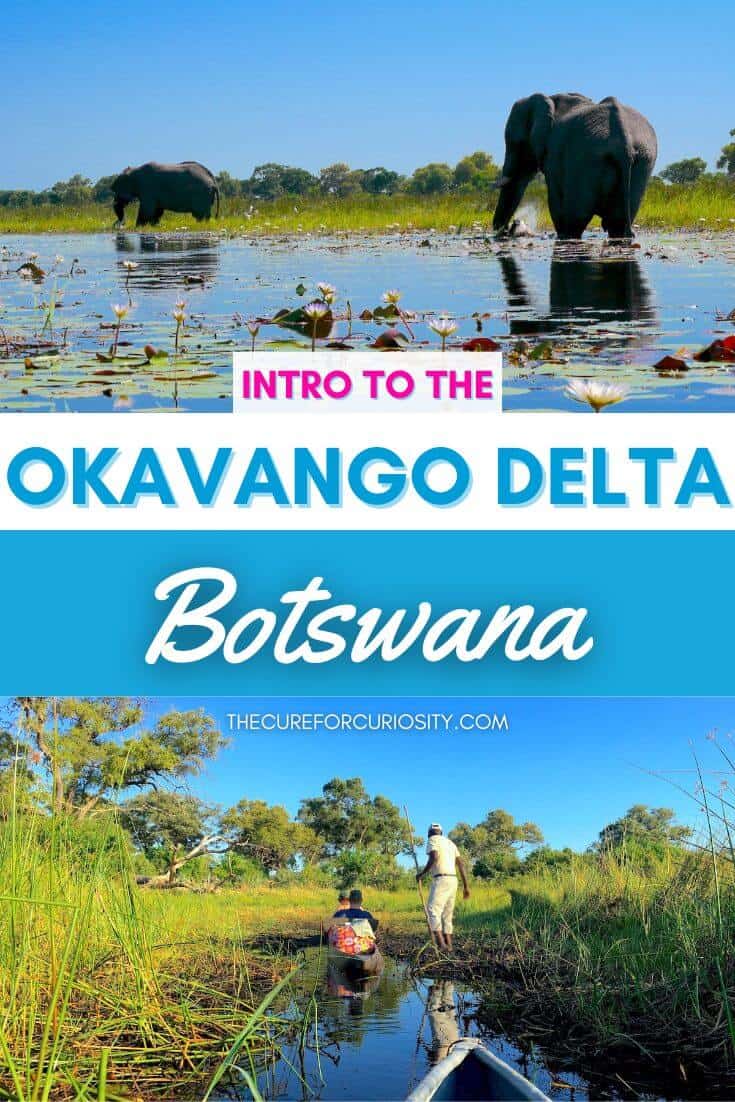
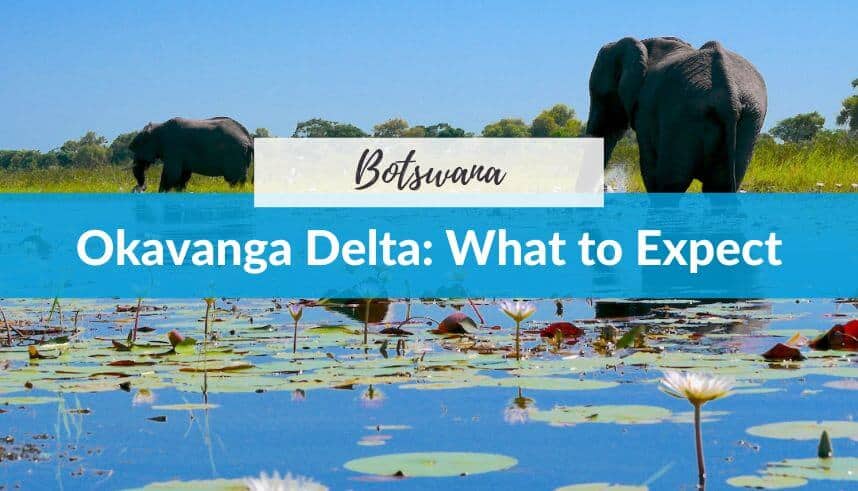
- Elephants: Frequently wade chest-deep through channels; one of the most spectacular mokoro sightings possible. We were lucky with this!
- African fish eagle: The iconic bird of the Delta; you will hear them before you see them
- Malachite kingfisher, pygmy goose, African jacana: Dazzling birds at close range on the water
- Reed frogs: Tiny, jewel-coloured, and everywhere once you start looking
On Bush Walks and Game Drives
- Elephant: The Okavango has enormous herds; sightings are near-guaranteed
- Buffalo: Large herds common in the Moremi area adjacent to the Delta
- Giraffe, zebra, wildebeest: I saw all three on my bush walk
- Lion: Present, especially in Moremi; more reliably found on game drives than walks
- Leopard: Present; elusive
- African wild dog: The Delta and Moremi Game Reserve are among the best places in Africa to see these endangered animals
- Cheetah: Occasional, more common in the drier fringes
- Warthog, impala, kudu, steenbok: Common throughout
Birds
With over 500 bird species recorded, the Okavango Delta is a world-class birding destination. Highlights include the Pel’s fishing owl (one of Africa’s most sought-after birds), slaty egret (near-endemic to the Okavango system), wattled crane, saddle-billed stork, African skimmer, and an extraordinary variety of kingfishers, herons, and raptors.
Admittedly I don’t know much about birds so I was not much help in identifying what we saw flying overhead or nesting in the trees near our camp.
Best Time to Visit the Okavango Delta
Dry Season / High Water: May – October (Peak Season)
This is the best overall time to visit, and June–August is the absolute peak. The floodwaters from Angola arrive in the Delta, water levels are at their highest, the mokoro experience is best, vegetation thins out making wildlife easier to spot, and temperatures are warm but not oppressive. (Early mornings can be cold. Bring layers for sunrise game drives.)
Wildlife concentrations are at their maximum during this period as animals gather along the water’s edge. It’s also when wild dog denning season occurs, making sightings more reliable. The trade-off is higher prices and more visitor numbers, though “crowds” in the Okavango are still nothing compared to other African destinations.
Shoulder Months: April – May and September – October
Excellent alternatives to peak season. Slightly lower prices, still excellent wildlife, and the Delta is transitioning in beautiful ways during these periods. October can get very hot 95 – 105°F (35–40°C) in the middle of the day.
Green Season: November – March
Green, dramatic, and beautiful… this is the time I visited. Migratory birds are present in huge numbers, making this the best time for birding. Prices drop significantly. This is when budget travelers can access lodges that are otherwise out of reach. The trade-off is that some areas flood, some camp tracks become impassable, and the inner Delta’s water levels are lower (the floods haven’t arrived yet from Angola). Wildlife is more dispersed and harder to spot in the thick green vegetation.
My trip was in December, right at the start of the green season. Wildlife sightings were still excellent. We saw elephants, buffalo, wildebeest, zebra, and a tortoise on a single evening bush walk. The heat during the day was intense, but mornings and evenings were beautiful. I can’t imagine how great “peak season” must be!
How to Get to the Okavango Delta
Step 1: Get to Maun
Maun is the gateway to the Okavango Delta and your first destination. It’s a small but well-connected town with a busy regional airport.
- By air from Johannesburg: Air Botswana and Airlink both operate direct daily flights from OR Tambo International Airport to Maun. Flight time is approximately 1 hour 40 minutes. This is the fastest and most convenient option for most international travelers.
- By air from Cape Town: Connections via Johannesburg. Budget 4–5 hours total travel time including the connection.
- Overland from Johannesburg: Possible via the border crossing at Tlokweng (near Gaborone) and then north through Francistown and Maun. It’s a long drive (roughly 10–12 hours) but feasible with your own vehicle or on a tour. The road is paved and in good condition all the way to Maun. Ultimately this is the route we took, but with stops along the way, like Khama Rhino Sanctuary.
Search flights to Maun on Expedia.
Compare prices and connection options from your departure city.
Step 2: Get into the Delta
- Land transfer (most budget tours): A 4WD vehicle takes you from Maun to a mokoro station on the Delta’s edge (typically 1–2 hours by road, depending on water levels and destination). From there, you transfer into a mokoro.
- Light aircraft (fly-in lodges): Private charter flights from Maun’s airport to airstrips within the Delta. 20–40 minutes in a small prop plane, and the aerial view of the Delta from above is spectacular in its own right.
- Motorboat (some operators): For reaching camps further into the Delta quickly, some operators use motorboats for the transfer section before switching to mokoros for the wildlife experience.

Where to Stay: Okavango Delta Accommodation
In Maun (Base Before/After the Delta)
Maun has a decent range of accommodation for all budgets, from basic campsites to comfortable lodges along the Thamalakane River. Most Delta tour operators pick up from Maun accommodation.
Choose from budget camps and safari lodges starting at just $20 up to luxury hotels up to multiple hundred dollars, like Glen Eden Boutique Hotel.
Search all Maun accommodation on Booking.com.
In the Delta
This is where your greatest expense will be as all accommodations, including the basic budget camping operators are all inclusive, including your activities, like mokoro rides and bush walks, as well as food and accommodation.
If you choose to stay overnight in the Delta, which I highly recommend, you just have to decide what you’re looking for. Budget camping? Mid-range fly-in camps? Luxury fly-in lodges?
What to Pack for the Okavango Delta
The Delta has some specific packing requirements that differ from a standard game drive safari. Here’s a quick guide.
| Category | What to Bring | Notes |
| Sun protection | High-SPF sunscreen, sun hat, UV neck gaiter | Water reflects sun. You burn from above AND below. |
| Clothing | Neutral/earth tones, long sleeves, quick-dry fabrics | No bright colors. Pack light layers for cool mornings. |
| Footwear | Closed-toe water shoes or sandals with straps | You may need to wade to/from the mokoro. |
| Insects | DEET repellent (30%+), mosquito net for camping | Malaria is present. Take prophylactics before arrival. |
| Camera gear | Dry bag or waterproof case, lens cloth | Spray and splashes happen. Protect your equipment. |
| Hydration | Reusable water bottle, water purification tabs | Bottled water is scarce once in the Delta. |
| Health | Malaria prophylactics, basic first aid kit | Start malaria meds before you arrive in Botswana. |
| Documents | Passport, insurance details, emergency contacts | No mobile signal in most of the Delta. |
| Sleeping (camping) | Sleeping bag liner, your own pillow, headlamp | Camps may not supply pillows. Temps drop at night. |
| Binoculars or zoom len | Compact 8×42 or 10×42 | Essential for birdwatching and spotting distant wildlife. |
A note on clothing colors: neutral and earth tones (khaki, olive, tan, grey) are standard in the Delta and for most African safaris. Bright colors can startle wildlife, and white clothing shows dirt quickly in the bush.

Tips for Getting the Most Out of the Okavango Delta
- Stay at least 2 nights. Day trips are fine as an introduction but miss the magic of sunset, the bush at night, and sunrise in the Delta. The longer you stay, the more you’ll see.
- Don’t skip the bush walk. Walking through the Delta on foot, with a knowledgeable guide who can read tracks, identify birds, and explain plant uses, is one of the most memorable parts of the experience. I saw more wildlife on my sunset walk than on the mokoro ride itself. It’s also rare to be able to go on safari on foot due to the dangers that exist!
- Get to know your poler. The mokoro polers are often Bayei or Hambukushu community members who grew up in the Delta. Their knowledge of the ecosystem, wildlife behavior, and local culture is extraordinary. Ask questions. Learn from and about them.
- Tip generously. Your poler’s income depends significantly on tips. ~$10–15 per day per person is appropriate, more if they went above and beyond. I wish I’d tipped more after such an incredible experience.
- Sort your malaria prophylactics before you leave home. Botswana has malaria, and the Delta is a high-risk area during the wet season. Speak to your doctor about the right medication for your trip at least a month before departure. Fair warning, some malaria meds come with side effects. Talk to your doctor!
- Protect your camera gear. Water splashes from the pole, morning dew, and high humidity are real risks. A dry bag or waterproof camera case is important.
- Leave the bright blue clothes at home. I’m looking at this from experience. The tsetse flies in parts of the Delta are attracted to dark blue and black. Lighter neutral colors are a double win: good for wildlife, bad for tsetse flies.
- Combine with Moremi Game Reserve. If budget allows, adding even 1 day in Moremi (the game reserve that borders the Delta) gives you access to the Delta ecosystem by vehicle, which dramatically increases your chances of seeing big cats and wild dogs.
Beyond the Basic Mokoro: Other Experiences in the Delta
The mokoro trip is the iconic Okavango experience, but it’s far from the only one. Depending on the camp and season, you might also be able to:
- Game drives in Moremi Game Reserve: 4WD open vehicle drives through one of Africa’s finest wildlife areas, adjacent to the Delta. Best for big cats, wild dogs, and buffalo.
- Scenic flights: A short flight over the Delta in a light aircraft gives you a completely different perspective on the scale and patterning of the channels from above.
- Boat safaris: Motorized boats can cover larger distances and reach areas inaccessible to mokoros; some camps offer both types.
- Fishing: The Okavango is one of Africa’s premier freshwater fishing destinations, with tiger fish, bream, and African pike.
- Horse safaris: Several specialist operators run multi-day horse safaris through the Delta, a unique way to move through the bush at animal eye-level.
- Cultural visits: Some operators include visits to local communities to learn about traditional life in the Delta ecosystem. This is highly worthwhile.
Is the Okavango Delta Worth It? My Honest Answer
Yes. Without qualification, yes.
I’ve been on game drives in Kruger, safaris in Chobe, walking trails in Zimbabwe. The Okavango Delta doesn’t replace those experiences. It’s different from all of them. Gliding through the water with the animals, the intimacy of a bush camp on an island with no fence between you and whatever’s moving in the dark, walking through the reed not knowing what’s lurking… it engages your senses in a way that a vehicle safari simply can’t.
My main regret is not having more time. Two days gave me a taste, but I’d want a few more days. If I were doing the trip again, I’d fly directly into Maun, spend at least three nights in the Delta on an overnight camping package, then fly to Kasane for Chobe, skipping the long overland bus journey entirely.
Is it expensive? It can be. Botswana isn’t a budget destination (surprising, I know). But the overnight camping packages from Maun are genuinely affordable by Botswana standards, and even a day trip gives you something you’ll remember for the rest of your life.
Ready to Book? Start Here
- Check out the Okavango Delta tours on GetYourGuide: See what’s available during your trip from day trips to multi-day full safari trips.
- Browse Okavango Delta safari tours on Viator: Check out their extensive day trip and multi-day packages, including meals, mokoro, and bush walks.
- Search Flights to Maun on Expedia: Search flights from Johannesburg, Cape Town, or your city of origin.
- View Hotels and lodges in Maun on Booking.com: Accommodation for all budgets, from riverside camping to mid-range lodges.
Explore More of Botswana
If you’re headed to Botswana, the Okavango Delta should definitely be one of your destinations, but don’t miss other amazing places like Chobe National Park and Khama Rhino Sanctuary. Here are some helpful resources to make the most of your time:
- The Okavango Delta: What to Expect (+ Is It Worth It?)
- Where is Botswana? Location, Map, Facts, & More
- Khama Rhino Sanctuary: Botswana’s Most Underrated Safari Stop
- 2 Weeks in Southern Africa: A Budget African Safari Itinerary
- Review of G Adventures Botswana and Falls Adventure Trip
Like this post? Pin it.