

Ultimate Denver to Glacier National Park Road Trip Itinerary: With 10+ Stops!
The Great American Road Trip is something most people dream about. Driving through wide-open country, rolling into well-known cities, eating pancakes in tiny towns, letting the wind blow through your hair in your imaginary convertible… no, just me?
In any case, driving from Denver to Glacier National Park not only takes you through some of the most beautiful national parks in the country, but past some truly lesser-known gems. I’ve broken the route into 12 legs, each ending somewhere worth stopping, from the iconic to the wonderfully obscure. Whether you have three days or two weeks, this road trip will not soon be forgotten.
Total Distance: ~1,000 miles
Total Driving Time: ~21 hours
Disclosure: Some of the links below may be affiliate links. At no additional cost to you, I may earn a small commission if you make a purchase.
How Long Does This Road Trip Take?
There are two sensible ways to approach this trip:
Fast Version (3 Days of Driving)
Hit the highlights without lingering. Each stop is experienced in a few hours rather than a full day. You’ll still see all of the scenery, but won’t have time to hike deeply into any of the parks.
Slow Version (1–2 Weeks)
Spend multiple days at the major national parks: Rocky Mountain, Grand Teton, Yellowstone, and Glacier can each absorb 2–4 days of exploration easily. This is the way to do it if your schedule allows.
The slow route is better. These are some of the most spectacular places in the United States. Rushing through them to tick boxes is a missed opportunity.
2026 National Park Updates: What’s Changed
A few significant changes affect the national parks on this trip. Read this before you book anything.
Non-US-Resident Fee: New $100 Per-Person Surcharge
Starting January 1, 2026, non-U.S. residents (international visitors, foreign nationals) are required to pay an additional $100 per-person surcharge at 11 major national parks, including every park on this route: Rocky Mountain, Grand Teton, Yellowstone, and Glacier.
This surcharge is per person, per park, not per vehicle, and not a one-time fee. A family of four non-residents visiting all four parks on this route would pay $1,600 in surcharges alone, on top of standard entrance fees.
Exemption: Non-residents who purchase the America the Beautiful Annual Pass for Non-Residents ($250) are exempt from this surcharge. For anyone visiting 3+ parks on this trip, the $250 pass is significantly cheaper than paying per park.
U.S. residents and citizens are not affected by this change. Bring a valid U.S. driver’s license, passport, or green card to qualify for the resident rate.
Rocky Mountain National Park: Timed Entry in 2026
Rocky Mountain National Park requires a timed entry reservation from 9 am to 2 pm daily from May 22 through Monday, October 12, 2026. Two permit types are available:
- Timed Entry Reservation: Required to enter any area of the park
- Timed Entry + Bear Lake Road Reservation: Required to access the Bear Lake Road Corridor between 5 a.m. and 6 p.m.
Reservations open on May 1, 2026 at 8:00 am on Recreation.gov. They also release next-day slots at 7 pm the evening before. A $2 processing fee applies. The park entrance fee is separate. Book well in advance for peak summer dates as they sell out quickly.
Grand Teton & Yellowstone: No Timed Entry Required
Neither Grand Teton nor Yellowstone requires a timed-entry reservation in 2026. Standard $35/vehicle entrance fees apply (valid 7 days). Note that the $35 Grand Teton pass also covers entry into John D. Rockefeller Jr. Memorial Parkway, and Yellowstone requires a separate pass if entering from the south through Grand Teton.
Glacier National Park: Vehicle Reservations CANCELLED for 2026
After five years of a timed-entry vehicle reservation pilot program, Glacier National Park has eliminated vehicle reservations for 2026. You can now drive into the park at any time without a pre-booked permit.
What’s replaced it:
- 3-hour parking limit at Logan Pass (effective July 1 – September 7, 2026)
- Ticketed shuttle to Logan Pass express service, reservation required via Recreation.gov starting May 2, 2026
- Possible temporary road closures in overcrowded areas
Arrive before 8 am for the best chance at Logan Pass parking. Check nps.gov/glac for the latest 2026 shuttle details.
Pro Tip: America the Beautiful Pass ($80/year for U.S. residents) covers all four national parks on this route and pays for itself after two park entries. For a trip like this, it’s a no-brainer. You’d spend $140 in entrance fees without it. Buy it at the first park gate or in advance at Recreation.gov.
12 Stops: Denver to Glacier National Park Road Trip
Driving from Denver up to Glacier National Park not only takes you through some of the most beautiful National Parks in the country, but it also takes you past some lesser known sights. Whether you have a couple of days to make the drive or two weeks, this road trip will not soon be forgotten. I’ve broken it up into 12 different driving legs, each ending at a fun new destination.
Total Distance: ~1000 miles / Total Driving Time: ~21 hours
Read More: Best Things to Do in Denver, Colorado.
Leg 1: Denver to Rocky Mountain National Park
Distance: 70 miles
Drive time: 1.5 hours
Cost: $35/vehicle 7-day pass, or America the Beautiful Annual Pass
Timed entry required: May 22 – October 12, 2026 (book at Recreation.gov)
Website: nps.gov/romo
Your first stop leaving Denver is an obvious one, and rightfully so. Rocky Mountain National Park is a spectacular introduction to the whole trip. You could spend days hiking through it, and I have… in winter, spring, and summer. Judge your time accordingly and see however much you can.
If you’re visiting in summer, Trail Ridge Road is the highlight. It’s the highest continuously paved road in the United States, cresting above 12,000 feet through open tundra with wide-open mountain views. It only opens after snowpack clears, typically late May or early June, so check road status before planning your visit around it.
2026 reminder: Book your timed entry reservation at Recreation.gov before arriving. Without one, you may be turned away during peak hours.

Check out the 12 Best Things to Do in Rocky Mountain National Park!
Leg 2: Rocky Mountain NP to Grand Teton National Park
Distance: 444 miles
Drive time: 7.5 hours
Cost: $35/vehicle 7-day pass (covers Grand Teton and John D. Rockefeller Jr. Parkway), or America the Beautiful Pass
No timed entry required in 2026
Websites: nps.gov/grte | nps.gov/yell
I’ll admit it plainly: I love the Grand Tetons. They are perfect mountains. I might go so far as to say I like them more than the Rockies. (Don’t quote me on that… or do, whatever.)
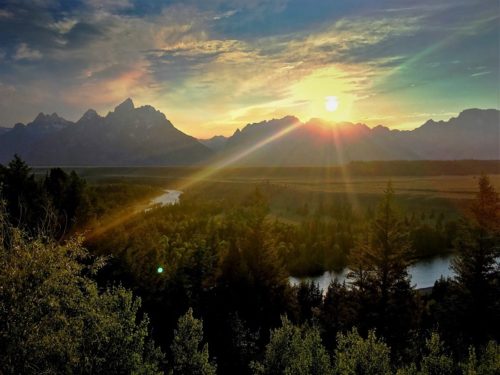
The Teton Range rises sheer from the valley floor without foothills, a wall of jagged peaks that appears almost without warning as you drive north through Wyoming. Time your arrival for sunset if you can. It is genuinely magical, and the wildlife starts coming out at that hour too. My favorite sunset spot is the Snake River Overlook, the same pull-off Ansel Adams made famous. You’ll understand immediately why he stopped there.
If your itinerary has room, spend a couple of days here and explore Yellowstone National Park just to the north. Distances in Yellowstone are large and traffic can be terrible so don’t underestimate how long it takes to get anywhere. Also expect patchy to nonexistent cell service. Download offline maps before you lose signal (I like Maps.me and Organic Maps), or bring a paper map.
Where to Stay Near Grand Teton & Yellowstone National Park
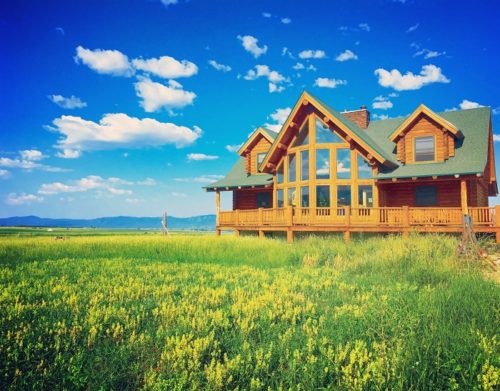
Even if you’re just passing through, I’d strongly recommend at least one night in this area. The wildlife and scenery are astounding, and you’ll want more time than you think.
Budget Accommodations: The Hostel in Teton Village, WY / Teton Hostel Hideaway in Driggs, ID
Mid-range Accommodations: Ridgeline Hotel at Yellowstone in Gardiner, MT / Faithful Street Inn in West Yellowstone, MT
Luxury Accommodations: Hotel Jackson in Jackson, WY / 1872 Inn in West Yellowstone, MT
Check out another great road trip itinerary from Denver to Moab.
Leg 3: Grand Teton NP to Mesa Falls
Distance: 88 miles
Drive time: 2 hours
Cost: $5 day pass, or America the Beautiful Annual Pass
Website: Mesa Falls Scenic Byway
Here’s where the route starts getting genuinely interesting.
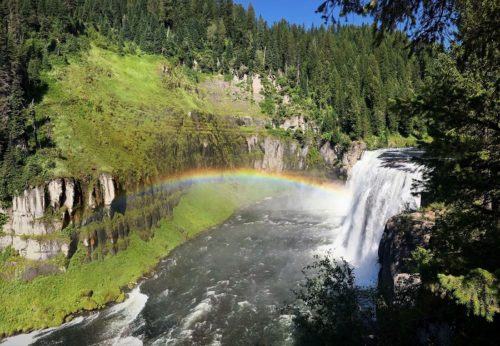
Mesa Falls is a two-for-one: there are two separate turnoffs, Upper and Lower Mesa Falls, with paths down to both. In under an hour you can see both falls and enjoy the thunderous sound of the water. For me, the standout was a rainbow that seemed permanently anchored above the Upper Falls. It made the whole scene feel surreal. Worth every minute of the detour.
Things to Skip: Henry’s Fork Caldera
Do not follow Google Maps in search of Henry’s Fork Caldera. You will end up on a dirt road for about an hour and arrive in the middle of a forest with nothing to show for it. Been there, done that. Please learn from my mistake.
Leg 4: Mesa Falls to Lewis & Clark Caverns State Park
Distance: 135 miles
Drive time: 2 hours 25 minutes
Cost: $8/vehicle parking + $15 Classic Tour (adults 15+) / $10 Paradise Tour (adults) / $10 kids 5–14 / Free for kids under 5
Tours run: May 1 – September 30 (reservations strongly recommended)
Website: fwp.mt.gov/stateparks/lewis-and-clark-caverns
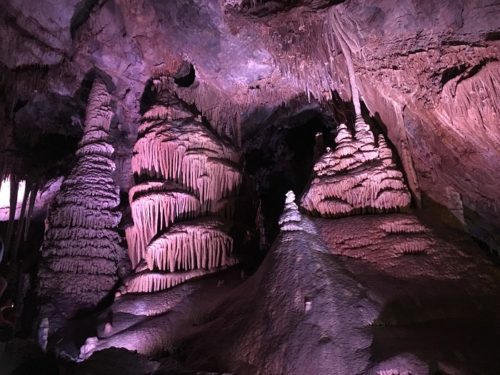
If you’ve never been inside a cave before, this is the place to do it. Lewis & Clark Caverns is Montana’s first and best-known state park, showcasing one of the most spectacular limestone cavern systems in the Northwest, filled with stalactites, stalagmites, columns, and helictites. It is kid and adult friendly, deeply interesting, and genuinely impressive.
There are two tour options:
- Classic Tour (recommended): 2 miles through the majority of the cave, including a ¾-mile uphill hike to the entrance and 600+ stairs inside. Starts with a 300-foot elevation gain, give yourself 30 minutes for the hike up before your tour time. There’s also a fun slide partway through. Lasts about 2 hours. Not recommended for those with claustrophobia or limited mobility.
- Paradise Tour: A shorter, mostly level 1-mile tour through the largest and most decorated room in the cave, the Paradise Room. Great for families with young children or anyone who wants the experience without the physical challenge.
Book in advance at fwp.mt.gov/stateparks or call 1-855-922-6768. Any unsold tickets become first-come, first-served on the day, but summer weekends sell out. The cave stays at 48°F year-round, so bring a layer regardless of the weather outside.
Leg 5: Lewis & Clark Caverns to Ringing Rocks
Distance: 28 miles
Drive time: 45 minutes
Cost: Free
Road condition note: Requires several miles of dirt/gravel road; 4WD recommended
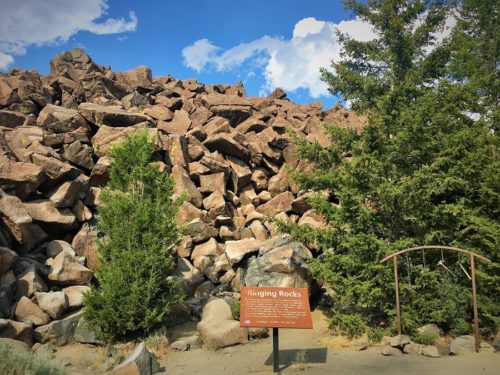
Ringing Rocks is the kind of obscure roadside stop that makes a road trip feel like a proper adventure. In essence: a boulder field where the rocks, when struck with a metal mallet, produce surprisingly melodious chiming sounds. The ringing comes from the specific composition of the rock combined with how the boulders are stacked. Remove one boulder and it loses its tone entirely.
Hammers are provided at a stand on-site, so you can scramble around the rocks making impromptu percussion. It’s free, it’s strange, and it’s genuinely delightful.
Fair warning: The access road is unpaved and rough for several miles. I drove a sedan and ended up parking and walking the last mile because the road got more treacherous than I was willing to push my car through. A friendly Canadian family gave me a ride back, which became its own highlight, but save yourself the trouble and bring or rent a vehicle with some clearance. 4WD is the safer choice.
Leg 6: Ringing Rocks to Berkeley Pit
Distance: 23 miles
Drive time: 45 minutes
Cost: ~$3/person (open mid-May through mid-September)
Website: pitwatch.org/visit
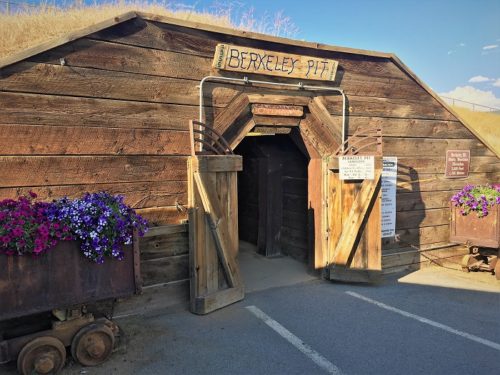
Butte, Montana has a gritty, unforgettable character, and the Berkeley Pit is its defining landmark. This former open-pit copper mine is now one of the largest EPA Superfund sites in the United States: a mile long, half a mile wide, 1,780 feet deep, and slowly filling with acidic water laced with heavy metals. The water has a surreal bluish-turquoise tint that’s beautiful in the most unsettling way possible.
A viewing platform on the southwest rim looks out over the pit. Informational displays explain the history of the mine, the copper boom that made Butte “The Richest Hill on Earth,” and the ongoing environmental management work. The whole thing takes about 30 minutes and leaves an impression.
Leg 7: Berkeley Pit to Missoula
Distance: 120 miles
Drivie time: 2 hours
Missoula is a natural overnight stop and a genuinely pleasant one. It’s a university town (University of Montana) set where five valleys converge, with the Clark Fork River running through downtown, a strong craft beer scene, and an easy energy. I mostly used it as a place to sleep and recharge, but it has more going on than that, including a beautiful hand-carved carousel in Caras Park that is, inexplicably, free to ride.
Where to Stay in Missoula
Missoula offers lots of great accommodation options including a number of extremely well run bed and breakfasts. Here are a few recommended options in each price range to help you plan your trip.
Budget Accommodations: City Center Motel / My Place Hotel
Mid-range Accommodations: Blue Mountain Bed and Breakfast / Goldsmith’s Bed and Breakfast
Luxury Accommodations: Gibson Mansion Bed and Breakfast
Leg 8: Missoula to Ewam Garden of One Thousand Buddhas
Distance: 30 miles
Drive time: 30 minutes
Cost: Free (suggested donation $5–10)
Website: ewam.org/garden-of-one-thousand-buddhas
A friend had mentioned this place to me months before this trip, and I kept filing it away as “one day.” This was one day.
The Ewam Garden of One Thousand Buddhas is exactly what it sounds like: an outdoor garden containing 1,000 Buddha statues arranged in a circular mandala pattern, set against the backdrop of the Mission Mountains. It sits in what feels like the middle of nowhere in the Flathead Valley, and arriving there for the first time is one of those travel moments you don’t quite expect.
The setting is immaculate and deeply peaceful. You can walk the grounds freely. There’s no cost to visit, though a $5–10 donation is suggested. Allow 30–60 minutes.
Leg 9: Garden of One Thousand Buddhas to National Bison Range
Distance: 19.4 miles
Drive time: 20 minutes
Cost: $5 day pass, or America the Beautiful Annual Pass
Website: fws.gov/refuge/national-bison-range
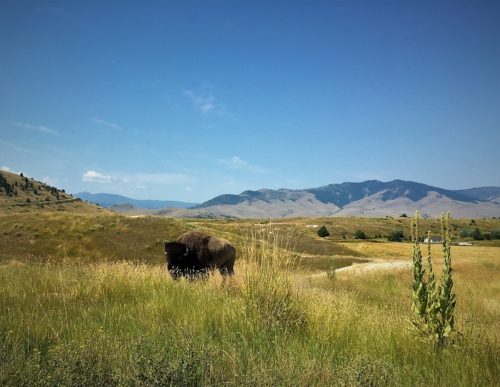
The National Bison Range offers two self-guided driving routes through the refuge, a one-hour loop and a two-hour loop, with bison, elk, pronghorn, mountain goats, and other wildlife visible from your car. You’re asked to remain in your vehicle at all times, which is both a safety rule and probably wise given the size of the animals.
Honest assessment: if you’ve already seen large bison herds in Yellowstone or Custer State Park in South Dakota, this may feel redundant. I found it somewhat underwhelming. I visited midday, and the animals were quiet and scattered. Dawn or dusk would likely be better. That said, it’s a very short drive off the route, admission is minimal, and the scenery is lovely regardless of wildlife sightings.
Pro Tip: If you’re pressed for time and have already had good bison encounters earlier on the trip, this is the most skippable stop on the route. If it’s your first time seeing large wildlife, make time for it.
Leg 10: National Bison Range to Kerr Dam Overlook
Distance: 34 miles
Drive time: 50 minutes
Cost: Free
The Kerr Dam (now formally renamed Séliš Ksanka Ql’ispé Dam) is a 204-foot concrete gravity-arch dam on the Flathead River. It’s 54 feet taller than Niagara Falls. From the parking area, you descend a set of stairs to an excellent viewpoint above the river gorge.
Here’s a caveat: the experience depends entirely on timing. In spring and early summer, when snowmelt is running high, water rushes over the structure in an amazing cascade. In late summer and fall, it becomes mostly a dam with a trickle… interesting infrastructure, but not the visual payoff you were hoping for. If you happen to arrive at the right time, the photos are fabulous. Either way, it’s free and it’s on the way, so it’s worth the quick stop.

Leg 11: Kerr Dam to Flathead Lake
Distance: 7 miles
Drive time: 20 minutes
Flathead Lake is enormous. In fact, it’s the largest natural freshwater lake west of the Mississippi, stretching 28 miles long and 15 miles wide with water so clear you can see the bottom at the edges. For many visitors, it’s a destination in itself, with boat tours to Wild Horse Island, hiking, and waterfront towns dotted around its perimeter.
Don’t drive past without stopping for Flathead Cherries. The Flathead Valley is genuinely famous for them. They’re sweet, large, and unlike anything you’ll find in a grocery store. Stands appear along the roadside during cherry season (typically late July), and prices are remarkably low. I bought a large bag for $3.
Leg 12: Flathead Lake to Glacier National Park
Distance: 86.5 miles
Drive time: 1.5 hours
Cost: $35/vehicle 7-day pass, or America the Beautiful Annual Pass
No vehicle reservations required in 2026
Website: nps.gov/glac
You made it.
Glacier National Park is my favorite national park in the United States, and arriving here after this route feels like a proper reward for the journey. One million acres of wilderness, 700+ miles of trails, 130+ named lakes, and the Going-to-the-Sun Road, one of the most spectacular paved drives anywhere in the world.
2026 access notes:
- No vehicle reservations needed (the timed-entry system has been cancelled for 2026)
- Logan Pass has a new 3-hour parking limit starting July 1, 2026
- A ticketed express shuttle to Logan Pass is available with tickets released on Recreation.gov starting May 2, 2026
- Arrive before 8 am on peak days for the best chance at Logan Pass parking
For a full rundown of where to stay and what to do, see the companion guides:
- Where to Stay for Glacier National Park
- Top 5 Hikes in Glacier National Park
- 10 Things to Know Before Visiting Glacier in Summer

Planning Out Your Denver to Glacier National Park Road Trip Itinerary
Please note that the most direct drive from Denver to Glacier National Park will only take 14.5 hours, so adding all of these stops does add a lot of time to your drive. But, these stops will give you the full “road trip” experience from the renown sights to the obscure, covering about 1,000 miles of open road in 21+ hours of driving.
If you’re wondering how long it can take, well that’s really up to you. Here are two different takes on how to split the Denver to Glacier National Park road trip itinerary up if you are “in a rush” or have time to meander and truly enjoy each stop along the way.
3 Day Itinerary from Denver to Glacier National Park
If you’re driving this route “directly”, aka hitting all the stops but not lingering, three days works well.
Day 1: Denver to Grand Teton / Yellowstone area
Start early. Drive Leg 1 through Rocky Mountain National Park (Trail Ridge Road if it’s open; otherwise Bear Lake or a short hike). Continue Leg 2 the full distance to the Grand Teton/Yellowstone area. Arrive in time for sunset at Snake River Overlook. Overnight in Jackson, WY or West Yellowstone, MT.
Day 2: Grand Teton/Yellowstone to Missoula
Start with a morning stop in Grand Teton or Yellowstone depending on your interests. Then drive Leg 3 (Mesa Falls), Leg 4 (Lewis & Clark Caverns, build in 3 hours for this), Leg 5 (Ringing Rocks), Leg 6 (Berkeley Pit), and Leg 7 to Missoula. It’s a long day but doable if you start early and don’t linger too long at any single stop.
Day 3: Missoula to Glacier National Park
Drive Legs 8 through 12: Garden of One Thousand Buddhas, National Bison Range, Kerr Dam, Flathead Lake, and arrive at Glacier National Park by early evening.
Set your road trip up for success with the Ultimate Road Trip Packing List!
1 to 2 Week Itinerary from Denver to Glacier National Park
With more time, this route becomes an amazing trip.
Days 1–3: Rocky Mountain National Park
Base in Estes Park. Hike the 12 best things to do in Rocky Mountain NP across two full days. Day trip to Trail Ridge Road at its most scenic.
Find out what to pack for a day hike with the Essential Hiking Packing List.
Days 4–6: Grand Teton & Yellowstone
Two nights near Jackson Hole. Full day in Grand Teton: Snake River Overlook at sunset, Jenny Lake hike, wildlife at Oxbow Bend. One full day in Yellowstone: Old Faithful, Grand Prismatic Spring, Lamar Valley for wolves and bison. If you have a third day, the Grand Canyon of the Yellowstone is worth it.
Day 7: Mesa Falls, Lewis & Clark Caverns, Ringing Rocks, Berkeley Pit
This is the “off the beaten path” day and one of the most fun. Mesa Falls in the morning, Lewis & Clark Caverns Classic Tour midday (book ahead), Ringing Rocks if road conditions allow, Berkeley Pit as you roll into Butte. Overnight in Missoula.
Day 8: Missoula, Garden of One Thousand Buddhas, National Bison Range, Kerr Dam
Relaxed morning in Missoula. Garden of One Thousand Buddhas after breakfast. National Bison Range for a midday wildlife drive. Kerr Dam overlook in the afternoon. Drive along Flathead Lake and overnight in Bigfork or Whitefish.
Days 9–14: Glacier National Park
Three to five days here does it justice. At minimum: a full day on Going-to-the-Sun Road and the Highline Trail, and a full day in the Many Glacier area (Grinnell Glacier or Iceberg Lake hike). With more time, add Avalanche Lake, Two Medicine, and the backcountry chalets.
Bonus
If you have extra days after Glacier, continue north into Canada. Waterton Lakes National Park is right across the border; Banff and Calgary are a couple of hours further.
Read more: Top 5 Hikes in Glacier National Park
Planning Tips & FAQ
No. The vehicle reservation system has been cancelled for 2026. You can drive into the park at any time. Logan Pass has a new 3-hour parking limit from July 1, and a ticketed shuttle is available for express access to Logan Pass.
Yes, from May 22 through October 12, 2026 during certain hours. Book on Recreation.gov, with advance reservations opening May 1. Without one during peak hours, you may be turned away at the gate.
Late June through mid-September is the sweet spot. The Going-to-the-Sun Road in Glacier typically opens fully in late June, all trails are accessible, and days are long. July and August are peak season. Early September has smaller crowds and beautiful fall light with most facilities still operating.
Almost certainly yes, if you’re a U.S. resident. At $80/year it covers Rocky Mountain, Grand Teton, Yellowstone, Glacier, and the National Bison Range… all on this route.
Without it you’d pay $140+ in entrance fees. If you’re an international visitor, look into the Non-Resident America the Beautiful Pass ($250), which covers standard entry across all national parks and makes the math work if you’re visiting multiple parks.
Mountain weather changes fast at any elevation. Always carry a waterproof layer and a warm layer regardless of the forecast. Bring bear spray for Glacier as it’s required on backcountry trails and strongly recommended on any hike. Buy it at a gear shop in Whitefish or Columbia Falls as you can’t fly with it. Download offline maps before you lose cell service (which happens frequently between Rocky Mountain and Glacier). See the Road Trip Packing List for the full checklist.
Fill up before entering any national park. There’s no gas inside Rocky Mountain, Grand Teton, or Glacier. Yellowstone has gas at a handful of locations inside the park (including Old Faithful and Canyon Village), but prices are significantly higher than outside.
Absolutely. Waterton Lakes National Park is directly across the border from Glacier and shares the same mountain ecosystem. Banff National Park and the town of Banff are about two hours north. If you have the time, the extension is worth it.
Continue Exploring the National Parks
There you have it. 12 stops for the complete Denver to Glacier National Park road trip. Not every stop will fit every itinerary or every travel style, but that’s the point.
Take what appeals to you and leave the rest. And note that many of the roads on this route are designated scenic byways, so even the driving legs are part of the experience.
Check out these related posts:
- Where to Stay for Glacier National Park: The Ultimate Guide
- Top 5 Hikes in Glacier National Park: The Best Trails for Your Bucket List
- 10 Things to Know Before Visiting Glacier National Park in Summer
- Top Hikes in Waterton Lakes National Park to Add to Your Itinerary
- 12 Best Things to Do in Rocky Mountain National Park
- Best Things to Do in Denver, Colorado
Perfect Your Road Trip with These Resources
Now that you have the best route from Denver to Glacier National Park, you can focus on the finer details, like what to pack and the best snacks to take. After all, they’re vital parts of any successful road trip!
- How to Plan a Road Trip: A Step-by-Step Guide
- 80+ Good Road Trip Snacks: The Key to Any Successful Road Trip!
- Road Trip Packing List for Expert Travelers: 60 Road Trip Essentials + More Tips!
Safe Travels!
Like this post? Pin it.


Such stunning photography! Mesa Falls is right up my street – waterfalls fascinate me, but that shot with the rainbow is just perfect!!
Yessss! Waterfalls are very impressive, and Mesa Falls is not too crowded since it’s a little off the beaten path.
Thans for sharing, some really great places to visit. Pinned it and added to my bucket list. 🙂
Hope you can visit some of them one day!
Wow, that looks like an amazing drive! There’s a lot of variety, which is nice.
It is a great drive. Lots of variety – and it can be fun for an individual, or a family!
Absolutely love this post. I love hiking and going into the mountains. American National Parks are absolutely beautiful and I would love to visit the Glacier National Park and Yellowstone National Park the most. Hopefully soon! Great post.
I can’t agree more! The American National Parks are truly amazing. You will LOVE Glacier National Park! It is my favorite of all of the ones I’ve visited. So beautiful!
This is a very informative and useful post. Thank you! I’ve been to some of these parks but not all. Hopefully, I’ll have a chance if not this summer then next.
I hope it works out. All of the parks and places are so unique and fun to explore!
This honestly sounds like a great trip! I love Denver and would love to visit Glacier so this could come in super handy. 🙂
It’s a great road trip! There are so many things to see in between and both Denver and Glacier National Park are AMAZING!