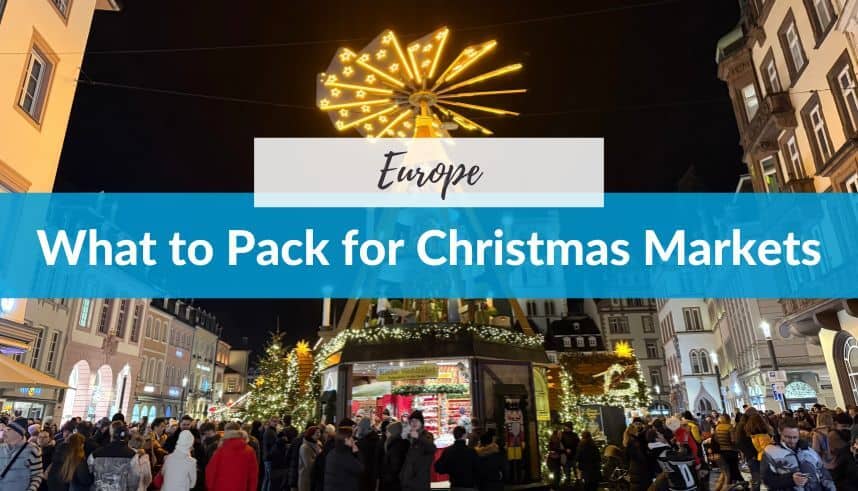
What to Pack for a Christmas Market Trip to Europe
When it comes to packing for Europe’s Christmas markets, I’m a firm believer in less is more. If you’ve followed along for a while, you know that I travel carry-on only, even for multi-week international trips, and my 2024 Christmas market trip was no exception.
That meant every single item in my backpack had to earn its place. I didn’t have space for bulky “just in case” outfits or shoes I might only wear once. I needed versatile pieces that layered well, dried quickly, and could transition from daytime sightseeing to nice dinners without a total wardrobe change.
And I wasn’t the only one thinking this way. In the months leading up to my trip, I kept seeing the same question pop up in travel groups and forums: What do I pack for Christmas markets in Europe? Worrying about the cold, about rain and snow, and about what kind of footwear is truly practical as it’s a fast way to ruin your trip.
After several weeks exploring markets across Germany, the Netherlands, Luxembourg, Belgium, and France, I’ve got answers. This guide isn’t just about what to bring to Europe Christmas markets. It’s also about what to not bring, how to pack smart, and how to stay warm and comfortable without overthinking it.
Disclosure: Some of the links below may be affiliate links. At no additional cost to you, I may earn a small commission if you make a purchase.
Setting the Stage: My 2024 Christmas Market Itinerary
This guide is based on firsthand experience. In 2024, I took a multi-week November and December trip focused on Christmas markets and holiday ambiance. I visited both large cities and small towns across five countries: Germany, the Netherlands, Luxembourg, Belgium, and France.
Weather ranged from cold but dry days to sleet, snow, and constant drizzle. Most of the markets were outdoors, and walking 10,000+ steps a day was common. I was constantly going from cold, damp air into heated museums, cafés, and train stations. The key to staying comfortable? Strategic packing and smart layering.
Let’s take a look at what to wear during a European Christmas markets trip.
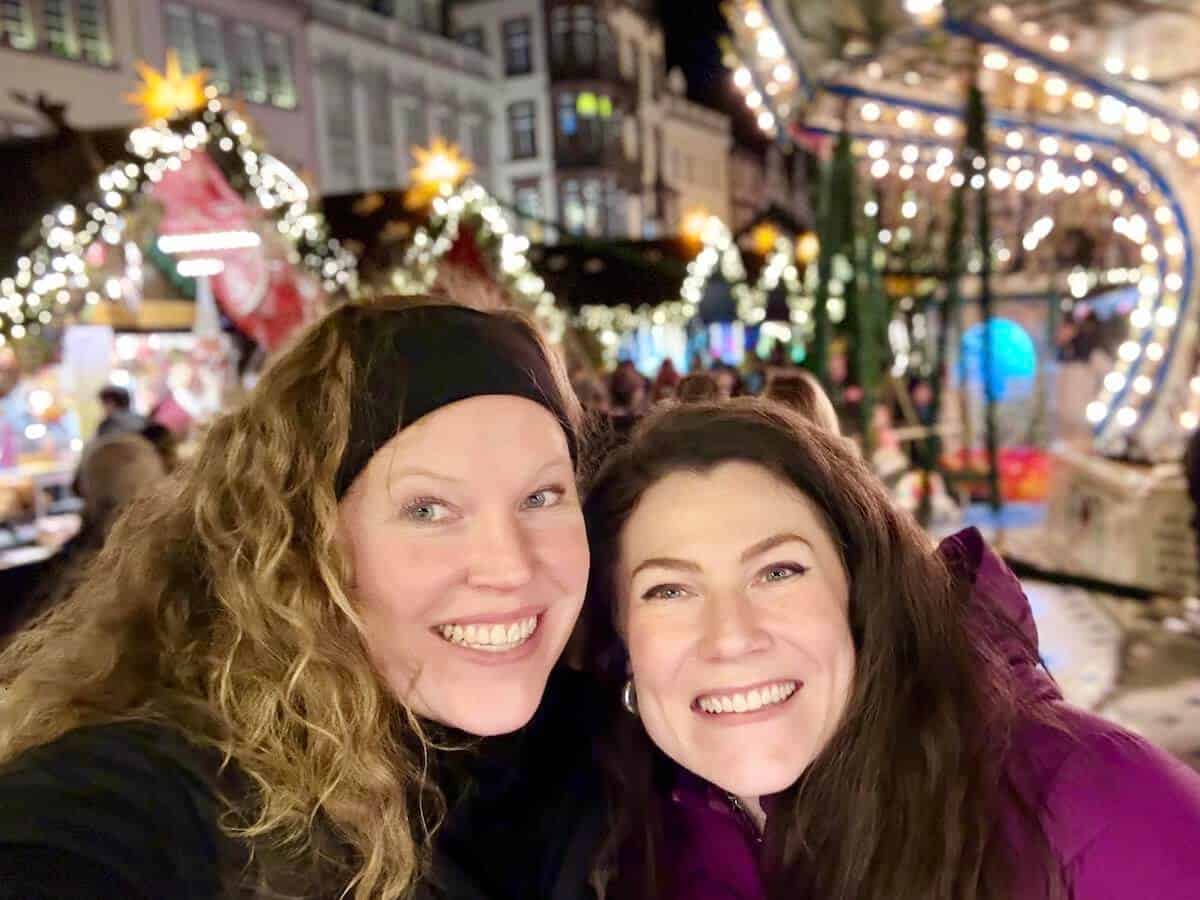
A Core Lesson for Winter Packing: How to Layer
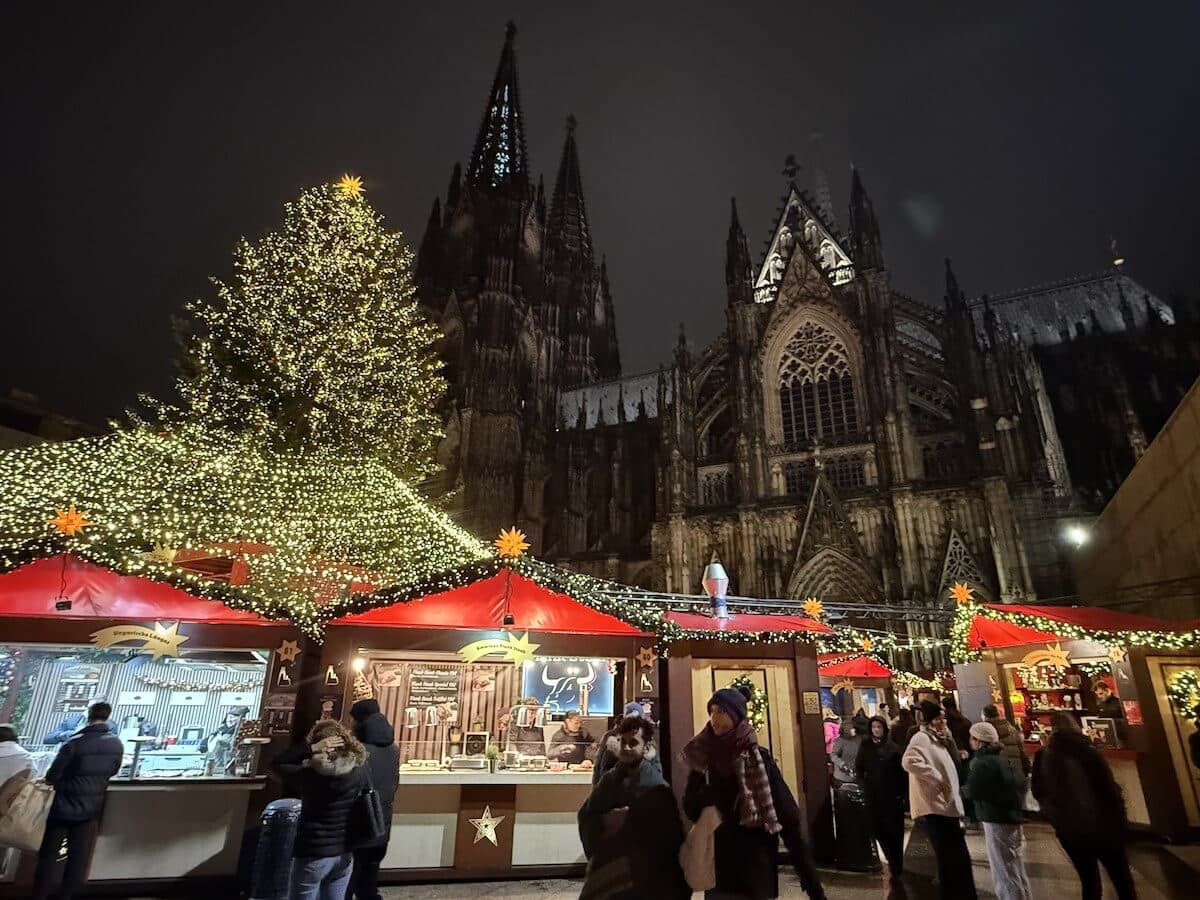
European Christmas market travel is all about being outside for long stretches of time. You’ll be browsing stalls, sipping mulled wine, and strolling through historic streets decorated from top to bottom with Christmas decorations.
But then you duck inside a warm restaurant or hop on a crowded train, and suddenly you’re sweating. The solution? Layering.
Let’s discuss the three layers you’ll need.
Base Layers: Your First Line of Defense
Your base layer is the clothing worn directly against your skin. Its job is to regulate temperature and wick away moisture. You’ll want:
- Thermal leggings or long underwear
- Merino wool or synthetic base layer tops (avoid cotton, which traps moisture)
When I first started shopping for winter clothes, I was shocked at the price of some of the “key” items. Let’s just say Merino wool is expensive, but it is also worth the investment. It’s breathable, naturally odor-resistant, and keeps you warm even when damp. Trust me, I’ve tested it through high altitude hiking in Nepal!
Pack three or four tops and two sets of thermal leggings. I wore mine under jeans or normal leggings and skirts. Even on colder days I felt totally comfortable!
Mid Layers: Warmth without Bulk
This is your insulation layer. It should trap body heat without restricting movement or being so bulky that it doesn’t fit under a coat.
- Wool sweaters or fleece pullovers
- Packable down vest or light insulated jacket
I personally packed a North Face Denali fleece jacket that was perfect for dry but chilly days when a full coat felt like overkill. On warmer afternoons, it was all I needed over my base layer.
Outer Layers: Waterproof and Windproof
Your outer layer protects you from the elements. We’re talking rain, wind, and snow. Waterproofing is non-negotiable. As soon as you get wet in the cold weather, you’re not just going to be uncomfortable, but you could lose your heat at a scary rapid pace.
I brought two outer layers that I mixed and matched depending on the weather:
- A waterproof, hooded jacket (lightweight but fully protective)
- A North Face fleece (mentioned above) for drier days or layering underneath
Having two outer layers meant I could adjust based on how cold or wet the day looked. The waterproof shell went over everything on sleet or snow days. A hood is also key as it saves you from having to carry an umbrella in packed markets.
Shoes or Boots for European Christmas Markets
While clothing and style may be top of mind, there’s another important question to consider: What shoes should you wear to Christmas markets in Europe?
Honestly, footwear may be the single most important decision you make when packing for Christmas markets in Europe. You’ll be walking a lot, often on wet cobblestones or icy sidewalks. Choose the wrong shoes or socks and you’re going to regret it… quickly.
Footwear: Supportive, Waterproof, and Slip-Resistant
Packing the right shoes is imperative. You need to prioritize:
- Waterproof boots or shoes
- Slip-resistant soles
- Support for long walking days
- Already broken in (this is crucial)
I wore a pair of Blondo waterproof leather boots with good tread and arch support. They kept my feet warm and dry, even in sleet and snow. Do not bring shoes that haven’t been worn on at least a few long walks at home.
If you don’t have shoes that you deem worthy, don’t worry. You’ll see people wearing a little bit of everything. We’re talking hiking boots to gym shoes to nice leather boots. I personally kept my shoe choices limited to ensure I fit within my 46L Osprey Porter backpack.
Sock Strategy: Merino Wool for the Win
Just like your base layers, socks matter more than you think.
- Merino wool socks are warm, moisture-wicking, and dry quickly
- Bring 2–3 pairs and rotate (they don’t need to be washed after every wear)
- Avoid cotton socks as they’ll make your feet cold and clammy fast
I personally swear by Smart Wool socks but one of my trusty travel friends is more into Darn Tough Vermont socks. Either way, pack socks that are up to the task. Cold feet can ruin your day. Good socks are a small investment that pays off in big comfort.
Don’t Forget These Cold-Weather Accessories
Last but not least. Pack a few key accessories that will make or break your comfort level.
- Touchscreen-compatible gloves: You’ll want to take photos or use Google Maps without freezing your fingers. Honestly, my touchscreen fingers weren’t great on my gloves, and it was a huge pain.
- A warm scarf: Ideal for blocking wind and adding insulation. There were times I needed to hide most of my face from the rain.
- A cozy hat or beanie: Even with a hood, having something tightly wrapped around your ears will really help you retain heat.
- Hand warmers: This seemed like overkill to me, but alas, I packed them, and they were helpful at times. They can bring heat back to your fingers after spending hours upon hours outside. Alternatively, if your hands get cold, it’s time to get another hot drink!
What (and What Not) to Carry
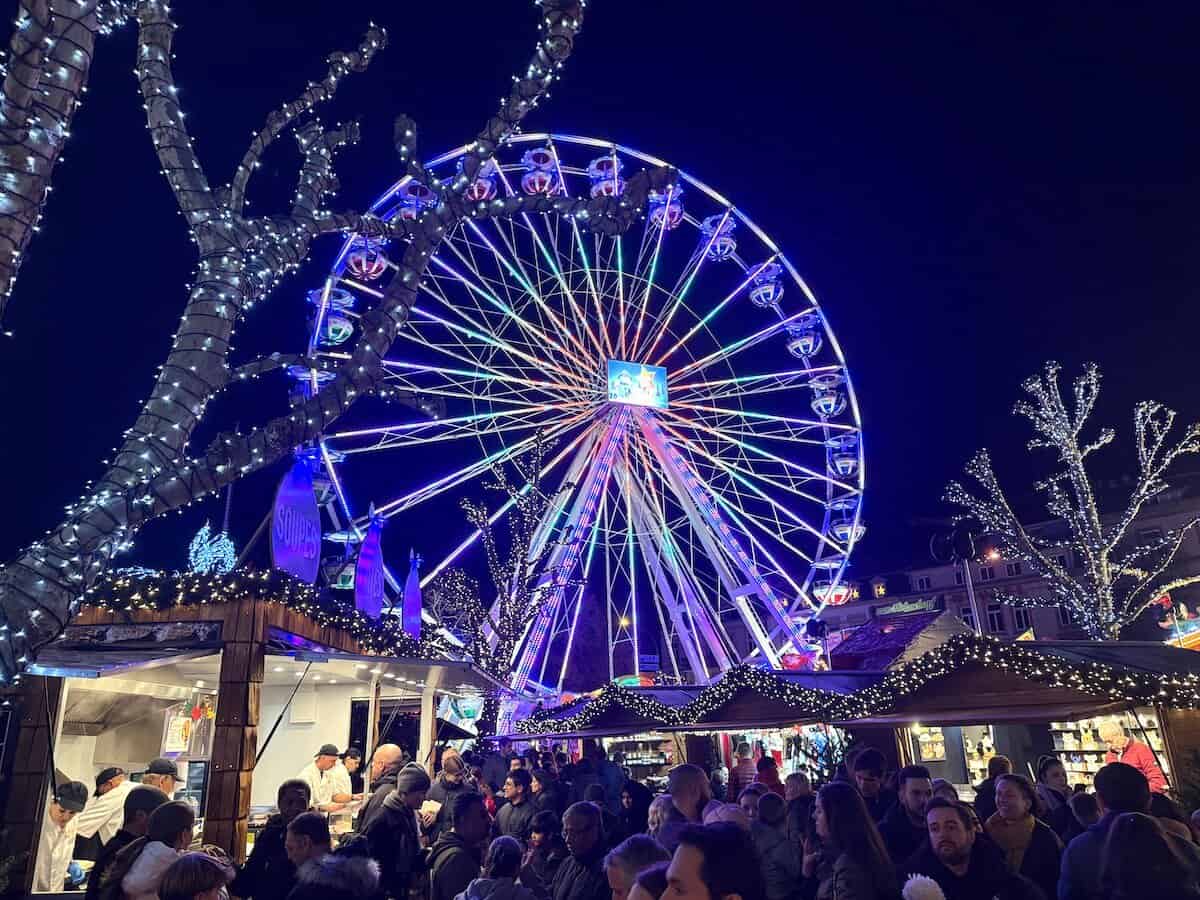
The Christmas markets are crowded, particularly at night. You want to travel light and keep your belongings secure.
What I Carried
Personally, I didn’t take much out to the Christmas markets, and what I did, i popped into my zippered coat pockets.
- Zippered coat pockets: My go-to for phone, cards, and cash
- Collapsible tote bag: Perfect for purchases like ornaments, chocolate, and gifts
- Small crossbody purse (if needed): Must zip fully and be worn in front
What to Leave Behind
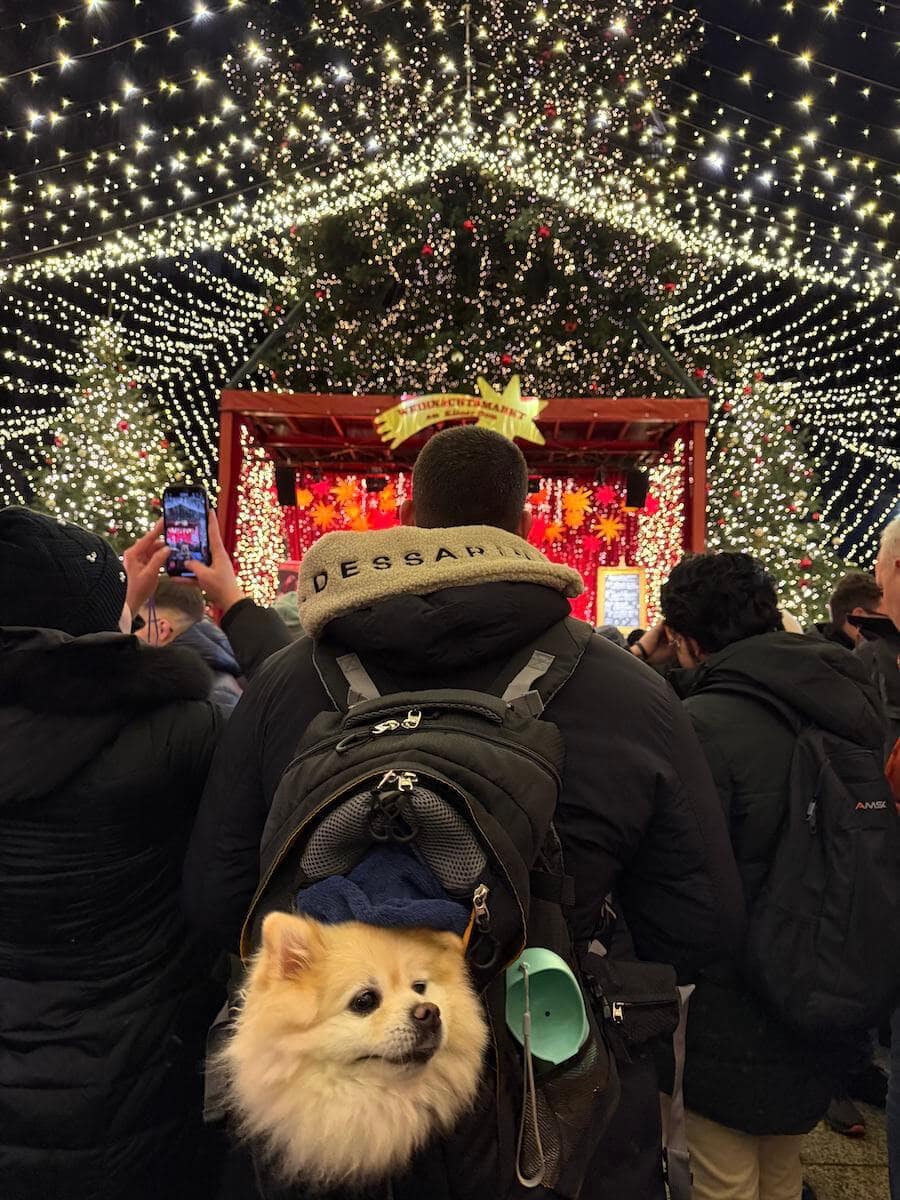
- Backpacks: Too bulky for crowds and easy for pickpockets to access. If you must take them, make sure you can wear it on your front.
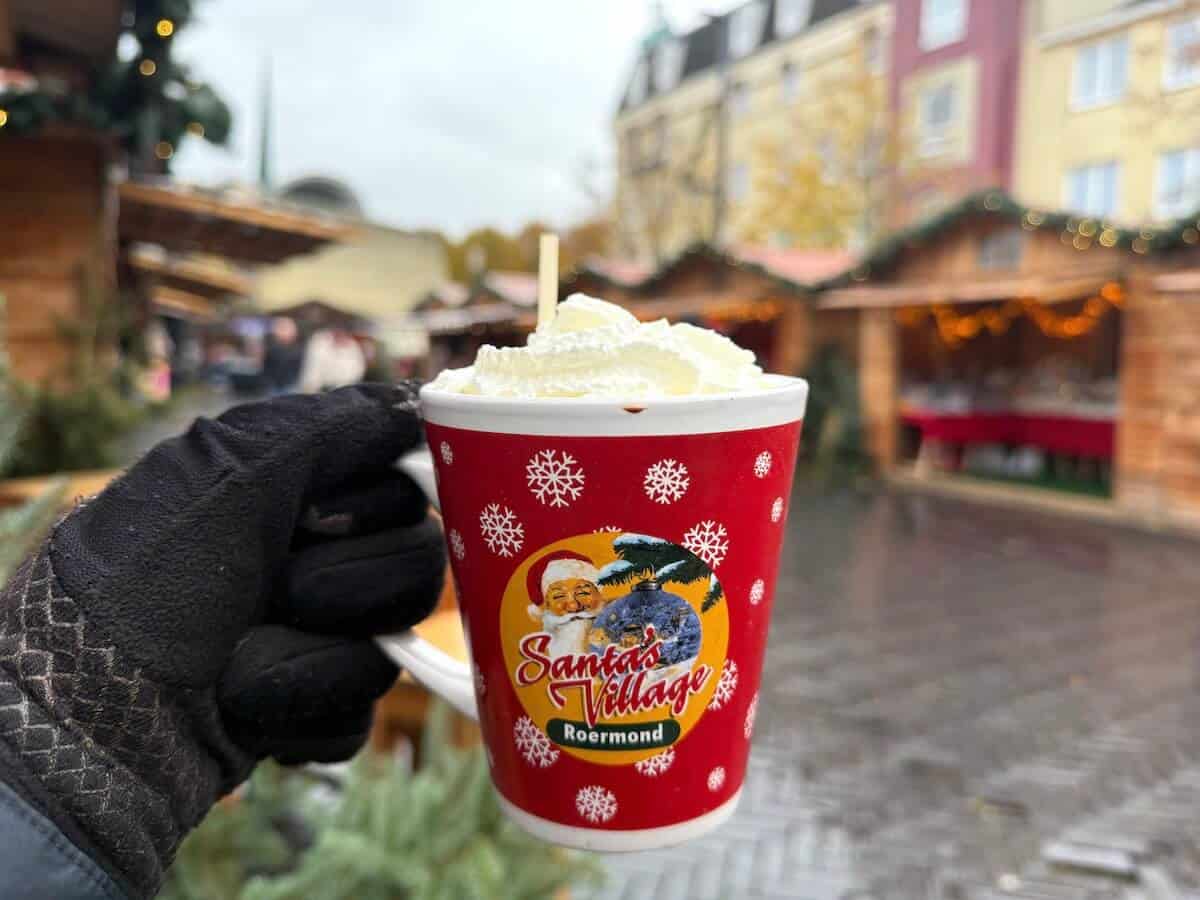
- Travel mugs: Markets provide reusable mugs with a deposit system
- DSLR or mirrorless cameras: Unless you’re a professional photographer, your phone is enough. One less thing to carry or worry about as you get jostled around and it turns from rain to snow.
- Valuables: Leave passports, extra credit cards, and irreplaceable items in your hotel room safe. You won’t need them during the day or at the markets.
Pro Tip: Most markets accept card payments, but it’s still a good idea to carry some local cash, especially in smaller towns or for food stalls. We often found that for mug deposits cash was easier to use and get back.
Important Tip: Limit What You Bring
Christmas market travel is about wandering freely, not lugging around half your suitcase. Stick to essentials and think about how you’ll feel carrying something after three hours on cobblestones.
If you’re second-guessing an item, you probably don’t need it. That applies to extra clothes, fancy accessories, and “maybe” shoes. Trust me: lighter is better as you hop on and off trains, planes, and automobiles. Worst case scenario: You’re in Europe and can buy almost anything you forgot or are missing!
Explore More of Europe
Christmas markets in Europe are magical, but only if you’re dressed for the weather and prepared to be on your feet. With the right layers, waterproof shoes, and a practical mindset, you’ll be free to enjoy every sip of Glühwein, every twinkling light, and every handmade ornament without distractions.
You don’t need a huge wardrobe. You just need the right pieces.
Need more insight? Check out this post:
- 10 Key Tips for First-Time Visitors to European Christmas Markets
- Two Week European Christmas Market Itinerary: Central-Western Europe
- The Mugs of European Christmas Markets: How the Deposit Works
Like this post? Pin it.