
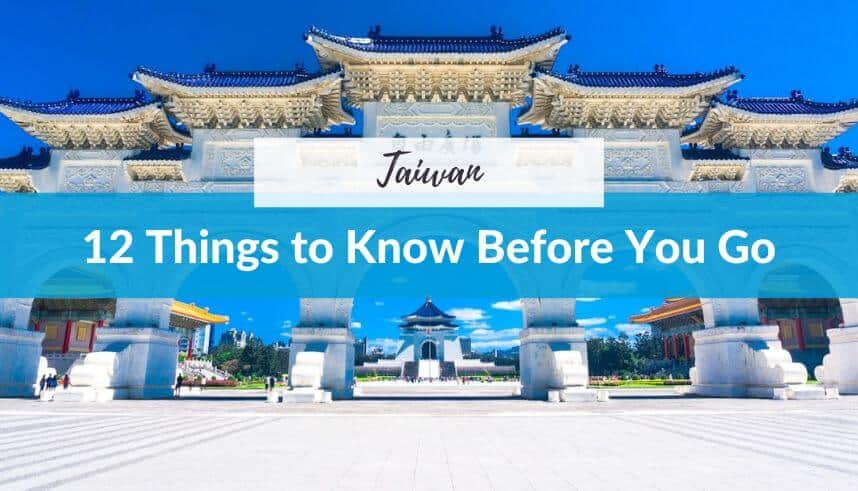
12 Essential Things to Know Before Visiting Taiwan (From a Solo Traveler)
When I booked my flight to Taiwan from Bangkok, I’ll admit I knew embarrassingly little about the island. My research amounted to: “It’s like China without all the negatives” (whatever that meant) and “the food is supposed to be amazing.” I figured if I loved my time in mainland China, Taiwan had to be even better, right?
Sixteen days later, having looped the entire island solo from Taipei to Hualien to Kaohsiung to Tainan to Sun Moon Lake and back to Taipei, I emerged with a completely different understanding of Taiwan. This isn’t just “China light”. It’s a unique destination with its own distinct culture, challenges, and incredible experiences.
If you’re planning your own Taiwan adventure, here are 12 things I wish I’d known before I went.
Disclosure: Some of the links below may be affiliate links. At no additional cost to you, I may earn a small commission if you make a purchase.
1. Taiwan Isn’t a Major Western Tourist Destination (And that’s actually great)
In my 16 days traveling around Taiwan, I met exactly one other Western tourist. One. Every other Westerner I encountered was teaching English in Taiwan or traveling during Chinese New Year holiday. Asian tourists from mainland China, Japan, Korea, and Southeast Asia? Plenty. But travelers from North America, Europe, or Australia? Practically nonexistent outside of Taipei.
What this means for your trip…
The Challenges:
- Finding travel buddies as a solo traveler requires more effort (though not impossible).
- Smaller cities have minimal English signage and fewer English speakers.
- Tourist infrastructure is less developed than in Thailand, Japan, or even parts of China.
- Online resources and travel guides offer less detailed information than for popular destinations.
The Advantages:
- You’ll have authentic experiences without tourist crowds.
- Locals are often delighted and curious to meet Western travelers.
- Prices remain reasonable because tourism hasn’t inflated costs.
- You’ll feel like you’re discovering something special that most travelers miss.
- Night markets, temples, and attractions aren’t overrun with tour groups.
My perspective after visiting 100+ countries: Taiwan’s relative obscurity among Western travelers is part of its charm. You know that feeling of discovering a place before “everyone” gets there? Taiwan still offers that… at least for non-Asian travelers.
Solo Travel Note: In Taipei, hostels have decent social scenes and you’ll find other travelers. In smaller cities like Tainan, Hualien, or Sun Moon Lake, you might be the only non-Asian guest. This can feel isolating or exhilarating depending on your personality… I found it mostly the latter.
Looking to connect with other travelers? Search social hostels on Booking.com
2. The Language Barrier Is Real… But Manageable
English is taught in Taiwanese schools, so many people understand basic English. However, finding fluent English speakers outside of Taipei is rare. This creates a fascinating paradox: simple tasks are easy, complex tasks are challenging.
Simple Tasks (Totally Manageable):
- Buying train tickets at stations with English kiosks.
- Ordering at convenience stores (point and pay).
- Getting around on Taipei’s MRT (all in English).
- Checking into hotels (most have basic English).
- Using translation apps for basic communication.
Complex Tasks (Can Be Frustrating):
- Asking for detailed directions.
- Taking taxis to specific addresses (have address written in Chinese characters).
- Understanding museum exhibits (many are Chinese-only).
- Ordering in local restaurants (no English menus or pictures).
- Dealing with problems (lost items, medical issues, complaints).
My Strategies that Worked
- Screenshot everything in Chinese characters: Hotel addresses, attraction names, bus stops… keep screenshots on your phone to show people when asking for help.
- Download offline translation apps: Google Translate’s offline Chinese pack and camera translation feature were lifesavers.
- Learn basic Mandarin phrases: “Nǐ hǎo” (hello), “xièxiè” (thank you), “duōshǎo qián?” (how much?), “wǒ bù dǒng” (I don’t understand). I recommend having someone pronounce these for you or Youtubing them as the accents are hard to get from the written words!
- Carry your hotel’s business card: So important for taxi rides home.
- Use the visitor centers: Every major city has visitor information centers, often with English-speaking staff. I used these constantly for maps, directions, and bus schedules.
- Embrace pointing and smiling: Non-verbal communication works surprisingly well. When in doubt, you can use emojis on your phone to help!
After two weeks, I managed to navigate the entire island, catch trains, find accommodations, order food, and visit attractions without speaking Mandarin or Taiwanese. Was it always smooth? No. Did I eat some mystery dishes and end up in a few wrong places? Absolutely. But that’s part of the adventure.
If you’ve traveled off the beaten path in places like Thailand, Vietnam, or Japan with limited English, you’ll be fine in Taiwan. If Taiwan is your first non-English-speaking destination, prepare for a learning curve, but an entirely doable one.
3. Transportation is Surprisingly Easy (Once You Understand the System)
Taiwan’s transportation infrastructure is excellent. It’s actually a legacy of Japanese colonial rule combined with modern investment. Getting around is easier than you might expect, even without speaking the language.
Trains: The Backbone of Taiwan Travel
Taiwan has two main rail systems.
1. Taiwan High Speed Rail (THSR/HSR)
- Connects major west coast cities (Taipei, Taichung, Tainan, Kaohsiung)
- Example: Taipei to Taichung in 1 hour (vs. 2-3 hours on regular trains)
- More expensive but time-efficient
- Book tickets online in English
- Reservations recommended for weekends and holidays
2. Taiwan Railway Administration (TRA)
- Slower, cheaper, and covers the entire island including the scenic east coast
- Multiple train types: Express, Chu-kuang (semi-express), Local
- I used TRA exclusively to save money, which was totally worth the extra time
- Check schedules and book online
- Tickets can be purchased online and printed at 7-Eleven (costs ~8 NTD to print)
Pro Tip: During Chinese New Year and major holidays, trains fill up fast and you might end up standing for hours. Book early or be prepared for standing room only as the conductor will still sell you a ticket.
Buses: Cheap and They Go Everywhere
Intercity buses connect places trains don’t reach and often cost half the train fare. The challenge? Schedules can be hard to find online in English. Visit visitor information centers to get current bus schedules and routes.
City buses are inexpensive (usually ~15 NTD per ride) and cover local destinations well. Route maps at bus stops are typically in Chinese, so ask your hotel for help identifying the right bus.
Metro Systems (MRT): Taipei and Kaohsiung both have modern, clean, efficient metro systems with full English signage and announcements. These are foolproof and a pleasure to use.
EasyCard: Your Transportation Best Friend
Buy an EasyCard (like Hong Kong’s Octopus Card or London’s Oyster Card) at any 7-Eleven, FamilyMart, Hi-Life, OK Mart or at the information centers in Taipei, Taoyuan, or Kaohsiung Metro stations. This rechargeable card works on:
- All metro systems
- City buses
- Some intercity buses
- Convenience store purchases
- Bike rentals
Cost: 100 NTD for the card (refundable deposit) plus however much you load.
It saves time, often gives discounts, and eliminates language barriers at ticket machines
Bike Rentals: Taiwan’s Secret Weapon
Many cities offer excellent bike rental systems and dedicated bike paths. The YouBike system in Taipei works like city bike shares worldwide, and Sun Moon Lake’s bike path has been ranked among the world’s most beautiful cycling routes.
Rental costs: ~100-400 NTD/day depending on bike type and location
Tours: When DIY Feels Like Too Much
If independent travel sounds overwhelming, organized tours can simplify things while still giving you Taiwan experiences:
Search Taiwan tours on Viator
Browse Taiwan experiences on GetYourGuide
My Take
I’m a DIY traveler by nature and found Taiwan’s transportation manageable solo. But I met other travelers who appreciated having guides explain temple significance, navigate language barriers, and handle logistics, especially for destinations like Alishan National Park or Taroko Gorge where public transport is trickier.
4. Hostels are Widely Available but Culturally Different
Budget accommodations exist in every city I visited, from Taipei to tiny Hualien. However, Taiwanese hostels operate differently than what you might expect from hostels in Europe, Australia, or even Southeast Asia.
What Makes Taiwan Hostels Unique
- Finding them is an adventure: Many hostels have no English signage outside. I frequently arrived at addresses to find what looked like a locked apartment building, knocked hesitantly, and was eventually let in by staff. After the first few times, this became normal.
- Limited English: Staff often speak minimal English. Basic check-in works fine, but getting local recommendations or detailed directions can be challenging.
- Different social dynamics: I was frequently the only Western guest…sometimes the only guest period. Don’t expect the backpacker party atmosphere of hostels in Bangkok or Barcelona.
- Minimal tourist information: Unlike European hostels with walls covered in local tips and tour flyers, Taiwan hostels rarely have maps, recommendations, or organized activities. Do your research before arriving.
- Clean but simple: Taiwanese hostels are generally clean and well-maintained, but amenities are basic. Don’t expect fancy common areas or kitchens.
Types you’ll encounter:
- Traditional dorm beds (most common)
- Pod hostels (private sleeping capsules in shared rooms)
- Japanese-style “mat on floor” accommodations (less common but exist)
Where to Book
- Booking.com (best for flexibility and English interface)
- Agoda (wider selection in Asia, including smaller properties)
Budget ranges in 2026
- Hostel dorms: 400-600 NTD ($13-20 USD) per night
- Budget private rooms: 800-1,500 NTD ($25-50 USD) per night
- Mid-range hotels: 1,500-3,000 NTD ($50-100 USD) per night
- Luxury hotels: 3000+ NTD ($100+ USD) per night
Pro Tip: If you’re traveling solo and want to meet other travelers, stay in Taipei hostels for the social scene, then switch to budget private rooms in smaller cities where you’ll likely be alone anyway. The price difference is often minimal.
For more accommodation strategies, see my Cost of Traveling in Taiwan guide.
5. Maps are Limited (But Technology Helps)
This was one of my biggest frustrations. Finding detailed, accurate maps with English labeling proved surprisingly difficult.
Physical maps were only available at Visitor Information Centers, and they are large, partially translated, and cumbersome to carry. I picked one up in every city I visited.
Google Maps works well in Taiwan… mostly. Street navigation is accurate, transit directions are reliable, and it helped me countless times. The limitation? Not everything is labeled in English, and some local business names only appear in Chinese characters.
Maps.me (offline maps app): This has been my go-to offline navigation app throughout my travels (although Organic Maps is also great!), but in Taiwan it fell short. Streets were accurate, but almost nothing else was labeled. No restaurants, hotels, attractions, or points of interest. It became essentially a detailed compass.
Apple Maps: Surprisingly good in Taiwan, especially in larger cities.
What Worked for Me
Due to the many limitations and frustrations I ran into, I recommend a hybrid approach.
- Download offline Google Maps for each area before losing WiFi.
- Screenshot important locations from Google Maps with both English and Chinese text visible.
- Get physical maps from visitor centers as backup.
- Save hotel locations offline so you can always navigate “home”.
- Use WiFi at convenience stores to re-orient when lost (7-Elevens and Family Marts everywhere offer free WiFi).
Pro Tip: The official visitor centers in each city (look for “i” information symbols) have English-speaking staff who can mark maps, write down directions in Chinese, and explain bus routes. I used these constantly and found staff incredibly helpful.
6. The Food is Amazing…and Adventurous
Taiwanese cuisine combines Chinese culinary traditions, Japanese influences, and indigenous ingredients into something entirely unique. Night markets are a must visit. Street food is an art form. And… bubble tea was invented here (in Taichung, to be specific).
Food Highlights
- Night markets: These aren’t just food courts. They’re social experiences, cultural phenomena, and the center of Taiwanese city life. Every city has at least one, and they’re where locals eat, socialize, and shop. Expect:
- Stinky tofu (you’ll smell it before you see it)
- Oyster omelets (蚵仔煎 – ô-ā-tsian)
- Beef noodle soup
- Scallion pancakes
- Grilled squid
- Bubble tea (珍珠奶茶 – zhēnzhū nǎichá)
- Countless other snacks and meals for 50-150 NTD
- Restaurant meals: Range from hole-in-the-wall local spots (100 NTD) to Western-style restaurants (300-500+ NTD)
- 7-Eleven and Family Mart: These aren’t just convenience stores in Taiwan. They’re life-savers. Hot meals, snacks, drinks, and basic groceries at reasonable prices. Both offer:
- Rice balls and dumplings
- Instant noodles you can prepare in-store
- Tea eggs
- Ready-made lunches
- Free WiFi
- Literally on every corner
- Bakeries: Taiwan has amazing bakeries with both Western and Asian-style baked goods. Great for breakfast and snacks.
Challenges Eating in Taiwan
- Menu roulette: Most local restaurants don’t have English menus or photos. Ordering becomes a pointing game or leap of faith. This led to some incredible discoveries and a few “interesting” meals I couldn’t identify.
- Vegetable scarcity: As a solo traveler eating at small places, I found vegetables harder to come by than expected. Meat-heavy dishes dominate, and ordering vegetable sides requires language skills I lacked.
- Dietary restrictions: If you’re vegetarian or vegan, learn the phrase “wo chi su” (我吃素 – I eat vegetarian). Many Taiwanese Buddhists are vegetarian, so accommodations exist, but you need to communicate your needs. Temple restaurants often serve vegetarian food. You can also have your hotel, hostel, or the information center write it down for you to show at restaurants.
- Food Safety: Food safety in Taiwan is excellent. I ate street food constantly without getting sick. The government regulates food standards stringently, and hygiene practices are generally very good.
- When everything’s closed: During Chinese New Year (and occasionally on random days in smaller towns), restaurants close. Having instant noodles from 7-Eleven saved me multiple times… and it’s surprisingly delicious.
My advice: Embrace the adventure. Point at what looks good, try things you can’t identify, and don’t be afraid of the night markets. Some of my best meals in Taiwan came from food stalls where I had no idea what I was ordering.
7. Weather in February is a Complete Gamble
I visited in mid-February (Chinese New Year period) thinking I’d escape winter. The reality? Taiwan’s weather in February is wildly unpredictable and varies dramatically by region.
What I Actually Experienced
Taipei (North):
- Cool temperatures (10-18°C / 50-64°F)
- Frequent rain and fog
- Needed a jacket most days
- Damp, gray weather
Taroko Gorge (East Coast):
- Pleasant hiking weather
- Some rain but manageable
- Cooler in the gorge than at sea level
Tainan and Kaohsiung (South):
- Mild and mostly dry
- Comfortable t-shirt weather
- Occasionally warm enough for shorts
Sun Moon Lake (Central Mountains):
- Cold (single digits Celsius)
- Heavy fog obscuring lake views
- Rain most days
- Felt like winter
Kenting (Far South):
- Warm and sunny (!)
- Actually waded into the water at the beach
- Felt like early summer
- Best weather of my entire trip
Fair Warning… Despite cool temperatures, mosquitoes were aggressive everywhere. I used repellent daily and still got bitten constantly. Pack insect repellent regardless of season.
Best Times to Visit Taiwan
Spring (March-May):
- Mild temperatures
- Blooming flowers
- Manageable tourist crowds
- Watch for plum rain season (May-June)
Fall (September-November):
- Comfortable temperatures
- Less rain than summer
- Great for hiking
- Beautiful light for photography
Summer (June-August):
- Hot and humid
- Peak typhoon season
- Most crowded with domestic tourists
- Best for beach activities if you don’t mind heat
Winter (December-February):
- Cool in the north, mild in the south
- Lower prices
- Fewer tourists
- Unpredictable rain
- Possible Chinese New Year (dates vary)
What to Pack Regardless of Season
- Umbrella: Compact travel umbrella for sudden showers
- Rain jacket: Non-negotiable, year-round
- Layers: Temperature varies by location and time of day
- Insect repellent: Mosquitoes don’t respect calendar seasons
- Comfortable walking shoes: For night markets and temple steps
8. Taiwan is Remarkably Safe
This deserves its own section because it’s one of Taiwan’s most underrated attributes. It’s incredibly safe, especially for solo travelers and women traveling alone.
My Experience as a Solo Female Traveler
Taiwan actually ranks among the safest destinations I’ve visited in 100+ countries. Solo travelers, first-time Asia travelers, and anyone concerned about safety can feel confident here. Here are some of the things I did that I would not think twice about:
- Walked night markets alone after dark repeatedly with zero concerns
- Explored cities independently without feeling watched or harassed
- Left belongings in hostel common areas without worry
- Used public transportation alone at all hours
I never felt threatened, catcalled, or uncomfortable.
Why Taiwan Feels so Safe
- Low crime rates: Taiwan has some of the lowest crime rates in Asia. Violent crime against tourists is extremely rare.
- Respectful culture: Cultural values emphasize respect and non-confrontation. Street harassment is virtually nonexistent.
- Excellent infrastructure: Well-lit streets, reliable public transport, and visible security in tourist areas create inherently safer environments.
- Helpful locals: Taiwanese people are generally kind and will help lost tourists. I had strangers walk me to bus stops, help me buy tickets, and give directions countless times.
- 24/7 convenience stores: The ubiquity of 7-Eleven and Family Mart means you’re never far from a safe, well-lit, staffed location if you need help or shelter.
Safety Precautions You Should Still Take
Just because it’s safe in Taiwan doesn’t mean you can throw all caution to the wind.
- Keep valuables secure in crowded night markets (pickpocketing is rare but possible).
- Stay aware in dimly lit areas (basic common sense).
- Avoid walking down completely deserted alleys late at night alone.
- Watch for aggressive scooter traffic when crossing streets.
- Have travel insurance for medical emergencies.
I also always recommend having travel insurance… just in case. I’ve used World Nomads for years and recommend them for comprehensive coverage including medical emergencies, theft, and trip disruptions. Granted, (knock on wood) I’ve never had to file a claim.
9. Chinese New Year Transforms Everything
I happened to visit during Chinese New Year (Lunar New Year) celebrations, which occurs in late January or early February each year. This holiday completely transforms Taiwan in ways both wonderful and challenging.
The Positives of Lunar New Year
I thought it would be all fun and games to visit over Chinese New Year… and part of me was right. I found:
- Incredible Celebrations: Lantern festivals, temple ceremonies, fireworks, and special events throughout the country.
- Unique Experiences: I attended the famous Lantern Festival in Jinshan—an once-in-a-lifetime experience.
- Festive Feel: Decorations, special foods, family gatherings visible throughout cities.
- Cultural Immersion: Seeing Taiwan’s most important holiday celebrated traditionally.
The Challenges of Traveling Over Chinese New Year
However, it also came with unexpected challenges.
- Crowded Trains: Many trains were standing room only as people traveled to family celebrations.
- Closed Businesses: Restaurants, shops, and some attractions shut down for several days. Not great when you’re visiting and want to experience it all!
- Higher Prices: Accommodation costs spike during peak holiday period.
- Fully Booked Hotels: Popular destinations fill up months in advance.
- Limited Food Options: When restaurants close, you’re stuck with 7-Eleven or the few places that stay open.
- Transportation Chaos: Buses and trains run reduced schedules and fill up faster.
My advice… If you want to experience Chinese New Year, plan far ahead. Book accommodations months early, expect crowds and closures, and embrace the chaos. If you prefer easier logistics, avoid traveling during the 2-week period around the holiday (dates change annually based on the lunar calendar).
10. English Information is Limited Online
Planning Taiwan trips requires more effort than researching trips to Thailand, Japan, or even Vietnam. English-language travel blogs, guidebooks, and official tourism information are improving but still lag behind more touristy destinations.
What this meant for me when I was planning my trip to Taiwan…
- I spent more time researching each destination before arriving.
- I couldn’t rely on last-minute trip planning.
- I found conflicting or outdated information frequently.
- I had to piece together information from multiple sources.
- I discovered some places had almost no English information at all.
If you’re looking for information, here are some ways I found great information or recommend you check out:
- Taiwan tourism official site: Some English content but not comprehensive.
- Travel blogs: Including mine! Taiwan travel blogging has grown significantly since my trip.
- Lonely Planet Taiwan guidebook: Still one of the better comprehensive resources.
- Visitor Information Centers: In-person staff often provided information I couldn’t find online.
- Google and creative searching: Sometimes required searching multiple variations to find answers.
- Fellow travelers: Talking to other travelers (the few I met) provided valuable recent intel.
Despite the extra challenge… there is an upside. Less information means more discovery. I stumbled upon amazing temples, viewpoints, and local restaurants I never would have found if everything was documented and reviewed online. I’m sure you will too!
11. Convenience Stores are Life-Changing
This sounds like hyperbole until you experience Taiwan’s convenience store culture. 7-Eleven and Family Mart aren’t just convenience stores… they’re essential infrastructure (like in Japan!).
I’m sure you’re doubting that a bit, but they offer a ton of convenience. Let’s look at some of the best parts.
Food
Chinese New Year left me without restaurants to choose from, but 7-Eleven never let me down!
- Hot meals (rice, noodles, dumplings)
- Snacks and drinks
- Fresh fruit
- Baked goods
- Tea eggs (a Taiwan convenience store staple)
Services
- ATMs
- Free WiFi
- Bathrooms (usually clean)
- Phone chargers
- Package delivery/pickup
- Bill payment
- Transportation card top-up
Travel Essentials
- Print train tickets and reservations (8 NTD per page)
- Buy EasyCards
- Purchase bus tickets
- Get SIM cards (some locations)
How I used them to make my trip around Taiwan more convenient…
- Breakfast nearly every day
- Printing train tickets
- Using WiFi when lost
- Topping up my EasyCard
- Refuge during rain
- Finding bathrooms
- Snacks for train journeys
- Quick lunches when nothing else was open
They’re literally everywhere: I’m not exaggerating when I say there’s a convenience store on almost every block in cities. In my Taipei neighborhood, I could see three from my hostel door.
12. Taiwan is Inexpensive…Seriously
My biggest pleasant surprise? Taiwan is remarkably affordable, especially compared to Japan, South Korea, or Western countries. For budget travelers, Taiwan offers incredible value.
My Actual Costs for 16 days
This is based on 2016 prices with updated estimates for 2026.
Daily average: $32.75 USD (2016) / ~$45-50 USD (2026 estimate)
2016 Breakdown: $32.75 USD/day
- Food: ~$10-12/day
- Accommodation: ~$17-20/day (hostels)
- Transportation: ~$6-8/day (around entire island)
- Activities: ~$1-2/day
Updated 2026 Budget Estimates: $40-60 USD/day
- Hostel dorms or budget hotels
- Street food and local restaurants
- Public transportation
- Free or low-cost activities
What’s especially affordable:
- Public transportation (trains, buses, metro)
- Street food and night market meals
- Hostels and budget accommodations
- Temple visits (free!)
- Many natural attractions (parks, trails)
Other Estimates for the Fancier Folks in the Room
Mid-range travel: $80-120 USD/day
- Private hotel rooms
- Mix of local and nicer restaurants
- Some taxis, tours
- Paid attractions and activities
Luxury travel: $200+ USD/day
- High-end hotels
- Fine dining
- Private tours
- Premium experiences
What costs more:
- High-speed rail (though still reasonable)
- Western food and hotel restaurant meals
- Luxury accommodations
- Organized tours
- Alcohol at bars (versus convenience stores)
For detailed cost breakdowns with specific examples, read my comprehensive guide: The Cost of Traveling in Taiwan
Bonus Tips for Your Taiwan Trip
- Get a SIM card at the airport: Having data makes everything easier. Cards are available at Taoyuan Airport with various data plans. 7-day unlimited data typically costs around ~500 NTD.
- Download offline resources: Google Translate offline Chinese, Google Maps offline areas, and translation apps before leaving WiFi.
- Small bills matter: Keep small bills (100, 50 NTD) for street food and small shops that might not have change for large bills.
- Temple etiquette: Remove shoes when required, don’t touch religious objects, and ask before photographing ceremonies.
- Learn basic phrases: Even minimal effort with Mandarin is appreciated. “Nǐ hǎo” (hello), “xièxiè” (thank you), and “duōshǎo qián?” (how much) go far.
- Bring a light rain jacket: I can’t emphasize this enough. Unpredictable rain happens year-round.
- Cash is still king: Many small restaurants, shops, and night market vendors don’t accept cards. ATMs are widespread.
Frequently Asked Questions about Taiwan Travel
US citizens can visit Taiwan visa-free for up to 90 days. Many other nationalities also enjoy visa-free entry, but requirements vary by country. Check current requirements before booking.
Extremely safe. Taiwan ranks among the safest destinations in Asia for women traveling alone. I experienced zero harassment, felt comfortable everywhere, and met other solo female travelers who had similar experiences.
Minimum one week to see Taipei and a few other highlights. Two weeks allows a comprehensive island loop. Three weeks lets you really slow down and explore deeply. I spent 16 days and could have used more time.
Yes. I did it with zero Chinese language skills. It’s occasionally frustrating but entirely manageable with patience, technology, and resourcefulness. Urban areas are easier than rural regions.
Trains (both HSR and TRA) form the backbone of intercity travel. Metros in Taipei and Kaohsiung handle cities. Buses fill gaps. Renting a car is possible but unnecessary for most travelers. Honestly, I can’t imagine trying to drive when I can’t read any of the road signs.
Spring (March-May) and fall (September-November) offer the best combination of weather, manageable crowds, and comfortable temperatures. Avoid July-September for typhoon season unless you don’t mind weather risks.
No. Taiwan is budget-friendly compared to Japan, South Korea, or Western countries. Budget travelers can easily travel for $40-60/day, while mid-range travelers spend $80-120/day.
Basic English is taught in schools, but fluent speakers are rare outside Taipei’s tourist areas. Younger people generally speak more English than older generations. Expect to use translation apps and creative communication.
Explore More of Taiwan
Taiwan surprised me in the best ways. Despite minimal research and no language skills, I navigated the entire island solo, ate incredible food, visited stunning temples and natural landscapes, experienced local culture, and felt safe and welcome throughout my travels.
The challenges I faced, like language barriers, limited tourist infrastructure, unpredictable weather, etc. were far outweighed by the warmth of Taiwanese people, the quality of the food, the ease of transportation, and the satisfaction of exploring somewhere off most Western travelers’ radars.
Would I recommend Taiwan? Absolutely, especially for travelers who want to experience authentic Asian culture without the tourist hordes found in Thailand, the high costs of Japan, or the logistics of mainland China.
Just go in with realistic expectations, download offline maps, pack a rain jacket, and prepare for an adventure!
Continue Planning Your Taiwan Trip
Here are some other posts to help you plan your trip!
- Complete Guide to Taipei: Everything You Need for 3–4 Days in Taiwan’s Capital
- Where is Taiwan? Location, Map, Facts, & More
- 12 Essential Things to Know Before Visiting Taiwan (From a Solo Traveler)
- Visiting Sun Moon Lake: Complete Guide to Taiwan’s Most Beautiful Destination
- The Cost of Traveling in Taiwan: Know How Much to Budget for Your Trip
Like this post? Pin it.


This sounds SO exciting and arordable .Looking forward to the day I get there . I would like to tour a bike and small tire plant. I have sean tires with made in taiwan on the side of them ..
Taiwan is definitely an underrated destination! I hope you make it there one day!