Where is Taiwan? Location, Map, Facts, & More
When planning a trip to Taiwan, one of the first questions many travelers ask is about its location, and for good reason. Taiwan’s geographic position has shaped not only its landscape and tropical-to-subtropical climate but also its complex political identity.
During my two-week solo journey through Taiwan, I discovered an island that defies simple categorization. From the moment I landed in Taipei after flying in from Bangkok, I was struck by how Taiwan blends Chinese traditions, Japanese influences, and its own distinct identity into something entirely unique.
Understanding where Taiwan is on the map will help you decide when to visit, what to pack, and, most importantly, what to expect from this fascinating island nation. Let’s explore Taiwan’s geographic location and answer some of the most common questions travelers have about this remarkable and often misunderstood destination.
Disclosure: Some of the links below may be affiliate links. At no additional cost to you, I may earn a small commission if you make a purchase.
Taiwan’s Location
Taiwan is an island nation located in East Asia, positioned in the western Pacific Ocean approximately 100 miles (160 kilometers) off the southeastern coast of mainland China. The island sits at the intersection of the East China Sea to the north, the Philippine Sea to the east, and the South China Sea to the southwest.
The country’s strategic location has made it a cultural crossroads throughout history. During my travels from the northern hot springs of Yangmingshan to the tropical beaches of Kenting National Park in the south, I experienced firsthand how Taiwan’s position between China and Japan has created a culture that honors tradition while embracing its own personality.
Where is Taiwan on the map?
Taiwan is part of East Asia, but pinpointing its exact location requires understanding the island’s relationship to its neighbors. The island lies roughly between 21°45′ and 25°56′ North latitude and 119°18′ and 124°34′ East longitude.
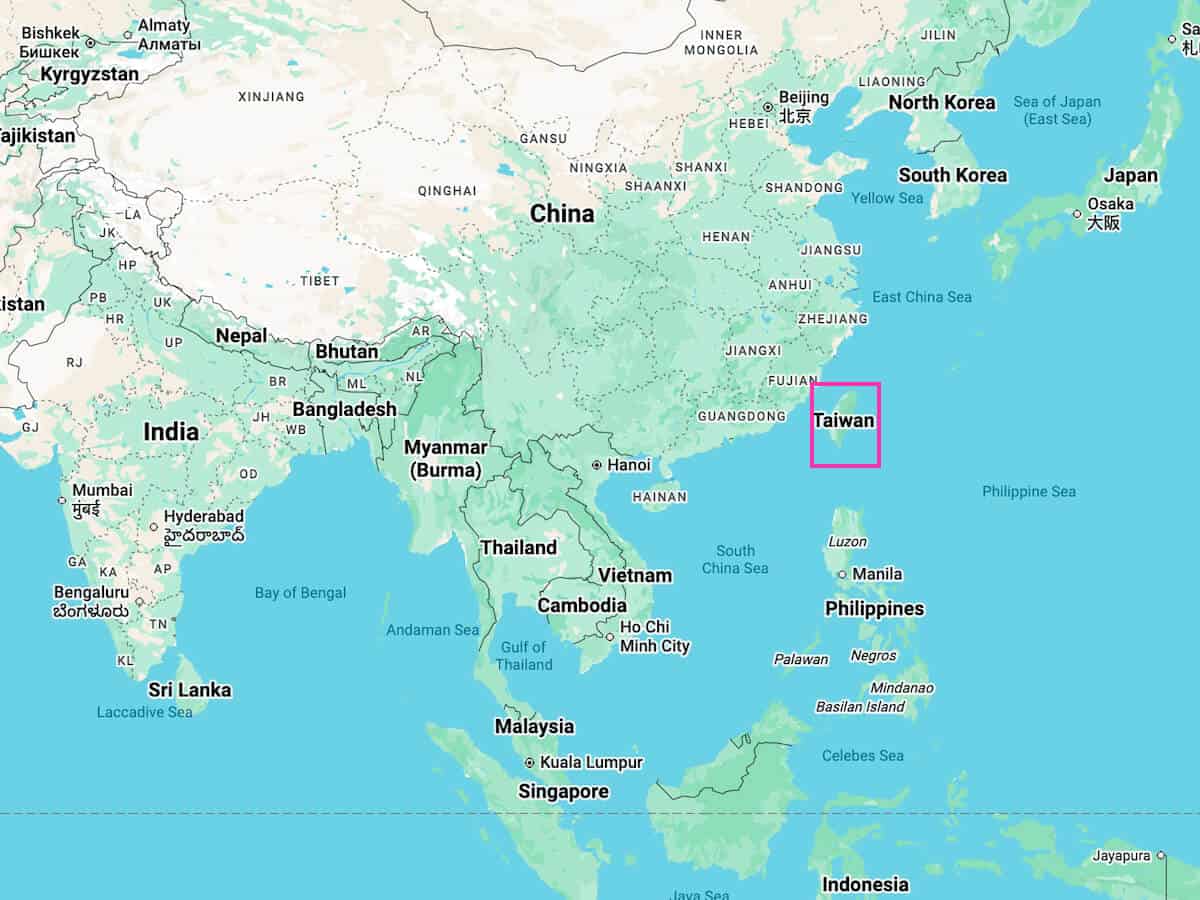
Unlike many island nations, Taiwan isn’t part of a large archipelago. Instead, it stands as a distinct island with several smaller surrounding islands under its jurisdiction, including the Penghu (Pescadores) Islands, Kinmen, Matsu, and the outlying islands of Green Island and Orchid Island.
When I traveled Taiwan’s east coast by train from Hualien to Taitung, the Pacific Ocean stretched to the east, while the Central Mountain Range rose to the west. It creates two distinctly different coastlines and climates within this small island.
Interactive Taiwan Map
Use this interactive map to zoom in and explore Taiwan’s location in East Asia and its place on a global scale.
What countries are closest to Taiwan?
Taiwan’s nearest neighbors include:
- China (Mainland): Approximately 100 miles (160 kilometers) to the west across the Taiwan Strait
- Philippines: About 230 miles (370 kilometers) to the south, separated by the Luzon Strait
- Japan: Roughly 430 miles (690 kilometers) to the northeast (to Okinawa)
This proximity to major Asian powers has significantly influenced Taiwan’s culture, food, and history. The Japanese colonial period (1895-1945) left lasting imprints that I noticed everywhere, from the orderly train system I relied on to circle the island, to the onsen (hot spring) culture I experienced in Yangmingshan National Park, to the prevalence of convenience stores like 7-Eleven on nearly every corner.
Planning Tip: Taiwan’s central location makes it an excellent hub for exploring East Asia. Many travelers (me included) combine their Taiwan trip with visits to Japan, Hong Kong, the Philippines, or mainland China, though you’ll want to budget at least 7-10 days for Taiwan itself to do the island justice.
How big is Taiwan?
Taiwan covers a total area of approximately 13,976 square miles (36,197 square kilometers), slightly larger than the state of Maryland or about the size of the Netherlands. The main island of Taiwan itself accounts for 13,826 square miles (35,808 square kilometers), with smaller outlying islands making up the remainder.
Despite its modest size, Taiwan packs incredible diversity into a small space:
- Length: Approximately 245 miles (394 kilometers) from north to south
- Width: Ranges from 89 miles (144 kilometers) at its widest point to as narrow as 20 miles (32 kilometers) in some southern sections
- Mountains: About 70% of Taiwan is mountainous, with over 200 peaks exceeding 9,800 feet (3,000 meters)
- Coastline: 973 miles (1,566 kilometers) of varied coastal landscapes
The compact nature of the island means you can experience an incredible variety of landscapes in a short time. During my two-week journey, I hiked through the marble cliffs of Taroko Gorge, explored subtropical forests in Alishan, soaked in volcanic hot springs near Taipei, and swam at tropical beaches in Kenting… all on one small island.
What is the capital of Taiwan?
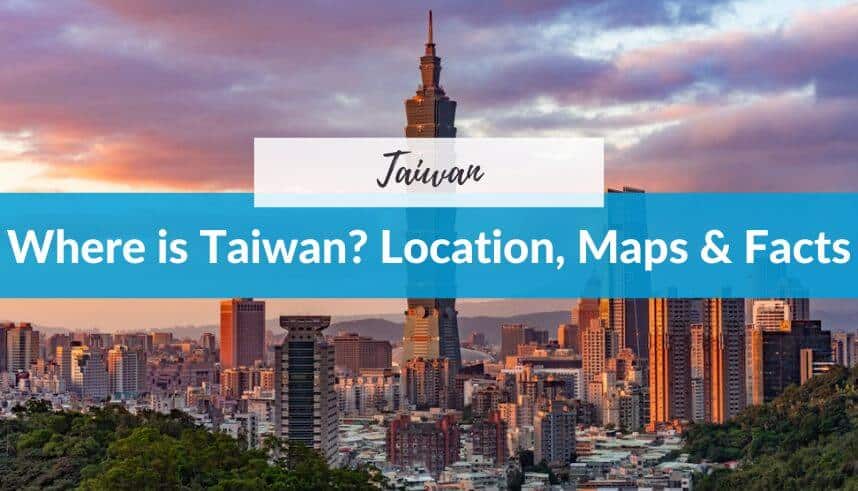
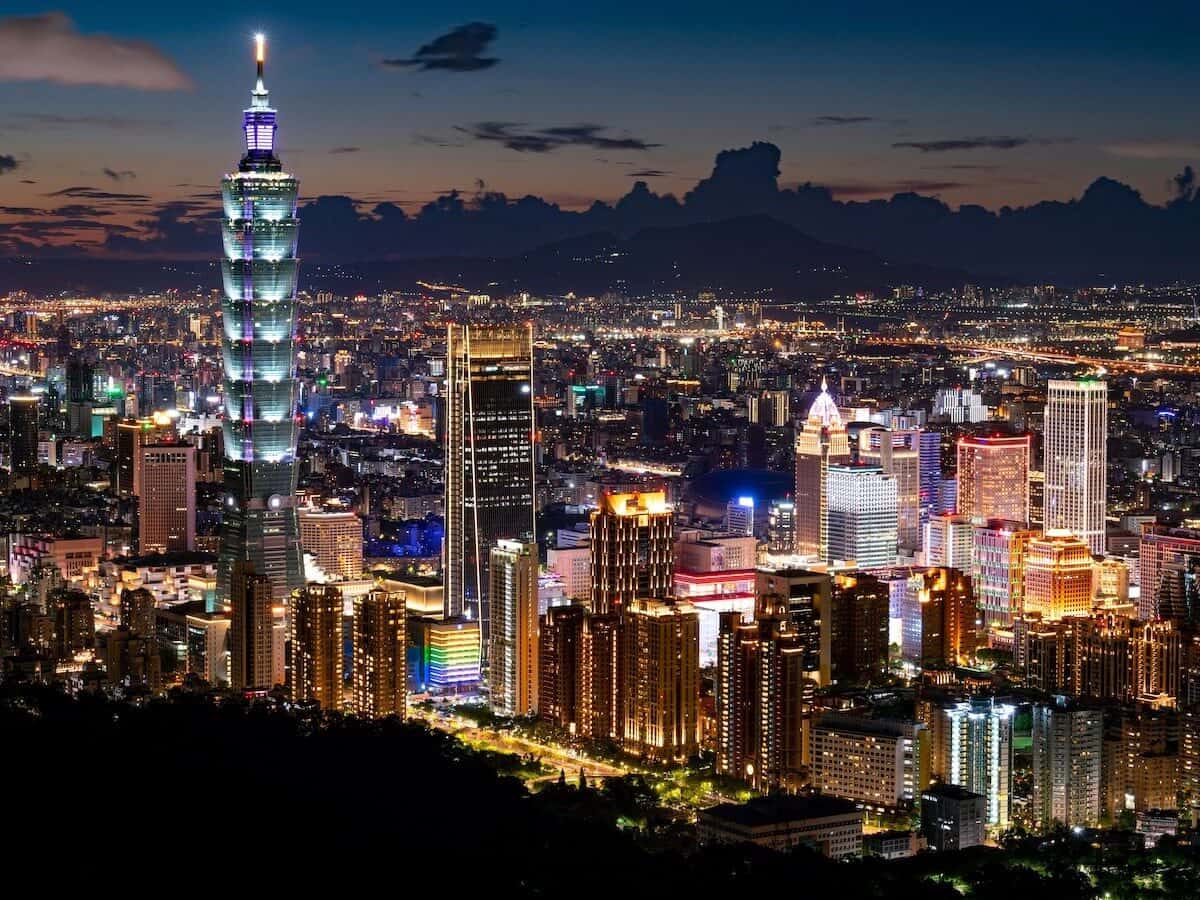
Taipei, located in the northern tip of Taiwan, is the capital and largest city. Home to approximately 2.6 million people in the city proper (and over 7 million in the greater metropolitan area), Taipei serves as Taiwan’s political, economic, and cultural center.
I spent about a week total in Taipei during my trip, arriving at the beginning and returning for my final days when my partner joined me there before flying out. The city brilliantly balances ultramodern skyscrapers (including the iconic Taipei 101, which was the world’s tallest building when construction completed in 2004) with traditional night markets, lots of temples, and a few parks.
Taiwan’s Population
As of 2026, Taiwan’s population is approximately 23 million people, making it the 61st most populous country in the world despite its small geographic size. This translates to a population density of about 1,683 people per square mile (650 people per square kilometer), one of the highest population densities globally.
The vast majority of Taiwan’s population (about 85%) lives in urban areas, concentrated primarily along the flatter western coast. Major cities include:
- Taipei (northern Taiwan): ~2.6 million in city proper
- Kaohsiung (southern Taiwan): ~2.7 million, Taiwan’s major port city (and one of my favorites!) where I spent several days exploring before day-tripping to Kenting
- Taichung (central Taiwan): ~2.8 million, where I had a brief stopover
- Tainan (southern Taiwan): ~1.9 million, the historical and cultural capital where I celebrated Valentine’s Day
How Taiwan’s Location Affects Its Climate
Taiwan’s position just north of the Tropic of Cancer creates a unique climate that varies significantly from north to south and from coast to coast. The island experiences a tropical climate in the south and a subtropical climate in the north, with the Central Mountain Range creating distinct microclimates across the island.
I visited Taiwan in February, which is generally considered winter in the northern hemisphere. However, my experience perfectly illustrated Taiwan’s climatic diversity:
- In Taipei (north), temperatures were mild but occasionally cool and rainy. I needed a light jacket, especially in the evenings.
- In Taroko Gorge (east coast), the weather was pleasant and perfect for hiking through the dramatic marble canyon.
- In Kenting (far south), I enjoyed warm, beach-friendly weather and even went wading into the water. It felt more like summer.
Average Temperatures
Taiwan’s climate varies by season and region:
Northern Taiwan (Taipei)
- Summer (June-August): 80-95°F (27-35°C), hot and humid
- Winter (December-February): 55-68°F (13-20°C), cooler with rain
- Spring/Fall: 70-80°F (21-27°C), generally pleasant
Southern Taiwan (Kaohsiung/Kenting)
- Summer: 82-95°F (28-35°C), hot and humid
- Winter: 65-77°F (18-25°C), warm and pleasant
- Spring/Fall: 75-86°F (24-30°C), ideal weather
Central Mountains
- Temperatures drop significantly with elevation
- Snow is possible on high peaks in winter
- Some mountain areas are 15-20°F cooler than coastal regions
Rainfall Patterns
Taiwan receives significant rainfall, especially during:
- Plum Rain Season (May-June): Sustained rainfall in northern and central Taiwan
- Typhoon Season (July-October): Heavy rains and strong winds possible
- Winter Monsoon (November-March): More rain in the north, drier in the south
February, when I visited, falls during the drier winter period… although “dry” is relative in Taiwan. I experienced some rainy days in Taipei and along the east coast, but nothing that significantly disrupted my plans.
Is Taiwan in the typhoon belt?
Yes, Taiwan lies squarely in the Western Pacific typhoon belt. The island typically experiences 3-4 typhoons per year, with the typhoon season running from July through October, peaking in August and September.
These powerful tropical cyclones can bring destructive winds, torrential rainfall, and dangerous storm surges. During typhoon season, it’s wise to:
- Monitor weather forecasts closely
- Purchase travel insurance with weather-related coverage
- Build flexibility into your itinerary
- Follow local authorities’ guidance
However, visiting during typhoon season (summer) isn’t necessarily a dealbreaker. Many typhoons miss Taiwan entirely or cause only minor disruptions. Summer also brings certain advantages… Mangoes are in season (yum). The mountains are bright green. Summer festivals!
Taiwan’s Geographic Highlights
Taiwan’s location and geology have created remarkable natural features.
Mountain Ranges
Taiwan is home to Yu Shan (Jade Mountain), which at 12,966 feet (3,952 meters) makes Taiwan the fourth-highest island in the world. The Central Mountain Range runs nearly the entire length of the island, creating dramatic landscapes that I witnessed firsthand in places like Taroko Gorge and Alishan National Park.
Multiple Ecosystems
The combination of tropical, subtropical, and temperate climate zones supports incredible biodiversity. Taiwan has more bird species than the entirety of Europe and hosts numerous endemic species found nowhere else on Earth.
Geological Activity
Taiwan sits on the Pacific Ring of Fire where the Philippine Sea Plate collides with the Eurasian Plate. This creates both spectacular mountain scenery and significant seismic activity. Taiwan experiences frequent small earthquakes and occasional major ones. In fact, there was one in Tainan right before I arrived.
Pick Your Coastline
The east coast features multiple cliffs above the Pacific Ocean, while the west coast has gentler, flatter terrain with extensive tidal flats. The north coast showcases unique rock formations shaped by wind and waves, and the south offers tropical beaches perfect for water sports. Each one is quite different… a good reason to travel around!
Hot Springs
Volcanic activity has blessed Taiwan with numerous hot springs (onsen), a legacy of Japanese influence. I soaked in the natural hot springs at Yangmingshan National Park north of Taipei, an experience that perfectly blended Taiwan’s geographic gifts with its cultural heritage.
Taiwan’s Continent
Geography can sometimes be more complex than it appears on a map, and Taiwan is a perfect example. Like many island nations, Taiwan’s continental classification raises interesting questions.
What continent is Taiwan on?
Geographically, Taiwan sits on the continental shelf of Asia, making it technically part of the Asian continent. However, the island’s relationship to the continental landmass is complicated by the Taiwan Strait and the island’s distinct tectonic setting.
From a cultural, economic, and political perspective, Taiwan is unquestionably part of East Asia, sharing strong historical, cultural, and economic ties with China, Japan, and other neighbors.
For travelers who keep track of which continents they’ve visited, Taiwan counts as Asia. However, I’d encourage you not to consider a trip to Taiwan as “checking off” Asia. This island deserves to be experienced on its own terms, not as a proxy for the Asian continent.
Understanding Taiwan’s Political Status
Perhaps no question about Taiwan generates more confusion and controversy than inquiries about its political status. As a traveler, I found it helpful to understand the basics of Taiwan’s situation, as it affects everything from what you’ll see on currency to how locals perceive their identity.
Is Taiwan its own country?
This seemingly simple question has a complex answer: Taiwan operates as a de facto independent country with its own government, military, currency, and democratically elected leaders, but its international legal status is complicated.
Officially known as the Republic of China (ROC), Taiwan governs itself completely independently from the People’s Republic of China (PRC). When I visited, I went through Taiwan’s immigration, used Taiwanese currency (New Taiwan Dollars), and interacted with Taiwan’s own government institutions. In every practical sense, Taiwan functions as an independent country.
However, the PRC claims Taiwan as part of its territory, and most countries (including the United States) do not officially recognize Taiwan as an independent nation due to diplomatic pressure from China. Instead, many nations maintain unofficial relations with Taiwan through cultural and economic offices rather than formal embassies.
As of 2026, only a handful of countries maintain formal diplomatic relations with Taiwan, though the island enjoys unofficial relationships with major powers including the United States, Japan, and most European nations.
For travelers, this means:
- You’ll need a valid passport to visit Taiwan (U.S. citizens can visit visa-free for up to 90 days).
- Taiwan uses its own currency (New Taiwan Dollar, TWD or NT$).
- You’ll see “Republic of China” on official documents, though locals increasingly identify simply as “Taiwanese”.
- The political situation is complex, but Taiwan welcomes tourists from around the world.
Which country is Taiwan located in?
This question often causes confusion, but the answer is straightforward: Taiwan is not located “in” any country as it is its own self-governing territory.
The confusion arises because the People’s Republic of China (mainland China) claims Taiwan as a province, while Taiwan (the Republic of China) operates as a de facto independent nation with its own democratic government.
Think of it this way: When you travel to Taiwan, you’re traveling to Taiwan, a distinct destination with its own government, culture, and identity. You’re not traveling to a region of China, despite what Beijing’s official position might be. (This isn’t meant to be a political statement so much as your experience in Taiwan is clearly Taiwanese, not Chinese. Travel to both. You’ll see what I mean!)
Why is China claiming Taiwan?
Understanding this requires a brief history lesson, which I’ll do my best to explain.
In 1949, after the Chinese Civil War, the Communist Party established the People’s Republic of China on mainland China, while the defeated Nationalist government (Kuomintang or KMT) retreated to Taiwan and continued to claim to be the legitimate government of all of China. For decades, both governments insisted they were the rightful rulers of all Chinese territory, aka mainland and Taiwan.
Over time, particularly as Taiwan democratized in the 1990s and 2000s, many Taiwanese began to develop a distinct national identity separate from China. Today, most Taiwanese see themselves as Taiwanese rather than Chinese, though cultural and ancestral connections to mainland China remain.
The PRC views Taiwan’s separation as a temporary aberration from the Chinese Civil War and maintains that reunification is inevitable. The PRC has never renounced the use of force to achieve reunification, making the Taiwan Strait one of the world’s most sensitive geopolitical flashpoints.
During my travels, I found that most Taiwanese were pragmatic about the situation. They focus on their daily lives, democracy, and building a thriving economy rather than dwelling on political uncertainties.
Are Taiwanese and Chinese the same?
This is both a simple and complicated question, depending on whether you’re asking about ethnicity, culture, language, or national identity.
Ethnically
The majority of Taiwan’s population (around 95%) is ethnically Han Chinese, with ancestors who migrated from mainland China over the past few centuries. About 2-3% of the population consists of indigenous Austronesian peoples who lived on Taiwan long before Chinese settlement.
Culturally
This is where it gets interesting. Taiwan’s culture is a unique blend of:
- Traditional Chinese culture (temples, festivals, cuisine, family values)
- Japanese influences from the colonial period (1895-1945)
- Indigenous Taiwanese traditions
- Modern, democratic values developed since the 1990s
- Western influences from globalization
During my time in Taiwan, I experienced this cultural fusion everywhere. I ate at night markets serving traditional Chinese snacks alongside Japanese-style cuisine, visited ornate Chinese temples then relaxed in Japanese-style hot springs, and observed how Taiwanese society has developed its own distinct character (more informal and open than mainland China), with strong democratic values and civic culture.
Linguistically
While Mandarin Chinese is the official language, Taiwan has its own linguistic landscape:
- Mandarin is spoken by nearly everyone (and I found many Taiwanese, especially younger people, spoke excellent English).
- Taiwanese Hokkien (often just called “Taiwanese”) is widely spoken, especially in southern Taiwan.
- Hakka is spoken by some communities.
- Indigenous languages are still maintained by aboriginal communities.
Admittedly, all of this just equated to the same thing: I do not understand it… except for the occasional English speaker!
National Identity
This has shifted dramatically. Polls consistently show that a majority of Taiwanese people now identify primarily as “Taiwanese” rather than “Chinese,” with younger generations feeling even less connection to Chinese identity. When I interacted with Taiwanese people during my trip, they clearly saw themselves as Taiwanese first and foremost.
In Summary…
While Taiwanese people share ancestral and cultural roots with mainland China, Taiwan has developed its own distinct identity over 75+ years of separate political development. It’s similar to how Americans and British people share a common language and cultural heritage but have distinctly different national identities.
Is Taiwan more Chinese or Japanese?
Taiwan’s identity doesn’t fit neatly into either category. It’s uniquely Taiwanese, drawing from both Chinese and Japanese influences while creating something distinct.
Chinese influences remain strong:
- Traditional temples and religious practices
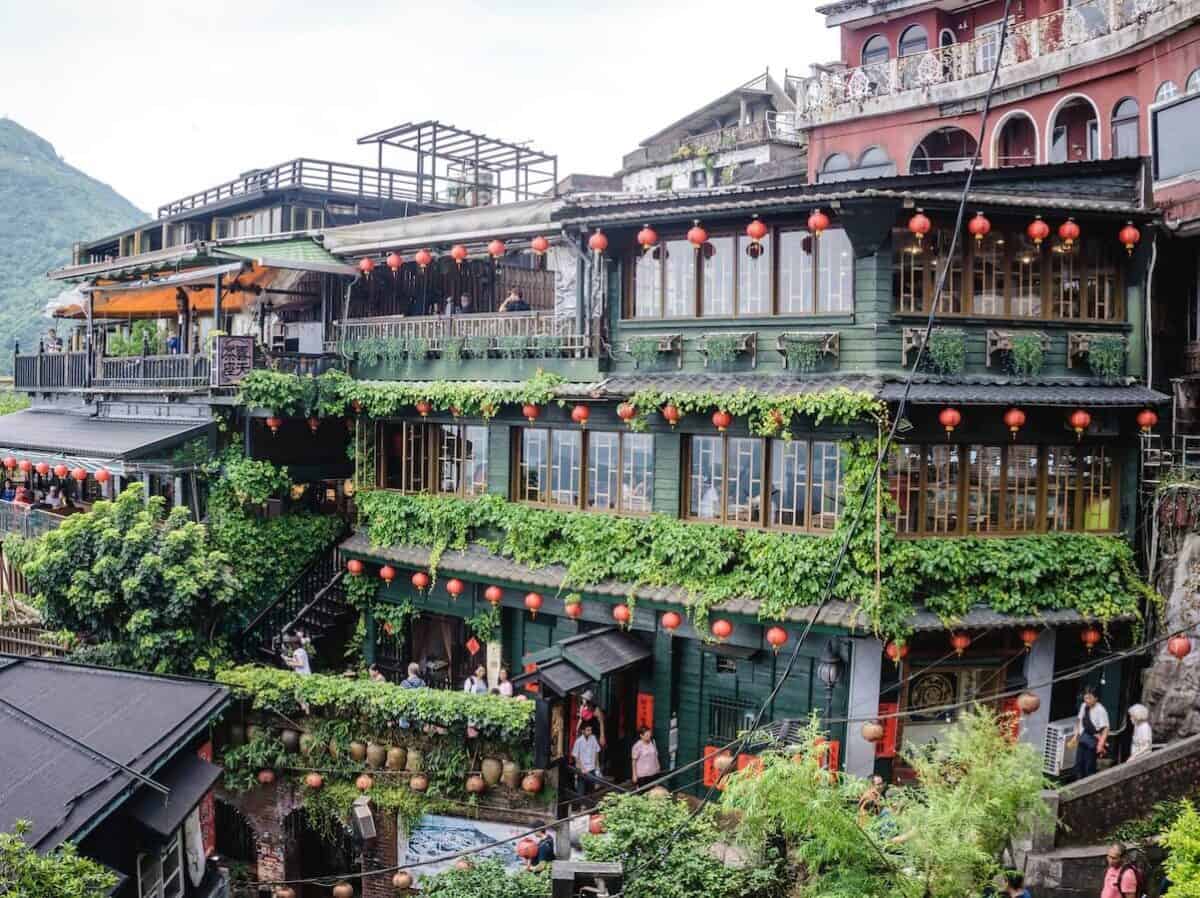
- Chinese festivals like Lunar New Year and Dragon Boat Festival (I experienced the Lantern Festival in Jinshan during my visit… which was a highlight!)
- Mandarin language and Chinese characters
- Family-centered culture and values
- Traditional Chinese medicine and food culture
Japanese influences are also pervasive:
- Infrastructure and urban planning from the colonial period
- Food culture: You’ll find Japanese-inspired cuisine everywhere, and bubble tea (invented in Taiwan) shows Japanese influence
- Onsen (hot spring) culture
- Convenience store culture (7-Eleven is ubiquitous)
- Orderly public behavior and efficient public transportation
- Architectural remnants from the colonial period
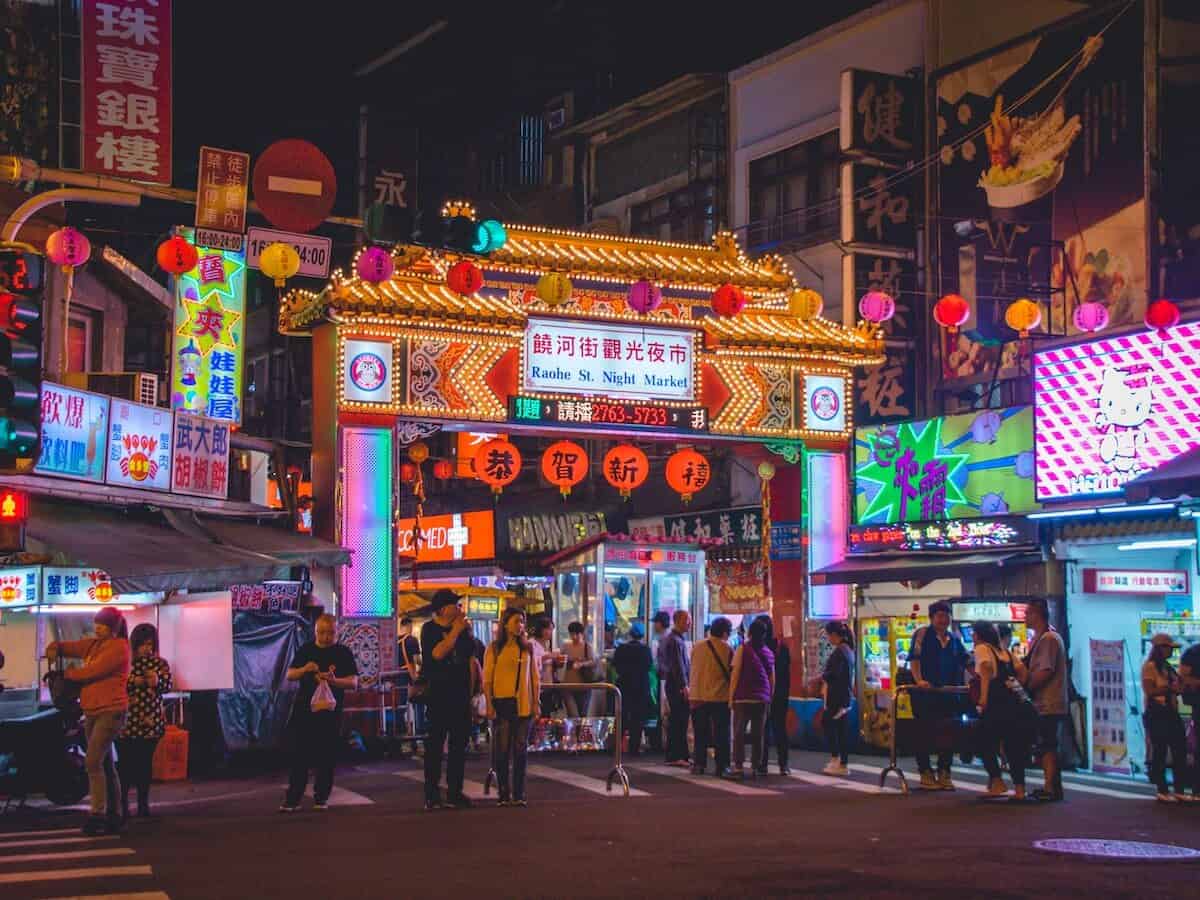
What struck me most during my travels was how Taiwan has synthesized these influences into something entirely its own. At a night market, you might eat oyster omelets (Chinese-style) followed by mochi ice cream (Japanese-inspired), then wash it down with pearl milk tea (invented in Taiwan). You’ll visit Chinese temples but travel there on Japanese-style efficient railways.
Taiwan is neither Chinese nor Japanese. It’s Taiwanese, a unique blend that also incorporates indigenous traditions, American influences (from post-WWII relationships), and its own innovations developed over decades of democratic self-governance.

Practical Information for Travelers
Best Time to Visit Taiwan
Taiwan can be visited year-round, but the ideal time depends on your priorities.
Spring (March-May): Excellent weather before summer heat arrives, blooming flowers, manageable crowds. This is one of the best times to visit.
Summer (June-August): Hot, humid, and typhoon-prone, but also the peak season for mountain hiking, beach activities, and summer festivals. Mango season!
Fall (September-November): Another ideal window with pleasant temperatures, though early fall still sees typhoon risk. Great for hiking and outdoor activities.
Winter (December-February): When I visited. Cooler temperatures in the north (I needed a light jacket in Taipei) but still pleasant in the south (perfect beach weather in Kenting). Fewer tourists, lower prices, and you can experience Chinese New Year celebrations if you time it right.
How to Get Around Taiwan
Taiwan’s public transportation is excellent, safe, and efficient, a legacy of Japanese infrastructure combined with modern upgrades.
Taiwan High Speed Rail: Connects major cities along the west coast from Taipei to Kaohsiung in about 90 minutes. Fast and comfortable but more expensive than conventional trains.
Taiwan Railways (TRA): The traditional rail system I used for my entire island loop. Slower but more affordable, with routes covering the entire island including the scenic east coast.
Taipei Metro (MRT): World-class metro system in Taipei. Clean, efficient, and easy to navigate.
Buses: Extensive bus networks connect areas not served by trains.
Taxi: Widely available and relatively affordable in cities.
I found the train system to be the backbone of independent travel in Taiwan. With an EasyCard (a rechargeable transit card), I was able to move between Taipei’s metro, intercity trains, and even convenience store purchases.
FAQ’s About Taiwan
U.S. citizens can visit Taiwan visa-free for up to 90 days for tourism. You’ll need a passport valid for at least six months beyond your planned stay. Citizens of many other countries also enjoy visa-free entry, but check current requirements before traveling.
Mandarin Chinese is the official language, though many Taiwanese also speak Taiwanese Hokkien and some speak Hakka. English proficiency is growing, especially among younger people in cities, and tourist areas generally have English signage but getting off the beaten track navigation gets harder. Download offline maps.
Yes, Taiwan is one of the safest destinations in Asia. Crime rates are low, and I felt completely safe traveling solo as a female throughout the island. The main safety concerns are traffic (scooters can be aggressive) and natural hazards during typhoon season.
Taiwan uses the New Taiwan Dollar (TWD or NT$). As of 2026, the exchange rate is approximately 30-32 TWD to 1 USD, though this fluctuates. Credit cards are widely accepted in cities, but cash is still king at night markets and smaller establishments.
Yes. Taiwan has excellent mobile coverage and affordable SIM cards available at the airport for tourists. Wi-Fi is also widely available in hotels, cafes, and many public spaces. Be aware as you get off the beaten path and into the many natural areas, you may lose service.
Taiwan operates as a de facto independent country with its own democratic government, currency, and military. However, the People’s Republic of China claims Taiwan as part of its territory. The political situation is complex, but Taiwan welcomes tourists and functions entirely independently in practical terms.
Explore More of Taiwan
So, can you now answer “Where is Taiwan?” I hope this guide has given you a clear picture of Taiwan’s geography, its unique political situation, and what makes this island nation such a fascinating destination.
Taiwan’s location in the Pacific, just off China’s coast, has shaped it into a place where ancient Chinese temples stand alongside Japanese colonial architecture, where indigenous cultures persist, and where democracy has flourished. From the neon-lit streets of Taipei to the marble cliffs of Taroko Gorge, from busy night markets to calm mountain hot springs, Taiwan offers experiences you won’t find anywhere else in the world.
My two+ weeks traveling solo through Taiwan (with my partner joining for the final days in Taipei) convinced me that this island deserves far more attention than it typically receives. It’s a destination that rewards curious travelers with incredible food, friendly people, stunning natural beauty, and a fascinating blend of cultures.
Here are some articles to help you plan your Taiwan adventure:
- Complete Guide to Taipei: Everything You Need for 3–4 Days in Taiwan’s Capital
- Where is Taiwan? Location, Map, Facts, & More
- 12 Essential Things to Know Before Visiting Taiwan (From a Solo Traveler)
- Visiting Sun Moon Lake: Complete Guide to Taiwan’s Most Beautiful Destination
- The Cost of Traveling in Taiwan: Know How Much to Budget for Your Trip
- Day Trip to Alishan National Scenic Area: The Complete Guide
- 2 Days in Taichung: Exploring the 3rd Largest City in Taiwan
Like this post? Pin it.