Day Trip to Alishan National Scenic Area: The Complete Guide
If there’s one place in Taiwan that genuinely lives up to the hype, it’s Alishan. Taiwan’s most visited mountain destination draws travelers with its ancient cypress forests, legendary sea of clouds, the iconic narrow-gauge forest railway, and some of the country’s finest high-mountain tea. No matter if you’re chasing the famous sunrise above the mist, walking past 2,300-year-old sacred trees, or sipping oolong poured straight from the plantation… Alishan delivers.
This guide covers everything you need to plan a successful trip: what to see, when to go, how to get there, where to eat, tour options, and honest answers to the most common questions.
Disclosure: Some of the links below may be affiliate links. At no additional cost to you, I may earn a small commission if you make a purchase.
What is Alishan? And Is It Actually a National Park?
Alishan National Scenic Area is a 415-square-kilometer mountain resort and nature reserve located in Chiayi County in central Taiwan. It sits at an altitude of 1,400 to 2,600 meters above sea level, with Taiwan’s highest peak, Yushan, visible on clear days from within the park.
Technically, Alishan is designated a National Scenic Area, not a national park, but for most travelers, the distinction is minor. It has been one of Taiwan’s most celebrated scenic attractions for nearly a century, alongside Taroko Gorge and Sun Moon Lake.
The area was originally the ancestral hunting grounds of the Tsou indigenous tribe, who still live in villages throughout the region. Japanese colonial administration built the Alishan Forest Railway in 1912 to log the area’s immense cypress forests, and by the 1970s, tourism had replaced logging as the primary industry. The scenic area was formally designated in 2001.
Top Things to Do in Alishan
We can’t talk about things to do in Alishan National Scenic Area without touching on the five wonders.
The Five Wonders of Alishan
Alishan is famous for its Five Wonders: the Forest Railway, the Sacred Trees, the Sea of Clouds, the Sunrise, and the Sunset. These have anchored the park’s identity for generations of visitors. Add cherry blossoms in spring and the park’s biodiversity, and you have a destination that offers something different in every season.
Watch the Sunrise Over the Sea of Clouds
This is the experience that defines Alishan for most visitors. The Zhushan Sunrise Viewing Platform is the most popular spot, reached by a dedicated sunrise train that departs Alishan Station once per day, with departure timed to the expected sunrise. On clear mornings, the view of sun spilling over a rolling sea of clouds with the green peaks of Yushan in the distance… it’s truly unforgettable.
Pro Tip: Check the free Alishan app (Alipedia) for that day’s predicted sunrise time. The platform fills up fast so get there early. If it’s foggy at the platform, that fog is the sea of clouds and you’re inside it. Head to a different elevation for clearer views.
Ride the Alishan Forest Railway
One of Taiwan’s most beloved transportation experiences, the Alishan Forest Railway was built in 1912 and is one of the few surviving mountain railways of its kind in the world. After 15 years of partial closure due to typhoon damage, the full line from Chiayi to Alishan reopened in July 2024. This was big news. The full journey from Chiayi takes around 3.5 hours and passes through mountain tunnels, scenic bridges, and the village of Fenqihu.
Within the park itself, the small red-and-white trains connect Alishan Station to Zhaoping (Chaoping), Sacred Tree Station, and Zhushan Station. Tickets cost NT$100 per segment and the rides are short but magical, especially on Wednesdays when the vintage hinoki (cypress-paneled) trains run.
Walk the Giant Tree Trails
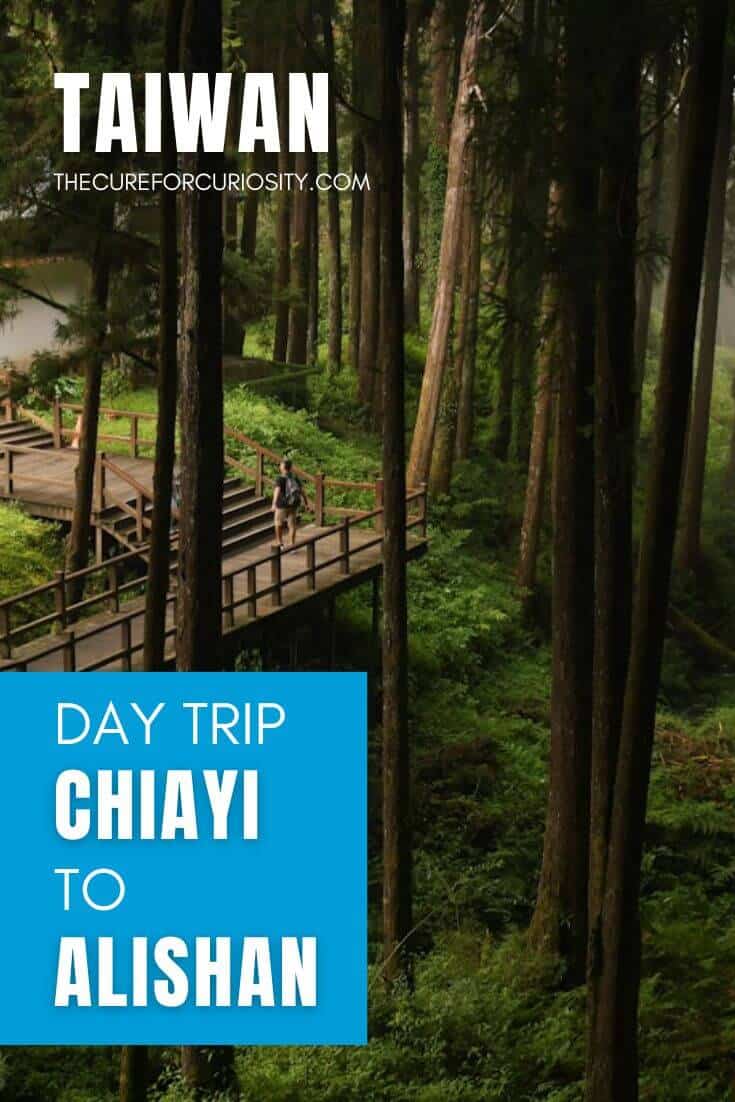
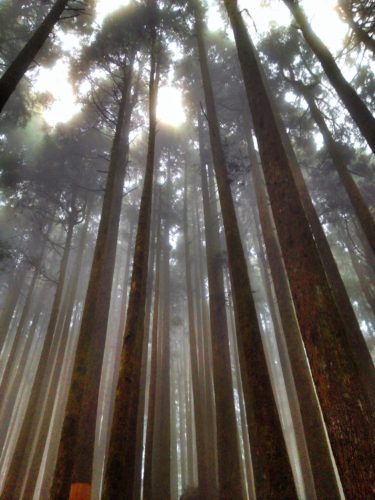
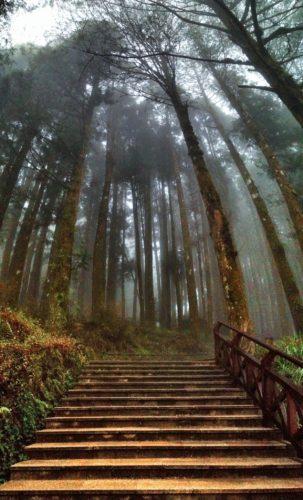
Alishan’s forests contain some of the oldest living trees on Earth. The Giant Tree Boardwalk winds past towering Taiwan red cypresses, many over 2,000 years old. Highlights include:
- Xianglin Giant Tree: A 2,300-year-old cypress standing 45 meters tall with a trunk circumference of 12.3 meters. A viewing platform lets you take in its full scale.
- No. 28 Giant Tree: Estimated at over 2,000 years old, standing 43.5 meters tall with a trunk circumference of 13.1 meters.
- Three-Generation Tree: Three generations of trees stacked on one another, a perfect symbol of the forest’s regenerative power.
Visit Sister Ponds (Jiemei Tan)
One of the most photographed spots in the park, Sister Ponds consists of two mountain lakes connected by a wooden bridge and a cypress pavilion. The reflection of surrounding trees in the water makes for a stunning photo, particularly in the early morning before tour groups arrive. The legend behind the ponds is bittersweet though. Two sisters supposedly leapt into separate ponds after falling for the same man.
Explore Shouzhen Temple and Ciyun Temple
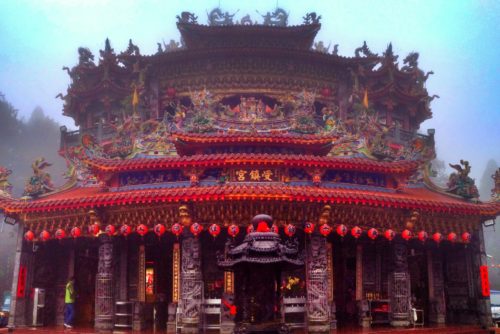
Shouzhen Temple is both Alishan’s largest temple and the highest-elevation temple in Taiwan. It’s set in a clearing surrounded by towering trees and is worth a visit even for non-religious travelers. Nearby Ciyun Temple, a Japanese-built Buddhist temple, offers one of the better viewpoints for watching the sea of clouds roll in from below.
Hike the Mianyue Line
For more serious hikers, the Mianyue Line is widely considered Alishan’s best trail. This half-to-full-day route through the forest offers incredible views.
Sip Alishan High Mountain Tea
The land surrounding Alishan is famous for producing some of Taiwan’s most prized oolong. Alishan High Mountain Tea is grown primarily in the Shizhuo area, where mist, high elevation, and rich soil combine to produce a tea with complex floral and creamy notes. Most visitors pass through the tea-growing areas without realizing it. But, if you want to properly experience it, consider a tea farm stop or tasting on the way up or down the mountain.
When is the Best Time to Visit Alishan?
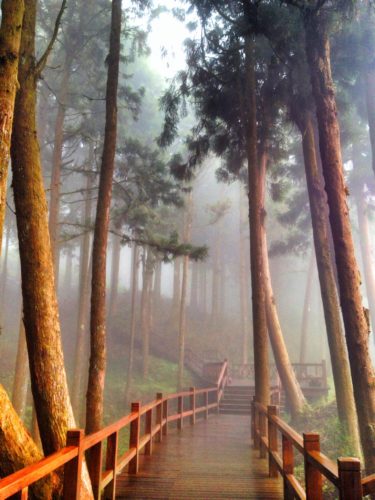
I visited Alishan in February, and I have to admit, the weather was pretty dreadful. It was foggy, cold, and a bit rainy. That being said, it also made it incredibly beautiful and it was not at all crowded. If you want better weather though, check the weather and pick a different time of year!
Spring (March–April)
Spring is considered peak season, when Yoshino cherry blossoms burst into bloom along the trails and especially around Zhaoping Park and Alishan Police Station. Expect crowds and book accommodation months in advance.
Summer (May–August)
Meanwhile, summer brings welcome cool relief from Taiwan’s coastal heat. Temperatures in the park range from 57 – 75°F (14 – 24°C) even in July and August. That’s a lot cooler than the lowland cities. Firefly season (April–June) draws a lot of people as well.
Autumn (September–November)
Fall offers crisp air, golden light, and fewer crowds. A strong case can be made that fall is the best all-around time to visit.
Winter (December–February)
Winter is quiet and cold, where temperatures can dip below 40°F (5°C) at higher elevations. Mist is more common, which makes the forest feel especially mystical. Snow occasionally falls at the highest points.
Alishan National Forest Entrance Fee
NT$300 per adult (NT$150 with proof of a public bus ticket from Chiayi. Save that yellow receipt). You can purchase your ticket online before you go.
Getting to Alishan from Taipei
Yes, you can visit Alishan from Taipei, but it’s a logistically involved journey that requires early planning. The better choice is to travel to Alishan from Chiayi. For me, this was going from Tianan to Chiayi and then on to Alishan National Park.
Option 1: High-Speed Rail (HSR) + Bus (Recommended)
This is the fastest and most popular route to take from Taipei to Alishan National Scenic Area. Take the HSR from Taipei to Chiayi (approximately 90 minutes, around NT$1,080 for a standard seat).
From Chiayi HSR Station, board Taiwan Tourist Shuttle Route A directly to Alishan (approximately 2.5 hours, around NT$300). There are only about four buses per day on Route A, so aim to be at Chiayi HSR by 9:00 AM to catch the 9:30 AM bus.
If you arrive at Chiayi’s main train station (TRA) rather than the HSR station, take Route B from there instead.
Total journey time from Taipei: approximately 4–4.5 hours.
Total journey time from Chiayi: 2.5 hours
Option 2: TRA Train + Bus (Budget Option)
Take a standard Taiwan Railways (TRA) train from Taipei to Chiayi (2.5–5.5 hours depending on the train type), then board the bus to Alishan from Chiayi TRA Station. This is cheaper but significantly longer.
Option 3: Alishan Forest Railway (Scenic, Not Recommended for Day Trips)
The newly reopened Forest Railway from Chiayi to Alishan is a wonderful experience, but the full journey takes 3.5+ hours one way. Combined with the Taipei-to-Chiayi leg, this is not practical for a day trip. Save the train for one leg if you’re staying overnight.
Option 4: Direct Night Bus (Weekend Only)
Bus number 1835, operated by Kuokuang Bus Company, departs Taipei Bus Station once per week on Friday evenings (8:45 PM in summer, 9:45 PM in winter), arriving at Alishan after approximately 5–6 hours. It returns from Alishan on Saturdays at 11:30 AM. This is mainly useful for those wanting to arrive in time for the Saturday sunrise.
Can You Do Alishan as a Day Trip from Taipei?
Technically yes — but most travel experts advise against it. The round-trip journey takes the better part of the day, leaving only 3–4 hours in the park. You won’t be able to see the sunrise (which requires an overnight stay or very early arrival), and you’ll miss the quieter, more magical hours in the forest.
If time is limited, consider staying one night, ideally in Alishan’s National Forest Recreation Area itself, though these hotels book out months in advance. Chiayi city is a solid backup base for a day trip into the park.
Getting to Alishan from Chiayi
Traveling to Alishan National Scenic Area from Chiayi is a far better option as you’ll only be in transport for 2 – 3.5 hours. This is the route I took. Granted, the city of Chiayi is nothing super special, but it did make it easy to reach Alishan!
Bus to Alishan from Chiayi
You have two options of buses, depending which train station you’re near:
- From Chiayi HSR Station, you’ll take the Taiwan Tourist Shuttle Alishan Route A (Bus 7329) to Alishan. (Bus 7329A includes one extra stop at Fengihu but will get you there too.) You can view the full timetable here.
- From the Chiayi Train Station, you can take the Taiwan Tourist Shuttle Alishan Route B (Bus 7322). You’ll find a 7322C and 7322D bus – either of which will get you there. 7322D will also stop at Fenqihu. View the full time table here.
A few helpful tips:
- There are more departures from the Chiayi Train Station, so if you’re looking for a specific departure time, head to the Chiayi Train Station!
- You can buy your train tickets a lot of ways, like online, in FamilyMart, on Klook, or simply paying by cash or EasyCard on the bus. That being said… there are some advantages to booking ahead.
- If you book your tickets online or at FamilyMart, you will get a reserved seat on a specific bus. If you use Klook, cash, or EasyCard, they are first-come, first-served seats. This means if it is peak season…. you may have to wait for the next bus!
Book a Tour to Alishan (Skip the Logistics)
If the transport planning feels overwhelming, a guided day tour is absolutely worth considering. Tours typically include hotel pickup, park entrance, a guide, and a flexible itinerary, letting you focus on experiencing Alishan rather than coordinating buses.
Here are the tours I recommend you check out.
Day Trip to Alishan from Chiayi or Taichung
Alishan Day Tour from Chiayi or Taichung (Viator)
A join-in day tour that departs from Taichung HSR, with a stop at Chukou Visitor Center on the way up. Includes park entrance and a knowledgeable local guide.
Prefer to book through Klook? Here’s a similar tour.
3 Day Tour around Taiwan
Private 3-Day Tour: Sun Moon Lake, Puli & Alishan from Taipei (Viator)
An excellent option if you want to combine Alishan with Sun Moon Lake. Includes two nights’ accommodation and all transport. Ideal for those who want a guided multi-day mountain experience without the hassle of planning each leg independently.
What to Eat in Alishan
Food options inside the park are limited but enjoyable. Around Alishan Station and the main tourist village, you’ll find local restaurants serving mountain cuisine, street food stalls with scallion pancakes and Taiwanese sausages, and hot drink vendors selling oolong tea and mountain coffee. Shouzhen Temple area also has a cluster of food stalls good for a mid-hike break.
One essential experience is the railway lunchbox sold at Fenqihu on the Forest Railway line. It’s widely regarded as among the most famous bento boxes in Taiwan. If you’re riding the train up, get one there.
Pro Tip: Most restaurants in the park close by 8 PM. There is one 24-hour 7-Eleven within the park (the one at Alishan Transport Center closed permanently in mid-2025), so stock up on snacks before heading to your accommodation for the night.
Where to Stay in Alishan
Staying inside the Alishan National Forest Recreation Area itself is the best option for catching the sunrise but rooms are limited and sell out extremely quickly, often months in advance. The most popular midrange option is Dafong Hotel (also known as Dafeng Villa), a five-minute walk from Alishan Railway Station. Alishan Hotel and Gou Hotel are pricier but deeper inside the park with pickup service.
If nothing is available inside the park, Chiayi City makes a practical base, as buses begin running early. Fenqihu and Shizhuo are also alternatives worth considering if you want a slower-paced mountain experience beyond the main tourist village.
Frequently Asked Questions
Yes, it’s possible. Day-trippers can comfortably cover the Giant Tree Trails, Sister Ponds, Shouzhen Temple, and take a short ride on the forest railway in around 3–4 hours inside the park. However, you won’t be able to see the sunrise (which requires an overnight stay or a very early Friday night bus from Taipei), and the journey from most cities is long enough that your time in the park will feel rushed. One night is the sweet spot for most travelers.
Absolutely. Alishan consistently ranks as one of Taiwan’s top attractions, and in 2025 it was named the 19th spot on The New York Times’ “52 Places to Go” list, the only Taiwan entry. The ancient forest, the sunrise spectacle, the forest railway, and the high-mountain tea culture combine to create an experience unlike anywhere else in the country. Even if the weather is foggy (and it often is), the atmosphere in the misty forest is hauntingly beautiful. (It’s the weather I got on my trip!)
The Five Wonders of Alishan are: the Forest Railway, the Sacred Trees, the Sea of Clouds, the Sunrise, and the Sunset. Many visitors add cherry blossoms (spring) and fireflies (late spring/early summer) as unofficial sixth and seventh wonders.
For most visitors, one night and two days is sufficient to cover the main highlights: the forest trails on day one, the sunrise on day two, with time for tea, temples, and the railway in between. Two nights lets you add the Mianyue Line hike or a side trip to Shizhuo’s tea plantations at a more relaxed pace. If you’re interested in the surrounding region, like Fenqihu Old Street or the Eryanping Trail, budget three to four days for the broader Alishan area.
Alishan is officially designated as Alishan National Scenic Area, which is distinct from Taiwan’s national parks. It’s administered by the Alishan National Scenic Area Headquarters under Taiwan’s Tourism Bureau. The designation offers strong environmental protection while also supporting the tourism infrastructure that makes the area accessible. In practical terms, it functions very similarly to a national park for visitors.
Practical Tips for Your Visit to Alishan
- Book accommodation well in advance, especially for cherry blossom season (March–April) and major holidays. Hotels inside the park release rooms 2–3 months ahead and sell out quickly.
- Bring layers even in summer, temperatures drop sharply after dark. At 2,500 meters, it can feel much cooler than the city.
- Pack rain gear. Alishan receives abundant rainfall year-round. A compact rain jacket or foldable umbrella is essential.
- Wear grip-soled shoes as the trails can be slippery when wet.
- Download Alipedia, the official Alishan app has real-time sunrise times, weather, bus schedules, and flower-blooming status.
- Save your bus receipt. It gives you 50% off the NT$300 park entrance fee (you pay only NT$150).
- No pets allowed inside the Alishan Forest Recreation Area.
Explore More of Taiwan
Getting to Alishan can feel complicated the first time, but with a little planning, or a good tour, it’s one of the most rewarding experiences Taiwan has to offer. There’s a reason travelers have been making the journey for over a century.
Now that you’ve planned out your day trip to Alishan National Park, it’s time to continue planning your trip. Take a look at my other posts about Taiwan:
- Complete Guide to Taipei: Everything You Need for 3–4 Days in Taiwan’s Capital
- Where is Taiwan? Location, Map, Facts, & More
- 12 Essential Things to Know Before Visiting Taiwan (From a Solo Traveler)
- Visiting Sun Moon Lake: Complete Guide to Taiwan’s Most Beautiful Destination
- The Cost of Traveling in Taiwan: Know How Much to Budget for Your Trip
- Day Trip to Alishan National Scenic Area: The Complete Guide
- 2 Days in Taichung: Exploring the 3rd Largest City in Taiwan
Like this post? Pin it.