The Location of Puerto Rico & How It Impacts Your Trip
Planning a trip to Puerto Rico? One of the first things to understand is where Puerto Rico is located. This will influence everything from your travel itinerary to the type of clothing you pack, when you visit, and more!
This guide provides all the essential information about the location of Puerto Rico, its geographical significance, and how its location impacts your experience on the island.
Disclosure: Some of the links below may be affiliate links. At no additional cost to you, I may earn a small commission if you make a purchase.
Where is Puerto Rico Located?
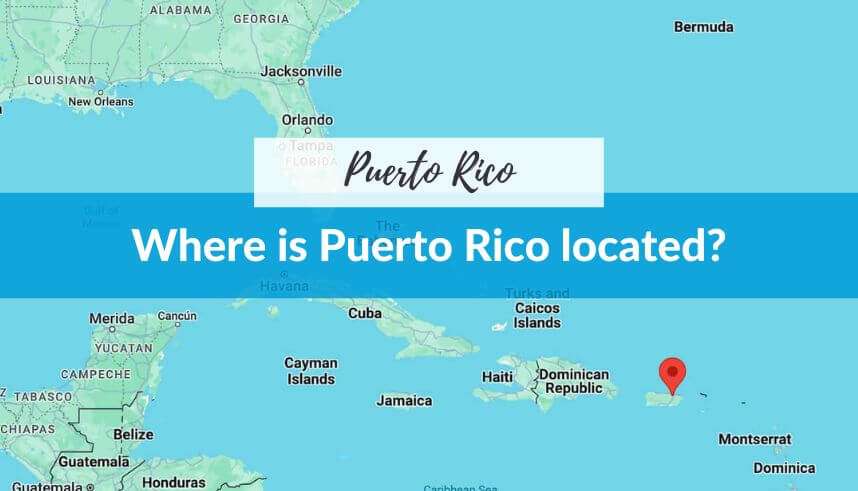
Puerto Rico is located in the northeastern Caribbean Sea, approximately 1,000 miles southeast of Miami, Florida, and about 50 miles east of the Dominican Republic. This strategic position places it in close proximity to both the Caribbean islands and the mainland of the United States.
This makes Puerto Rico a convenient and popular travel destination in the Caribbean for those on the East Coast of the United States, like me. That might explain why I visit frequently.
Location of Puerto Rico on a Map

Interactive Map of Puerto Rico
Puerto Rico’s Geographic Coordinates
Puerto Rico is situated at approximately 18.2208° N latitude and 66.5901° W longitude. These coordinates place the island within the tropical climate zone, which contributes to its warm weather, palm lined beaches, and beautiful rainforest.
The island’s position near the Tropic of Cancer also influences its seasonal weather patterns. This makes it a year-round destination for those looking to enjoy a tropical island.
How big is Puerto Rico?
Puerto Rico covers a total land area of about 3,515 square miles (9,104 square kilometers). The main island is approximately 110 miles (177 kilometers) long and 40 miles (64 kilometers) wide, making it the smallest of the Greater Antilles Islands.
Despite its size, Puerto Rico boasts a diverse landscape that includes mountains, rainforests, beaches, and coastal plains. If you want to explore beyond its capital city, San Juan, you’ll want to rent a car and get out to the other parts of the country.
In fact, the island’s manageable size makes it easy for you to explore multiple regions in just a week. You can enjoy the historic streets of Old San Juan, the trails and waterfalls of El Yunque National Forest, and the stunning beaches of Culebra.
Whether you’re interested in cultural tours, outdoor adventures, or simply relaxing on the beach, Puerto Rico’s size and infrastructure make it a perfect destination.
The Impact of Puerto Rico’s Location
Puerto Rico is part of the Greater Antilles, which also includes Cuba, Jamaica, and Hispaniola. This location places it in the heart of the Caribbean, a region known for its beautiful beaches and tropical rainforests.
What makes it unique though, is that its proximity to the Greater Antilles and the Caribbean has facilitated a unique blend of influences from indigenous Taíno culture, Spanish colonization, African heritage, and more recent American governance. This mix is evident in the island’s language, cuisine, music, and traditions.
As you explore Puerto Rico, you’ll be able to pick out the unique blend of Spanish, American, and indigenous influences. This is part of what makes it an incredible and distinctive destination as compared to its Caribbean neighbors.
Is Puerto Rico located in the hurricane belt?
Puerto Rico is located on the edge of the hurricane belt, a region in the Atlantic Ocean known for frequent tropical storms and hurricanes, particularly from June to November. While the island is less frequently hit directly compared to some other Caribbean islands, it has experienced significant hurricanes in the past.
The most significant hurricanes to hit Puerto Rico include Hurricane Maria in 2017 and Hurricane Georges in 1998. These storms caused extensive damage and highlighted the importance of preparedness.
As it is an island, make sure to monitor weather forecasts during hurricane season (June – November) and be aware of potential disruptions. Fortunately, the island’s infrastructure and response systems have been strengthened to better handle such events, but a direct hit can still be devastating.
Which continent is Puerto Rico on?
A common question is whether Puerto Rico is part of North or South America. Geographically, Puerto Rico is situated in the Caribbean, which is often considered a subregion of North America.
Although it’s geographically part of the Caribbean, Puerto Rico is politically associated with North America as an unincorporated territory of the United States. This unique status means that while Puerto Rico is culturally and historically part of the Caribbean, it shares economic and political ties with the mainland United States in North America.
Is Puerto Rico a Country?
No, Puerto Rico is not an independent country. It is an unincorporated territory of the United States. This status means that while Puerto Rico has its own local government and constitution, it does not have the full sovereignty of an independent nation.
Puerto Ricans are U.S. citizens and are subject to U.S. federal laws. However, they do not have voting representation in the U.S. Congress and cannot vote in U.S. presidential elections while residing on the island.
While this is where Puerto Rico sits today, it has been a topic of ongoing debate and discussion both on the island and within the United States. Could it be the 51st state one day? It’s possible. Could it become independent? It’s also possible. Only time will tell if the country of Puerto Rico is in our future!
What is the capital city of Puerto Rico?
The capital city of Puerto Rico is San Juan. Located on the northern coast of the island, San Juan is the largest city and the main cultural, financial, and tourism hub of Puerto Rico. Known for its rich history and culture, San Juan has a well-preserved colonial district known as Old San Juan, where you can explore historic forts, colorful buildings, and cobblestone streets.
The city of San Juan also features modern amenities, including shopping centers, restaurants, bars, and beaches. It’s typically the destination for visitors to Puerto Rico, partially because the largest international airport is located here and partially because it is the largest city with the most going on.
San Juan is also the administrative center of Puerto Rico with the seat of the island’s government also located in the city.
The Geography of Puerto Rico
Puerto Rico’s geography is remarkably varied for its size. The central Cordillera Central mountain range, coastal plains, karst regions, and the only tropical rainforest in the U.S. National Forest System, El Yunque, all contribute to the island’s natural beauty.
Where you want to go in Puerto Rico will really depend on what type of landscape you’re looking for.
- Mountains and Forests: The Cordillera Central offers scenic views and hiking opportunities, while El Yunque provides a true rainforest experience filled with waterfalls and panoramic views.
- Beaches and Coastal Areas: Puerto Rico is famous for its beautiful beaches, such as Flamenco Beach on Culebra and the bioluminescent bays in Vieques.
- Caves and Karst Regions: The island’s limestone formations create unique cave systems, particularly in the Río Camuy Cave Park.
Explore More of Puerto Rico
Knowing the location of Puerto Rico will help you plan your trip, particularly the time of year you visit and what to pack, but you’re just at the beginning! It’s time to learn more about traveling to Puerto Rico to see if its the place for you.
Here are some helpful articles to get you started:
- 16 Helpful Things to Know Before Traveling to Puerto Rico
- Where to Stay in San Juan, Puerto Rico: Best Hotels & Areas
- 10 Top Things to Do in San Juan for the Trip of a Lifetime
- 8 Best Bars in Old San Juan: Where to Find Nightlife & Drinks
- How to Get to Culebra, Puerto Rico: 4 Key Transportation Options
- Best Time to Visit Culebra, Puerto Rico: Season by Season Breakdown
- 10 Best Things to Do in Culebra, Puerto Rico
Like this post? Pin it.