Discover Pisa: The Perfect Italian Stopover for the Leaning Tower
When most travelers think of Pisa, they picture crowds of tourists posed for that iconic leaning tower photo… You know the ones: pretending to hold it up, push it over, or kick it down onto unsuspecting friends. But this little Tuscan city deserves more than a quick Instagram moment, although it’s also perfectly suited for exactly that if you’re short on time.
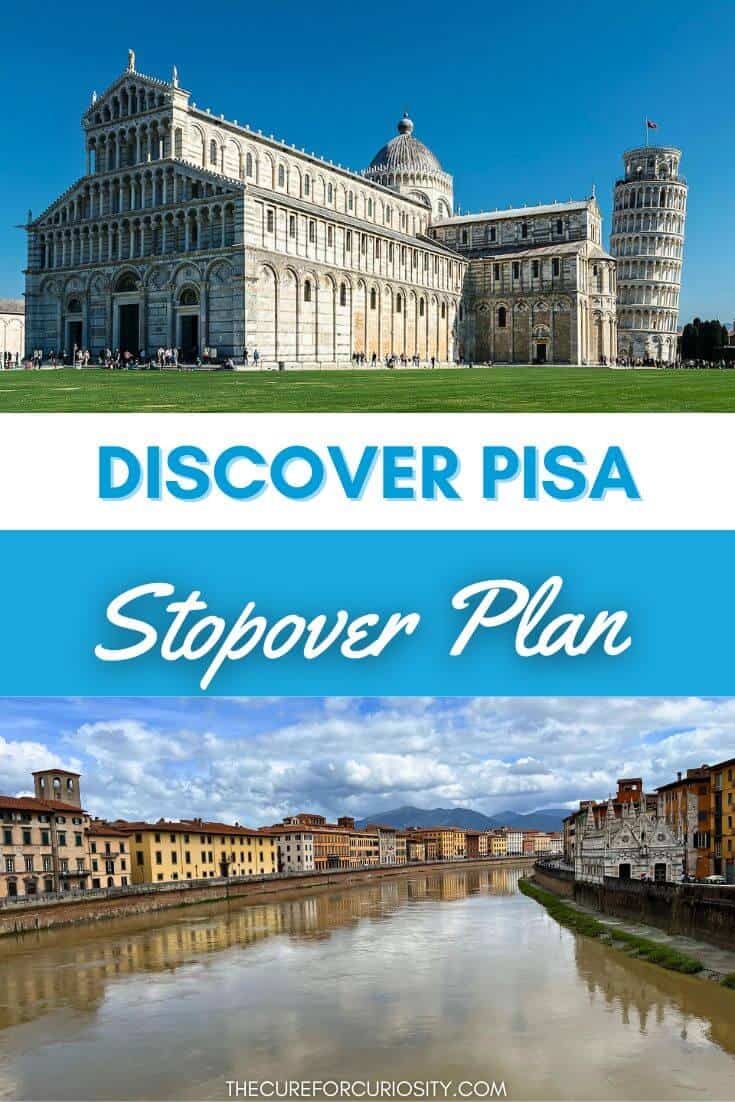
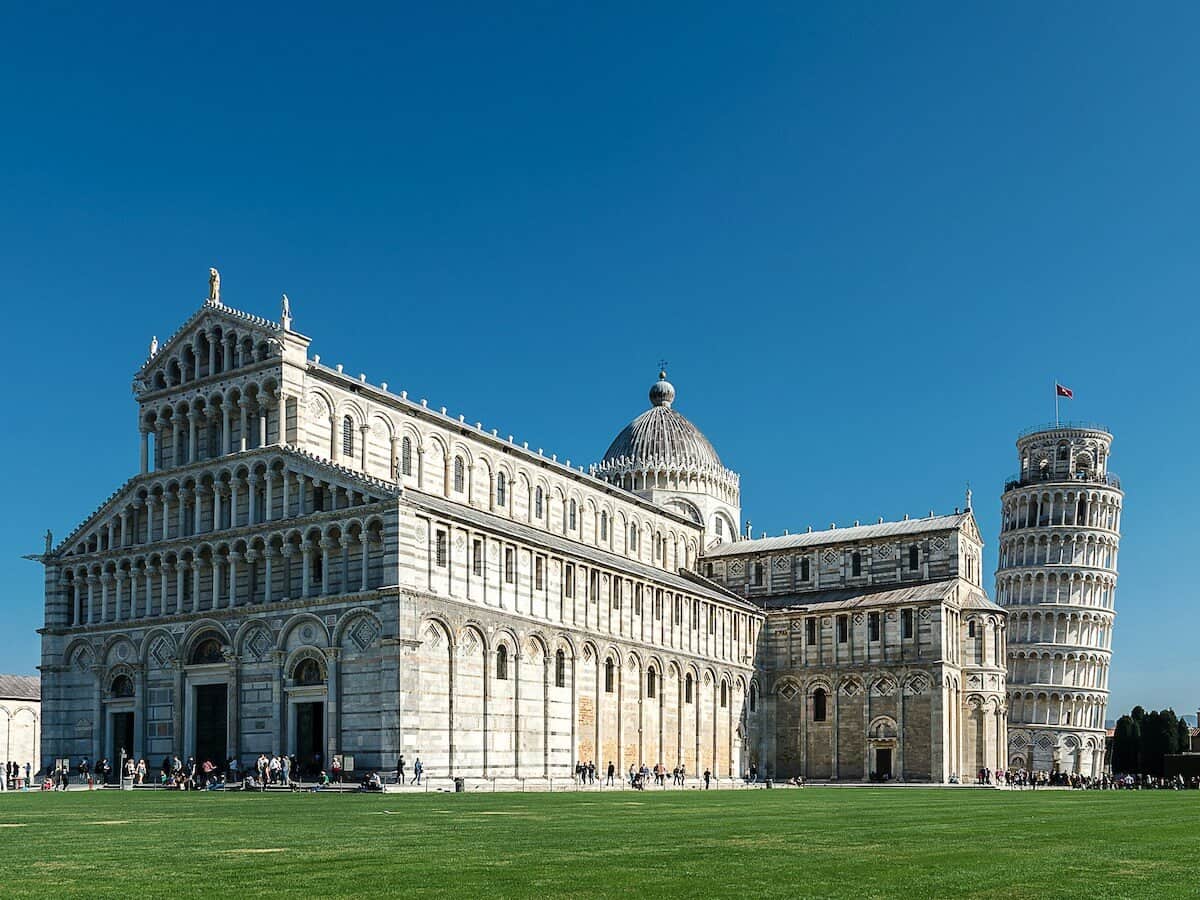
The truth is, Pisa is a small town with just a handful of main attractions. You’ve got the famous Leaning Tower (Torre Pendente), of course, along with the stunning Pisa Cathedral (Duomo), the Baptistery, and the Camposanto Monumentale, all clustered together in the Piazza dei Miracoli (Square of Miracles). Wander a bit further and you’ll find the picturesque Arno River cutting through the city, lined with colorful buildings that give you a taste of authentic Tuscan life.
All of these attractions are fast and easy to cover, so why not add Pisa as a stopover on your broader Italy itinerary? In fact, it’s one of my favorite side stops in Italy (but never the main event)! Having visited ~4 times, let me share all you need to know for a quick stop in Pisa to see the famous Leaning Tower of Pisa or even an overnight stop if your itinerary allows.
Disclosure: Some of the links below may be affiliate links. At no additional cost to you, I may earn a small commission if you make a purchase.
The Leaning Tower: More Than Just a Photo Op
Now, we’ve all heard about the Leaning Tower of Pisa, but what makes it so famous? And perhaps more confusing… how is it still standing after all these years?
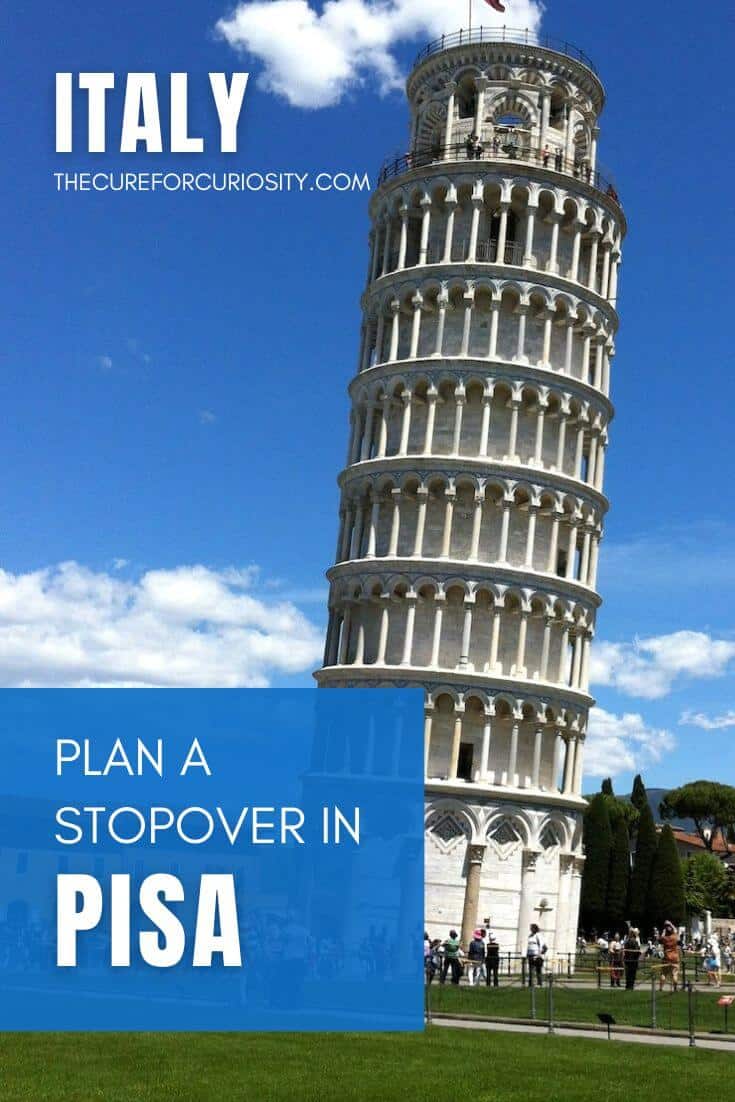
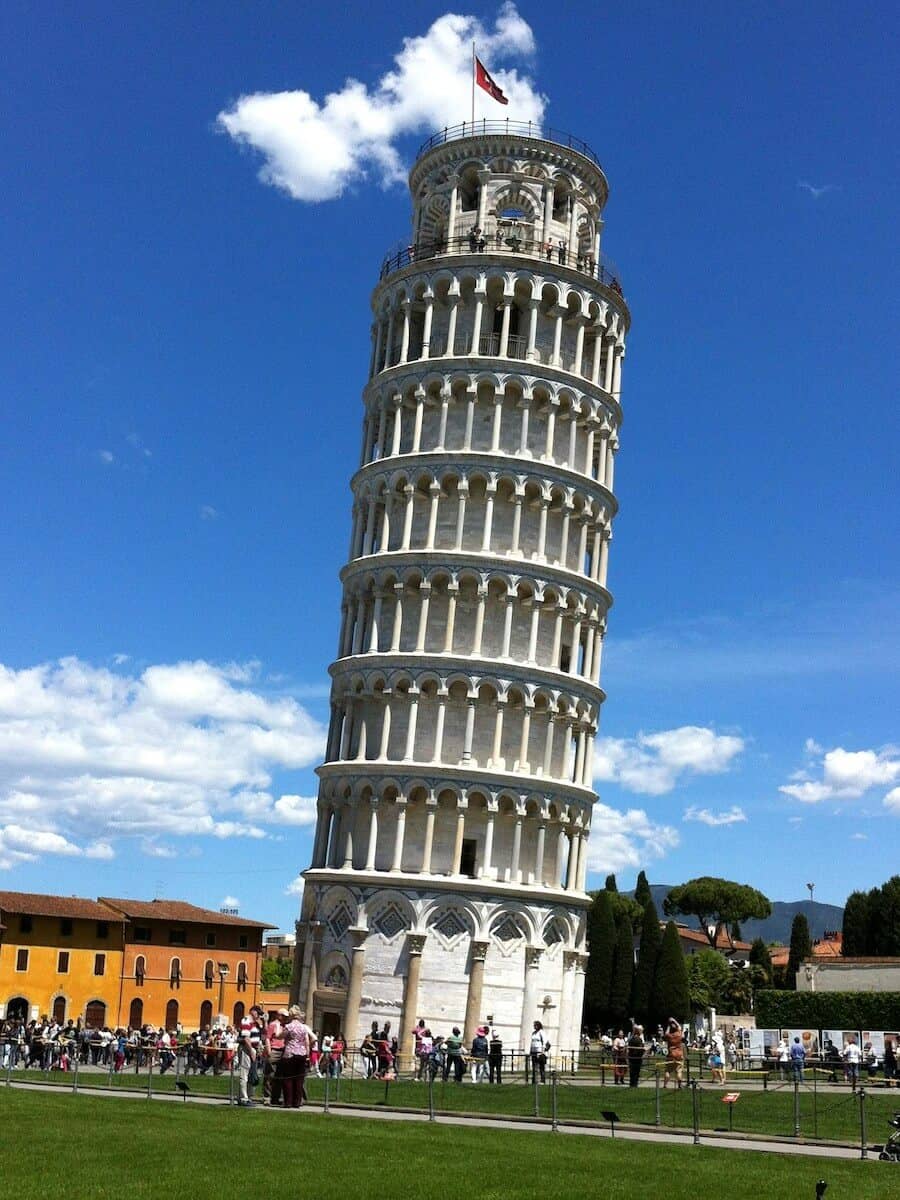
Construction on the tower began in 1173 as a bell tower (campanile) for the adjacent cathedral, but almost immediately, the tower started to lean due to the soft clay, fine sand, and shells that make up the subsoil beneath it. The foundation was simply too shallow (only about 3 meters deep) for the tower’s weight, which totals approximately 14,500 metric tons.
By the time builders reached the third floor in 1178, the tilt was already noticeable, and construction halted for nearly a century. By 1990, the tilt had reached a dangerous 5.5 degrees. That’s about 15 feet (4.5 meters) from perpendicular at the top. At this point, engineers closed the tower to the public and undertook extensive stabilization work between 1993 and 2001.
Using sophisticated soil extraction techniques, they carefully removed earth from beneath the north side of the foundation, allowing the tower to settle back slightly. The structure was stabilized by remedial work between 1993 and 2001, which reduced the tilt to 3.97 degrees.
Is the tower still falling?
Not anymore! In May 2008, engineers announced that the tower had been stabilized such that it had stopped moving for the first time in its history. Experts actually believe it will remain stable for at least 200 years. Interestingly, engineers intentionally preserved the lean rather than straightening it completely. I mean, the iconic tilt is what draws visitors, after all.
The tower attracts massive crowds year-round. The tower has become one of the most visited tourist attractions in the world as well as an architectural icon of Italy, receiving over 5 million visitors each year. Though not everyone climbs to the top (only about 500,000-600,000 people actually ascend the 294 steps annually), the tower remains one of the most photographed structures in Italy.
Fun fact: Because of the tower’s original tilt, the north side staircase has 296 steps to the top, while the south side has a couple less at 294. This is why you’ll see different numbers of steps in the Leaning Tower quoted!
Climbing the Tower
The tower stands 56 meters (183.27 feet) tall on the low side and 57 meters (186.93 feet) on the high side due to the lean. Climbing to the top involves ascending 294 steps along a spiraling staircase that becomes increasingly disorienting as you go. The tilt means you’re constantly walking at an angle. The views from the top are spectacular, offering a bird’s-eye perspective of the Piazza dei Miracoli and the terracotta rooftops of Pisa.
Important climbing details:
- Tickets must be booked in advance (especially April-October) as there’s a strict limit on visitors per time slot.
- Children under 8 years old are not permitted to climb.
- You must store all bags in the provided lockers before ascending (no backpacks, purses, or large items allowed).
- The climb takes about 30 minutes round trip.
Exploring the Piazza dei Miracoli
The entire Leaning Tower complex is a UNESCO World Heritage Site, and for good reason. Beyond the famous tower, you’ll find some of Italy’s finest Romanesque architecture all in one stunning piazza.
Pisa Cathedral (Duomo di Pisa)
This magnificent cathedral is a masterpiece of Romanesque architecture with intricate marble facades and stunning mosaics. The interior features a gilded coffered ceiling and beautiful artwork. Admission is free, but you still need to get a timed ticket from the ticket office.
The Baptistery
The largest baptistery in Italy, this circular marble building is known for its remarkable acoustics. If you’re lucky, you might catch a demonstration of the echo effect. The pulpit inside, carved by Nicola Pisano, is considered one of the finest examples of medieval sculpture.
Camposanto Monumentale (Monumental Cemetery)
This hauntingly beautiful cloister was built to house earth brought back from Golgotha during the Crusades. The frescoed walls (many damaged during WWII but now restored) and marble monuments make it a peaceful, contemplative space.
Pricing
- Leaning Tower: €20-25 (varies by season)
- Cathedral: Free (timed ticket required)
- Baptistery, Camposanto, and Museo dell’Opera: €7-10 each, or combo tickets available €27
- You can admire all the buildings from the outside for free
Fair warning: the Piazza dei Miracoli is a major tourist area, complete with souvenir vendors hawking everything from miniature towers to “I ♥ Pisa” t-shirts. And yes, the lawn in front of the tower is packed with people taking those cliché photos… holding up the tower, pushing it over, kicking it down onto their friends.
It’s touristy, it’s a bit of a tourist trap, but honestly? It’s also part of the charm. Embrace it, take your silly photo, and enjoy the moment.
Planning Your Stop in Pisa
Here’s where Pisa really shines: its location. It sits between northern Italy highlights like Cinque Terre and Florence, making for a perfect stopover that breaks up your journey without derailing your itinerary. Trust me. I’ve tried it. Multiple times. But there are many ways you can visit Pisa. Let’s layout your options.
Getting around Italy
I’m a huge fan of taking the train city to city in Italy. The system is super smooth, efficient, and affordable. Honestly, I find it more convenient than driving. When we did a campervan trip from Amsterdam to Rome (going down the Rhine and through the stunning Dolomites), parking in Italy was a constant headache, the tolls added up quickly, and getting insurance on the car in Italy was surprisingly challenging. I guess they know how Italians drive!
While that road trip was an adventure in itself, for hopping between Italian cities, trains are unbeatable and my recommended mode of transportation. As a plus, that also makes stopping in Pisa super easy as a few train lines converge here!
Trains from Florence to Pisa
One of the closest “big” cities to Pisa is Florence. This makes Pisa a natural day trip destination from Florence. Fortunately, there are approximately 20 trains per day running between Florence and Pisa, and a round-trip ticket costs around €20. The journey takes just under an hour, making it an incredibly easy day trip or stopover.
If you’re driving, it’s also simple to take a few hours to drive over, park, see the main attractions, grab lunch, and continue on your way.
From Pisa Centrale Train Station to the Piazza dei Miracoli
Coming into Pisa Centrale, you have two great, affordable options to get to the Tower (or you can just grab a taxi):
- Walk: It’s just over 1 mile (1.7 km) and takes about 20-25 minutes on foot.
- Bus: Several lines run frequently from the station:
- Line 1+ from Stazione 1 stop (direction Park Pietrasantina) every 10 minutes to Torre 1 stop
- Line 4 from Stazione 8 stop every 20 minutes to Del Parlascio stop
- Line 21 (night service) from Stazione 5 stop every 30 minutes to Torre 1 stop
- Lines 60-70-80-120-130 from Sesta Porta bus station (via Battisti) to Torre 1 stop
Luggage Storage Options at Pisa Centrale
If you’re just passing through Pisa and you don’t want to haul your luggage around, there are several luggage storage options right at Pisa Centrale Train Station:
- Stow Your Bags – Luggage Storage: Located at Centrale Train Station
- Left Luggage Pisa: Convenient station location
- Baggy Lockers Pisa: Open 24 hours for maximum flexibility
- Bounce Luggage Storage: Also open 24 hours for convenient storage
From the station, you can then easily walk, taxi, or bus to the Piazza dei Miracoli unburdened.
Overnight in Pisa
While most people stop in Pisa for just a few hours, if you have the time, staying overnight in Pisa offers something truly special. I have warm memories from my study abroad days of spending an evening in Pisa with friends, and I always take the chance to pop back in, retrace my steps, and bask in that nostalgic feeling.
Once the day-trippers leave (usually by 6-7 pm), Pisa transforms into a genuine small Italian town. You can enjoy an evening stroll along the Arno River – without the crowds, dine at local trattorias, and experience the city as residents do. Early morning is equally magical. You can arrive at the Piazza dei Miracoli around 7-8 am meaning you’ll have the tower practically to yourself for photos and a moment of peace before the hoards arrive.
Pisa as a Flight Hub
I’ve also used Pisa as a strategic stopover city for flights. When I studied abroad, I’d route through Pisa when traveling from Valencia to Palermo, Sicily, or Valencia to Florence because Pisa’s airport is a hub for low-cost carriers, like Ryanair. It’s a budget-friendly way to fly, and you can easily squeeze in a visit to the city between flights or on your way to your final destination.
My Favorite Hack: The Train Station Hop
While we’ve looked at a number of ways to visit Pisa, here’s my favorite way to experience Pisa for those who may be short on time but don’t want to miss this famous town. It’s something I discovered on my third visit when I was traveling light with just my 46L Osprey backpack and was passing by on my way from Cinque Terre to Florence.
Coming from Cinque Terre by train, I hopped off at Pisa S. Rossore station (the stop closest to the Leaning Tower) instead of the main Pisa Centrale station. From there, it’s just a short walk to the Piazza dei Miracoli where you can see:
- The Leaning Tower of Pisa (Torre Pendente)
- Pisa Cathedral (Duomo di Pisa)
- The Baptistery
- Camposanto Monumentale
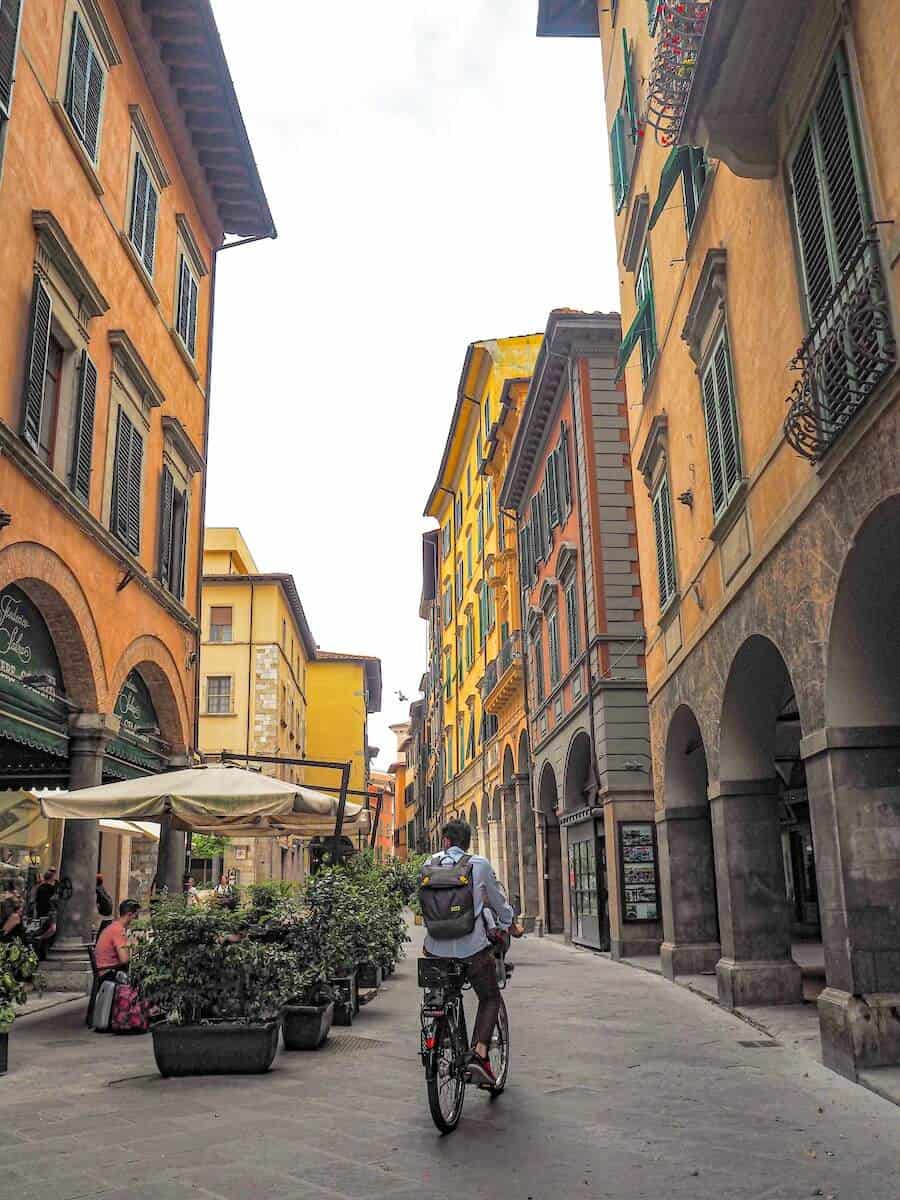
After soaking in the sights, enjoying some people watching, and maybe grabbing a gelato, I walked through the historic center toward Pisa Centrale station, a distance of only 1.6 miles (2.6 km) or about 35 minutes on foot. Along the way, you’ll cross the Arno River, passing through picturesque streets with local shops and cafes, and see the Chiesa di Santa Maria della Spina, a tiny Gothic gem sitting right on the riverbank.
Then I simply hopped back on my train to Florence (or wherever you’re headed next) from Pisa Centrale, never having to backtrack or deal with storing luggage.
Stretch Your Legs, Add an Experience
This train station hop is brilliant for a few reasons. You get to stretch your legs instead of sitting continue hours on the train, check out a beautiful Italian town that might not otherwise make your itinerary, and you do it all without the hassle of checking into accommodation or wasting time retracing your steps. It’s efficient, energizing, and surprisingly satisfying.
Would I recommend this for a first-time visitor to Pisa? Only if you’re short on time. Otherwise, get off at Pisa Centrale, store the luggage, and spend a bit more time getting to know the town of Pisa.
Not Passing Through Pisa? Make It a Day Trip
If your itinerary follows the classic Rome > Florence > Venice route and doesn’t naturally pass through Pisa, you can still visit, but I’d recommend doing it as part of a broader day trip. Since Pisa’s main attractions are concentrated and can be seen relatively quickly, combining it with other nearby destinations makes for a much fuller experience.
Pisa + Cinque Terre
This pairing is magical. After seeing the Leaning Tower, head to the five colorful villages of Cinque Terre perched on dramatic coastal cliffs. You can hike between villages on scenic trails (if they’re open), feast on fresh seafood and pesto (the region’s specialty), and watch the sunset over the Ligurian Sea. It’s the perfect blend of architecture, monuments, and natural beauty.
Recommended tour: Pisa and Cinque Terre Day Trip from Florence
Pisa, Siena & San Gimignano
This trio showcases the very best of Tuscany. Siena offers medieval streets and the stunning Piazza del Campo, where the famous Palio horse race takes place twice a year. San Gimignano, the “Medieval Manhattan,” rises from the Tuscan hills with its iconic towers (14 still standing from the original 72). You’ll wander cobblestone streets, sample world-class Vernaccia wine, and feel like you’ve stepped back in time. Combined with Pisa’s monuments, it’s a perfect Tuscan sampler.
Recommended tour: Pisa, Siena, San Gimignano and Chianti Day Trip from Florence
I’d suggest self-driving if you’re comfortable with it (just factor in those parking challenges I mentioned!), or booking a guided tour that handles all the logistics. Tours are especially convenient for hitting multiple towns in one day without the stress of navigating or timing train connections.
Frequently Asked Questions about Pisa
How long do you need in Pisa?
If you’re just seeing the main sights around Piazza dei Miracoli, 2-3 hours is sufficient. If you want to climb the Leaning Tower, explore the riverside, and have a meal, plan for 4-6 hours. An overnight stay is worthwhile if you want to experience the town without crowds and see its more authentic, small-town Italian character.
Is Pisa worth visiting or is it too touristy?
If you’re passing through, it’s 100% worth a stop to see the famous Leaning Tower of Pisa and the stunning UNESCO World Heritage Site complex. However, if it’s significantly out of your way, I’d recommend seeing if you can combine it with additional sights, like one of the day trips mentioned above to Cinque Terre or the Tuscan hill towns. The tower itself, while iconic, isn’t worth going far out of your way for on its own.
That said, I personally enjoy every chance I get to pop in and retrace my steps through this cute town. Your experience may vary depending on your travel style and what you’re looking for.
Can you climb the Leaning Tower?
Yes! You can climb the tower, but tickets must be booked in advance, especially during peak season. The climb involves 294 steps and takes about 30 minutes round trip. Be aware that the tilted stairs can be disorienting, but the view from the top is spectacular. Note that children under 8 years old are not permitted to climb, and you must store all bags in the provided lockers before ascending.
Book your Leaning Tower ticket now!
How do I get from Pisa airport to the city center?
There’s a convenient PisaMover shuttle train that runs from the airport to Pisa Centrale station in just 5 minutes. From there, it’s about a 20-25 minute walk (1.7 km) to the Leaning Tower, or you can take one of the many buses that run every 10-20 minutes. The whole journey costs just a few euros.
What’s the best time to visit Pisa?
Early morning (before 9 am) or late afternoon (after 5 pm) are best for avoiding the crowds at the Piazza dei Miracoli. For weather, spring (April-May) and fall (September-October) offer pleasant temperatures and fewer tourists than summer. If you’re doing the train station hop, any time works since you’re moving through efficiently. Staying overnight gives you the best of both worlds, a quiet evening and an early morning.
Do I need to buy tickets in advance for the Leaning Tower?
Yes, I highly recommend it, especially from April through October. Tickets sell out quickly due to the limited number of visitors allowed per time slot, and you’ll be assigned a specific entry time. Book your Leaning Tower ticket here.
If you’re just taking photos from outside, no ticket is needed. The Cathedral is free to enter but still requires a timed ticket.
What else should I know before visiting?
- The entire Piazza dei Miracoli complex is a UNESCO World Heritage Site.
- You can admire all the buildings from outside for free.
- If entering any buildings, you’ll need to store bags in provided (free) lockers.
- The area is filled with souvenir vendors. It’s touristy, but that’s part of the experience.
- Don’t skip the other buildings in the complex; the Cathedral, Baptistery, and Camposanto are all worth seeing.
- Transportation info and updates can be found at https://www.opapisa.it/en/informations/getting-there/
Explore More of Italy
If you’re planning an overnight stay, a strategic stopover between trains, or a packed Tuscan day trip, don’t overlook Pisa. This little city proves that sometimes the best travel experiences are the ones you squeeze in between your “main” destinations, or the ones that unexpectedly become highlights in their own right.
Just don’t forget to take that silly photo holding up the tower. Trust me, you’ll want it later.
Looking to explore more of Italy? Here are some helpful posts.
- Discover Pisa: The Perfect Italian Stopover for the Leaning Tower
- 15 Best Places to Visit in Italy + 2 Bonus Sights
- Epic 1 Week Itinerary in Italy: Visiting Rome, Florence, & Venice
- 11 Best Things to Do in Venice: The Italy Dreams are Made Of
- 40 Best Things to Do in Florence, Italy
- Visiting the Famous Romeo & Juliet Balcony in Verona, Italy
- 10 Secrets of Bologna to Know Before You Go
- 10 Best Things to Do in Bologna, Italy: The City of Porticos
- How to Day Trip to Siena from Florence + One Day Itinerary for Siena
- Planning a Trip to Cinque Terre: The Complete Guide
Like this post? Pin it.